Top

Digital asset insurer funds Middle East expansion

Policy & Regulation·December 16, 2023, 12:10 PM

OneDegree, a Hong Kong-based InsurTech startup is expanding its area of engagement to the Middle East, funded through an undisclosed investment from Dubai Insurance.


Fresh funding round to finance growth

The seven-year-old startup announced on Friday that it has secured further funding, solidifying its commitment to Middle East expansion while building upon the success of OneDegree’s $55 million Series B round in June. Total funds raised are believed to be in the region of $100 million.

The Series B round was required to expand its digital assets insurance portfolio. Similarly, the partnership with Dubai Insurance is aimed at facilitating OneDegree’s expansion into the digital asset insurance sector within the United Arab Emirates (UAE) and the Gulf region. The startup firm will now proceed to establish a new entity in Dubai and hire staff locally to take on new business in the region.

Among its notable investors are Alibaba Entrepreneurs Fund (AEF) Greater Bay Area Fund, Sun Hung Kai & Co and Cathay Venture, the venture capital arm of Taiwanese billionaire Tsai Hong-tu’s Cathay Financial Holdings. OneDegree’s CEO, Alvin Kwock, has stated that the company is on track to achieve profitability by the second half of 2024.
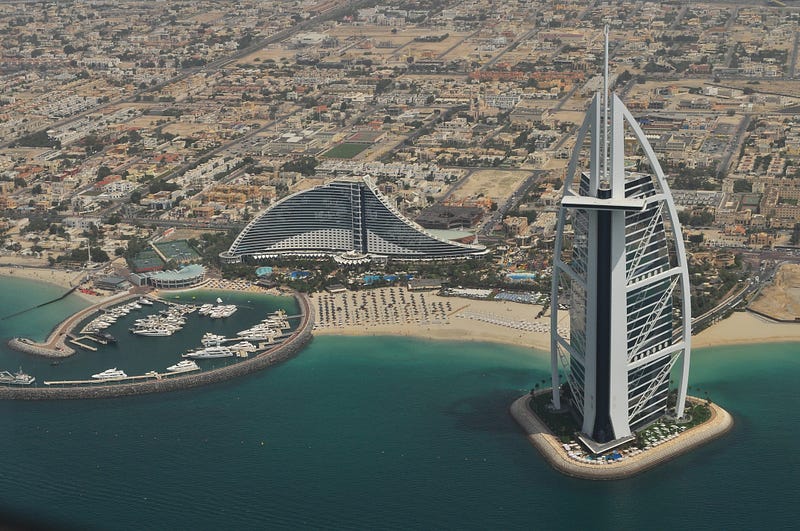
Photo by Roman Logov on Unsplash


Ministerial interest

It’s understood that the UAE’s economy minister, Abdulla bin Touq Al Marri, had outlined his interest in OneDegree bringing its service offering to the UAE when he met with representatives from the company at the Belt and Road Summit in Hong Kong in September.

Given that OneDegree is planning to service the digital assets sector in the UAE, the move aligns with Dubai’s new crypto regulatory framework implemented earlier this year, which mandates insurance coverage for licensees engaged in crypto-related businesses to safeguard users’ funds. Major players in the crypto industry, such as Binance, Crypto.com and OKX, have already established a presence in Dubai.


Only digital asset insurer in Asia

In a video interview from Dubai on Friday with Forbes, Alvin Kwock emphasized OneDegree’s unique position as the first and only licensed insurer in Asia capable of providing digital asset insurance.

Kwock revealed that approximately half of the world’s top 20 crypto exchanges have approached OneDegree for its digital asset insurance, with some of them already being clients. The startup has extended its services to around 30 companies, including Cactus Custody, the custodian unit of Singapore’s Matrixport; Rakkar Digital, backed by Thailand’s Siam Commercial Bank; and Hashkey, one of Hong Kong’s licensed crypto exchanges.

In July it penned a deal with blockchain infrastructure firm Blockdaemon. Meanwhile, it has been underwriting digital assets for crypto custodian METACO since November 2022.

Anticipating substantial growth, Kwock expects the number of OneDegree’s digital asset insurance customers to surpass 100 by the end of 2024. He foresees this segment constituting about half of the company’s total business in the coming year, up from the current level of 30%. Kwock underscored the evolving dynamics in the crypto market, emphasizing the increasing importance of risk management and the essential role of insurance in the digital asset industry.

OneDegree’s expansion into the UAE aligns with the nation’s crypto-friendly policies, actively attracting firms to leverage its supportive regulatory environment. Indirectly, it also serves the Hong Kong government’s strategy to deepen business ties with the Middle East.


More to Read
View All
Web3 & Enterprise·

May 03, 2023

Temasek Refutes Claims of Investment in Array

Despite reports emerging on Monday that it had invested in Array, an algorithmic currency system, Singaporean state-owned conglomerate and global investment firm Temasek has denied any such investment.In a very brief statement published to its website on Tuesday, Temasek stated:“We have seen news articles and a tweet from Array about Temasek’s investment in it. This news is incorrect. Temasek has not invested in Array and we have no relationship with them.”CoinTelegraph had taken to reporting the claim on Monday. The article had outlined a $10 million investment by the Singaporean state investor into Array, the developer of an algorithmic currency system that relies upon smart contracts and artificial intelligence. Reputational lossIf it had been true, such an investment would have been seen as a positive for the crypto space as it would be indicative of a renewed appetite for crypto-based projects from the giant Southeast Asian investor.Temasek was a key investor in failed cryptocurrency exchange, FTX. In November 2022, the company had to write down its entire investment of $275 million into the fraudulently managed exchange business. To an onlooker, a $275 million write-down may seem like an extraordinary loss.However, given that the Singaporean investing behemoth has a $403 billion dollar portfolio, the loss represents just 0.09% of that portfolio, hardly making a dent in the health of the company.The greater loss for Temasek relative to the FTX collapse has been reputational. Top tier venture capital investors like Temasek, who had otherwise been assumed to be the most diligent of actors in the professional investing world, were all sharply criticized for failing to identify the extent of the mismanagement and fraud that had occurred at the now bankrupt cryptocurrency exchange. Bogus ClaimsIn fairness to those who had reported the fake news, they were acting on information that Array had put out into the ether and as of yet, has not corrected. At the time of publication, the project’s website features a list of renowned investors including Temasek. Alongside Temasek, Array claims to have obtained investment from Standard Chartered, Coinbase Ventures, Spark Capital, Khosla Ventures, The Blackstone Group, Binance Labs, Sequoia Capital and a16z.In the case of Binance Labs, a spokesperson for the venture arm of the global exchange told The Block that it is not an investor in the project. To further dispel the claim, Temasek took to Twitter, stating:”Fake news about Temasek’s investment in @Array_Protocol. We have seen news articles and a tweet from Array about Temasek’s investment in it. This news is incorrect. Temasek has not invested in Array and we have no relationship with them.” Further instances of misinformationThe misinformation follows a similar scenario that played out with OPNX, a newly launched platform that offers spot and futures trading, alongside the ability for investors to trade bankruptcy claims.A couple of weeks ago, the platform, which had been founded by Kyle Davies and Su Zhu, the key executives behind failed crypto hedge fund, Three Arrows Capital, asserted that it had the backing of some notable investors. Almost immediately, venture capital and market maker DRW and venture capital firm Nascent denied that they were investors in OPNX.

news
Web3 & Enterprise·

Dec 10, 2024

GRVT snags license to become world’s first regulated DEX

GRVT, a hybrid cryptocurrency exchange platform that bases its operations in Singapore, has secured a trading license in Bermuda which the project claims, makes it the first regulated decentralized exchange (DEX).  In a press release published on the project’s behalf by PR Newswire on Dec. 6, the project, which aspires to be “Goldman Sachs on blockchain,” announced the acquisition of a Class M Digital Asset Business License from the Bermuda Monetary Authority (BMA). Photo by GuerrillaBuzz on UnsplashAiming for further licensingThe license puts the firm on a path to operate as a fully regulated DEX. Securing this Class M license isn’t the end of the project’s regulatory compliant endeavors, however. Class M confers a “modified” exchange license under the Bermuda Digital Asset Business Act (DABA). Class M covers pre-operational activities while the service remains within a sandbox environment. The company hopes to have acquired Class F or “Full” licensing designation by mid-2025. At that point, GRVT will be in a position to take its service from a sandbox environment to full launch of its institutional-grade perps DEX in a regulatory compliant manner. On X GRVT suggested that this licensing is pivotal in the movement of decentralized finance (DeFi) towards mainstream adoption. “With this milestone, DeFi evolves - safer for users and institutions alike,” the project wrote. Hybrid approachAs a hybrid DEX, GRVT combines the decentralization of DeFi with the structure and compliance required for the participation of institutional investors. Commenting on this latest development, GRVT CEO Hong Yea stated:”We've always believed compliance should be the foundation for crypto and DeFi, not an afterthought. Without it, earning institutional trust—and bringing revolutionary technologies to the mainstream—becomes nearly impossible." Yea told Cointelegraph that in two weeks time, the project will officially launch its mainnet to all users. “Our trading volume will then be available through major external data providers,” he added. In preparation for that mainnet launch, the project announced in September that it had partnered with 16 market makers including Galaxy Trading, Amber Group, QCP and others, in order to ensure that the platform has sufficient liquidity in place to enable a smooth launch. Users have been testing the platform following its Open Beta Testnet launch in August. The GRVT CEO believes that the project can “unify cryptocurrency and mainstream finance, creating a system where assets move freely and all forms of value coexist in one integrated ecosystem.”   A regulated yet decentralized offeringReferring to the two main components baked into the GRVT offering, he said that “decentralization distributes control away from central authorities, promoting transparency, security, and user empowerment.” Meanwhile, “regulation establishes standards to protect users, ensure market integrity and promote fair practices.” In successfully pursuing licensing in Bermuda, GRVT joins a list of more than 30 firms in the digital assets sector who have obtained licensing in the British overseas territory. In October global cryptocurrency exchange platform Kraken launched a Bermuda-based derivatives trading business having obtained licensing from the BMA. USDM stablecoin issuer Mountain Protocol received a Class F license from the BMA in July. Other entities successfully licensed by the BMA include Coinbase, HashKey, Circle, Bittrex and Zero Hash.

news
Web3 & Enterprise·

Dec 22, 2023

Buysell Standards and AGST collaborate to expand security token projects in Southeast Asia

Buysell Standards and AGST collaborate to expand security token projects in Southeast AsiaBuysell Standards, a South Korean company operating fractional investment platform Piece, is accelerating its expansion into the Southeast Asian market through a recent business collaboration.A report from Korean news outlet Financial News indicates that the company has signed a memorandum of understanding (MOU) with AGST, a subsidiary of blockchain-focused investor Fundiant Holdings. This collaboration aims to launch security token projects within the Association of Southeast Asian Nations (ASEAN) region.Photo by Kelvin Zyteng on UnsplashSingapore in Q1 2024As an asset manager in Singapore and Japan, AGST is set to play a pivotal role in the issuance and distribution of security tokens in these markets. Their strategy includes launching security token products in Singapore in the first quarter of next year. These products will be backed by assets from Buysell Standards.The partnership between Buysell Standards and AGST is set to be multifaceted, encompassing several key areas of collaboration. Together, they will focus on developing new investment products and building the necessary infrastructure to support them. They will also focus on marketing and promotional efforts in the ASEAN region.Anticipating regulatory exemptionBuysell Standards is among the seven companies that received approval from the South Korean Financial Services Commission to issue security tokens. The company is anticipating a regulatory exemption from the government, which would allow them to introduce fractional investment products linked to ship finance.Buysell Standards expects that its partnership with AGST will facilitate quicker access to funding from international sources for high-quality investment products in South Korea. Meanwhile, AGST seeks to introduce a range of Korean assets to the global security token market.Emphasizing the quick adoption of fintech by ASEAN investors and their fondness for South Korea, Shin Beom-jun, CEO of Buysell Standard, stated that the company is committed to actively promoting Korean security token products on the global investment stage.Kim Chang-soo, Chairman of Fundiant Holdings, expressed his ambition to strengthen the Korean security token market. He observed that the market is currently in an early stage of development, leading to the undervaluation of underlying assets. He believes that introducing Korean security tokens to international markets will reciprocally aid in the expansion and maturation of the domestic market.

news
Loading