Top

Coinone’s recent addition of USDT/KRW trading pair expected to reduce Kimchi premium

Markets·December 01, 2023, 9:01 AM

Coinone, a major South Korean cryptocurrency exchange, listed USDT, a stablecoin pegged to the US dollar on the platform’s Korean won-denominated market on Thursday (local time). Its listing price was KRW 1,289.

Tether Limited, the company behind USDT, asserts that their stablecoin is “backed 100% by Tether’s reserves.” These reserves comprise a variety of real-world assets such as U.S. Treasuries, overnight reverse repurchase agreements, corporate bonds and precious metals. According to CoinMarketCap, USDT’s market capitalization stands at $89 billion, ranking it third in the cryptocurrency market, just behind Bitcoin and Ethereum.
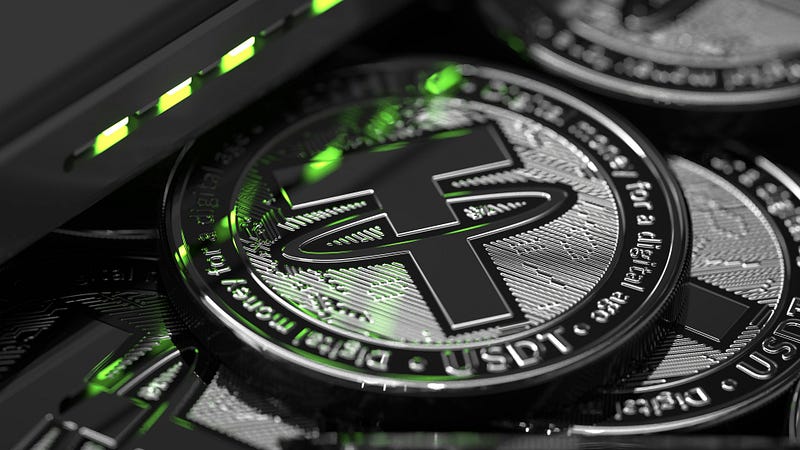
Photo by DrawKit Illustrations on Unsplash


First to list USDT/KRW trading pair

Despite the significance of USDT in the cryptocurrency market, Korean exchange users have faced the limitation of not being able to purchase the stablecoin using Korean won, although these exchanges did offer markets denominated in USDT. This limitation has prompted Koreans to turn to foreign cryptocurrency services for acquiring USDT. With Coinone’s latest move, the platform has become the first to facilitate USDT/KRW trading among the nation’s five fiat-to-crypto Korean exchanges — Upbit, Bithumb, Coinone, Korbit and Gopax.

Regarding this development, Kwon O-hoon, Managing Partner at the law firm Cha and Kwon, told local news outlet Decenter that there seem to be no particular legal concerns with the crypto exchange’s engagement in USDT transactions. This perspective stems from the absence of stablecoin regulations in the country.


Reducing the Kimchi premium

According to Decenter, crypto experts anticipate that the introduction of USDT/KRW trading will help in reducing the Kimchi premium, a term referring to the discrepancy in cryptocurrency prices on South Korean exchanges compared to those in foreign exchanges.

For instance, according to data from CoinNess, the average price of BTC on Korean exchanges is around KRW 51,177,250. This is about 2.34% higher than its average price on foreign exchanges, which stands at KRW 50,005,909. This difference means that users on Korean exchanges need to pay an additional KRW 1,171,340 to buy one BTC, compared to what they would pay on international platforms.

However, the newly added trading pair will streamline transactions between exchanges, making it simpler for investors to engage in arbitrage. This ease of transfer is expected to lead to more balanced pricing across different markets, reducing the Kimchi premium.

In light of this development, Jo Dong-hyeon, CEO of blockchain company Undefined Labs, said various institutions and blockchain projects will likely find USDT increasingly useful as a store of value, given USDT facilitates easy transfers between different exchanges.

More to Read
View All
Web3 & Enterprise·

May 27, 2025

Chinese food company adds Bitcoin to balance sheet

DDC Enterprise, a Chinese company headquartered in Hong Kong and listed on the New York Stock Exchange (NYSE), has become the latest corporation to add Bitcoin (BTC) to its balance sheet.Photo by Michael Förtsch on UnsplashInitial 21 BTC purchaseThe plant-based food products company which operates under the “DayDayCook” brand published a press release via Business Wire last Friday announcing its first Bitcoin purchase. It’s likely that there was a symbolic element to the firm’s first Bitcoin purchase, given that it bought 21 BTC while Bitcoin has a supply cap of 21 million BTC. The company completed the transaction via share exchange with an investor group, issuing 254,333 class A ordinary shares while acquiring the 21 BTC at a market price of $2,283,667. DDC outlined that it plans to make two further purchases over the coming days of 79 BTC, at which point the firm’s corporate treasury will hold 100 BTC. Targeting 5,000 BTCThe company has a much more ambitious Bitcoin accumulation plan, however. Over the course of the next three years, it is targeting the establishment of a Bitcoin treasury holding 5,000 BTC. At current market pricing, that would amount to a Bitcoin treasury of around half a billion dollars in value. In the near term, the firm is targeting the acquisition of 500 BTC by the end of this year. DDC Founder and CEO Norma Chu described the development as a “pivotal moment” in the company’s evolution. She said that this plan reflects DDC’s “confidence in Bitcoin as a store of value,” while demonstrating the firm’s interest in pursuing innovation. “We are fully committed to ensuring the success of this strategy, which aligns with our vision to drive long-term value for our shareholders,” she added. Web3 innovationAccording to a DDC website, the company has innovative plans that go beyond just a Bitcoin treasury. It plans to deepen community engagement through the use of NFT loyalty programs and immersive Web3 experiences. It also plans to leverage blockchain transparency in its efforts to build greater community engagement. The website sets out a vision whereby DDC can blend its culinary heritage with next-generation technologies.  The company suggests that real-world asset (RWA) tokenization has the potential to revolutionize consumer engagement, while offering the possibility of enabling fractional ownership of product lines. It has set out a roadmap where it outlines having established a digital platform in 2012, going on to engage in content creation and content commerce over the course of a decade.  The firm carried out an initial public offering (IPO) in 2023 and from 2025 onwards, aside from its Bitcoin treasury strategy, it plans to integrate RWA tokenization and Web3 technology into its business, while also adopting AI technologies to enhance supply chain efficiency. DDC is one of a growing list of corporations to adopt Bitcoin as a strategic asset over the course of the past 18 months. Earlier this month, another Chinese company, Nasdaq-listed Jiuzi Holdings, an electric vehicle (EV) retailer, announced that it had adopted a plan to acquire 1,000 BTC. Hong Kong-listed game developer Boyaa Interactive holds 3,350 BTC.

news
Policy & Regulation·

Jul 01, 2025

Kazakhstan establishing national crypto reserve

Kazinform, the state-owned official news agency of Kazakhstan, has reported that the central Asian republic is working towards the establishment of a national crypto reserve. The news agency revealed that in answering an inquiry from a member of the Kazakhstan parliament, Timur Suleimenov, Governor of the National Bank of Kazakhstan, said that the central bank is currently studying information related to the formation and management of a national crypto reserve. Photo by engin akyurt on UnsplashFollowing best international practicePlans are being devised for a crypto reserve on the basis that best international practice as applied to sovereign wealth fund management is adopted. In this respect, guidelines related to transparency of accounting and secure crypto custody will be followed. The reserve will be established through an affiliate entity of Kazakhstan's central bank, specializing in alternative investments. In responding to the parliamentary inquiry, Suleimenov also revealed the likely source of funding for the fund. He stated: “International practice shows that the sources for such a reserve may include confiscated crypto-assets, as well as  cryptocurrencies mined by a crypto miner partially owned by the government.” Suleimenov outlined that while crypto assets have proven to be volatile and riskier than other asset classes, having the reserve controlled and managed by a central bank affiliate would result in the required levels of risk management and overall oversight being applied. According to Kursiv, a news organization focused on the Central Asian region, the authorities in Kazakhstan plan to amend relevant legislation so as to enable the effective management of the crypto reserve. Suleimenov stated that the central bank is open to discussing potential legislative amendments with members of Kazakhstan's parliament. The National Bank of Kazakhstan's governor also warned that misinformation by pseudo-business coaches related to cryptocurrencies needs to be curbed. He feels that in order to protect investors, and particularly young people, legal measures will be necessary in an effort to bring about greater transparency within the country’s crypto market. The authorities in Kazakhstan currently have a crypto regulatory framework in place that requires crypto trading platforms that extend their services to local users to have acquired a trading license from the Astana International Financial Centre (AIFC).  In May, it emerged that the Central Asian republic is planning to establish a pilot project for cryptocurrencies called “CryptoCity.” At the time, Kazakhstan’s president, Kassym-Jomart Tokayev, delivered a speech at the Astana International Forum outlining that the CryptoCity project would facilitate the use of crypto for the payment of goods and services within a specific geographical zone. Crypto hub potentialEarlier that month, the country’s First Vice-Minister of Digital Development, Innovation and Aerospace Industry, Kanysh Tuleushin, said that Kazakhstan had the potential to emerge as a leading cryptocurrency hub within the Central Asian region. Following the implementation of a ban on crypto mining in China in 2021, Kazakhstan experienced an influx of miners, attracted by cheap electricity. However, the arrival of miners was unplanned for, putting extreme pressure on the local electricity grid, resulting ultimately in brownouts and protests. The country once accounted for 27% of global Bitcoin mining. However, regulations introduced in 2023 led to the activity being scaled back considerably.

news
Web3 & Enterprise·

Sep 15, 2023

Huobi Rebrands as HTX to Mark Tenth Anniversary

Huobi Rebrands as HTX to Mark Tenth AnniversaryIn a move marking its 10th anniversary, Seychelles-registered cryptocurrency exchange Huobi has decided to rebrand itself as “HTX.”Rebranding confusionIn crypto-centric discussions on social media, the decision has sparked controversy and raised eyebrows, drawing comparisons to the now-defunct exchange FTX.The announcement of Huobi’s rebranding to HTX was made on Wednesday. According to the company, the new name is a combination of symbolic elements. The “H” represents the first letter of “Huobi,” the “T” is a nod to Justin Sun’s blockchain project Tron, and the “X” stands for the exchange itself.Alternatively, some interpret “HT” as a reference to the exchange’s native Huobi Token (HT), while the “X” symbolizes the Roman numeral for 10, commemorating the company’s 10th anniversary. Huobi’s new slogan accompanying the rebranding is “HTX, Just Trade It.”Before the official announcement, Huobi changed its social media account names to align with the new brand. The exchange’s Twitter handle is now HTX_Global, and its official Telegram group is named “HTXglobalofficial.” As of the time of writing, the website domain still retains the original Huobi name.Photo by Kate Trysh on UnsplashFTX comparisonsThe rebrand immediately drew attention on social media. In one of a range of similar comments, a user lined up the Huobi logo next to that of FTX and wrote: “I think I’ve seen this movie before.” Although a matter of speculation, there has been some chatter on social media in recent weeks, questioning the health of the Huobi business. It didn’t help the firm that in August, rumors swirled that some of the company’s executives were subject to an investigation by Chinese authorities.This isn’t the first time a crypto-related entity has seemingly borrowed part of its name from FTX. In January, the founders of the collapsed cryptocurrency hedge fund Three Arrows Capital announced plans to raise $25 million for a proposed crypto exchange called “GTX.” Huobi’s rebrand has amused some FTX creditors who had faced criticism from some in the crypto sector for wanting to resurrect the business while maintaining the same branding.In early August, Huobi refuted reports suggesting insolvency and the arrest of senior executives by Chinese authorities. Additionally, the exchange had previously been ordered to cease operations in Malaysia following regulatory actions by the country’s securities regulator in May.International marketing effortHuobi’s rebranding to HTX has undoubtedly stirred debate and curiosity within the cryptocurrency community. Justin Sun, an advisor to the project, stated at a media briefing at Token 2049 in Singapore that the HTX brand will be marketed towards Huobi’s international English-speaking users.Sun said: “It’s very hard for foreigners, Westerners, to pronounce ‘Huobi’… It doesn’t make any sense to them,” Sun said, explaining that the word Huobi means fire and coin in Chinese. “That’s why we rebranded as HTX for international branding.”As the crypto industry continues to evolve, it remains to be seen how this new identity will impact Huobi’s reputation and standing in the market. Regardless, the crypto world is known for its surprises, and Huobi’s marketing move serves as a reminder that the industry is in constant flux, filled with unexpected developments.

news
Loading