Top

Seoul Auction Blue seeks to register security tokens with the FSS for Andy Warhol’s artwork

Web3 & Enterprise·November 29, 2023, 6:14 AM

Seoul Auction Blue, the operator of fractional artwork investment platform Sotwo, recently submitted an application to the South Korean Financial Supervisory Service (FSS), local news outlet Seoul Economic Daily reported on Wednesday (local time). Its aim is to register security tokens linked to artworks with the financial authority, marking it the third entity in the country to pursue this innovative financial venture.
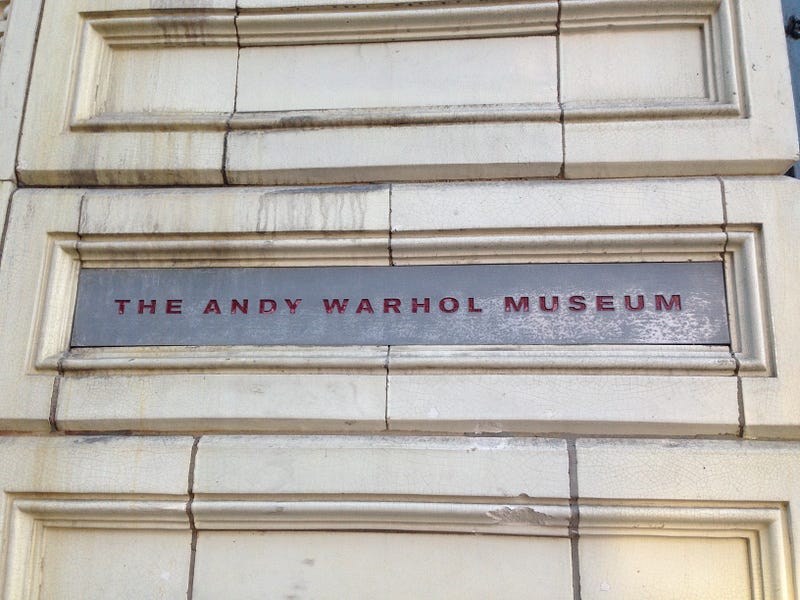
Photo by Guido Coppa on Unsplash


Andy Warhol’s ‘Dollar Sign’

The artwork investment app plans to issue security tokens based on Andy Warhol’s “Dollar Sign,” a piece measuring 51.0 cm in height and 40.5 cm in length. This artwork was purchased by Seoul Auction Blue at an auction for KRW 626.2 million (approximately $485,000). The total value of the security tokens, inclusive of issuance costs, is approximately KRW 700 million. The firm will issue a total of 7,000 tokens, each valued at KRW 100,000. Upon receiving regulatory approval, Seoul Auction Blue is set to open for subscription requests from Dec. 20 to 26.

In its endeavor to issue digital investment contract securities, Seoul Auction Blue has meticulously prepared its documentation in line with the FSS’s guidelines. The selection of the artwork of Andy Warhol, the renowned and iconic 20th-century artist, aligns with the FSS’s recommendation to choose a significant piece by an internationally acclaimed artist. This strategic choice reflects the company’s commitment to compliance and the recognition of Warhol’s global stature in the art world.


Preventing conflicts of interest

The registration application submitted by Seoul Auction Blue includes specific restrictions aimed at preventing conflicts of interest with its affiliates related to security tokens. As per these rules, the company is barred from buying idle assets of affiliates to back its security tokens. Instead, Seoul Auction Blue is permitted to acquire them only through public methods like participating in an open bid or a post-sale bid process. Notably, the token issuer is in principle prohibited from purchasing these assets via intermediaries in private sales or any other non-transparent settings.

The acquisition of underlying assets requires approval from the compliance monitoring committee. Furthermore, this regulation strips Seoul Auction Blue of the capacity to determine the final trading prices or conditions for these transactions.

In addition, the company is collaborating with a couple of securities firms to safeguard investors’ funds, creating a buffer against any potential bankruptcy of the issuer. The funds raised from subscriptions for the security tokens will be managed in accounts overseen by KB Securities. Additionally, an investor protection fund is being set up, which will be handled as a trust fund by Shinhan Securities. This fund acts as an extra layer of security, offering investors enhanced protection for their investments.

More to Read
View All
Web3 & Enterprise·

Mar 08, 2024

Travel booking startup targets Bitcoin investors with cashback offer

Travala.com, the Cayman-incorporated company that provides crypto-native travel booking service, has unveiled an enticing offer for Bitcoin investors, involving cashback paid in the leading cryptocurrency in collaboration with the AVA Foundation. This initiative, announced by the firm on the X social media platform on March 7, aims to reward travelers who pay for their bookings in Bitcoin, encompassing an array of travel options, from flights to hotels and activities spanning across three million destinations globally.Photo by Kanchanara on Unsplash10% BTC cashbackUnlike traditional cashback systems, where waiting periods for rewards can be lengthy, Travala.com ensures swift crediting of Bitcoin cashback into users' accounts within 24 hours after the completion of their trips. As part of this offer, cashback will be paid to the value of 10% of the customer’s spend, payable in Bitcoin. Since its establishment in 2017, Travala.com has positioned itself at the intersection of cryptocurrency and travel, offering a diverse platform for bookings across various properties, activities and airlines. With support for over 90 digital currencies, the platform remains focused on cryptocurrency adoption, while aiming to provide value and flexibility for its users. Mass adoption opportunityJuan Otero, CEO of Travala.com, emphasized the growing appeal of Bitcoin to mainstream audiences, buoyed by recent developments like the approval of the first Bitcoin spot exchange-traded fund (ETF) in the United States. Otero sees this initiative as a means to broaden the adoption of crypto for everyday transactions, providing travelers with an efficient way to utilize reward programs. The move towards Bitcoin-based rewards reflects the early stages of an industry-wide shift in travel loyalty programs. With traditional points-based systems losing traction, there's a burgeoning demand for innovative incentive schemes. Steve Hipwell, a contributor to the AVA Foundation, highlighted the success of the AVA Smart Program, which has already distributed over $2.1 million worth of travel rewards in AVA tokens to customers who completed trips booked through Travala.com. By integrating direct Bitcoin rewards, the aim is to capture an additional segment of travelers seeking ways to save on their journeys. Bitcoin stands out as one of the top three payment methods on Travala.com, accounting for approximately 9% of travel bookings on the platform. In 2023, travelers splurged over $5 million in BTC on flights, hotels and activities. Travel Tiger NFTsAccess to Travala's BTC cashback scheme comes with a degree of exclusivity. Users must possess a Travel Tiger NFT and stake 2,500 AVA tokens to activate Smart Diamond membership. This exclusivity stems from the limited availability of Travel Tiger NFTs, with only 1,000 in existence. These NFTs, minted on the Ethereum blockchain, serve as randomly generated utility collectibles. Market data from OpenSea places the floor price of Travel Tigers at 2.85 ETH, roughly valued at $11,165 at the time of writing. This tie-up with the AVA Foundation is not Travala’s first partnership. In November 2023 the company struck a deal with travel industry meta-search giant Kayak, allowing it to integrate with Kayak and enable platform users to search more effectively for travel deals. Back in 2019, the company had struck a similar partnership with accommodation booking platform Booking.com. 

news
Policy & Regulation·

Dec 28, 2023

China disrupts massive crypto-related laundering operation

While cryptocurrencies may be banned in China, crypto trading activity continues in some corners, nonetheless, sometimes through accessing overseas exchanges. With that, authorities recently uncovered a massive underground banking operation that exploited crypto trading platforms to evade local forex regulations.Photo by Manuel Joseph on Pexels$2.2 billion laundering operationOn Sunday, an account on popular Chinese social media platform WeChat run by China’s State Administration of Foreign Exchange (SAFE) published details of the $2.2 billion laundering operation bust. Xu Xiao, the Inspector at the Qingdao Branch of the State Administration of Foreign Exchange, revealed that the scheme involved underground banks who purchased virtual currencies and then sold the virtual currencies through overseas trading platforms to obtain the foreign currency they needed. This process, he explained, completes the conversion of yuan and foreign currencies, constituting the illegal act of buying and selling foreign exchange. Stringent capital controlsChina enforces stringent rules on money transfers outside the country. Citizens are limited to exchanging up to $50,000 in foreign currency and require a permit for transactions beyond that limit. Any transaction exceeding the limit without a permit is considered money laundering. During a recent investigation, authorities seized cryptocurrencies valued at approximately $28,000 in Tether, Litecoin and other digital currencies. However, the operation is estimated to have facilitated the movement of over $2.2 billion, involving more than a thousand bank accounts across 17 provinces and municipalities. Monetary control loopholesChina, once the largest cryptocurrency market, imposed a comprehensive ban on crypto exchanges in September 2017 and subsequently expanded its restrictions to include crypto mining and trading. Despite these measures, reports have surfaced about underground crypto exchange operations. Earlier this year, an investigative report by the Wall Street Journal found that global exchange Binance continues to do thriving business with Chinese customers. Global crypto exchanges are reportedly still onboarding Chinese clients indirectly. The South China Morning Post (SCMP) recently accused Binance of facilitating Chinese crypto trading accounts by falsely claiming they are from Taiwan. While mainland China adopts a hostile stance towards cryptocurrencies, the special administrative region of Hong Kong remains progressive in the sector. Hong Kong’s regulatory authorities have introduced specific rules for cryptocurrencies and are licensing crypto exchanges operating within the jurisdiction. Arthur Hayes, the co-founder of the BitMEX crypto derivatives platform, recently described Hong Kong as the gateway for mainland China to global capital markets. Hayes asserted that wealthy Chinese individuals all bank in Hong Kong and with that, they all have access to crypto exchanges and brokers. In Cambodia, it is understood that illicit Chinese-linked activities oftentimes implicate the use of U.S. dollar stablecoin Tether (USDT) to move funds in and out of China even though Tether is banned in Cambodia. The latest crackdown in China underscores the ongoing challenges faced by authorities in controlling crypto-related activities, highlighting the dynamic nature of such activity within and adjacent to mainland China. As regulatory scrutiny intensifies, the contrast between mainland China’s approach and Hong Kong’s more open stance toward cryptocurrencies becomes increasingly evident. 

news
Web3 & Enterprise·

Feb 28, 2024

Profitability eludes Canaan despite further growth

Beijing-headquartered crypto mining equipment manufacturer Canaan recently revealed its financial results for the fourth quarter of 2023, demonstrating that it continues to struggle with profitability despite positive numbers relative to revenues and growth.Photo by Sasun Bughdaryan on UnsplashIncreased revenues and salesAccording to the company’s filing, during the last quarter of 2023 Canaan reported a surge of 45.7% in total computing power sold compared to the preceding quarter, reaching 5.5 million Thash/s. This ascent, which reflects a 191.9% increase from the same period in 2022, signifies not just a recovery but a robust resurgence in demand and operational ability. The company's dispatch of 19.6 million Thash/s throughout the year, marking a 29.6% leap from 2022, aligns with the rebound in bitcoin prices observed in Q4 2023, a pivotal factor shaping Canaan's operational revitalization. 47% growth on previous quarterA closer examination of the financials reveals not only surpassing total revenues but also a notable 47.3% quarter-over-quarter growth. Canaan's foray into international markets, bolstered by securing substantial orders from esteemed public company clients, underscores a buoyant sales performance and a positive outlook for the computing sector. Despite the buoyant sales and revenue figures particularly in the mining machine market, the sector has faced ongoing regulatory uncertainties and market fluctuations. Nonetheless, the company's strategic initiatives, alongside the positive market effects of the approval and listing of spot bitcoin exchange-traded funds (ETFs), have been positive. Moreover, Canaan's investments in wafer supply capabilities and strategic financial maneuvers garnered approximately US$136 million through at-the-market (ATM) programs and preferred shares. Recording a lossYet, the company’s journey in 2023 was not without its hurdles. Q4 2023 witnessed a significant increase in product revenues from the previous quarter but a decline from Q4 2022, attributed to dwindling sales prices as the halving event loomed, underscoring the volatility inherent in the cryptocurrency market. Results published last year are indicative of the company’s difficulty. In Q2 2023, revenues were strong, yet the company wasn’t turning a profit.With Q4 results, it’s now clear that the firm lost $421 million in 2023. In Q4, Canaan recorded a net loss of $139 million. That compares with a loss of $91 million in Q4, 2022. The company also expects tough market conditions in 2024. In its forward-looking outlook, it stated:”For the first quarter of 2024, and the second quarter of 2024, the Company expects total revenues to be approximately US$33 million and US$70 million, respectively, considering the challenging market conditions across the industry. This forecast reflects the Company’s current and preliminary views on the market and operational conditions, which are subject to change.” The crypto mining sector remains a very challenging market. With the upcoming Bitcoin halving event set to occur in April, it’s expected that as much as 20% of mining capacity could be forced offline, as some equipment would simply fail to mine on a profitable basis. Indicative of the challenges within the sector, crypto miner Core Scientific was forced into bankruptcy due to market difficulties in December 2022. It has only recently exited that bankruptcy process and now expects to generate revenues of $600 million in 2024. Another Bitcoin miner, Riot Platforms, has warned that profitability may be difficult to achieve in 2024 due to chip shortages.   

news
Loading