Top

SBI and TradeFinex establish 'SBI XDC Network APAC'

Web3 & Enterprise·January 03, 2024, 3:07 AM

Japanese financial services company SBI Holdings has successfully established "SBI XDC Network APAC" in Japan, following through on an intended joint venture with TradeFinex, the driving force behind the XDC Network.

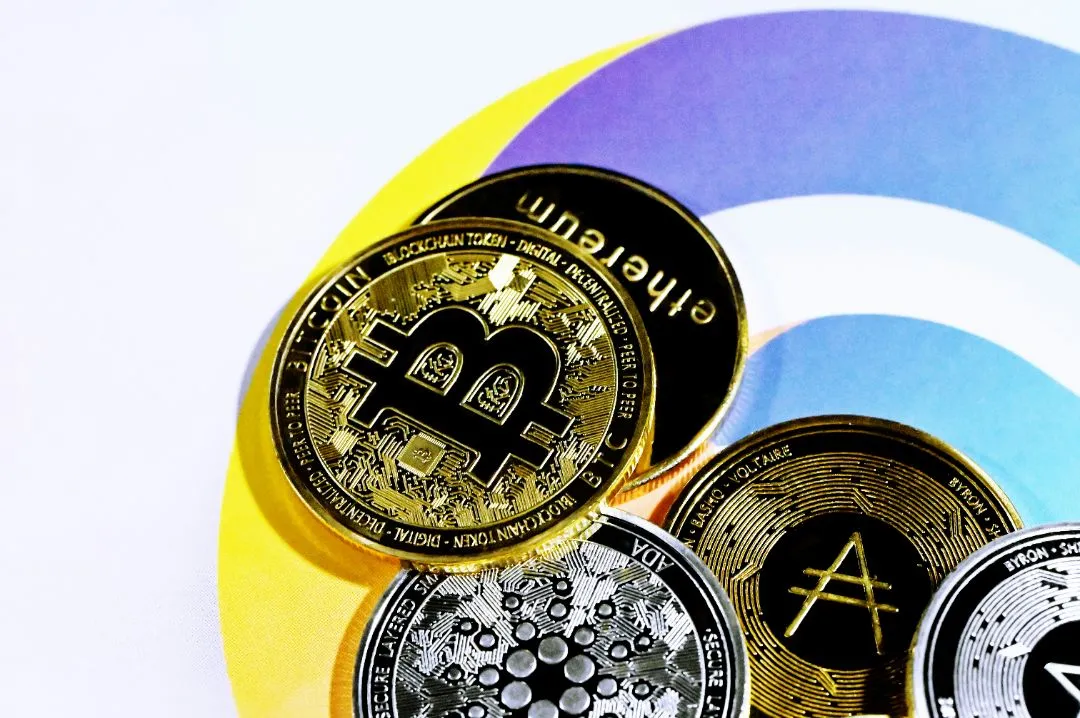
https://asset.coinness.com/en/news/074616ef432fcea09c3abd4f55441a37.jpg
Photo by William Warby on Unsplash

JV company formation

At the end of September, the two companies outlined the starting point of an intended collaboration. Only three months later, SBI has come back with an update, a press release published on Dec. 27, to detail the progress that has been made thus far.


According to that document, the companies established joint venture corporate entity SBI XDC Network APAC Co. Ltd. on Dec. 18. Among the directors of the new company is the President of BITPoint Japan, a wholly owned subsidiary crypto exchange business of SBI.


Majority stakeholder

SBI will be the majority stakeholder in the venture, holding 60% of the company’s shares while Dubai-based TradeFinex will be the minor partner, with a 40% shareholding. The press release outlines that the stakeholders will “work to expand the use case using the blockchain technology of the XDC Network in global economic activities centered on trade finance and cross-border payments, not just the handling of tokens.”


With that, this enterprise-focused blockchain initiative aims to elevate the efficiency of trade finance. Going forward, it endeavors to broaden the applications of XDC Network's blockchain technology in global economic activities, with the emphasis remaining on trade finance and cross-border payments.


The XDC Network, inaugurated in 2017, is a community-driven platform tailored explicitly for trade finance and payments. It introduces a smart contract system that streamlines global trade operations by tokenizing real-world assets (RWAs) such as bonds, trade assets and trade documents. Operating on a high-speed, secure and cost-effective blockchain, XDC Network aspires to transform the landscape of trade finance.


SBI Group has been actively involved in various services related to the XDC Network, including being the first exchange in Japan to handle XDC tokens. This was made possible through a partnership with SBI VC Trade, a company within the SBI Group specializing in crypto asset exchange services.


Corda platform proof of concept

Logo design has been completed for the new entity, while a website has also been launched. Not wasting any time, the new company has already initiated a proof-of-concept (PoC) experiment. The experiment involves connecting the XDC Network with the Corda platform from SBI R3 Japan and the Corda Bridge from IMPEL GLOBAL.


The PoC experiment revolves around conducting fiat payments generated by business-to-business transactions in XDC via Corda and the Corda Bridge. Leveraging a hybrid blockchain with both private and public characteristics, the objective is to attempt to offer a seamless one-stop service that settles both private and public aspects simultaneously.


The company claims that this approach achieves an efficient and smooth payment method for cross-border transactions, including international trade, outshining conventional fiat currency transactions.

 

More to Read
View All
Policy & Regulation·

Dec 23, 2023

Hong Kong regulators signal embrace of spot crypto ETFs

Hong Kong regulators signal embrace of spot crypto ETFsHong Kong has signaled its readiness to usher in spot crypto exchange-traded funds (ETFs), as the Securities and Futures Commission (SFC) and the Hong Kong Monetary Authority (HKMA) jointly announced on Friday that they are prepared to accept applications for such funds.Photo by Oskar Kadaksoo on UnsplashUpdated virtual asset-related policyIn a set of circulars released, a joint circular representing both regulators and a separate circular published by the SFC, they outlined the updated policy for intermediaries engaging in virtual asset-related activities.The SFC, responsible for overseeing financial markets in Hong Kong, expressed its openness to applications for the authorization of funds with exposure to virtual assets, specifically mentioning virtual asset spot exchange-traded funds (VA spot ETFs).This move expands beyond the existing crypto futures ETFs, demonstrating Hong Kong’s commitment to adapting its regulatory landscape to the evolving crypto market. It also builds on positive commentary made by SFC CEO Julia Leung on the subject last month. Leung stated that the regulator was open to the notion of retail participation in spot crypto ETFs in Hong Kong.Leung stated:“We welcome proposals using innovative technology that boosts efficiency and customer experience. We’re happy to give it a try as long as new risks are addressed. Our approach is consistent regardless of the asset.”Use of license platformsFriday’s SFC circular emphasized that transactions conducted by these ETFs must occur through SFC-licensed crypto platforms or authorized financial institutions. The SFC outlined that both in-kind and in-cash subscription and redemption methods are permissible for SFC-authorized spot VA ETFs, providing flexibility in fund management.Custody requirements were also addressed, with the SFC specifying that the trustee or custodian must delegate its crypto custody function exclusively to an SFC-licensed Virtual Asset Trading Platform (VATP) or entities meeting the crypto custody standards set by the HKMA.Industry responseThese latest circulars from the regulators have prompted a response from the industry. The Hong Kong Stock Exchange has reacted, welcoming the announcement. It believes that such a move would serve to strengthen Hong Kong’s position as a digital asset hub in the region. The exchange already lists a number of crypto futures ETFs, with multinational investment bank UBS having recently extended access to these products to its Hong Kong-based high-net-worth clients.While the regulatory landscape in the United States in 2023 has proven to be hostile, one very positive development appears to be ongoing work towards spot bitcoin ETF approval. Although still a matter of speculation, many industry commentators believe that approval will come through on Jan. 10. The advent of spot bitcoin and crypto ETFs in both eastern and western markets would likely make for an extremely bullish 2024 for the industry.Hong Kong’s move towards spot crypto ETFs aligns with its proactive stance in adapting to the rapidly evolving crypto landscape. The regulatory framework, as outlined in the circulars, reflects a balance between fostering innovation and ensuring investor protection. The city’s financial authorities have taken a comprehensive approach to review and update policies, once again signaling their ongoing commitment to embracing the growing role of virtual assets in the financial world.

news
Web3 & Enterprise·

Aug 24, 2023

Maple Finance Secures $5 Million to Fund Asia Expansion

Maple Finance Secures $5 Million to Fund Asia ExpansionMaple Finance, a crypto capital network focused on institutional business, has recently concluded a funding round that raised $5 million, with a view towards using the funds to finance an expansion into the Asian market.Maple Finance operates as a platform that empowers lending pool delegates and credit professionals to establish their own credit facilities on the blockchain. These facilities cater to different borrowers who can draw from these pools.Notably, Icebreaker Finance initiated a $300 million lending pool on Maple to assist Bitcoin miners in 2022. Maple Finance functions as the infrastructure atop which these lending pools are built, with pool delegates and lenders independently evaluating and verifying their risk.Photo by Monstera on PexelsMaple Direct lendingThe capital infusion was led by Blocktower Capital and Tioga Capital, with participation from supporters including GSR Ventures, Cherry Crypto, Veris Ventures, and Spartan Capital. This funding will not only facilitate Maple Finance’s expansion endeavors but will also fuel the growth of its newly introduced pure-play lending division, Maple Direct.Maple Finance has spotted an opportunity that has opened up due to the collapse of lending giants like Genesis Lending, BlockFi, Voyager, and Celsius in the institutional lending space. In addition to its role as a platform for facilitating third-party pool creation, Maple Direct was launched in June. It offers overcollateralized loans secured by Bitcoin, Ethereum, and staked Ethereum as collateral.Sydney Powell, the firm’s Co-Founder and CEO explained that Maple Direct is designed to offer an over-collateralized lending product transparently on-chain, providing a differentiated approach in the market. Unlike other platforms, borrowed collateral isn’t rehypothecated for yield generation; instead, it is securely held with a qualified custodian. This strategy positions Maple Finance to cater to market demand while minimizing risk.Strategic expansionPowell told TechCrunch: “I think now is the time to do that because all the other competition exited, and so that’s created this opportunity for us to step in and offer a product.” He expanded further on how the company is thinking strategically, relative to the expansion of the services it is now offering: “Other players try to focus on just trying to build the technology, kind of like Uber and Airbnb. What we’ve tried to do is to act as an underwriter so we need to show credit expertise. I think it gives us a little bit more control over the outcome and it’s a little bit closer to Apple in that it’s more vertically integrated.”Pushing into AsiaThe newly raised funds are earmarked for global expansion, with a particular focus on the Asia-Pacific (APAC) region. This is a strategic move, considering that several jurisdictions in APAC, such as Singapore and Hong Kong, have adopted pro-crypto regulations.“In Asia, you have regulatory clarity, or rather, regulatory support, both coming out of Hong Kong and Singapore in terms of new legislation that’s come through, and you already have a very heavy trading focus over there,” Powell stated.Maple’s product development is ongoing. Earlier this month, the company launched a Treasury Bill Pool that provides accredited investors with access to US Treasury Bills with what it claims is a “risk-free rate” of return, given that the pool generates a yield of 4.67%.

news
Web3 & Enterprise·

May 26, 2023

Renault Korea Establishes Metaverse Space for Car Enthusiasts

Renault Korea Establishes Metaverse Space for Car EnthusiastsRenault Korea Motors made an announcement on Friday that it will establish the Renault Korea Hub, an immersive automotive experience located within a metaverse, according to a report by Korean news media Dailian. The company intends to commence operations of this unique venture in the upcoming autumn season.Photo by Richard Horvath on UnsplashThe Sandbox and Korean brandsThe Renault Korea Hub will operate within K-verse, a designated area of Korean brands within The Sandbox, a metaverse platform based on blockchain technology.The Sandbox metaverse has recently announced its latest Korean brand partners, and as part of this development, a land sale event is being organized where their adjacent land will be raffled off. The event is named “Hallyu Rising.” Hallyu or the Korean Wave is a cultural phenomenon that has experienced a significant surge in global popularity since the 1990s, mainly thanks to its pop songs and TV shows.During the land sale event, users have the chance to acquire land adjacent to various prominent brands associated with Korean culture. This will be made possible through raffles and auctions facilitated by the metaverse platform. Other notable partners besides Renault Korea are Channel A, a TV broadcasting network; Netmarble, a game publisher; and CJ ENM, an entertainment company.Unique experiences for car enthusiastsThe Renault Korea Hub, the first of its kind in Korea, will provide a unique space for automobile enthusiasts to indulge in a diverse array of experiences and games. As per the automaker’s announcement, visitors will have the chance to engage in activities like developing their own vehicle designs.Visitors will have the opportunity to experience Renault Korea’s vehicles in voxel form, allowing them to explore the technology, design philosophy, and stories associated with each vehicle. A voxel can be understood as a 3D counterpart to a 2D pixel, representing a value on a regular grid in 3D space.Renault Korea CEO Stéphane Deblaise stated that the carmaker intends to continue its pursuit of diverse Web 3.0-based activities centered around metaverses and non-fungible tokens (NFTs). He said the automaker’s projects aim to establish a connection between customers’ mobility experiences and their digital lives. Deblaise also highlighted that these projects will undergo further development through the integration of artificial intelligence (AI) technologies.Storytelling contestEarlier this month, Renault Korea introduced the storytelling contest titled “create your SM6,” which concludes today. This campaign inspires customers to utilize emerging AI technologies to design their own SM6 vehicles and transform them into NFTs. The SM6, Renault Korea’s midsize sedan, initially debuted in 2016 and has undergone subsequent facelifts to enhance its features and aesthetics.The top ten performers in the storytelling contest, who create captivating renditions and stories featuring the SM6, will be rewarded with utility NFTs and KLAY, the native token of the Klaytn network. The first-place winner will receive a prize package consisting of 1 million KRW ($750) worth of KLAY, along with six SM6 NFTs.The announcement of the winners is scheduled to take place between May 31 and June 9. Following the announcement, the airdrop of rewards will be conducted from June 30 to July 7.

news
Loading