Top

Ripple Expands in Asia-Pacific with Full License to Operate in Singapore

Web3 & Enterprise·October 05, 2023, 1:02 AM

Enterprise blockchain firm Ripple announced on Wednesday (UTC) that it has secured a full license to operate in Singapore, where it has established its Asia-Pacific headquarters since 2017.

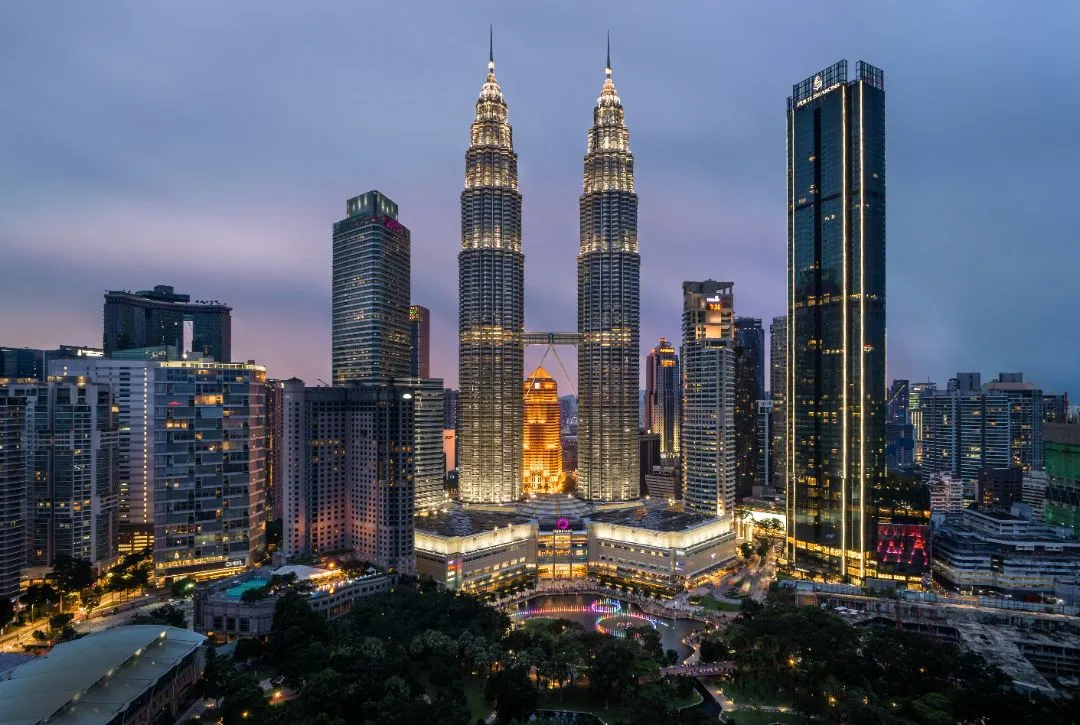
Photo by Sergio Sala on Unsplash


From outline to full approval in 4 months

This development marks another step in Ripple’s strategic expansion within the Asia-Pacific region, known for its rapidly growing cryptocurrency market. Ripple’s journey to obtaining this full license began less than four months ago when the Monetary Authority of Singapore (MAS) granted it an initial in-principle approval in June. With the newly acquired full license, Ripple is now authorized to offer regulated cryptocurrency payment services in Singapore, a key financial hub in the region.

Brad Garlinghouse, the CEO of Ripple, expressed his enthusiasm for the company’s continued growth in Singapore, stating:

“We have hired exceptional talent and local leadership, doubling headcount over the past year and plan to continue growing our presence in a progressive jurisdiction like Singapore.”


Global expansion strategy

The company also highlighted the fact that over 90% of Ripple’s business occurs outside the United States, making the Asia-Pacific region, and Singapore in particular, a vital part of its global expansion strategy.

Monica Long, President of Ripple, explained in a recent interview with CNBC that the Singapore office has seen substantial growth in the past year due to the booming business opportunities in the Asia-Pacific region. This expansion aligns with Singapore’s leadership in crypto regulation in the region. The introduction of the Payment Services Act, which has been in effect since January 2020, has played a large part in that, regulating payment services and crypto services to the public.

Singapore’s regulatory framework also includes requirements for crypto service providers to safeguard customer assets in statutory trusts by the end of 2023 and restrictions on facilitating lending or staking of retail customers’ assets. These measures ensure consumer protection and responsible growth in the crypto industry.


Praising Singapore

Garlinghouse commended Singapore’s regulatory approach, stating, “Under MAS’ leadership, Singapore has developed into one of the leading fintech and digital asset hubs, striking the balance between innovation, consumer protection and responsible growth.” Ripple’s experience in Singapore differs entirely from the ongoing legal battle it has found itself in in the United States with the Securities and Exchange Commission (SEC).

Both Ripple and Coinbase have found themselves embroiled in lawsuits with the regulator in the US. In Ripple’s case, the firm and its founders have been accused of unlawfully selling their native cryptocurrency XRP without registering it with the SEC. However, a landmark ruling in July determined that XRP, as a token, may not necessarily be classified as a security.

Long spoke to the contrasting experiences the firm has encountered between the United States and Singapore. Long stated:

”Being in Singapore a couple weeks ago felt like night and day compared to the US in terms of open dialogue with regulators, and thus being able to build innovative *and* compliant products.”

Ripple, along with Coinbase and several other crypto firms, has criticized the lack of regulatory clarity in the US and has even considered relocating operations due to the SEC’s stringent regulatory stance. Notably, Coinbase also recently announced its successful acquisition of a major payment institution license in Singapore, following its in-principle approval obtained about a year ago.


More to Read
View All
Web3 & Enterprise·

Sep 07, 2023

Lotte Group’s Bellygom NFT Project Garners Global Fanbase of Over 300K

Lotte Group’s Bellygom NFT Project Garners Global Fanbase of Over 300KDaehong Communications and Lotte Homeshopping shared yesterday that their NFT project has now garnered a global fanbase exceeding 300,000 members. The two companies are subsidiaries of South Korean industrial conglomerate Lotte Group.Photo by Khinaii van Laren on UnsplashPartnership initiatives as global expansionTheir NFT initiative, operated by the group’s marketing arm Daehong, is based on Bellygom, the pink bear character representing Lotte Homeshopping. As part of its global strategy, the Bellygom NFT project has formed partnerships with various international projects and has been actively involved in communication efforts. Notably, Bellygom’s X (formerly Twitter) account, created earlier this year, has attracted 100,000 followers within a span of five months.At the end of last month, Daehong successfully completed the minting of Bellyland, the second NFT collection of the Bellygom project. The minting event was accompanied by Jelly Adventure, a universe where users can participate in a wide range of missions and games to earn “Bubble Gums.” Notably, Jelly Adventure is not only accessible to Bellyland NFT holders but also to those of other projects such as YogaPetz and Mocaverse.It’s worth highlighting that the minting event achieved the sale of over 5,000 NFTs, even during a period of reduced activity in the NFT market. Despite the declining minting prices and quantities, it managed to raise over 750,000 MATIC.Joining of new international usersAdditionally, the minting event attracted new international users to the Bellygom project, underlining its sustainability. The successful debut of Bellyland NFTs has significantly contributed to the project’s global expansion and presence.Furthermore, Daehong is pursuing a range of initiatives aimed at cultivating a fan-centric ecosystem with the ultimate objective of driving broader adoption of Web3 technologies. With the belief that the fanbase provides a strong foothold for the brand’s growth, the marketing firm plays a crucial role in facilitating the introduction of the Bellygom brand to the Web3 space. To this end, Daehong is constructing a universe with a story that embodies the brand’s identity while seamlessly integrating it with conventional marketing strategies.

news
Web3 & Enterprise·

Aug 22, 2025

Circle President visits Seoul for stablecoin talks with exchanges and central bank

Circle President Heath Tarbert, who oversees the issuer of the USDC stablecoin, arrived in Seoul on Aug. 21 for a series of meetings with South Korean cryptocurrency and blockchain industry leaders, as well as the governor of the country’s central bank. Citing industry sources, local outlet Newsis reported Tarbert visited three major exchanges, Upbit, Bithumb and Coinone, shortly after landing, spending roughly an hour at each. Discussions centered on recent developments in Korea’s digital asset ecosystem.Photo by Daniel Bernard on UnsplashGathering insight from exchangesThe trip underscores Circle’s growing interest in South Korea, one of the world’s largest crypto markets by trading volume despite its heavy tilt toward retail investors. Circle is reportedly seeking on-the-ground insight from local trading platforms. An executive from a research firm said the market offers an attractive foothold for global players looking to deepen networks. Previous reports indicated Circle has also begun informally recruiting in South Korea to support initiatives tailored to the local market, and the company is also weighing a direct investment in a domestic crypto firm. Homing in on stablecoinsStablecoins are expected to dominate the agenda with exchanges. USDC is the world’s second-largest stablecoin by market share, behind Tether’s USDT, and all three exchanges already support USDC trading. Upbit and Bithumb have meanwhile indicated their plans to develop Korean won–pegged tokens, recently filing trademark applications for their projects. Given Circle’s position in the sector, one exchange official said local platforms may look to the U.S.-based company as a benchmark, adding that practical knowledge-sharing could be the most meaningful outcome of Tarbert’s visit. Tarbert also attended a dinner with Simon Seojoon Kim, CEO of crypto venture firm Hashed, whose teams span Seoul, Singapore, Bengaluru, Silicon Valley and Abu Dhabi. Circle and Hashed have been in frequent contact, and the gathering offered another forum to exchange views on recent market developments. Talks with the central bank governorOn the policy front, Tarbert met with Bank of Korea (BOK) Governor Rhee Chang-yong at Circle’s request before the dinner. Rhee has signaled openness to the introduction of won-backed stablecoins, while emphasizing prudential safeguards and noting differences with some lawmakers on potential issuers. The BOK head has previously warned that allowing non-bank entities to issue won-backed stablecoins could pose risks, such as circumventing capital rules. The South Korean central bank is working with other agencies to develop a framework that ensures the stability and utility of stablecoins while preventing their use to bypass foreign exchange controls. The meeting between Tarbert and Governor Rhee likely covered regulatory parameters for cross-border remittances using stablecoins and avenues for public-private collaboration to foster a compliant won-stablecoin market. On the following day, Tarbert is slated to meet executives from four major financial groups: Shinhan Financial Group, Hana Financial Group, KB Financial Group and Woori Bank. Kakao Group, the company behind the KakaoTalk messaging app, is also on the itinerary. Representatives from its mobile payment platform, KakaoPay, are expected to take part in the discussions. The talks come as Kakao recently formed a task force to navigate Korea’s evolving stablecoin rules. Separately, Circle listed on the New York Stock Exchange (NYSE) earlier this year under the ticker “CRCL.” The initial public offering (IPO) priced at $31 a share and opened at $69, raising nearly $1.1 billion. As of Aug. 21, the stock closed at $131.80. 

news
Policy & Regulation·

Dec 22, 2023

China to outline clear directions for NFT & Web3 development

China to outline clear directions for NFT & Web3 developmentEarlier this week, China’s Ministry of Science and Technology announced a decision to work towards releasing a comprehensive strategy document aimed at clarifying the future path for the development of NFTs and Web3.Photo by Christian Lue on UnsplashFurthering Web3 innovationIn a communication published online on Tuesday, the ministry outlined its plan to enhance collaboration between relevant departments, emphasizing the promotion of Web3 innovation, increased research deployment and the strengthening of talent within the industry. Despite the regulatory challenges in the crypto space, the ministry acknowledged the growing interest in NFTs among Chinese citizens.The strategy document, developed in collaboration with the Chinese Academy of Sciences and the China Association for Science and Technology, will address key issues such as inheritance, innovation, security and government responsibilities.Ban not suppressing interestDespite the country’s ban on cryptocurrencies, the ministry expressed a commitment to the development of the Web3 industry, particularly focusing on non-fungible tokens (NFTs). Earlier this year, a Wall Street Journal investigation found that leading global crypto exchange Binance was thriving in China.One gray area that Chinese citizens are exploiting relative to the ban is that of NFTs. Crypto trading and mining were banned a couple of years ago. However, NFTs remain legal with the result that there has been a surge in adoption of digital collectibles in China. That prompted China’s top procuratorial agency, the Supreme People’s Procuratorate of China, to issue a warning relative to a number of attributes and risks relative to NFTs in May.Web3-related initiativesSeveral Web3 initiatives have already been underway in China. The Ministry of Science and Technology, in conjunction with the Cyberspace Administration of China, has released important policy documents, including the “Guiding Opinions on Accelerating the Application of Blockchain Technology and Industrial Development” and the “Blockchain Information Service Management Regulations.”Additionally, collaborative efforts involving the Cyberspace Administration of China, the Propaganda Department of the Central Committee, the Supreme People’s Court and other departments have conducted blockchain pilot actions, specifically in areas such as energy, rule of law, copyright and trade finance.The metaverse is another Web3 segment that the Chinese seem to be targeting for growth. A report by POLITICO published last August found that Chinese authorities and state-owned companies appeared to be seeking to mold and develop the metaverse in line with Chinese values. Efforts are being made to effect further development in the regions also, with the city of Zhengzhou announcing in May a set of metaverse-related policy proposals.Looking ahead, China’s Web3 strategy aims to concentrate on key sectors such as government affairs and industry. The plan seeks to encourage the development of novel business models, including NFTs and decentralized applications (dApps), while also accelerating the innovative application of Web3 and the construction of a digital ecosystem.The ministry’s recent response to Wu Jiezhuang, a member of the CPPCC National Committee, the country’s political advisory body, indicated that the delay in releasing the strategy document is part of a meticulous approach to ensure the strategic framework aligns with the evolving nature of the industry.While the postponement may be met with some disappointment, the overall tone remains optimistic, pointing towards the likelihood that China is committed to fostering innovation within the Web3 sector.

news
Loading