Top

South Korea’s top asset manager halts trading for bitcoin ETFs

Policy & Regulation·January 12, 2024, 7:24 AM

Mirae Asset Securities, South Korea’s largest asset management firm, has begun suspending trading for bitcoin ETFs, according to industry sources on Friday. This comes after an announcement made by the Financial Services Commission (FSC) stating that brokering spot bitcoin ETFs may be considered a violation of the government’s stance on virtual assets and the Financial Investment Services and Capital Markets Act.

https://asset.coinness.com/en/news/2bfc0e3e832d14e083f6d827227e0bdd.webp
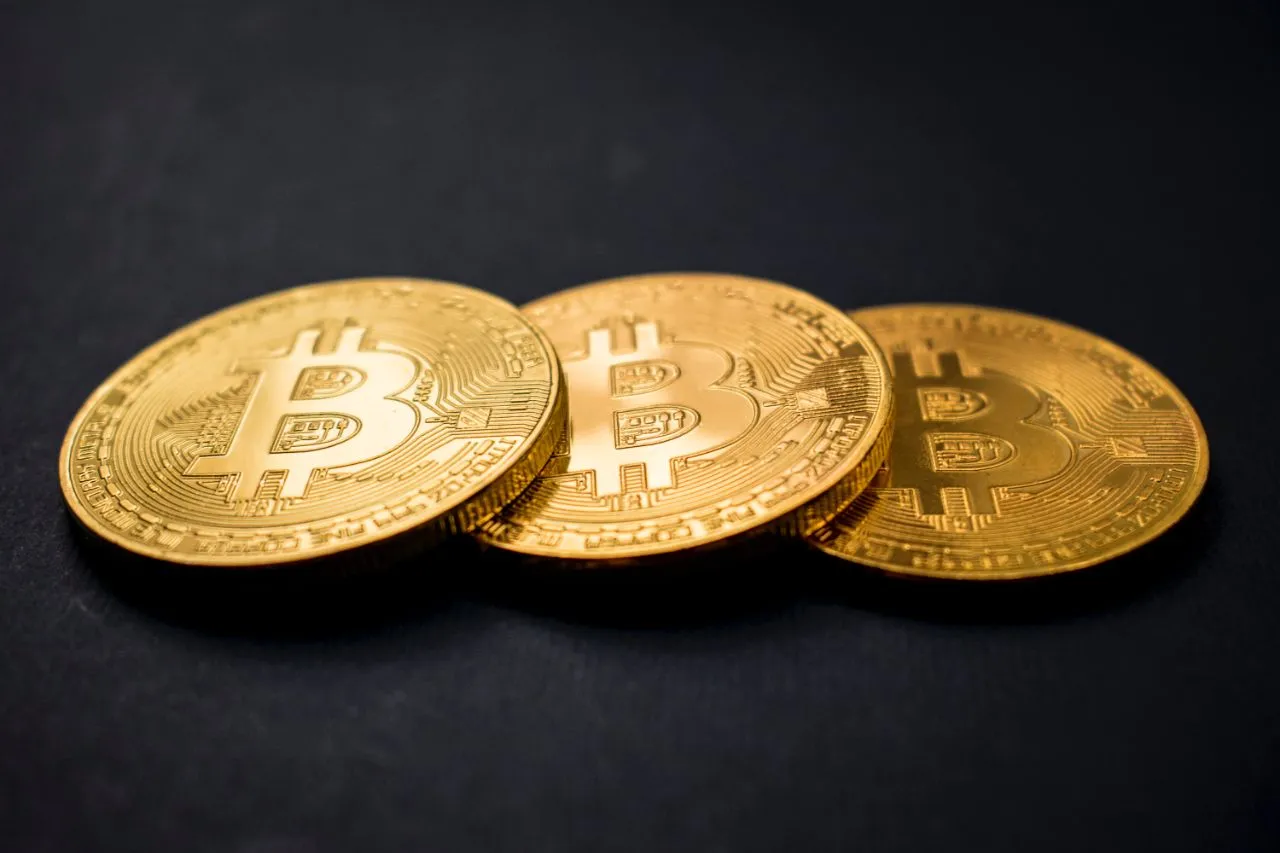
Photo by Dmytro Demidko on Unsplash

Taking preemptive measures

The asset manager has blocked new purchases of spot bitcoin ETFs listed in Canada and Germany starting yesterday and is considering suspending trading of bitcoin futures ETFs that have been listed in overseas markets since 2021. This includes the Proshares Bitcoin Strategy ETF, Valkyrie Bitcoin Strategy ETF, Invesco Galaxy Bitcoin Strategy ETF and VanEck Bitcoin Strategy ETF.


As Korean financial authorities are putting the brakes on domestic investments in the recently approved spot bitcoin ETF by the U.S. Securities Exchange Commission (SEC), it is believed that Mirae Asset Securities is putting a preemptive halt to trading in other bitcoin ETFs.


Spot vs futures

Spot bitcoin ETFs differ from futures ETFs in that they track the price of Bitcoin by actually holding the cryptocurrency, while the latter tracks its price through futures contracts. South Korean securities firms have been brokering futures ETFs listed in overseas market for a while now.

More to Read
View All
Web3 & Enterprise·

Jul 17, 2023

KITC Cooperates with Buysell Standards to Develop Security Token Products in Korea

KITC Cooperates with Buysell Standards to Develop Security Token Products in KoreaKorea Investment and Securities Co. (KITC), a leading securities company in South Korea, has partnered with Buysell Standards, the operator of the fractional investment platform PIECE, to jointly develop security token services.Photo by Tierra Mallorca on UnsplashNon-traditional securitiesAccording to a report from local news outlet News1, the two entities have agreed to collaborate comprehensively on security token products. This includes offering non-traditional securities such as investment contracts and non-monetary trust contracts, establishing infrastructure for launching investment products on token issuance platforms, and setting up processes for trust agreements.Buysell Standards has been expanding its range of fractional investment products from art and luxury goods to ships. The company has successfully completed various blockchain-related projects, including the development of its own blockchain mainnet for security token issuance.KITC’s security token effortsIn March, KITC established ST Friends, an alliance established in cooperation with Internet-only banks Kakao Bank and Toss Bank. The alliance has been actively working towards commercializing security tokens by signing business agreements with fractional investment firms like content investment platform Funderful and proptech platform Valuemap Corp. Proptech, the abbreviation of property technology, refers to the use of information technology to facilitate real estate buying, selling, and management.KITC believes that the partnership with Buysell Standards will accelerate the process of providing innovative financial products. Choi Seo-ryong, the head of the platform division at KITC, expressed excitement about collaborating with Buysell Standards, renowned for its expertise in digitizing real-world assets (RWAs). Choi emphasized KITC’s commitment to converting various content that we encounter in our daily lives into security tokens.Last month, KITC inked a memorandum of understanding (MOU) with Open Asset, a blockchain fintech company based in Seoul, to develop a distributed ledger system for ST Friends.Similarly, Buysell Standards has also been proactive in forming partnerships for security token projects. In February and April, the fractional investment platform operator entered into collaborations with Shinhan Securities and KB Securities, respectively.

news
Policy & Regulation·

May 24, 2024

Hong Kong privacy watchdog halts Worldcoin operations

Hong Kong's Office of the Privacy Commissioner for Personal Data (PCPD) has issued a directive for the Worldcoin Foundation to cease its operations within the region, citing violations of local privacy laws. The decision comes after the PCPD found that Worldcoin had improperly collected facial and iris data from approximately 8,302 individuals. The agency’s investigation included ten covert visits to six different Worldcoin locations between December 2023 and January 2024. According to the PCPD, the extent of data collection by Worldcoin was deemed "unnecessary and excessive" failing to adhere to the Data Protection Principles.Photo by Claudio Schwarz on UnsplashConcerns over data retentionThe privacy watchdog criticized Worldcoin for its intention to retain personal data for up to 10 years. This retention period was intended for training AI models for user verification processes but was judged by the PCPD to be excessively long, amounting to prolonged retention of personal data. Following the findings, the PCPD has issued an enforcement notice to Worldcoin, mandating the cessation of all its activities in Hong Kong. Privacy Commissioner Ada Chung has called on the public to report any ongoing operations by Worldcoin in the city. In response to growing international scrutiny, Worldcoin announced in March that it would halt the collection of personal data and is planning to introduce a new feature titled "Personal Custody," which would purportedly allow users to store their data on their devices. This change comes as Worldcoin faces additional challenges in other jurisdictions, including Spain and Portugal, which have also expressed concerns over the project's data collection practices. The project was also scrutinized in South Korea but it recently resumed services. As of now, Worldcoin has not provided comments regarding the recent regulatory actions. 

news
Markets·

Jun 27, 2023

Huobi Delists USDD Stablecoin Pairs

Huobi Delists USDD Stablecoin PairsHuobi Global, the Seychelles-headquartered cryptocurrency exchange, has made the decision to delist ten trading pairs, primarily involving tokens used in transactions with the USDD stablecoin issued by the TRON DAO Reserve.That’s according to an announcement published to Huobi’s website on Monday. These tokens are supported by TRON founder Justin Sun, who also acts as an advisor to Huobi. The delisting, effective from June 29, will impact several tokens, including the Cardano blockchain token ADA, Solana’s SOL, ApeCoin’s native token APE, MATIC from Polygon, FIL from Filecoin, and ETC from Ethereum Classic.Photo by Napendra Singh on UnsplashUnregistered securitiesAll of these tokens were offered on the Houbi platform in pairs with USDD. Additionally, trading pairs involving ARPA, GAS, QTUM, and ZKS with Bitcoin will also be removed from the platform. Huobi stated that these changes are aimed at providing users with an improved trading experience.Originating from China, Huobi has played a significant role in spot and derivatives trading for digital assets. The decision to delist these tokens follows their classification as unregistered securities in recent lawsuits by the US Securities and Exchange Commission against Binance and Coinbase. Prior to Huobi, Robinhood and eToro had already removed some of these tokens from their platforms.Stablecoins are designed to maintain a stable value by pegging them to less volatile assets like the US dollar. They achieve this by holding equivalent reserves of cash and cash-equivalent assets as collateral. Stablecoins are widely used by traders for transferring funds between exchanges and as a hedge against price volatility. This makes them some of the most heavily-traded tokens in the crypto space.USDD stabilityUSDD, the stablecoin at the center of this delisting, currently ranks as the eighth largest stablecoin by market capitalization, with approximately $750 million. Huobi is the primary exchange for buying and trading USDD, according to CoinGecko, a crypto market data provider. USDD is backed by various digital assets such as Bitcoin, Ether, and TRX, and it is issued by the TRON DAO Reserve. The TRON DAO Reserve operates as a decentralized autonomous organization (DAO), utilizing blockchain technology to automate voting and transaction processes.USDD is an algorithmic stablecoin, with the assets held in backing the coin over-collateralized to a level of 170%. Despite this, the stablecoin has had issues in maintaining its US dollar peg from time to time. The issue has been that the token is partly backed by the TRX token, the native token of the TRON ecosystem. If TRX backing is discounted, the stablecoin is only 49% backed.Reports indicate that Sun acquired a controlling stake in Huobi through a Hong Kong-based asset manager, reportedly paying around $1 billion in November. However, Sun hasn’t provided any details of any such ownership stake.Huobi’s decision to delist these trading pairs reflects the evolving regulatory landscape and the need for exchanges to ensure compliance with securities regulations. By removing tokens that have faced legal scrutiny, Huobi aims to maintain a robust and compliant trading environment for its users.

news
Loading