Top

Turkey nears completion of newly crafted crypto regulations

Policy & Regulation·January 12, 2024, 2:41 AM

The Turkish government is on the verge of finalizing comprehensive regulations for the cryptocurrency market.


It has been known for a number of months that Turkey had been working towards the production of a regulatory framework for crypto, with the primary objective of securing the country’s removal from the Financial Action Task Force’s (FATF) "grey list." According to revelations from Minister of Treasury and Finance Mehmet Simsek, who participated in an interview with the Anadolu Agency on Wednesday, those regulations are now nearing completion.

https://asset.coinness.com/en/news/78096bc4b2b95fd49de0eca04d548d27.webp
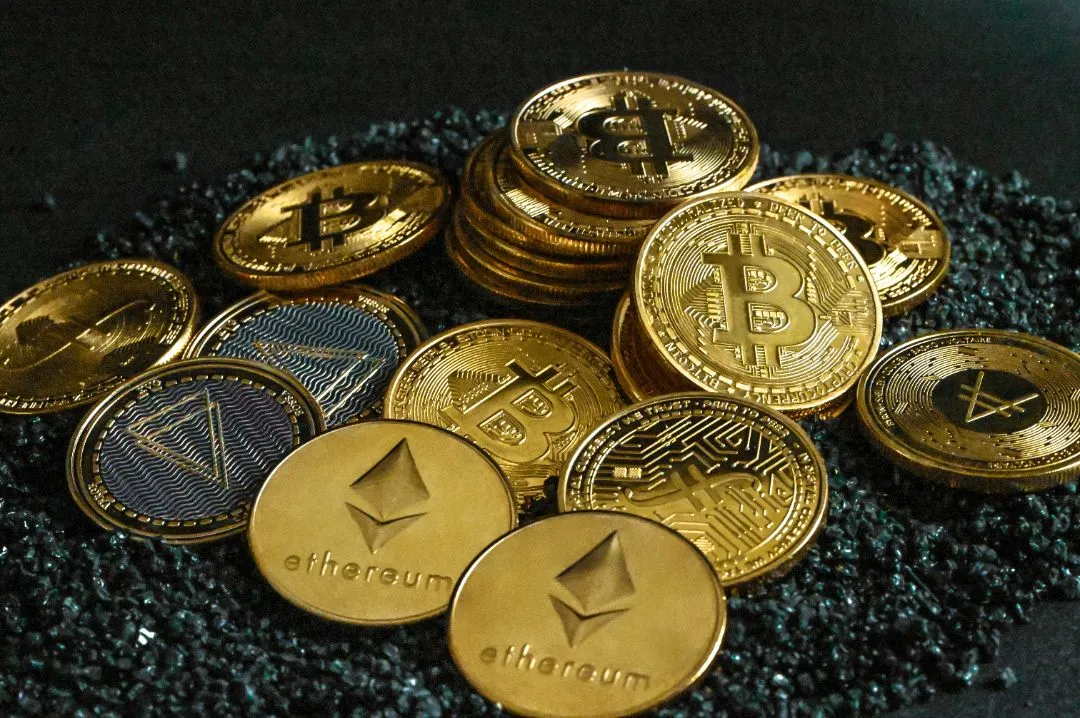
Photo by Emre on Unsplash

Framework in advanced stages

Simsek disclosed key elements of the forthcoming regulations, emphasizing the government's commitment to legally defining critical concepts in the crypto space, licensing trading platforms and aligning with the standards set by FATF.


The crypto framework tailored for the Turkish market is in the advanced stages of development, with a meticulous evaluation of its technical aspects underway, noted Simsek. The overarching goal is to mitigate the risks associated with crypto trading, especially for ordinary investors, aligning with international standards to facilitate the country's removal from the FATF's grey list.


Licensing and defined terms

Simsek outlined the forthcoming guidelines, stating that crypto platforms will be mandated to acquire licenses from Turkey's Capital Markets Board (CMB). A number of months ago, Bora Erdamar, the director of the BlockchainIST Center, an Istanbul-based university research and development center for blockchain technology, had underscored the importance of establishing licensing standards as part of the new crypto framework. Erdamar claimed that would be necessary in order to “prevent abuse of the system.”


Erdamar is of the view that any such regulatory framework may include digital security protocols, advanced custody services, compulsory proof of reserves and capital adequacy requirements.


It’s understood that the regulations will provide legal definitions for essential terms such as "crypto assets," "crypto wallets," "crypto asset service providers," "crypto asset custody service" and "crypto asset buying and selling platforms."


As an example, Simsek clarified the definition of crypto assets as "intangible assets that can be created and stored electronically using distributed ledger technology or a similar technology, distributed over digital networks, and capable of expressing value or rights."


While emphasizing the reduction of risks in crypto trading, Simsek clarified that the regulations would not encompass the specific tax regime for virtual assets. The proposed regulations have long been under consideration as Turkish authorities aim to bring clarity to the crypto market.


The Minister assured that the crypto legislative proposals would be finalized this month, preceding the FATF evaluation scheduled for February.


Notably, between July 2022 and June 2023, Turkey ranked fourth globally in raw crypto transaction volumes, recording approximately $170 billion in activity, trailing behind the United States, India and the United Kingdom, as reported by the blockchain analytics firm Chainalysis. A report by KuCoin last year identified a marked increase in adoption in Turkey. 


It’s believed that wayward inflation over recent years relative to the Turkish lira is playing a large part in that trend. In recent weeks the Turkish president took the step of appointing an expert in blockchain and crypto assets to the central bank’s rate-setting committee.

 

More to Read
View All
Web3 & Enterprise·

Dec 20, 2023

Glohow to promote UtopiaGames’ blockchain-based casino games on global stage

Glohow to promote UtopiaGames’ blockchain-based casino games on global stageUtopiaGames, a game developer based in Seoul, has entered into a partnership with Glohow, a global co-publishing service provider and subsidiary of Kakao Games. As per a report by local news website Etoday, this collaboration is aimed at launching comprehensive marketing efforts for UtopiaGames’ blockchain-based social casino gaming platform, “Vegastopia.”Photo by Michał Parzuchowski on UnsplashGlobal metaverse casino cityThe game company anticipates that Vegastopia will introduce innovative elements to the game development industry, as it is conceptualized as a global metaverse casino city. This 3D online gaming platform is developed to mimic a real-life casino setting, offering players an immersive experience. In Vegastopia, virtual gamers can participate in psychological battles, utilizing tactics like bluffing, just as they would in a physical casino environment.150 countries by H1 2024Vegastopia offers a feature where players can create and manage their own casinos or cardrooms. In these personalized spaces, operators have the autonomy to manage their own point systems. The platform has recently concluded its closed beta testing phase and is now gearing up for a soft launch in select countries, including France, Mexico and Southeast Asian nations. Looking ahead, UtopiaGames plans to launch the service in some 150 countries by the first half of next year.Resolving trust issues with blockchainAn official from UtopiaGames highlighted Glohow’s track record in successfully promoting global game projects from notable gaming firms such as Kakao Games, Sky People, Hidea, Gravity, Wemade, Webzen and Neowiz. With Glohow at the helm of Vegastopia’s marketing, management, customer service and localization efforts, the game’s global presence has notably increased, the person added. The official further pointed out that Vegastopia has garnered significant attention for addressing the issue of trust in online casino games by using blockchain, a key factor in its growing popularity and appeal.UtopiaGames’ latest advancement comes on the heels of equity investments from SU Holdings and BU Technology. These investments totaled KRW 21 billion, equivalent to approximately $16.2 million.

news
Policy & Regulation·

May 08, 2023

BNP Paribas Partners With Chinese in Digital Yuan Push

BNP Paribas Partners With Chinese in Digital Yuan PushThe Chinese authorities continue with their sustained efforts to promote use of the digital yuan, on this occasion by hooking up with French international banking group, BNP Paribas.According to the South China Morning Post (SCMP) on Friday, the partnership will see BNP Paribas collaborating with the Bank of China (BOC) to promote the digital yuan to its corporate clients. The digital yuan or e-CNY is a digital representation of the Chinese sovereign currency, issued by the BOC.Photo by Eric Prouzet on Unsplashe-CNY system accessAs part of the arrangement, BNP Paribas China will connect into the BOCs system, accessing an e-CNY management system. The BOC has authorized ten banks in China including the four state-owned banks, all of which are domestic lenders, to deal with its digital currency business.The direct e-CNY system access enables straight-through processing, allowing BNP Paribas to offer digital wallet functionality to its corporate clients relative to the digital yuan. Essentially, the system will allow BNP Paribas China’s corporate clients to link their bank accounts with an accompanying digital wallet. Other functionality that will be enabled as a consequence includes access to smart contract applications through the m-CBDC bridge (central bank digital currency).BNP Paribas China CEO CG Lai commented on the partnership: “While this collaboration can supplement the Bank’s offline payment collection capabilities and further optimize our clients’ account structure, this also reinforced the Bank’s commitment to the China market.” Lai outlined that the bank intends to enhance customer service capabilities by pursuing digital innovation that, like in this instance, contributes to China’s economic development.Louise Zhang, Head of BNP Paribas China Transaction Banking claimed that the partnership will “provide innovative, efficient cash management and trade financing services to local and multinational clients.”CBDC developmentThere has been a lot of activity in recent years when it comes to the development of CBDCs. The central banks of most nations have carried out some level of preparatory or investigative work relative to a digital currency. However, China has been by far the leader in its development of a CBDC.The BOC first began research into a digital currency in 2014. The country’s State Council approved the development of the digital yuan in partnership with China’s commercial banks in 2017. Beyond initial development, a testing phase began in 2019 with the project known as the Digital Currency Electronic Payment (DCEP) system emerging as the first version of the digital yuan after a number of years of development.In 2020, the BOC began more extensive testing of the digital currency in four Chinese cities — Shenzhen, Suzhou, Chengdu and Xiong’an. To promote use of the currency at that time, they offered free digital yuan to residents of those cities to spend, in that way, stepping up efforts to popularize the digital currency.Last month, the administrators of the Chinese city of Xuzhou announced that it was in the process of publishing a pilot scheme which will set out a means for promoting China’s e-CNY digital currency. Also in April, the eastern city of Changshu clarified that it is gearing up to commence paying state employees in the city in e-CNY. According to an announcement made by the city’s finance bureau the civil servants will start to receive e-CNY as payment in May.

news
Web3 & Enterprise·

Apr 22, 2025

XRP primed for institutional adoption in Asia via tracker fund launch

XRP, the native asset of the XRP Ledger (XRPL), a blockchain network developed by Ripple Labs, is destined for further institutional adoption in Asia due to the launch of the region’s first XRP tracker fund. Crypto-focused institutional asset manager HashKey Capital recently announced the launch of its HashKey XRP Tracker Fund, which has been devised to track the performance of what is the world’s fourth-largest crypto asset by market cap, after Bitcoin (BTC), Ether (ETH) and U.S. dollar stablecoin Tether (USDT).Photo by Kanchanara on UnsplashEnabling institutional accessThe fund enables investors to gain exposure to XRP without having to take direct ownership and custody of the digital asset. Bitcoin and Ethereum exchange-traded funds (ETFs) have become popular in a number of markets, including the United States, as they allow institutional investors to gain exposure to these digital assets where they may have been uncomfortable with direct ownership due to concerns around custody and counterparty risk or regulatory concerns. According to HashKey’s press release, investors can buy into the fund through cash or in-kind subscription and subscribe or redeem shares monthly. The fund will be measured and compared against a benchmark index provided by CF Benchmarks, a provider of crypto-related indices. HashKey Partner Vivien Wong acknowledged the potential that XRP has in the market, stating:“XRP stands out as one of the most innovative cryptocurrencies in today’s market, attracting global enterprises who use it to transact, tokenize, and store value.”She added that the new fund simplifies access to XRP within the region, while catering to a growing demand for investment opportunities related to digital assets.Potential ETF fund conversionThis marks HashKey’s third product that tracks digital asset pricing, with the company having launched both Bitcoin and Ethereum exchange-traded funds (ETFs) previously. On X, HashKey Capital outlined that the XRP Tracker Fund could potentially evolve into a fully fledged ETF, subject to regulatory approval, within the next 1-2 years. The new fund, which was launched on April 18, also incorporates a strategic partnership with XRP developer Ripple Labs. In what is understood to be the first of a number of collaborations, Ripple will fulfill the role of being the fund’s anchor investor. Ripple’s Managing Director for the Asia-Pacific (APAC) region, Fiona Murray, cited the development as proof that institutional adoption of digital assets continues to go from strength to strength.  Ripple CEO Brad Garlinghouse stated last month that he expects a number of spot XRP ETFs to be approved in the United States later this year. Earlier in March, analysts at American investment bank JPMorgan had estimated that spot XRP ETF approval in the U.S. could result in net inflows of $8 billion into such products.At the time of writing, XRP was trading at $2.09. The asset has increased in price by 300% over the course of the past 12 months, largely due to a changing regulatory environment in the United States and optimism that a settlement can be reached to end its multi-year legal battle with the Securities and Exchange Commission (SEC).

news
Loading