Top

Tether bites back on UN report criticism

Policy & Regulation·January 17, 2024, 2:38 AM

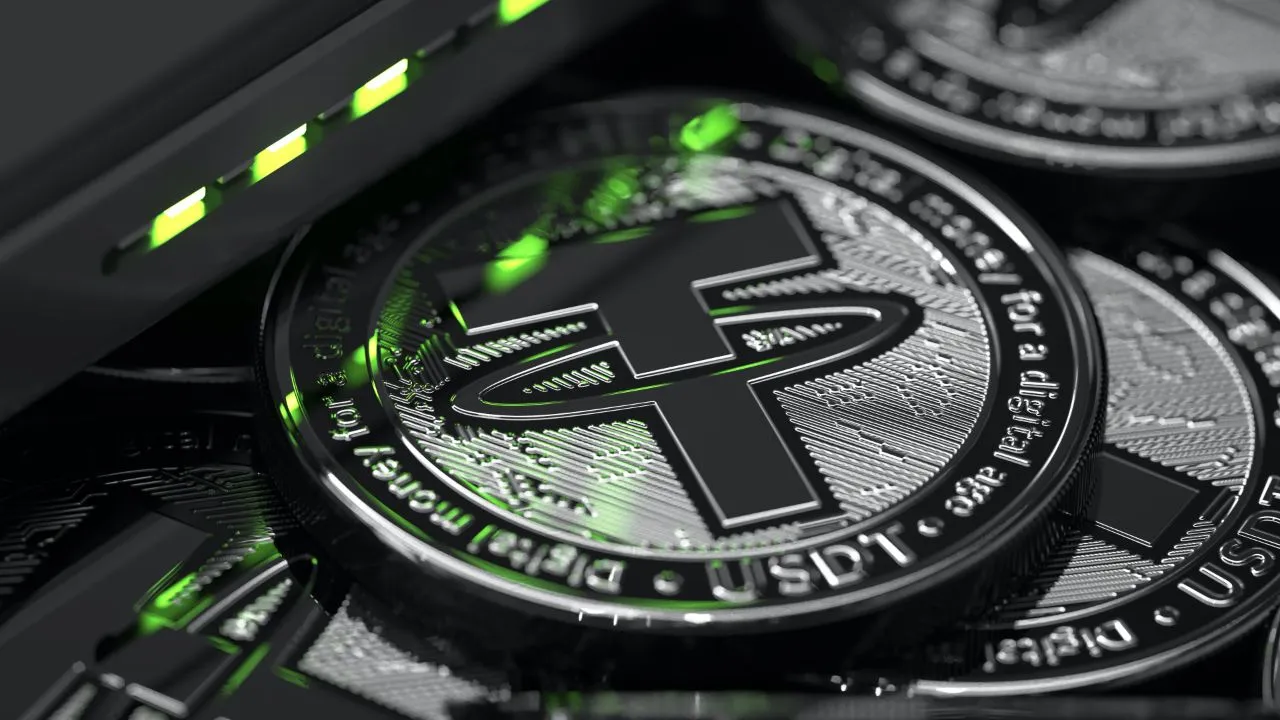
A United Nations (UN) report published on Monday pointed fingers at USDT for its alleged role in money laundering and scams in Southeast Asia, prompting the stablecoin’s issuer, Tether, to respond.
https://asset.coinness.com/en/news/88531fff58ac8d4add71c7e6cea87920.webp
Photo by DrawKit Illustrations on Unsplash

Fighting back

The stablecoin issuer finds itself under the spotlight once again, facing intense scrutiny over its association with illicit activities, according to the UN report. Responding by way of a blog post, Tether expressed disappointment and pushed back against the accusations.


The firm asserted that the report disproportionately focuses on USDT's alleged connection to illicit activities, neglecting to acknowledge the positive impact it has had on developing economies in emerging markets.


Collaborating with law enforcement

Tether defended its position by highlighting its collaborative efforts with global law enforcement agencies, such as the Department of Justice (DOJ), the Federal Bureau of Investigation (FBI) and the recently onboarded United States Secret Service (USSS). The company expressed disappointment with the UN's assessment and stressed that its monitoring measures surpass those of traditional banking systems, historically implicated in money laundering cases.


Having frozen over $300 million in recent months to combat the criminal use of crypto assets, Tether emphasized the traceability of its tokens and its established track record of collaboration with law enforcement. In its blog post, Tether urged the UN to shift the conversation from concentrating solely on risks to discussing how centralized stablecoins like USDT could contribute to the fight against financial crimes.


The UN Office for Drugs and Crime (UNODC) division responsible for Southeast Asia and the Pacific released the report, specifically highlighting USDT as a significant instrument for money laundering in the region, notably on the Tron blockchain. Tether's response came soon after the release of the UNODC report, where the company emphasized the need for a broader discussion with the UN on addressing financial crimes within blockchain platforms.


Tether acknowledged that there are still numerous opportunities to combat financial crimes on blockchain platforms and encouraged the UN to engage with the industry to comprehend and implement contemporary strategies. The company expressed a willingness to collaborate on initiatives aimed at enhancing the understanding of blockchain technology and its potential in fighting financial crime.


A perennial controversy

Tether has been the subject of a perennial controversy inside and outside the crypto space over the years. Its critics have long accused the company of not having the asset backing to reflect the U.S. dollar stablecoins it issues.


The issue has been compounded by Tether’s inability to produce fully fledged audits as opposed to attestation reports to verify its holdings. Speaking on the edges of the World Economic Forum’s annual meeting in Davos, Switzerland, on Tuesday, Howard Lutnick, CEO of leading global financial services firm Cantor Fitzgerald spoke positively about Tether. He said that his firm has held and managed large quantities of Tether’s assets. Lutnick confirmed that “they have the money they say they have.”


Off the back of Lutnick’s comments, Nic Carter, partner at venture capital and private equity firm Castle Island Ventures, outlined that Tether’s critics have been proven wrong. Carter wrote:


“Tether truthers spent 6 years trying to convince everyone tether would collapse and drag down the industry. it didn't. . . . Not sure anyone has ever been more wrong about anything.”

More to Read
View All
Policy & Regulation·

Jun 03, 2023

Huobi Aims for Hong Kong License Within 6–12 Months

Huobi Aims for Hong Kong License Within 6–12 MonthsAccording to Justin Sun, the founder of layer one blockchain Tron and advisor to Huobi, the cryptocurrency exchange could have obtained a crypto trading license in Hong Kong by the end of the year.Photo by Pixabay on PexelsApplication submissionIn an interview with CoinDesk TV on Friday, Sun revealed that Huobi recently submitted an application to become a virtual asset service provider (VASP) in Hong Kong. While the approval process typically takes up to 18 months, Sun expressed optimism that a decision could be reached within the next six to twelve months.A legacy Chinese cryptocurrency exchange was driven out of the country a few years ago following the implementation of a crypto trading ban, and is now a Seychelles-headquartered company which currently has offices in Singapore, Japan, South Korea, and the United Kingdom.It had been previously understood that at least 10 companies with Chinese founders, including OKX, Bybit, and Huobi, had either announced or were known to be planning to announce their bid for licenses in Hong Kong. Sun’s comments today add clarity to the matter.Sun highlighted that during this grace period, which spans the next 18 months, the specific details of regulations will be developed. This includes guidelines on compliance with customer withdrawals and anti-money laundering requirements. He further explained that with the approval, Huobi Hong Kong will be able to operate, onboard customers, establish banking relationships, and serve its user base effectively.In a strategic move, Huobi relocated its headquarters from Singapore to Hong Kong, driven by the city’s aspirations to become a leading virtual asset hub as early as this summer. The exchange’s decision to establish a presence in Hong Kong positions it favorably to leverage the emerging opportunities in the region.Expectations of more applicantsWhile it’s not entirely clear who else has applied, Sun speculated that five to six other major players could follow suit. Among the potential contenders mentioned were OKX, Gate.io, Bitget, and ByBit. This suggests a potential wave of interest in Hong Kong as a regulatory-friendly jurisdiction for virtual asset trading.When asked about Huobi’s plans to enter the Canadian market and compete with established players like Coinbase and Kraken, Sun made it clear that Huobi has no immediate intentions to operate in Canada. He emphasized the importance of prioritizing friendly jurisdictions, with a specific focus on regions like the Caribbean, Hong Kong, and Japan.Hong Kong’s regulatory approach towards cryptocurrencies and virtual asset service providers has gained attention in recent months. The city’s commitment to establishing a robust framework for digital asset trading and ensuring compliance with international standards has drawn interest from industry players seeking regulatory clarity and stability.As Huobi progresses through the application process and awaits a decision on its VASP license, the outcome will have significant implications not only for the exchange itself but also for the broader crypto ecosystem in Hong Kong. The successful acquisition of a license by Huobi could set a positive precedent, attracting more exchanges to establish a presence in the region and further solidifying Hong Kong’s position as a leading virtual asset hub in Asia.The developments in Hong Kong’s regulatory landscape will be closely monitored by industry participants as they shape the future of virtual asset trading in the city.

news
Web3 & Enterprise·

Sep 05, 2025

Yunfeng Financial buys 10K ETH as Hong Kong firms deepen push into digital assets

Yunfeng Financial Group has purchased 10,000 Ethereum (ETH) on the open market for $44 million, the Hong Kong–listed fintech said in a Sept. 2 statement. The company described the move as part of a broader plan to increase exposure to digital assets, joining firms such as Bitmine Immersion Technologies and SharpLink Gaming that have incorporated ETH into corporate treasuries.Photo by DrawKit Illustrations on UnsplashETH backs RWA strategy, inflation hedgeThe acquisition follows Yunfeng’s July outline to expand into Web3, real-world asset (RWA) tokenization, artificial intelligence, and ESG-linked assets aimed at net-zero goals. Yunfeng said ETH could support its Web3 and RWA businesses, help optimize assets, and provide a hedge against traditional currencies. It is also exploring ways to incorporate ETH into insurance products. The RWA market has grown in recent months, with on-chain RWAs totaling $28.19 billion at the time of publication, up 7.37% from a month earlier, according to data from RWA.xyz. Yunfeng noted it may adjust the size of its ETH reserves in line with market conditions, regulation, and its financial position. The company said the purchase falls below Hong Kong Stock Exchange disclosure thresholds: all five percentage ratios—assets, profits, revenue, consideration, and equity capital—remain under 5%. It stated it will meet disclosure requirements if future transactions push holdings beyond the relevant limits. Institutions drive ETH momentumThe announcement comes amid heightened interest in ETH. CryptoRank data show a 30% year-to-date price increase, and Tom Lee, Fundstrat’s head of research and chair of BitMine, has forecast a near-term range of $4,000 to $5,450. He argued that Ethereum is well placed to serve institutional use cases, pointing to its role in hosting more than half of the roughly $250 billion stablecoin supply and its prominence in asset tokenization. Hong Kong continues to position itself as a regional hub for blockchain and digital assets despite Mainland China’s 2021 ban on crypto trading. In a separate development, Fosun Wealth Holdings launched tokenized shares of Sisram Medical, an Israeli med-tech company listed in Hong Kong. The tokens, representing about $328 million in market value, were deployed across Vaulta, Solana (SOL), Ethereum, and Sonic. Fosun said it plans to tokenize additional corporate bonds and shares, without naming issuers or setting a timeline. Other local companies have also disclosed crypto exposure. Linekong Interactive Group reported holdings of 92.07 BTC, 943.63 ETH, and 6,091.7 SOL as of June 30 after purchases in the first half of the year, with cumulative unrealized gains of roughly $7.5 million. Linekong said it views crypto as a long-term investment and may increase its holdings pending board and shareholder approval. 

news
Web3 & Enterprise·

Jan 30, 2024

BitBunny app offers users Bitcoin rewards for walking

BitBunny, a South Korean mobile app that distributes rewards based on walking activity, now offers rewards in the form of Bitcoin, according to an article by local news outlet TechM on Tuesday (KST).Photo by Thom Milkovic on UnsplashUnlocking rewardsBitBunny allows users to earn Bitcoin by completing missions like walking, checking daily attendance, inviting other friends to use the app, watching advertisements and participating in quizzes and games. Last Friday, the app added a new feature called "Catch the Bunny," a game where users can earn up to 10,000 points, or “coins”. These coins can either be used as cash when exchanged for vouchers – which can be used at various brands like Starbucks or Burger King – or invested in cryptocurrencies like Bitcoin, Ethereum, Ripple and Dogecoin. Due to these features, the app surpassed 100,000 users within just three months of release. BitBunny's vision"BitBunny's growth is an example of how mobile app technology and crypto are converging in everyday life, creating new user experiences," said Lee Kyung-tae, Team Lead at BitBunny. "We will continue to try different things to keep users interested and engaged." With a commitment to experimentation and user engagement, BitBunny is poised to redefine the way that users interact with both mobile apps and cryptocurrencies, offering a glimpse into a more integrated and rewarding digital future.

news
Loading
