Top

Yunfeng Financial buys 10K ETH as Hong Kong firms deepen push into digital assets

Web3 & Enterprise·September 05, 2025, 7:56 AM

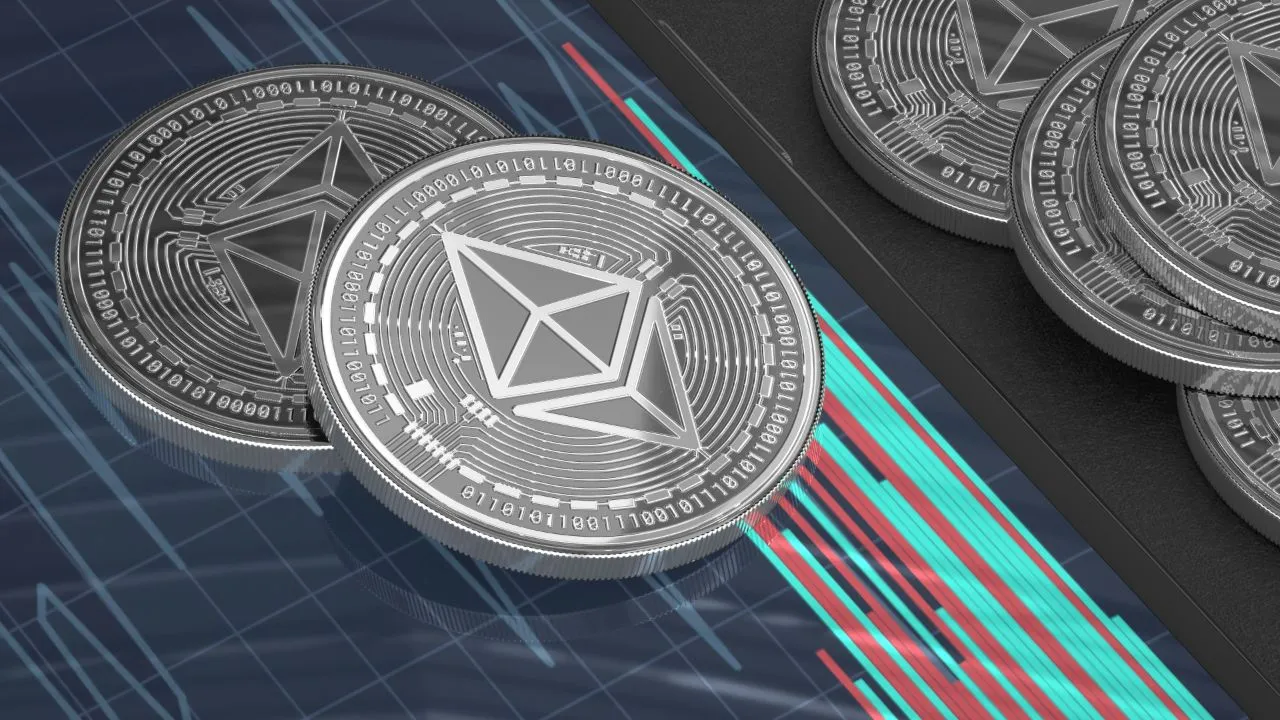
Yunfeng Financial Group has purchased 10,000 Ethereum (ETH) on the open market for $44 million, the Hong Kong–listed fintech said in a Sept. 2 statement. The company described the move as part of a broader plan to increase exposure to digital assets, joining firms such as Bitmine Immersion Technologies and SharpLink Gaming that have incorporated ETH into corporate treasuries.
https://asset.coinness.com/en/news/5fa82465787c9ef40322fc21d6ebdf30.webp
Photo by DrawKit Illustrations on Unsplash

ETH backs RWA strategy, inflation hedge

The acquisition follows Yunfeng’s July outline to expand into Web3, real-world asset (RWA) tokenization, artificial intelligence, and ESG-linked assets aimed at net-zero goals. Yunfeng said ETH could support its Web3 and RWA businesses, help optimize assets, and provide a hedge against traditional currencies. It is also exploring ways to incorporate ETH into insurance products. The RWA market has grown in recent months, with on-chain RWAs totaling $28.19 billion at the time of publication, up 7.37% from a month earlier, according to data from RWA.xyz.


Yunfeng noted it may adjust the size of its ETH reserves in line with market conditions, regulation, and its financial position. The company said the purchase falls below Hong Kong Stock Exchange disclosure thresholds: all five percentage ratios—assets, profits, revenue, consideration, and equity capital—remain under 5%. It stated it will meet disclosure requirements if future transactions push holdings beyond the relevant limits.


Institutions drive ETH momentum

The announcement comes amid heightened interest in ETH. CryptoRank data show a 30% year-to-date price increase, and Tom Lee, Fundstrat’s head of research and chair of BitMine, has forecast a near-term range of $4,000 to $5,450. He argued that Ethereum is well placed to serve institutional use cases, pointing to its role in hosting more than half of the roughly $250 billion stablecoin supply and its prominence in asset tokenization.


Hong Kong continues to position itself as a regional hub for blockchain and digital assets despite Mainland China’s 2021 ban on crypto trading. In a separate development, Fosun Wealth Holdings launched tokenized shares of Sisram Medical, an Israeli med-tech company listed in Hong Kong. The tokens, representing about $328 million in market value, were deployed across Vaulta, Solana (SOL), Ethereum, and Sonic. Fosun said it plans to tokenize additional corporate bonds and shares, without naming issuers or setting a timeline.


Other local companies have also disclosed crypto exposure. Linekong Interactive Group reported holdings of 92.07 BTC, 943.63 ETH, and 6,091.7 SOL as of June 30 after purchases in the first half of the year, with cumulative unrealized gains of roughly $7.5 million. Linekong said it views crypto as a long-term investment and may increase its holdings pending board and shareholder approval.


 

More to Read
View All
Policy & Regulation·

Sep 19, 2023

Kazakhstan Launches NPC With CBDC Implementation by 2025

Kazakhstan Launches NPC With CBDC Implementation by 2025Kazakhstan’s National Bank (NBK) has unveiled the National Payment Corporation (NPC), a dedicated entity responsible for spearheading the development and launch of the country’s central bank digital currency (CBDC), known as the digital tenge.In a press release published last Friday, the NBK set out that the launch of the NPC is effectively a restructuring of the Kazakhstan Center for Interbank Settlements. The new entity has been entrusted with overseeing the national payment system.This mandate includes overseeing critical functions like interbank clearing services, facilitating money transfers, and managing digital identification. However, the NPC’s central mission revolves around establishing a robust “digital financial infrastructure” with a primary focus on realizing the digital tenge.Photo by Uladzislau Petrushkevich on Unsplash2025 targeted launch dateThe journey toward the digital tenge began in February of this year, with an ambitious launch date set for 2025. Deputy Governor of the NBK, Berik Sholpankupov, initially articulated a vision centered on a “collaboration between traditional finance and DeFi,” aimed at significantly improving financial inclusion and strengthening international trade.As of now, the CBDC pilot in Kazakhstan has advanced to a controlled environment pilot phase involving actual consumers and merchants. One of the key partners in this venture is Binance, the world’s largest cryptocurrency exchange. Binance is actively supporting the pilot through its technical solution, BNB Chain, marking a convergence between traditional financial institutions and the blockchain-based cryptocurrency sector.Kazakhstan’s pursuit of CBDCs aligns with a global trend as numerous countries worldwide explore the potential of CBDCs. An astounding 105 countries, representing a substantial 95% of the global gross domestic product (GDP), are currently exploring the concept, highlighting the collective recognition of the transformative potential of digital currencies in shaping the future of finance.Last week it emerged that the NBK had entered into a collaboration with the global financial messaging service SWIFT relative to the beta-testing of a CBDC.Attracting global exchangesIn a move that bolsters the development of crypto in the central Asian country, Binance launched a regulated digital asset platform in collaboration with the local Freedom Finance Bank. Around the same time, Bybit secured in-principle approval to trade within the country from the local regulator.Kazakhstan’s proactive stance toward cryptocurrency is also evident in its taxation policies. In 2022, the government collected approximately $7 million in tax payments from cryptocurrency mining entities following the implementation of revised regulations governing the fiscal responsibilities of cryptocurrency mining.Additionally, the government introduced legislation aimed at curbing excessive energy consumption by domestic crypto miners, instituting licensing requirements, and making minor adjustments to the taxation framework.Kazakhstan’s steps in establishing the National Payment Corporation and venturing into the realm of CBDCs reflect the country’s interest in embracing the digital era and staying at the forefront of financial innovation. As the industry looks on, Kazakhstan’s digital tenge project could serve as a model for others seeking to bridge the gap between traditional finance and the exciting possibilities of DeFi.

news
Web3 & Enterprise·

Apr 26, 2024

Phemex introduces Lending Protocol and Pulse Season 3

Stella Chan, the chief operating officer of Phemex, a crypto derivatives exchange with a presence in Turkey and Singapore, recently provided details of the company’s unveiling of its Lending Protocol and SocialFi initiative Pulse Season 3. In an interview with Cointelegraph, Chan outlined that since the founding of the firm in 2019, the company has been evolving and working towards carving out a niche for itself in the industry. The executive confirmed that the exchange business has reached a point where daily trading volume now exceeds $2 billion across more than 300 trading pairs. Pulse Season 3Chan is also the co-founder of Phemex’s Pulse, a social trading platform that rewards users while attempting to foster a community spirit within the crypto sphere. As part of Phemex events held at Token 2024 in Dubai last week, the company announced Pulse Season 3, a SocialFi mechanism to incentivize community engagement. The initiative introduces casting and tipping features. Casting is a means through which community members can post up content. Meanwhile, tipping serves as a method through which other community members can acknowledge and reward high-quality community member contributions. Through this initiative Phemex is hoping to deliver an enhanced experience where trading seamlessly intersects with trending topics and insightful content.Photo by Shubham Dhage on UnsplashPhemex Lending ProtocolAlongside Pulse Season 3, the company has also launched the Phemex Lending Protocol, a feature allowing users to borrow crypto at competitive rates while earning interest. As part of that offering, all loans are safeguarded through the collateralization of the user’s digital assets. With an initial liquidity allocation of $22 million, this protocol has been established with an eye towards empowering traders to amplify their capital without selling their assets, while aligning in a more general sense with the user’s overall trading needs. Phemex is attempting to spearhead the transition towards greater user autonomy without compromising security. The Phemex Lending Protocol is central to that effort, offering users competitive borrowing rates and opportunities for passive income generation.  Standing testament to that, the platform offers interest rates on USDT starting at 3.57%. For those that hold vePT, the wrapped version of the platform's native Phemex token (PT), an additional 30% discount on borrowing rates is being offered. vePT is destined to act as a token which confers voting authority in the not too distant future, relative to Phemex’s governing decentralized autonomous organization (DAO). The platform is further enabling capital efficiency from the service user’s perspective by applying very little restriction so that funds can be withdrawn and redeployed at will, with minimum delay. Coming off the back of these announcements during Token 2024, the company appears to be following through on that momentum. Taking to the X social media platform on April 25, Chan outlined details of a plethora of user experience (UX) upgrades relative to its Pulse offering. Future plansLooking ahead, Phemex envisages the offering of a broader range of products tailored to user needs. Plans for an automated market maker (AMM) protocol aim to provide users with passive earning opportunities by contributing to liquidity. Additionally, Phemex is exploring the development of an on-chain credit scoring mechanism, leveraging its soulbound digital identity token to enhance access to decentralized finance (DeFi).

news
Web3 & Enterprise·

Jan 11, 2024

OKX Ventures invests in Web3 infrastructure startup

OKX Ventures, the investment wing of the Seychelles-based cryptocurrency exchange OKX, has disclosed a strategic A-round investment in Polyhedra Network. Details of the investment have been outlined through a press release published via PRNewswire on Tuesday. Specializing in the creation of Web3 infrastructure, Polyhedra Network places a premium on interoperability, scalability and privacy, leveraging advanced zero-knowledge (ZK) proof technology.Photo by Precondo CA on UnsplashInteroperability with privacyA ZK proof provides the ability for one party to cryptographically prove to another party that it possesses a certain piece of information without having to reveal the actual underlying information to the other party. Central to Polyhedra Network's product offering is its zkBridge protocol, a system facilitating trustless and efficient cross-chain infrastructure for both layer-1 and layer-2 interoperability. The protocol empowers the receiving chain to verify specific state transitions on the sending chain. This approach ensures robust security without external assumptions, effectively reducing the costs associated with on-chain verification. Polyhedra Network made an initial impact in 2023 with the launch of the "zkBridge Mainnet Alpha." That product enabled interoperability over 20 layer-1 and layer-2 blockchains, including well-known networks such as Bitcoin, Ethereum, BNB Chain and Arbitrum. Distributed proof systemThe innovative strides of Polyhedra Network, which was founded in the United States by James Zhang, Tiancheng Xie and Nikhil Shah, continued in 2023 with the introduction of deVirgo, a novel distributed proof system expediting proof generation. The deVirgo protocol also incorporates recursive proofs which trim on-chain proof verification costs associated with zkBridge. Last month, Polyhedra Network unveiled its Bitcoin messaging protocol with zkBridge, ushering trustless interoperability into the Bitcoin ecosystem through the use of ZK-proof technology. Asian backingBy championing entrepreneurs contributing to the blockchain industry's advancement, OKX Ventures is helping to build innovative companies, bringing global resources and historical experience to the forefront of blockchain projects. It is one of many Asia-centric venture firms to do so. Polyhedra has secured backing from Hong Kong’s Animoca Brands and HashKey Group, Singapore’s UOB Venture Management, NGC Ventures, Signum Capital and Foresight Ventures, alongside KuCoin Ventures. In an initial funding round in February 2023, the UC Berkeley team attracted $10 million in funding. By April, a pre-Series A round had raised a further $15 million. Dora Yue, the founder of OKX Ventures, expressed their honor in participating in the investment in Polyhedra Network's interoperability infrastructure. Yue lauded the creativity demonstrated by Polyhedra Network's team in developing advanced ZK-proof mechanisms, emphasizing the balance achieved between ZK interoperability and scalability. OKX Ventures, with an initial capital commitment of $100 million, is committed to supporting Polyhedra Network's vision of seamlessly connecting the Web2 and Web3 worlds, aiming to attract a more extensive user base to the industry. As the investment arm of the global crypto exchange platform, it dedicates itself to exploring top-tier blockchain projects on a global scale. Its focus is on fostering cutting-edge blockchain technology innovation, aspiring to support the healthy development of the global blockchain space and investing in long-term structural value.

news
Loading