Top

Night Crows pre-registration NFT collection sells out

Web3 & Enterprise·January 18, 2024, 6:12 AM

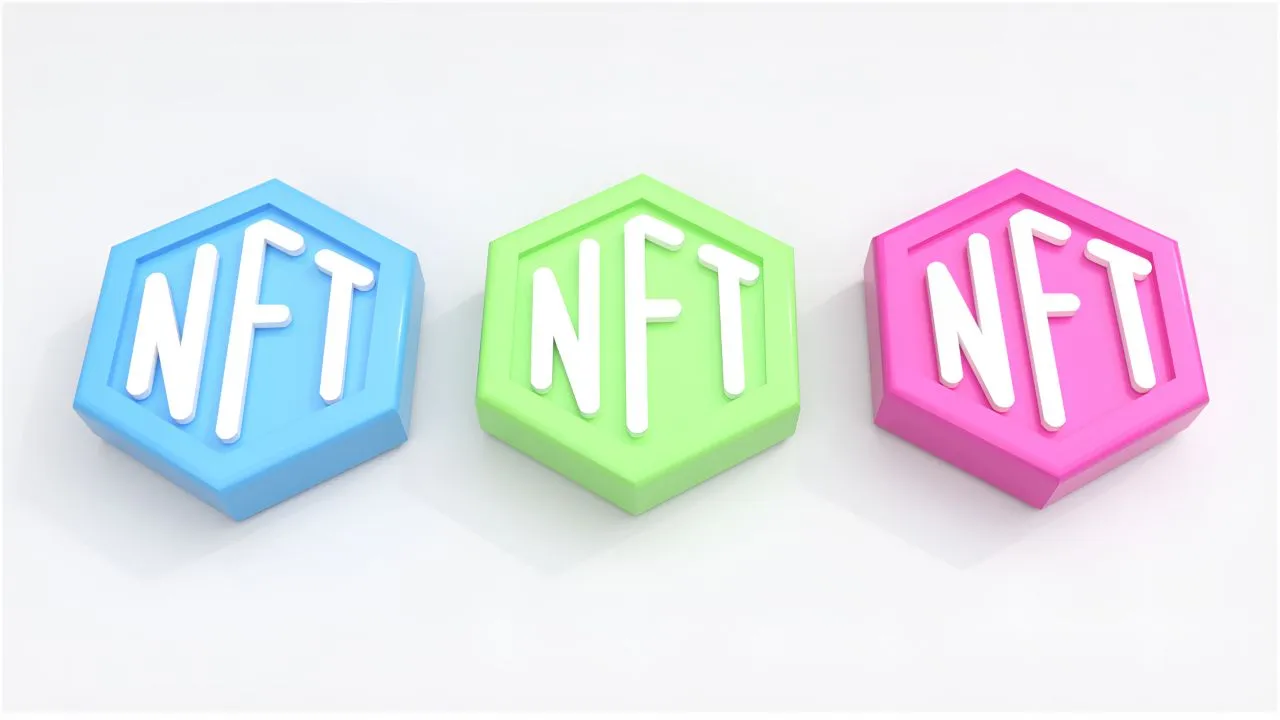
South Korean gaming publisher Wemade opened sales for its “The Night is Coming” NFT collection on Jan. 11 to 12 to celebrate pre-registration for the global version of the massively multiplayer online role-playing game (MMORPG) Night Crows. All 341 NFTs were sold out, according to an official press release on Thursday (KST).
https://asset.coinness.com/en/news/08a4e582a888218a0b97ffdacdfa770b.webp
Photo by Choong Deng Xiang on Unsplash

Unveiling exclusive NFTs

The NFT Collection featured NFTs of different tiers, including Uncommon and Rare NFTs that went on sale on Jan. 11, as well as Epic, Legendary and Mythical NFTs that were available on NILE – short for “NFT Is Life Evolution,” a decentralized autonomous organization (DAO) and NFT marketplace on WEMIX3.0 – the next day. All NFTs were sold out within a day.


Blockchain-backed fantasy game

Built on Unreal Engine 5, a three-dimensional computer graphics engine used for game and content development, Night Crows features high-quality graphics, an immersive world, realistic action and major in-game battles. It has topped the popularity and revenue charts on major app markets in South Korea since its launch in April last year.


The global version of the game, which is scheduled for release in March, will harness blockchain technology and a multifaceted tokenomics system that tokenizes in-game items. It will also introduce character NFTs that keep character and player data in one place, connecting the game’s internal and external economies.


Wemade also stated that owners of the NFTs can exchange them with CROW, the game’s native token, starting on April 1. The token’s value is stabilized by a minting process controlled by the Peg Stability Module (PSM), which allows users to swap a native stablecoin for other protocol-accepted stablecoins at a 1:1 rate.


More to Read
View All
Web3 & Enterprise·

Jun 20, 2025

Lion Group secures $600M facility to fund HYPE token treasury

Lion Group Holding Ltd (LGHL), a Nasdaq-listed financial services firm that provides an all-in-one platform for traders, has announced that it has secured $600 million to fund a Hyperliquid (HYPE) treasury. In a press release published by PR Newswire on behalf of the firm on June 18, the company outlined that a $600 million funding facility has been put in place by ATW Partners, a New York-headquartered investment firm that manages a number of private equity funds. Global investment bank Chardan Capital acted as the placement agent in facilitating the funding, with the first closing of $10.6 million, as per the subscription agreement.Photo by Towfiqu barbhuiya on UnsplashCorporate treasury strategyLion Group will use that money to launch a new corporate treasury strategy built around Hyperliquid’s HYPE token. Hyperliquid is a decentralized exchange (DEX) which was created by Hyperliquid Labs, a startup founded by Jeff Yan.  The HYPE token is the native token of the Hyperliquid platform. It’s used to secure the network through staking and for project governance. The token is also used to provide transaction incentives, while the Hyperliquid platform buys back HYPE tokens using trading fee revenues. Lion Group’s platform offers its users access to contract-for-difference (CFD) trading, total return swap (TRS) trading, over-the-counter (OTC) stock options trading, while also acting as a futures and securities brokerage. Up until 2022, the firm was based in Hong Kong, opting to relocate to Singapore at that point. Primarily, the company serves corporate clients, individual professional investors and retail investors located in China and throughout the Southeast Asian region. Future of trading is on-chainIn explaining its rationale for pursuing a HYPE treasury strategy, the company’s CEO, Wilson Wang, stated: “Hyperliquid represents a natural extension of LGHL's existing derivatives business into decentralized markets, and reflects our conviction that decentralized on-chain execution is the future of trading." Going forward, the company will pursue a strategic accumulation of HYPE, with the token serving as the firm’s primary reserve asset. In addition to HYPE, Lion Group outlined that it may also allocate funds to purchase Solana (SOL) and Sui (SUI), with these tokens to be staked and custodied with institutional-grade digital asset custodian, BitGo. Lion Group asserted that both of these assets would form “key pillars” of a treasury strategy “focused on execution-first protocols.” Wang added that the company views “protocols like HYPE, with decentralized sequencing, as foundational to building scalable DeFi systems.” The company is not the first mover in terms of launching a HYPE-based corporate treasury. On June 17, Eyenovia, Inc. (EYEN), a Nasdaq-listed ophthalmic technology firm, announced that it had entered into a securities purchase agreement with a view towards financing a $50 million HYPE treasury. Additionally, the firm plans to change its name to Hyperion DeFi and its stock ticker to HYPD later this week to reflect its new HYPE-based reserve strategy. Shares in Eyenovia closed at $4.83 on June 18, down 30.7% over the course of 24 hours. Lion Group shares closed at $3.33, up 19.78%.

news
Policy & Regulation·

Apr 10, 2023

Korean Banks Look into Safer Crypto Investment Amid Wealth Management Growth

Korean Banks Look into Safer Crypto Investment Amid Wealth Management GrowthDespite growing economic uncertainties, the Korean wealth management market is expected to see growth, triggering fierce competition in the banking industry.©Pexels/Adrien OlichonWealth management growth in APACAlthough the Korean wealth management industry saw a slowdown in its growth last year amid burgeoning economic concerns, the banking industry expects recovery in the future. Management consulting firm Oliver Wyman forecast that the Asia-Pacific wealth management industry will experience a compound annual growth rate of 5.4% until 2026. Against this backdrop, Korean banks are focusing on improving their wealth management capabilities.Crypto-inclusive wealth management trendShim Hyun-jung, a researcher at Woori Finance Research Institute, said that following the global trend, the Korean wealth management industry will need to diversify its target customer groups, adding that banks have to devise phased strategies and deploy them while closely monitoring the domestic crypto market.Previously, several global consulting firms mentioned the following as this year’s asset management trend: Customer segment diversification, growing demand for asset transfer and withdrawal, digital asset management with better human interaction, more investment in environmental, social, and governance (ESG) projects, and advancement in virtual asset security and service technology.

news
Policy & Regulation·

Dec 08, 2023

Regulatory crackdown as Hong Kong authorities act against crypto entities

Regulatory crackdown as Hong Kong authorities act against crypto entitiesIn a recent move, the Securities and Futures Commission (SFC) of Hong Kong has issued a public warning against suspected virtual asset-related frauds involving HongKongDAO and BitCuped, marking a significant crackdown on deceptive practices in the crypto space.The action taken by the SFC in conjunction with the Hong Kong Police Force was outlined in a notice published on Wednesday. The notice stated:“The SFC suspects HongKongDAO may be disseminating false and misleading information about itself and its business through online channels.”In relation to BitCuped, it stated: “The SFC notes that BitCuped claims on its website that ‘Laura Cha’ and ‘Nicolas Aguzin’ serve as its Chairman and Chief Executive Officer respectively, when in fact none of them has any affiliations with BitCuped.”Photo by Teodor Kuduschiev on UnsplashHongKongDAO’s alleged misinformationOperating under the name “Hong Kong Digital Research Institute,” HongKongDAO has faced accusations of disseminating false and misleading information. The SFC expressed concerns about the claims made by HongKongDAO, including assertions of licensing by the SFC, engagement in regulated activities since July 2020, and bids for a “Hong Kong Digital Currency Exchange Licence” related to the government’s stablecoins framework.The SFC contends that these claims are unfounded and could potentially mislead the public into believing that HongKongDAO’s services are officially sanctioned and legitimate.HongKongDAO seems to manage at least two Telegram groups, one in Chinese with over 10,000 members and the other in English with over 1,700 members. Within these groups, there appears to be a promotion of the purported “market” price and future market value of the HKD token, enticing investors to make purchases.Allegations of BitCuped false affiliationsSimultaneously, BitCuped has been accused of making fraudulent claims to enhance the credibility of its operations. The company falsely asserted affiliations with prominent figures Laura Cha and Nicolas Aguzin, claiming them as its chairman and CEO, respectively. However, the SFC has refuted these affiliations. Laura Cha is the Chairman of Hong Kong Exchanges and Clearing Limited (HKEX), while Nicolas Aguzin is the Executive Director and CEO of HKEX.Taking proactive measures, the SFC has requested the Hong Kong Police Force to block access to the websites of both HongKongDAO and BitCuped. Cease and desist letters have also been issued to the operators of these websites, demanding the cessation of the sale of HKD Tokens offered by HongKongDAO.Series of crypto scamsFollowing the JPEX fraud allegations in September, Hong Kong faced another cryptocurrency exchange scandal involving Hounax in November. With at least 145 police reports filed and a sum of over HK$148 million ($19 million) involved, affected investors expressed frustration at what they deemed a slow response from regulatory bodies.These incidents have reignited discussions about the need for more robust cryptocurrency regulations in Hong Kong. The city’s aspiration to become a global hub for crypto innovation and adoption faces challenges due to a lack of clear and consistent regulation, leaving investors vulnerable to fraud and manipulation.In light of these developments, the SFC emphasized the importance of public caution regarding investment opportunities that seem too good to be true. The regulator urged vigilance against social media and instant messaging platforms where individuals, not investment professionals, might lure unsuspecting investors.

news
Loading