Top

Hong Kong Authorities Unite to Form Crypto-Centric Taskforce

Policy & Regulation·October 06, 2023, 1:18 AM

Authorities in Hong Kong are taking action to address recent mounting concerns surrounding illicit cryptocurrency activities, particularly in light of the recent JPEX scandal. The Hong Kong Police Force and the Securities and Futures Commission (SFC) have come together to establish a specialized working group dedicated to closely monitoring and countering suspicious activities connected to virtual asset trading platforms (VATPs).

In a statement published by Hong Kong’s Securities and Futures Commission (SFC) on Wednesday (local time), the agency set out details of a collaborative task force which has been formed in the wake of a high-level meeting held on September 28.

The collaboration draws on input from the SFC as well as a number of law enforcement divisions within the Chinese autonomous territory, including the Commercial Crime Bureau, Cyber Security and Technology Crime Bureau, and Financial Intelligence and Investigations Bureau.
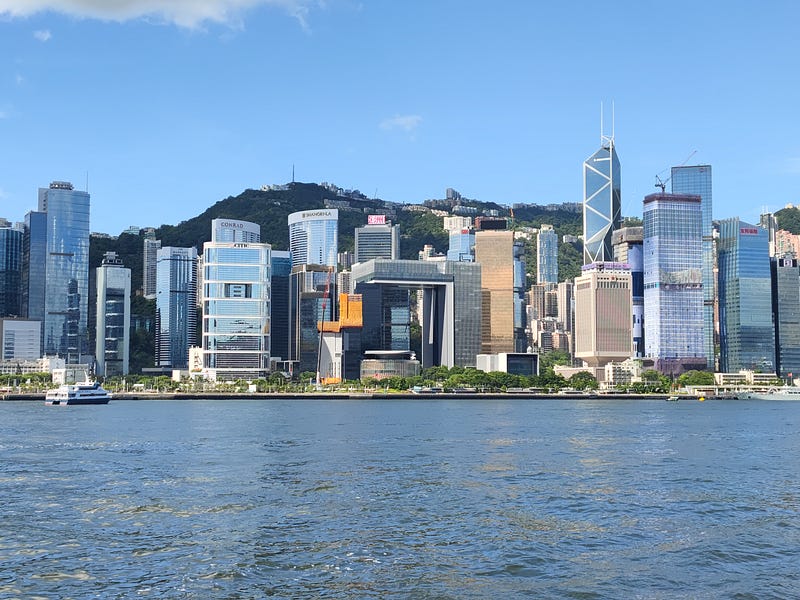
Photo by Cheung Yin on Unsplash


Greater coordination and information sharing

The primary objectives of this alliance are to enhance coordination, foster information sharing, assess risks tied to VATPs, and, above all, safeguard the interests of the Hong Kong public.

Christopher Wilson, Director of Enforcement at the SFC, underscored the regulator’s commitment to allocating resources to combat problematic VATPs and safeguard investor interests. Eve Chung, Assistant Commissioner of Police (Crime) at the Hong Kong Police Force, emphasized the significance of intelligence exchange and collaborative efforts in responding to the challenges posed by VATPs to protect the Hong Kong public.


Knee jerk response to JPEX scandal

It would appear that the necessity for such a concerted effort became patently clear as a direct response to the errant activities of Dubai-based crypto platform JPEX within Hong Kong.

Issues with the exchange first emerged in September when the platform outlined that it was having liquidity issues as a consequence of some third party market makers having withdrawn their services. JPEX subsequently raised withdrawal fees to an unreasonable level to deter customers from withdrawing funds from the platform.

The saga has affected over 1,600 investors with more than $150 million in assets becoming unavailable to them. The case resulted in the arrest of at least 20 individuals, with local telecom providers blocking online access to the platform as requested by law enforcement.

Earlier, on September 13, the SFC had issued a warning accusing JPEX and crypto influencers of disseminating false or misleading information on social media about their application for a virtual asset trading license in Hong Kong.

The ongoing JPEX controversy has prompted regulators in Hong Kong to explore measures to strengthen regulations governing the cryptocurrency market. The establishment of the task force signifies a proactive stance to address these concerns and ensure swift, effective action against illicit activities in the crypto sector.

In addition to the joint task force, the SFC has taken steps to enhance transparency by publishing a comprehensive list that includes licensed, deemed licensed, closing down, and application-pending crypto exchanges, along with a list of “suspicious VATPs.” This transparency initiative aims to provide clarity and protect investors by offering insights into legitimate and questionable cryptocurrency trading platforms operating in Hong Kong.

More to Read
View All
Policy & Regulation·

Nov 12, 2024

Deutsche Bundesbank joins Singapore’s Project Guardian

The Deutsche Bundesbank, Germany’s central bank, has joined Project Guardian, a collaboration established in 2022 between the Monetary Authority of Singapore (MAS) and the financial sector, with an emphasis on the use of asset tokenization to improve liquidity and efficiency within financial markets.Photo by Rachel Davis on UnsplashAssessing DLT technologyIn a press release published on Nov. 8, Bundesbank Executive Board member Burkhard Balz suggested that the central bank is aligned with MAS in that both central banks are interested in determining “how innovative technologies and concepts, such as distributed ledger technology (DLT) or blockchain, can be put to meaningful use in the financial sector.” In joining Project Guardian, the Bundesbank will take part in the Asset & Wealth Management workstream, testing an interoperable blockchain platform for tokenized and digital funds. While the German central bank has just announced details of its participation in Project Guardian, in a speech given at the Layer One Summit, an event which formed part of the Singapore Fintech Festival last week, MAS Deputy Director Leong Sing Chiong welcomed the Bundesbank, alongside the World Bank, to Project Guardian.  The MAS executive clarified that the Deutsche Bundesbank and the World Bank would join the project’s Policymaker Group. He outlined that the role of that group is to “help provide inputs on governance arrangements, guidance on how GL1 [Global Layer One] infrastructures can be developed in line with global standards, and advice on appropriate regulatory guardrails for tokenised asset transactions.” GL1 refers to an initiative that has been established to create the foundational digital infrastructure to facilitate tokenized assets. Cross-border collaborationThrough its involvement in Project Guardian, the German central bank hopes to strengthen cross-border collaboration, while at the same time, progressing matters related to the “standardisation and interoperability of digital assets.” In working towards the goal of standardization, MAS has published two comprehensive reports covering fixed income tokenization and fund tokenization. MAS believes that the use of too many individual private DLT networks is resulting in fragmentation, with a detrimental effect with regard to liquidity. Consequently, the Singaporean central bank is establishing the Guardian Wholesale Network to improve liquidity and achieve asset tokenization at scale. The network will consist of Citi, Schroders, Standard Chartered, UOB and HSBC. Additionally, it was recently announced that SBI Digital Markets, a Singapore-based affiliate company of Japan’s SBI Digital Asset Holdings (SBI DAH), intends to contribute towards greater liquidity through its involvement in a fixed income asset tokenization pilot. Meanwhile, Citi and Fidelity have developed a proof of concept for a digital foreign exchange (FX) swap, enabled within an on-chain money market fund (MMF).  Tokenization inflection pointLeong went on to claim that while nobody has succeeded yet in implementing tokenization at scale, an inflection point has been reached with regard to the use of tokenization. He added that many use cases are promising relative to tokenization but that there is a need for supporting infrastructure “to enable good use cases to scale beyond individual networks.” In the press release, Leong said that the Bundesbank’s expertise “will be invaluable as we work together to enhance liquidity and efficiency of financial markets through asset tokenisation.”

news
Markets·

Jan 09, 2024

Philippines leading charge in Asia amid global bitcoin payment surge

Bitcoin's global merchant acceptance witnessed a substantial surge, growing by 174% throughout 2023, with the Philippines proving itself in leading the way within the Asian region.Photo by rc.xyz NFT gallery on UnsplashRegion facing regulatory restrictionsThat’s according to BTC Map, a provider of bitcoin merchant mapping services. The data, derived from BTC Map's open-source mapping data via OpenStreetMap, revealed that the number of venues accepting bitcoin payments surged from 2,207 at the beginning of the year to 6,126 by the year's end. This diverse array of businesses included restaurants, bars, shops and various services. The expansion of bitcoin vendors is a global phenomenon, with concentrations notably observed in Europe, the United States and Latin America. The Philippines stands out in Asia with hundreds of vendors, while regulatory restrictions in East Asia, especially China, have limited adoption. While it's great to see a high level of direct adoption among Filipino merchants, it's easy to understand why this level of adoption hasn’t been matched within Asia’s largest market. China has had a long-standing ban on cryptocurrency trading, mining or its use as a means of payment. Despite the ban, it appears that crypto trading is still alive and well in China, although beneath the surface. With mining too, while the sector shrank considerably once a ban was imposed, there is believed to be a significant ongoing level of bitcoin mining occurring still within China’s borders. However, when it comes to vendors, this is likely to be an activity that is far too visible to the authorities and with that, China’s 1.4 billion citizens are not getting the opportunity to buy goods and services with the world’s leading cryptocurrency. Compounding matters, the Chinese authorities have been working diligently on a myriad of projects to bring about day-to-day retail use of the country’s central bank digital currency, the digital yuan. Those efforts are not likely to be aligned with an accommodation of or tolerance of bitcoin payments. The increase in merchant listings showcased a slight decline from the peak in September, which reached 6,590 merchants. BTC Map's platform allows businesses and users to tag locations accepting bitcoin payments, with the rise in numbers potentially attributed to increased user contributions to the database. This surge in bitcoin adoption globally occurred against the backdrop of the cryptocurrency's price volatility throughout the year. Despite potential limitations in data collection due to its reliance on volunteer contributions, the overall trend indicates a growing acceptance of bitcoin. Ongoing challenges to adoptionA panel of bitcoin leaders at the Plan B conference in October discussed the challenges and opportunities of global bitcoin adoption. Notably, they highlighted the difficulty of onboarding new users and merchants, particularly in diverse cultural contexts. In El Salvador, where bitcoin is legal tender, obstacles persist in convincing merchants to accept bitcoin payments. Geographically, concentrations of bitcoin-accepting vendors were more prevalent in Central and South America, while Africa and Asia demonstrated fewer such establishments. The United States and Europe led in the global count of crypto-friendly merchants. The panel stressed the importance of education in overcoming these challenges, emphasizing the need for user-friendly applications to facilitate mainstream adoption, moving away from complex technologies. As bitcoin continues its global expansion, the industry recognizes the vital role education and user-friendly solutions play in fostering broader acceptance. 

news
Policy & Regulation·

Aug 17, 2023

Abu Dhabi Approves M2 for Crypto Services

Abu Dhabi Approves M2 for Crypto ServicesM2, a virtual asset firm based within Abu Dhabi Global Market (ADGM) in Abu Dhabi, has received authorization from the Financial Services Regulatory Authority (FSRA) to establish a multilateral crypto trading facility in the United Arab Emirates (UAE) capital.This pivotal development, announced on Wednesday, allows M2 to provide both retail and institutional clients in the region with the capability to engage in activities such as purchasing, selling, and safeguarding digital assets, including Bitcoin.Photo by Jametlene Reskp on Unsplash2023 platform launchScheduled for a launch later in 2023, the M2 platform’s creation has been a year-long process, designed to cultivate trust, security, and integrity within the burgeoning virtual asset landscape. The company’s mission is to empower users with access to the highest level of services, including the ability to transact with cryptocurrencies using fiat currency and tap into derivative and yield offerings.Stefan Kimmil, the CEO of M2, acknowledged the significance of this regulatory milestone:“The process of obtaining the license is the first step on our journey, and we will remain in close dialogue with ADGM to ensure transparency around the custody of client assets.”Kimmil also expressed M2’s commitment to maintaining the high industry standards, as the UAE solidifies its position as a global front-runner in the virtual asset realm.Founded earlier this year, M2 claims to have a depth of credible expertise driving it, with executives having joined the firm from traditional finance giants such as Deutsche Bank, JP Morgan, and Goldman Sachs.Progressive regulationThe FSRA has taken a forward-thinking approach to digital asset regulation, having introduced a comprehensive framework for virtual assets in 2018. This framework has not only attracted numerous major cryptocurrency-focused companies to establish operations within its regulated financial and economic zone but has also fostered the region’s digital asset landscape.ADGM CEO Salem Al Darei underscored the organization’s mission of driving growth and investment opportunities in the virtual asset sector: “We remain committed to enhancing Abu Dhabi’s digital asset landscape and actively supporting the diversification of our thriving economy.”This sentiment is well-aligned with the broader vision of expanding the digital horizons of the UAE. The approval granted to M2 follows in the footsteps of significant advancements in the UAE’s cryptocurrency landscape. In November 2022, cryptocurrency exchange giant Binance secured financial services permission, bolstering its presence in the region.Furthermore, Rain, a prominent cryptocurrency exchange that serves the Middle East and North Africa (MENA), Turkey, and Pakistan, obtained regulatory approval last month to extend virtual asset brokerage and custody services to UAE residents.The emergence of M2’s platform points to the ongoing fostering of a dynamic virtual asset ecosystem that is currently ongoing in Abu Dhabi and the UAE at a national level. As the platform prepares for its forthcoming launch, it’s seeking to usher in a new era of accessibility, sophistication, and opportunity for the growing community of retail and institutional clients seeking to engage with cryptocurrencies in the UAE.

news
Loading