Top

EDX Markets plans Asian expansion enabled by additional funding

Web3 & Enterprise·January 26, 2024, 6:19 AM

EDX Markets, a crypto-trading platform backed by Citadel Securities and Fidelity Digital Assets, is planning to establish a new crypto exchange in Singapore.


EDX Clearing

The plan was revealed in a recent Bloomberg article. In tandem with the report, a press release published on Tuesday also provided further detail on its recently-launched digital asset clearinghouse, EDX Clearing. Unlike traditional exchanges, EDX operates its own clearinghouse, following a non-custodial model in collaboration with Anchorage Digital. This approach allows institutional investors to execute trades without the need for pre-funding in fiat currency or crypto, contributing to capital efficiency and risk management.


Since its launch in October, EDX Clearing has cleared more than $3.1 billion of transactions. The recent approval of bitcoin exchange-traded funds has further intensified trading activity, with substantial volumes traded following their launch.


EDX Markets offers a unique platform for institutional investors to directly trade major cryptocurrencies like bitcoin, ether and litecoin. EDX addresses institutional players' needs with a non-custodial model, emphasizing risk management and infrastructure that aligns with traditional market practices.
https://asset.coinness.com/en/news/557aaeb48ecca84b73db895e4b938981.webp
Photo by Julien de Salaberry on Unsplash

Fresh funding infusion

The company is also introducing spot and perpetual futures trading, following a successful additional funding round led by new investor Pantera Capital and existing supporter Sequoia Capital.


The recent funding infusion, the exact size of which was not disclosed, empowers EDX Markets to enhance its technology and expand its global footprint. The firm’s CEO, Jamil Nazarali, highlighted Singapore's strategic significance, citing its favorable environment for trading a diverse range of tokens and perpetual futures, along with its pool of financial talent.


The platform has gained support from traditional finance heavyweights such as Charles Schwab and Miami International Holdings, alongside original backers Citadel Securities, Virtu Financial and Fidelity Investments' digital-asset arm. The recent funding round saw investors buying in at double the initial share prices from 2022.


According to Paul Veradittakit, Managing Partner at Pantera Capital, EDX mirrors traditional market expectations, incorporating speed and capital efficiency while adapting to the unique features of the crypto landscape. Taking to the X social media platform, Veradittakit wrote:

”We believe that EDX markets reduces counterparty risk for institutions through its non-custodial clearing model.”


EDX Markets has witnessed noticeable trading volumes, with over $1.4 billion in notional volume traded in December alone. The company, headquartered in Hoboken, New Jersey, plans to build out its technology independently and transition away from its initial partnership with MEMX (Members Exchange).


Singapore expansion

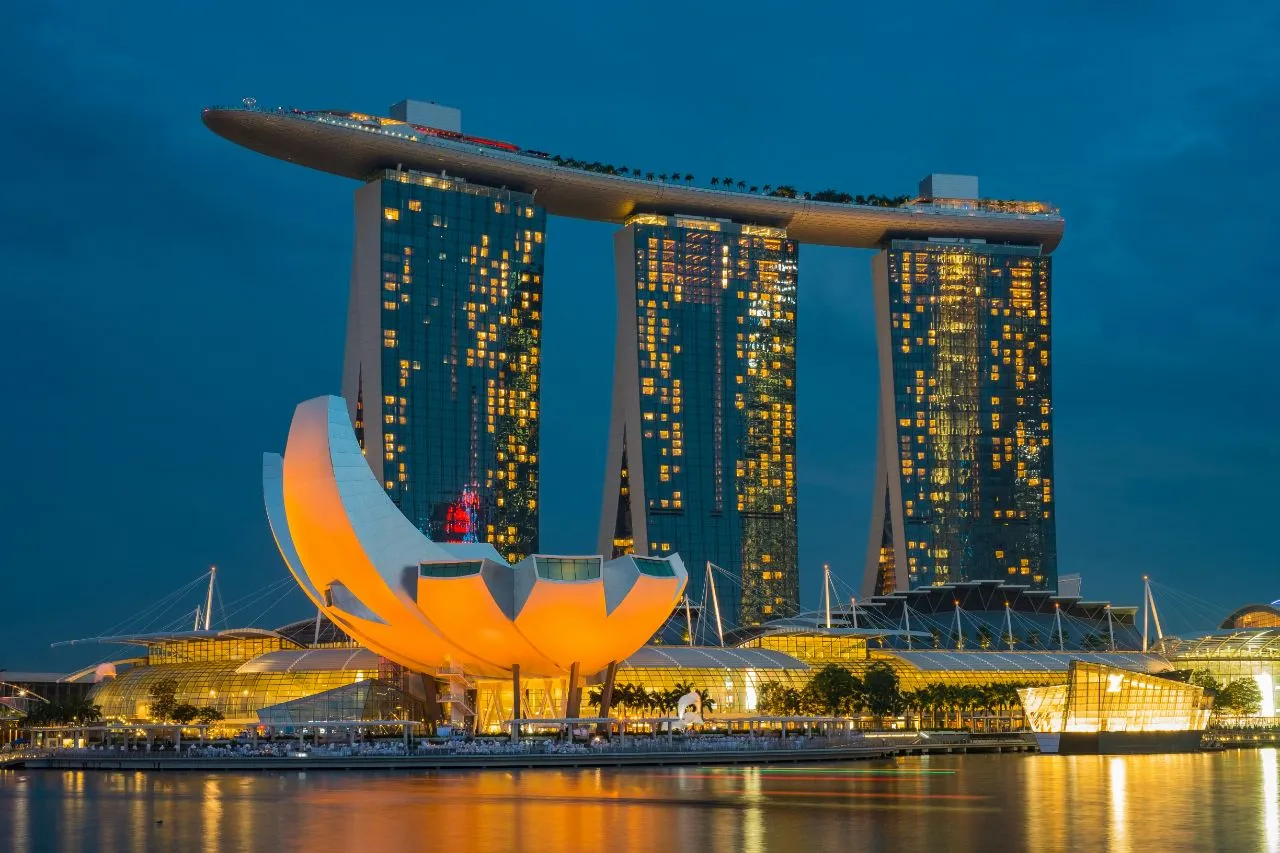
The expansion into Singapore involves seeking approval from the Monetary Authority of Singapore (MAS) to operate an exchange offering both spot and perpetual futures trading.


In December, EDX's clients traded more than $1.4 billion in notional volume. Following the approval of spot bitcoin exchange-traded funds (ETFs), EDX customers executed trades totaling more than $100 million in a single 24-hour period this month.


While many in the sector welcome the involvement of TradFi in the crypto space, some have concerns with regard to how things play out over the longer term. Community member Joe Kerr took to social media on the subject, stating:

”My concern is that they’ll use the ETFs to buy from public exchanges, custody with Coinbase but when shares sell, the Bitcoin is bought through EDX and locked behind an ‘institutions only’ firewall.”


More to Read
View All
Policy & Regulation·

Jun 01, 2023

Hong Kong and the UAE Collaborate on Crypto Regulation

Hong Kong and the UAE Collaborate on Crypto RegulationHong Kong and the United Arab Emirates’ (UAE) central banks have announced a collaboration to work on cryptocurrency regulations and financial technology development. The move is significant insofar as both territories have been making headway in developing global crypto hubs over the course of the past six months.Photo by Nick Fewings on UnsplashStrengthening cooperationFollowing a meeting on Monday, the Hong Kong Monetary Authority (HKMA) and the Central Bank of the UAE published a statement on Tuesday, in which they set out the areas of cooperation between them. They agreed to strengthen cooperation on “virtual asset regulations and developments.”The central banks also expressed their commitment to facilitating discussions on joint fintech development initiatives and the sharing of knowledge through their respective innovation hubs.Financial infrastructureDuring the meeting, the officials highlighted the importance of financial infrastructure and financial market connectivity between the two jurisdictions. The Governor of the Central Bank of the UAE, H.E. Khaled Mohamed Balama, expressed his anticipation for an ongoing and long-term relationship with the HKMA.HKMA’s Chief Executive Eddie Yue echoed this sentiment, emphasizing that both regions share many complementary strengths and mutual interests, which will contribute to the economic benefits of the collaboration.In addition to the meeting, a seminar was organized for senior executives from banks in Hong Kong and the UAE. The seminar covered various topics, including improving cross-border trade settlement and exploring how UAE corporations can leverage Hong Kong’s financial infrastructure platforms to gain access to Asian markets.This collaboration comes at a time when the Securities and Futures Commission (SFC) in Hong Kong is allowing virtual asset service providers (VASPs) to cater to retail investors starting from June 1. Christopher Hui, the Treasury Chief of Hong Kong, emphasized that virtual assets are here to stay and acknowledged the fundamental value they bring. Hui also stressed the importance of regulation to harness the positive elements of cryptocurrencies while mitigating potential risks.Since the announcement of the application process by the SFC, several cryptocurrency exchanges, including CoinEx, Huobi, BitMEX, and OKX, have filed applications to provide dedicated crypto trading services in Hong Kong.FAFT travel ruleThe collaboration between the central banks of Hong Kong and the UAE marks a significant step in the global development of cryptocurrency regulations and fintech innovation. The move is demonstrative of ever improving levels of international cooperation on digital assets worldwide.Both jurisdictions are moving forward with the implementation of the Financial Action Task Force’s (FATF) travel rule. The UAE issued new guidelines in that respect on Tuesday. Hong Kong has gotten a head start in this respect, with the implementation of the travel rule through the introduction of the Anti-Money Laundering and Counter-Terrorist Financing (Amendment) Bill in December 2022.By leveraging their respective strengths and knowledge-sharing efforts, these regions aim to foster a conducive environment for the growth and adoption of digital assets. With increased financial infrastructure connectivity and joint initiatives, both jurisdictions are poised to benefit economically from this collaboration in the long run.

news
Policy & Regulation·

Oct 21, 2024

Leader of Japan’s DPP commits to crypto tax cuts ahead of election

Yuichiro Tamaki, leader of Japan’s Democratic Party for the People (DPP), has outlined that if elected the party will introduce a crypto tax plan that will bring about the lowering of taxation on crypto gains to 20%. Tamaki’s comments come ahead of the Asian nation's elections, which are due to be held on Oct. 27. Taking to the X social media platform on Oct. 19, Tamaki wrote: “If you think crypto assets should be taxed separately at 20% instead of treated as miscellaneous income, please vote for the Democratic Party for the People. There will be no tax when exchanging crypto assets with other crypto assets.”Photo by Liger Pham on PexelsCrypto taxation reformThe DPP leader added that he would be appreciative of people spreading the word and letting the broader Japanese public know about this commitment that is being made in respect of crypto taxation reform. The reduction to 20% would bring the treatment of crypto in line with that of the stock market in Japan, where gains are already taxed at the 20% tax rate. The DPP leader included a graphic within his X post that provided further detail. It outlined that a loss carry-forward deduction could be applied by the taxpayer within a three-year timeframe.  A tax exemption would apply when it comes to the exchange of crypto assets. The DPP is also in favor of increasing the permitted leverage multiple from 2x to 10x relative to crypto trading. Finally, the party supports the introduction of spot crypto exchange-traded funds (ETFs) in Japan. Focusing on developing Web3In response to an X user, Tamaki claimed that the DPP would consider a reduced taxation policy to be inclusive of other financial income in the future. However, for right now, the DPP leader said that the focus was on making Japan “a strong nation in the Web3 business.” Another Japanese crypto community member suggested that the proposed tax cut would lead to an increase in tax revenues, based upon the assertion that many people don’t file tax returns simply because tax calculations are too difficult right now. While the plan is positive for Japan’s crypto community, the DPP is unlikely to be in a position to implement such a plan. The party currently holds just seven of the 465 seats in the National Diet, the Asian nation’s House of Representatives.  Tax reform guidelinesCurrently, the applicable tax rate applied to crypto revenues can reach as high as 55% in Japan. At the end of August Japan’s Financial Services Agency (FSA) unveiled new tax reform guidelines for 2025. One component of those proposals was the suggestion that the crypto tax rate should be reduced to 20%. With that, if Tamaki’s DPP can’t influence matters, the regulator’s proposals may be of sufficient weight to have the matter addressed. The approach taken to the taxation of crypto in various jurisdictions is having a bearing in terms of the competitiveness of those locations relative to the development and further roll-out of Web3 technologies. Earlier this month, the United Arab Emirates took a positive step forward by exempting crypto from value-added tax (VAT). Meanwhile, in Indonesia the local regulator is moving towards a re-evaluation of what is considered to be a harsh taxation policy relative to crypto. 

news
Policy & Regulation·

Mar 05, 2024

Indonesia mulls crypto tax policy review

Indonesia's cryptocurrency regulatory body is urging the government to reconsider its tax policies concerning digital assets. Officials from Indonesia’s Commodity Futures Trading Supervisory Agency (Bappebti) argued last week that the imposition of double taxation on crypto transactions warrants a reevaluation. That’s according to a report which appeared in local news source, Bisnis Indonesia, a Jakarta-based daily newspaper. Currently, cryptocurrencies in Indonesia are classified as commodities, subjecting them to a value-added tax (VAT) of 0.11% and an income tax of 0.1%.Photo by Bisma Mahendra on UnsplashProposed changes in 2025Tirta Karma Senjaya, the head of Bappebti, the Indonesian Commodities and Futures Trading Regulatory Authority, highlighted that the classification of cryptocurrencies as commodities might undergo changes in 2025. This potential shift is due to the planned transfer of crypto oversight from Bappebti to the Southeast Asian country’s financial services authority, OJK.It had been speculated that the switch of oversight would potentially reclassify digital assets as securities. With that change would come a necessary adjustment to the applicable tax policy. Tirta suggested that given that cryptocurrencies are expected to be integrated into the financial sector by January 2025, he urged the Tax Director General to reconsider these tax rates. The regulatory body head added that it’s been over a year since the implementation of these rules. With that, tax policies typically undergo annual reviews. Accommodating crypto’s developmental stateAddressing an event in Jakarta, the regulatory body head emphasized the nascent stage of the crypto industry and its regulatory framework. Consequently, he advocated for providing the industry with leeway to mature until it becomes a substantial contributor to national revenue. In response to Bappebti's call for a reassessment of crypto taxes, Dwi Astuti, a spokesperson for the Ministry of Finance, assured that the Ministry would consider input from both industry stakeholders and the public. "We welcome input from Bappebti and the public. It will certainly be discussed internally," remarked Astuti during a media interaction last week. 2023 crypto tax take slumpThe existing tax structure for cryptocurrencies has been in effect since April 2022, generating approximately $2.49 million in revenue in January 2024. In contrast, Indonesia recorded $41.2 million in crypto tax revenue in the previous year. However in 2023, the country witnessed a decline of 63% in crypto tax revenue compared to the previous year, despite Bitcoin's remarkable surge of approximately 160% during that period. Local crypto exchanges such as INDODAX had attributed the significant drop in trading volume throughout 2023 directly to hefty taxes, expressing concerns that it would drive users towards foreign exchanges. Hasan Fawzi from the Ministry of Finance highlighted the trend of decreasing crypto asset transaction values in 2023. Nonetheless, he noted that the number of crypto asset customers continued to rise, reaching 18.06 million users throughout the year. The crypto sector is seen as having a lot of potential in Indonesia. Last October data released by Bappebti suggested robust growth of the crypto investment landscape within the country. Over the space of a year, Indonesia had seen a 10.1% growth in the number of crypto investors. That data may not have been lost on the country’s politicians as in December, crypto featured as an election campaign issue.

news
Loading