Top

Bybit Extends Service Offering to Include Lending

Web3 & Enterprise·May 03, 2023, 1:29 AM

Dubai-headquartered crypto spot and derivatives trading platform Bybit announced on Tuesday that it has expanded the range of services it offers to now also encompass crypto lending.
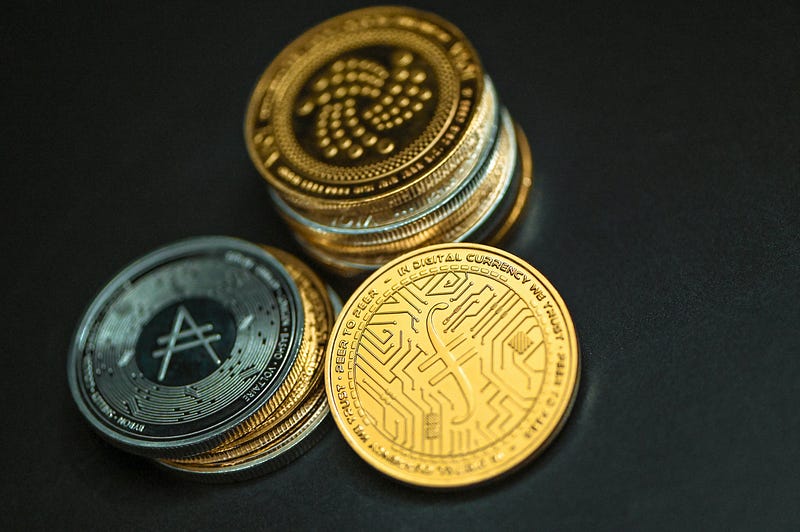
Photo by Traxer on Unsplash


Hourly interest

In the announcement which has been published to the platform’s website, the company set out the nature of the Bybit Lending product. “With Bybit Lending, users can deposit their unused cryptocurrencies into Asset Pools, which will be lent out to borrowers,” the service update outlines.

Expanding on the features that the new service offering brings with it, the crypto platform outlines that customers will have the ability to accrue interest on an hourly basis. That interest will be calculated at a variable rate, with a variance in the rate depending upon the level of borrowing activity. “In extreme cases where there are no borrowers at all, the interest rate could drop to 0%,” the company clarified.


Low risk claims

Bybit points out that “loaned assets are kept safe by Bybit’s strict risk management system, enabling you to earn returns with peace of mind.” While this is comforting to hear, it remains to be seen to what extent crypto market participants will take this statement at face value.

2022 proved itself to be a graveyard for most of the leading crypto lending firms, and with that, such failures also proved to be a graveyard for the hard earned funds of retail market participants in their hundreds of thousands. Many are dubious about the integrity and sustainability of the crypto lending model, at least at a retail level.


Withdrawal restrictions

Bybit added that the product facilitates flexible redemptions. However, in an accompanying note, it added that the withdrawal of funds is dependent upon “ the funds in the Asset Pool [not being] fully lent out and you have not exceeded your Daily Withdrawal Limit.”

It’s important to note that as many of the failed crypto lenders were getting further and further into difficulty in 2022, they added more arduous withdrawal limits and withdrawal conditions as a mechanism to stem the bleeding that was the outward flow of deposits against a backdrop of a deficit in customer funds held by these platforms.

In further marketing of the product on Twitter, the company is claiming that customers can benefit from interest rates of up to 16.46%. While one could take the view that limited promotion of exceptionally high interest rates is harmless, the lesson learned from recent crypto lender failures is that such platforms were offering excessive and unsustainable interest rates as a mechanism to reel in retail deposits, only to later proceed to mismanage those funds.


Competing offerings

Bybit is not alone in offering this service. While a plethora of lending services exited the market via bankruptcy, exchanges such as OKX and KuCoin have their own variations on lending. OKX extends a loan facility to platform users proportionate to digital assets the user has deposited on the platform. Seychelles-based KuCoin offers a lending service across a broad spectrum of crypto assets.

The intent of US based platforms Coinbase and Kraken in this regard has been retarded due to the actions of US regulators. Kraken fell foul of the Securities and Exchange Commission (SEC) relative to its staking service and paid a $30 million fine as a consequence. Meanwhile, Coinbase shelved plans to launch lending-based services in September 2021 having been warded off the idea by the SEC.


More to Read
View All
Web3 & Enterprise·

Sep 08, 2023

HashKey Enhances User Security with Exchange Insurance Partnership

HashKey Enhances User Security with Exchange Insurance PartnershipHong Kong-based cryptocurrency exchange HashKey has taken a step towards bolstering its users’ security by signing a memorandum of understanding (MOU) with fintech firm OneDegree to provide insurance coverage for digital assets held on the platform.Photo by Manson Yim on UnsplashIndustry-wide significanceThat’s according to a report in local news media on Wednesday. The move represents a positive development not only for HashKey users, as it extends protection to both hot wallets and cold storage addresses, but for the overall crypto space.After the trail of destruction left by a series of high-profile crypto collapses in 2022, the overarching crypto space has been crying out for adequate solutions that reassure crypto market participants that their funds are safe when placed on centralized crypto platforms. In the traditional banking world, in most jurisdictions there are insurance-based schemes that guarantee a certain percentage or level of depositors funds. In many cases, these schemes are backed by the central government.Asian crypto market participants have been hit harder than most due to these collapses having nothing in place in terms of deposit safeguards. In Singapore, crypto lenders Vauld and Hodlnaut failed, leaving deposit shortfalls. The city-state’s residents were particularly hard hit when it came to FTX as many Singaporeans had opted to use the exchange given that the authorities had banned Binance from trading there.Xiaoqi Weng, the Chief Operating Officer of HashKey, emphasized the company’s commitment to fortifying its financial, technical, and service infrastructure to offer customers comprehensive protection. The goal is not only to enhance user security but also to contribute to the overall development of Hong Kong’s digital asset ecosystem.Mitigating riskYanlin Guo, Co-founder of OneDegree, underscored the importance of establishing a robust framework for cryptocurrencies that includes insurance to identify and mitigate potential risks effectively. This collaboration between HashKey and OneDegree aims to provide added peace of mind to cryptocurrency investors who entrust their assets to the exchange.HashKey achieved a significant milestone on August 3 when it became the first cryptocurrency exchange to receive regulatory licensing from the Hong Kong Securities and Futures Commission, enabling it to offer services to retail investors. Subsequently, on August 28, the exchange launched its trading services, albeit with relatively low trading volumes.Currently, HashKey Hong Kong supports the trading of Bitcoin and Ethereum, with no options for margin trading or cryptocurrency derivatives. Nevertheless, the exchange accepts fiat deposits in both US dollars and Hong Kong dollars from authorized financial institutions worldwide.The issue of user insurance has been a contentious topic in the cryptocurrency industry, with various exchanges offering different levels of protection. Some exchanges provide no insurance beyond a contractual claim to users’ assets in the event of bankruptcy. Others offer insurance solely for fiat deposits, while a select few, such as Binance and Bitget, extend coverage to crypto-related incidents.HashKey has answered a market need by integrating this insurance product into its trading service. It’s likely that other platforms will follow suit in the not-too-distant future.

news
Web3 & Enterprise·

Sep 25, 2023

CityLabs Secures 8.55% Stake in Gopax

CityLabs Secures 8.55% Stake in GopaxCityLabs, a company listed on the KOSDAQ stock exchange, has stepped in as a rescue investor for the South Korean cryptocurrency exchange Gopax.The company announced last Friday that it has acquired a total of 76,308 shares of Streami, the operator of Gopax, securing an 8.55% stake in the company. The investment amounts to a total value of KRW 5.4 billion (approximately $4 million).Photo by Precondo CA on UnsplashGopax’s turbulent historyGopax has recently been facing public and regulatory scrutiny due to its internal struggles, such as undergoing major changes in leadership earlier this year following its acquisition by Binance, with Lee Jun-haeng resigning and Binance’s Asia Pacific Head, Leon Sing Foong, taking over.After this event, Streami submitted reports to the Financial Intelligence Unit (FIU) under the Financial Services Commission (FSS) in line with requirements to inform the regulatory body about such changes. However, due to delays in the FIU’s approval process likely influenced by Binance’s various legal and regulatory challenges, there was yet another leadership transition — Foong stepped down, and Lee Joong-hoon, Gopax’s former Vice President, took over. Notably, Foong recently left Binance altogether amid regulatory crackdowns.During this process, Gopax also struggled to make principal and interest payments on its own decentralized finance (DeFi) service, GOFi, in the wake of last year’s FTX collapse. The amount of customer funds locked in GOFi totals KRW 56.6 billion, according to an announcement made by Gopax in April. Binance acquired a stake in Gopax on the condition that it would inject enough capital into Gopax to repay this amount in full.CityLabs steps inAs a result, there have been speculations that a Korean company would invest in Gopax and deliver the exchange from its woes. Some even predicted that this company might become a major shareholder, although CityLabs has acquired only an 8.55% stake due to the fact that the funds required to do so far exceed CityLabs’ annual revenue.Last year, CityLabs reported a consolidated revenue of KRW 28.4 billion and an operating loss of KRW 6.1 billion. Although its revenue increased by 2% compared to the previous year, operating losses grew by 46.9%. While the company may not have sufficient funds at present to become a major shareholder, there lies the possibility that it may increase its stake in the future.The acquisition seems to be driven by CityLabs’ interest in blockchain businesses and the crypto market. While it currently specializes in intelligent transportation systems (ITS), it was formerly Dayli Blockchain, which was affiliated with the crypto exchange Coinone and Dayli Financial Group (now known as Gowid). In 2017, Yellow Mobile became the largest shareholder of Dayli Financial, and in February 2018, it became the largest shareholder of DailyBlockchain, making Dayli Blockchain its subsidiary. Coinone was also a subsidiary of Yellow Mobile at the time. All of these ownership relations have now been restructured.CityLabs has thus been involved in the blockchain industry for some time now with previous connections to cryptocurrency exchanges while also offering decentralized identity (DID) and blockchain as a service (BaaS) products. Observations point to the possibility that its history has influenced its decision to invest in Gopax.“We acquired shares to secure an entry point into the crypto market and position ourselves as a major player,” the company said in a statement.Meanwhile, financial authorities are considering plans to examine the eligibility of major shareholders when reviewing applications from crypto businesses.

news
Web3 & Enterprise·

Jun 19, 2023

Korean Blockchain Fund Supports Web3 Game Developer Growth in Southeast Asia

Korean Blockchain Fund Supports Web3 Game Developer Growth in Southeast AsiaHashed, a Seoul-based blockchain venture fund, has spearheaded a seven-figure investment round for Decentralised Gaming Ventures (DGV), a Web3 game development support entity primarily serving Southeast Asia (SEA), according to a press release. This funding will help DGV in its mission to foster the growth of promising game developers in the region.Photo by Timo Volz on PexelsSEA as a Web3 Game HubDGV has set its sights on making SEA a hub to nurture game developers and bolster the Web3 game sector. The company has already established a studio in Singapore, where 32 talented game developers work in eight different teams, providing them with the necessary resources to design and introduce new gaming titles. Over the past year, DGV has supported the release of 15 games.Studio in SingaporeDGV further plans to help game developers in the region through alliances with renowned entertainment intellectual property (IP) owners. In the past, the company has teamed up with Singapore-based designer toys and art collectibles studio Mighty Jaxx, and recently appointed gaming veteran Derrick Sim as its Chief Operating Officer. Sim has expertise in collaborating with major entertainment IPs, including Marvel, StarCraft II, and FIFA Online 2.DGV CEO Samson Oh articulated the firm’s aspiration to forge an environment that empowers developers in SEA to create blockchain-powered Web3 games, anticipated to be the gaming industry’s future. With the support from Hashed, DGV looks to reinforce the region’s reputation as a fertile ground for innovative game developers.Hashed’s Co-Founder Ryan Kim commended DGV’s effective leadership, SEA governmental backing, and firm groundwork for expansion in the Web3 gaming industry. The investment in the firm signals the Korean fund’s belief in DGV’s seasoned team and its mission to leverage IP accessibility to advance its digital ownership initiative in the gaming realm.

news
Loading