Top

OKX adds token support for atomicals, runes, doginals and stamps

Web3 & Enterprise·January 31, 2024, 3:40 AM

Leading crypto exchange platform OKX has recently unveiled its plans to enhance its marketplace by incorporating Atomicals (ARC-20), Runes, Stamps (SRC-20) and Dogecoin’s Doginals (DRC-20) into its Web3 wallet.


‘First-to-market’ initiative

Taking to social media on Monday, the firm provided further details regarding the additions, outlining that it is part of a "first-to-market" initiative, solidifying OKX's commitment to the expanding realm of Bitcoin NFTs. The integration of these token standards is aimed at positioning OKX as a leading one-stop NFT ecosystem within Web3.


Starting with the integration of Stamps on Feb. 5, OKX Wallet users will gain the ability to view and transfer Bitcoin token standards. Subsequently, in late February, OKX Wallet will extend its support to Atomicals, Doginals and Runes, enabling millions of users to engage in buying and selling these NFTs without incurring any trading fees.


OKX Marketplace will also follow suit, integrating DRC-20, ARC-20 and Runes standards in late February, thus broadening the scope for users to participate in zero-fee trading.

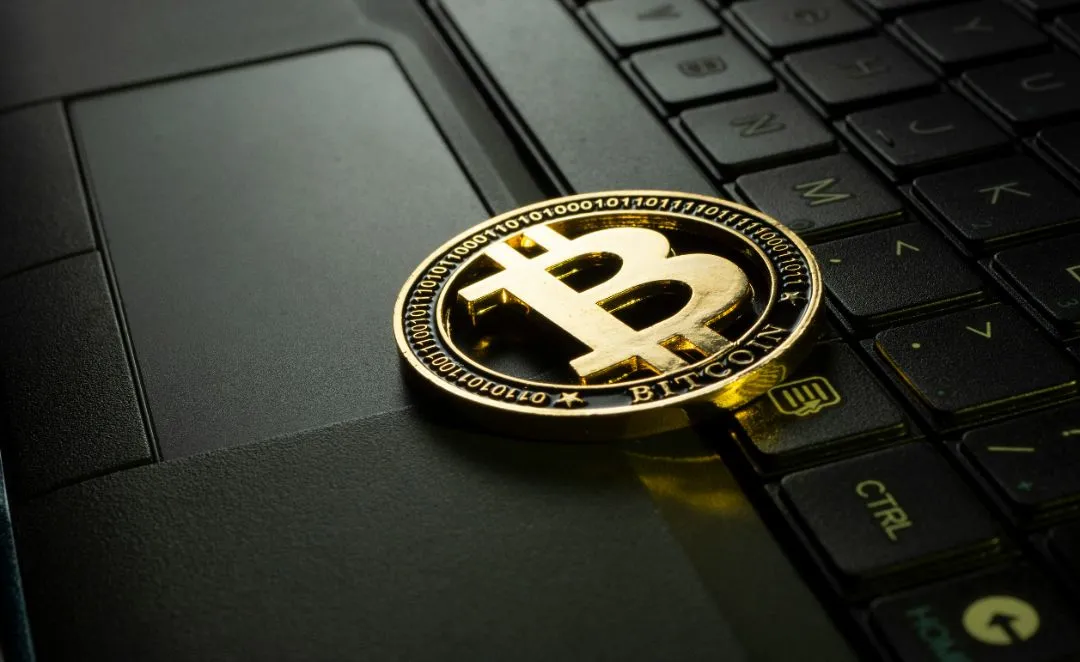
https://asset.coinness.com/en/news/0d02e8052e965a6d6651b181a3df01f5.webp
Photo by Shubham's Web3 on Unsplash

Driving mainstream adoption of Web3

Jason Lau, chief innovation officer at OKX, underscored the platform's dedication to driving mainstream adoption of Web3 technologies, making the exploration and realization of NFT potential more accessible for users.


Despite concerns about potential blockchain congestion due to NFTs, Lau characterized these challenges as "growing pains," expressing confidence that they will be addressed over time. Lau told CoinDesk that “these things will last forever, as long as the chain lasts.”


Emphasizing the surge in activity and user growth since the launch of their product, Lau positioned OKX as an evolving platform at the forefront of developing tools for users to access all of Web3. OKX Wallet's inscriptions tool presently supports minting on 23 networks, including Bitcoin, Dogecoin, Ethereum, Polygon, BNB Chain, Avalanche-C and Arbitrum One, among others.


Boosting OKX Marketplace

The move aims to establish OKX Marketplace as the largest NFT marketplace in the industry, boasting zero-fee trading across an expanding range of token standards. The platform's advanced NFT offering includes features such as hex error checking, liquidity across multiple standards, bulk minting capabilities and automatic error detection.


Despite OKX's open embrace of Ordinals and other Bitcoin protocols, some members of the Bitcoin ecosystem express discontent, labeling Ordinals as digital spam. Jason Lau vehemently disagrees, asserting that in open and permissionless networks like Bitcoin, "there is no such thing as spam." He contends that as long as fees are paid and transactions adhere to consensus rules, they are valid. Lau emphasizes OKX's historical support for the Bitcoin ecosystem, including upgrades like SegWit, Taproot and Lightning.


As debates surrounding the role of Ordinals and NFTs within the Bitcoin ecosystem persist, OKX's proactive stance signals a belief in the potential of Bitcoin-based NFTs to introduce innovative use cases and design possibilities. The disruptions experienced by various blockchains in December, attributed to increased transaction activity related to inscriptions, underscore the growing impact of these developments within the Bitcoin ecosystem and the broader crypto landscape.

 

More to Read
View All
Web3 & Enterprise·

Dec 28, 2023

Mt.Gox creditors start to confirm receipt of first repayments

It's been nearly ten years since the infamous collapse of the Japanese bitcoin exchange Mt. Gox, with some creditors of the defunct business now claiming to have finally received their long-awaited repayments.Photo by Su San Lee on UnsplashSubreddit payment confirmationsTestimonies shared on the Mt.Gox creditor subreddit and a dedicated Telegram channel reveal that certain payments, in the form of Japanese yen, have been distributed to creditors who opted for PayPal as their preferred mode of receipt. Excitement marked the early stages of this repayment process. Users on Reddit joyfully shared their experiences, with one exclaiming:"I got money!! I just got my initial payment via Paypal!!"This development comes after Mt.Gox rehabilitation trustee, Nobuaki Kobayashi, had previously extended the repayment deadline from Oct. 31, 2023, to Oct. 31, 2024. However, last month, Kobayashi informed creditors that certain cash repayments would be initiated before the year's end. Despite efforts to expedite the process, the sheer volume of creditors and the complexities involved mean that repayments will continue into 2024. The collapse of Mt.Gox in early 2014 triggered global regulatory responses and initiated a nearly decade-long bankruptcy and corporate rehabilitation process. The exchange fell victim to a series of hacks between 2011 and 2014, leaving a lasting impact on the cryptocurrency landscape. The commencement of repayments has been hanging over the crypto market for many years, with many fearing that the process may have a dampening effect on the bitcoin unit price, given that funds are being distributed in Japanese yen and bitcoin. Earlier this year, the U.S. government indicted two Russian nationals for laundering funds stolen from Mt.Gox, shedding light on the enduring legal ramifications stemming from the exchange's demise. Double payment glitchHowever, it appears the process encountered some glitches, as other Reddit posts indicated that a few creditors received double payments via PayPal, adding a new layer of complexity to the already intricate Mt. Gox saga. Reddit users, such as u/rlycreativename, have shared emails they claim to have received from the Mt.Gox Rehabilitation Trustee. The emails acknowledge a system issue leading to inadvertent double transfers and legally obligate recipients to return the surplus amount. While some users have complied with the request and returned the duplicated funds, others have expressed hesitancy, citing the historical challenges creditors faced in obtaining their money. The situation has evoked discussions on Reddit, with users debating whether the Trust deserves a swift return, considering the prolonged struggle creditors endured to reclaim their funds. While it may be tempting for some creditors to hold on to the duplicate payment, such a decision may only serve to heap more misery on long-suffering Mt.Gox creditors. The recent case of Jatinder Singh and Thevamanogari Manivel would be very relevant for creditors to consider. Singh was a customer of well-known digital assets platform Crypto.com. In 2021 the firm inadvertently transferred $10 million to his account. Singh conspired with Manivel to withdraw and keep the funds. A community corrections order of 18 months has been imposed on Manivel in Australia while Singh will be sentenced in February.  

news
Policy & Regulation·

Oct 08, 2024

UAE exempts crypto from VAT

The United Arab Emirates (UAE) is updating its tax policy such that cryptocurrency-related transfers and conversions will be exempt from value-added tax (VAT).  News of the policy change emerged via the UAE’s Federal Tax Authority (FTA), which published an Arabic version of the updated tax code on Oct. 2, followed by the publication of an English version on Oct. 4.Photo by Darcey Beau on UnsplashExemption backdated to 2018British multinational consulting firm PricewaterhouseCoopers (PwC) published a review of the UAE tax code update on Oct. 4. The auditing firm noted that virtual assets are defined within the UAE tax code as a “representation of value that can be digitally traded or converted and can be used for investment purposes.”It noted that Article 42 of the update dealt with the crypto VAT exemption. The firm suggested that entities dealing with crypto should “analyze the impact of the exemption on their (retrospective) VAT position, especially in respect to their input tax recovery,” adding that voluntary disclosures may be required to correct previous tax returns. Additionally, a VAT exemption has been introduced on services extended to fund managers relative to licensed funds. Younis Haji Al Khoori, a UAE Ministry of Finance official, stated that the amendments have been made with a view towards easing the burden on businesses. He stated:“These amendments help minimise misunderstandings, simplify procedures, and ultimately contribute to an improved quality of life for all.”  Crypto-friendlyAbdulla Al Dhaheri, CEO of the Blockchain Center in Abu Dhabi, commented on the development on X, stating:”The UAE, driven by visionary leadership, continues to set the global standard by becoming the number 1 destination for blockchain innovation. With the elimination of VAT on crypto transfers and conversions, the UAE reinforce their commitment to building a world-leading digital economy, attracting the best talent and investment from around the globe.” The UAE, and particularly Dubai and Abu Dhabi, have taken great strides forward in ensuring regulatory clarity for the virtual assets sector over the course of the past two years. Regulatory frameworks have been put in place, leading to many participants in the crypto sector praising the regulatory stance taken within the UAE.  This latest addition has equally being welcomed within the crypto sector. Many crypto sector participants have highlighted it as a wake-up call for other jurisdictions to follow suit or see crypto enterprises move to the UAE.  The Indian authorities, in particular, have an unfavorable tax policy in place relative to digital assets, with a 1% tax deducted at source (TDS) being applied. This latest development in the UAE prompted some to consider if India would learn from the UAE’s example. Earlier this year, the Indonesian tax framework, which subjects crypto assets to both income tax and VAT, was cited as the main reason for a slump in crypto trading. A recently published report by blockchain data platform Chainalysis found that the Middle East & North Africa (MENA) region accounts for 7.5% of crypto trading volume, with the report noting that the UAE, alongside Saudi Arabia, is showing a strong interest in decentralized platforms.

news
Policy & Regulation·

Nov 11, 2025

Japan to tighten crypto lending rules as regulator backs bank stablecoin pilot

Japan’s Financial Services Agency (FSA) is moving to close gaps in crypto regulation and support a new bank-led stablecoin pilot, as markets watch for a potential Bank of Japan rate hike. Tougher oversight of crypto lending and IEOsAccording to a CoinPost report, at the fifth meeting of its Digital Asset Working Group held last week, the FSA discussed introducing new requirements to bring crypto lending clearly within the regulatory framework. While firms managing or staking crypto must register as exchanges, some operators have avoided registration by structuring services as borrowing schemes, which are not legally treated as asset management.Photo by Possessed Photography on UnsplashThe FSA flagged that users face both credit and volatility risks, yet operators are not required to segregate customer assets or use cold wallets. Some services offer returns around 10% or tie up funds for several years, with weak risk management and exposure to re-lending defaults and staking slashing. Under the new policy direction, operators will need stronger risk management for re-lending and staking, tighter custody controls, and clearer risk disclosures and advertising. Institutional-only borrowing not offered to the public will remain exempt. Some members questioned whether the new requirements would be practical to implement for off-chain operators, noting that staking is fundamentally on-chain. The group also examined initial exchange offerings (IEOs) lacking financial audits, particularly those aimed at retail investors. Members discussed limits similar to equity crowdfunding: investments over 500,000 yen ($3,000) capped at 5% of annual income or net assets, up to 2 million yen ($13,000). Most past domestic IEOs were under 500,000 yen ($3,200). Some warned such caps could be bypassed through secondary trading, where tokens are immediately tradable. Major banks pilot stablecoinAlongside stricter rules, the FSA will support a stablecoin pilot led by MUFG Bank, Sumitomo Mitsui Banking Corporation, and Mizuho Bank. CoinDesk Japan noted the project, the first under the Payment Innovation Project, will include three additional participants. Mitsubishi Corporation will oversee operations, while Progmat and Mitsubishi UFJ Trust and Banking will handle issuance and custody. The pilot, launching this month with implementation targeted within the year, will test whether a joint stablecoin by major banks can navigate regulatory and operational challenges. Rate hike speculation mountsJapan’s calibrated digital asset push comes as speculation grows over a possible Bank of Japan (BOJ) rate hike next month. Minutes from the BOJ’s October meeting, cited by South Korean outlet Edaily, show one board member saying most conditions for a hike have been met and that financial conditions would stay easy even after an increase. The BOJ kept its rate at 0.5% at that meeting. A rate hike was described as likely if firms are seen committing to wage increases ahead of next spring’s labor talks and if no major global shocks emerge. Markets, however, remain cautious, citing uncertainty over U.S. tariff effects and whether newly elected Prime Minister Sanae Takaichi will endorse such a hawkish stance. 

news
Loading