Top

Terraform Labs claims bankruptcy protection will help SEC lawsuit appeal

Policy & Regulation·February 01, 2024, 2:38 AM

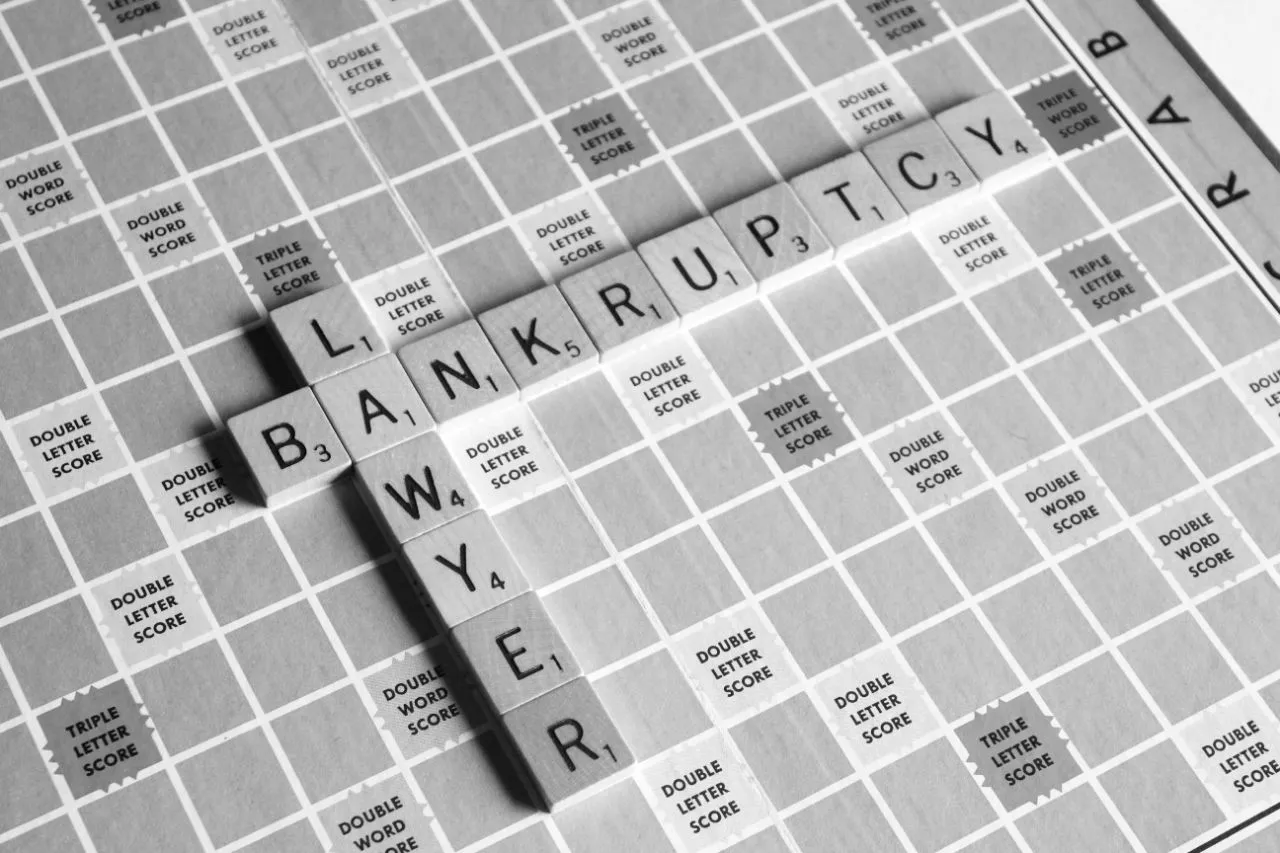
Singapore’s Terraform Labs, the company founded by incarcerated crypto entrepreneur Do Kwon, has filed for Chapter 11 bankruptcy protection as a mechanism to shield itself from potential severe penalties in the U.S. Securities and Exchange Commission's (SEC) securities fraud lawsuit.
https://asset.coinness.com/en/news/73e4b56764b30a6054091fae2112247c.webp
Photo by Melinda Gimpel on Unsplash

Pursuing an appeal

The bankruptcy filing, submitted on Tuesday in the U.S. Bankruptcy Court for the District of Delaware, aims to allow Terraform Labs to pursue an appeal against the SEC's allegations. In the filing, Terraform Labs CEO Chris Amani emphasized the critical nature of the bankruptcy protection for the company's ongoing operations, preservation of value for creditors, including the Terra community, and the pursuit of an appeal against the SEC enforcement action.


Amani expressed concerns that, without Chapter 11 protection, the company could face liquidation after the trial, forfeiting its right to appeal and leading to disastrous consequences for its business. Having acted as Terraform’s chief operating officer earlier in 2023, last July Amani was appointed as the firm’s CEO.


Protection afforded by Chapter 11

The estimated assets and liabilities of Terraform Labs fall between $100 million and $500 million, as disclosed in the firm’s bankruptcy filing earlier this month. Amani highlighted the potential financial strain resulting from a substantial money judgment, indicating that the company might not be able to satisfy such a judgment or post the necessary supersedeas bond for an appeal, a bond that must be provided by a petitioner who attempts to have a judgment set aside, without the protection afforded by Chapter 11.


The SEC charged Terraform Labs and former CEO Do Kwon with securities fraud in February 2023, accusing them of orchestrating a "multi-billion dollar crypto asset securities fraud." The Commission claimed the company raised billions from investors through unregistered transactions, offering an interconnected suite of crypto asset securities. Terraform Labs disputes the SEC's summary judgment decision, asserting that the cryptocurrency tokens in question are not securities under the Acts and that the SEC's jurisdiction is not applicable.


The potential consequences of liquidation extend beyond the company itself, impacting hundreds of thousands of Luna cryptocurrency holders, the same individuals the SEC purportedly seeks to protect. Luna operates on the Terra blockchain maintained by Terraform Labs.


Terraform Labs, known for the algorithmic stablecoin TerraUSD and its sister cryptocurrency Luna, filed for bankruptcy protection in the wake of the infamous collapse of both in May 2022.


The SEC's case stems from that $40 billion collapse of TerraUSD and a previous version of Luna, accusing Terraform Labs and Kwon of misleading investors about the stability of TerraUSD.


Kwon was arrested in March of last year in Montenegro for using false documents. He is currently detained in Montenegro, following his attempt to travel to Dubai with a fake Costa Rican passport. The Terraform founder is currently awaiting extradition to either the United States or South Korea. Both Do Kwon and Terraform Labs deny committing fraud, with the SEC trial scheduled to commence in New York in late March.




More to Read
View All
Policy & Regulation·

Sep 20, 2023

Illiquid Token Sinks OPNX’s $30 Million Hodlnaut Bid

Illiquid Token Sinks OPNX’s $30 Million Hodlnaut BidThe interim judicial managers overseeing the restructuring process of troubled Singaporean crypto lender Hodlnaut have firmly opposed the takeover offer presented by OPNX, the Dubai-based crypto bankruptcy claims trading platform associated with the founders of the now-defunct hedge fund, Three Arrows Capital.Photo by Image Hunter on PexelsSpeculative token valueIn a report published on Tuesday, Bloomberg referred to a recent court filing in which the administrators of Hodlnaut had characterized OPNX’s $30 million bid in FLEX digital tokens as “illiquid” and bearing “speculative value.” Additionally, a significant portion of Hodlnaut Group’s creditors, representing 60% of the total debt, had also voiced their dissent towards the proposed OPNX deal.Hodlnaut, headquartered in Singapore with operations in Hong Kong, found itself among the casualties of the $1.5 trillion crypto market downturn last year. OPNX had expressed its interest in taking control of Hodlnaut last month.Among the concerns raised by managers were the absence of a cash injection or assets with readily available liquidity, such as Bitcoin or Ether. Furthermore, there was no clear timeline provided for the repayment of creditors’ debts, and the proposal lacked detailed information regarding payments, which are limited to just 30% of liabilities, according to the court-appointed supervisors of Hodlnaut’s restructuring.FLEX token offeringThe FLEX token, associated with the CoinFLEX exchange, whose founders Mark Lamb and Sudhu Arumugam launched OPNX earlier this year, is at the center of the proposal. Currently, it holds a market value of approximately $54.4 million. However, its trading volume remains low. Moreover, its unit value stands at $0.55, marking a substantial 95% decrease from a month ago when the offer was first submitted to the Singapore court, as per data from CoinGecko.The deal would have meant OPNX taking a 75% stake in the business. Previously, Hodlnaut’s founders Simon Lee and Zhu Juntao had put forward a proposal of a business sale rather than liquidating the company as the preferred option.Su Zhu and Kyle Davies, co-founders of Singapore’s Three Arrows Capital, played instrumental roles in the inception of OPNX, joining with the CoinFLEX founders in establishing the bankruptcy claims trading platform. Despite their initial contributions, it’s worth noting that Zhu has previously clarified that neither he nor Davies are involved in the day-to-day management of the exchange.Regulatory sanctionsIn recent developments, Zhu and Davies were sanctioned with a nine-year ban by the Monetary Authority of Singapore due to violations connected to their collapsed hedge fund firm, which operated out of Singapore. Furthermore, in August, authorities in Dubai levied fines against Zhu, Davies, Mark Lamb, OPNX CEO Leslie Lamb, and Arumugam for operating and promoting OPNX without the required local license.The rejection of OPNX’s bid by Hodlnaut’s bankruptcy administrators underscores the challenges implicated by illiquid tokens. The fate of Hodlnaut remains uncertain, pending further developments in the ongoing legal proceedings, and will depend upon its management’s efforts in finding a new buyer for the business.

news
Markets·

Dec 07, 2023

Market speculates on Qatari investment driving bitcoin price surge

Market speculates on Qatari investment driving bitcoin price surgeRumors are circulating within the cryptocurrency space that Qatar’s sovereign wealth fund may have dabbled in investing in bitcoin, leading to the recent surge in the bitcoin unit price.Such a move, while still an unconfirmed speculation, would be indicative of the increasing recognition of Bitcoin as a mainstream asset class. At the time of writing, bitcoin stands at $44,000. That represents a 16% increase over the space of the past week and a 166% increase since the beginning of the year.Photo by Yiğit Ali Atasoy on UnsplashKeiser’s claimAccording to outspoken Bitcoin advocate Max Keiser, Qatar’s sovereign wealth fund (QSWF), responsible for managing the nation’s significant oil and gas-generated wealth, is considering allocating up to $500 billion to the leading cryptocurrency.To provide context, this investment would eclipse the publicly disclosed bitcoin holdings of MicroStrategy, founded by Michael Saylor, by an astonishing 671 times. MicroStrategy currently holds the position of the largest corporate holder of Bitcoin, with 174,530 BTC acquired in November.Keiser speculates that the QSWF’s monumental investment could propel bitcoin’s price to new highs, reaching $100,000. Keiser tweeted:“The God Candle, a $100,000 uptick in #Bitcoin is in play. It will shift the global axis of wealth and power in 1 tick.”Custodia Bank Founder and CEO Caitlin Long shared a similar view on the X social media platform on Wednesday, pointing out that in September the Emir of Qatar had visited El Salvador and met with President Nayib Bukele. The inference is that it would have been an interest in bitcoin that may have provided the motivation for that visit, given that Bukele and El Salvador have adopted bitcoin as a sovereign currency.However, not everyone is on board with this theory. Some have pointed out that the assertion that the QSWF will invest $500 billion into bitcoin is impossible, given that the fund has $475 billion under management.Bitcoin advocate Luke Broyles weighed in on the rumor, emphasizing the crucial interplay between bitcoin’s supply and demand. Broyles highlighted the $76 billion worth of BTC still available on crypto exchanges, underscoring the fundamental principle of bitcoin’s fixed supply. According to Broyles, any substantial investment would inevitably drive prices higher.However, Broyles remains skeptical of the Qatar news, deeming it a rumor, and expressed shock if it proves remotely true. That view has led many back to the original speculation in relation to this most recent price action, the illusive bitcoin spot exchange-traded fund (ETF) approval in the United States.Some activity in recent days has suggested that BlackRock, the world’s largest fund manager, has been doing preparatory work for the launch of its iShares Bitcoin Trust ETF. Not everyone was positive on the topic of Bitcoin on Wednesday, however. Jamie Dimon, the CEO of JPMorgan Chase, testified before the U.S. Congress on Wednesday, stating “If I were the government I’d close [Bitcoin] down.”

news
Markets·

May 02, 2024

Lackluster debut for crypto ETFs in Hong Kong

Hong Kong's debut of Bitcoin and Ether exchange-traded funds (ETFs) faced a tough start on their first day of trading, with volumes falling far below the record-breaking figures seen in the United States earlier in January 2024. Tough act to followThe launch of six spot Bitcoin and Ether ETFs, managed by prominent firms including China Asset Management, Harvest Global, Bosera and HashKey, marked a significant milestone for Hong Kong's cryptocurrency market. However, initial trading volumes indicated a notable contrast with the groundbreaking volumes witnessed during the debut of spot Bitcoin ETFs in the United States. On their inaugural day, the total trading volume of the six new crypto ETFs in Hong Kong amounted to 87.58 million Hong Kong dollars ($12 million). This figure, while significant, paled in comparison to the $4.6 billion trading volume recorded for U.S. spot Bitcoin ETFs on their first day, making the U.S. investment funds a tough act to follow. Despite the disparity, industry experts like Justin d'Anethan, head of APAC business development at crypto market maker Keyrock, viewed the Hong Kong ETFs' performance positively within the local market context.Photo by Simon Zhu on UnsplashAbsence of stakingD'Anethan told The Block that while the trading volume in Hong Kong didn't match the U.S. debut, it reflected a noteworthy level of investor interest, particularly considering the market dynamics in Hong Kong, which lacks access to mainland China investors. Bloomberg ETF Analyst Eric Balchunas suggested on X that people expected too much and that in reality, it was a good first day’s trading. In an interview with Bloomberg, China Asset Management CEO Yimei Li stated that the products open the door “for a lot of RMB holders.” They didn’t show up on day one as d’Anethan pointed out, and he further noted that the absence of staking rewards for Hong Kong's spot Ether ETFs was a notable factor affecting investor decisions. Data from the Hong Kong Stock Exchange (HKEX) cited by Cointelegraph illustrated the relatively subdued performance of the newly launched ETFs. Among them, the Bosera HashKey Bitcoin ETF and Ether ETF recorded modest trading volumes, while the China Asset Management (CAM) Bitcoin ETF demonstrated stronger traction, attracting significant trading volume by the closing bell. Prior to trading, CAM's subscription size for its spot Bitcoin and Ether ETFs drew substantial interest, totaling $140 million during the initial offering period. This heightened anticipation was further fueled by the success of HKEX's cryptocurrency futures ETFs, which garnered $529 million in net inflows in the first quarter of 2024. Fee exemptionsIn an effort to stimulate investor participation, local fund managers and brokerages in Hong Kong offered fee exemptions for the new crypto ETFs. Harvest waived its management fee for six months, while Bosera extended a fee waiver period of four months. Despite the optimism surrounding the launch, potential access to the ETFs by mainland Chinese investors remains uncertain, subject to Know Your Customer (KYC) policies. Meanwhile, the Securities and Exchange Commission's (SEC) stance on Ether ETFs in the U.S. complicates the prospects of listing such products in the near future. While Hong Kong's debut of Bitcoin and Ether ETFs faced challenges in matching the fervor witnessed in the U.S., it nevertheless represents a significant step forward for the region's cryptocurrency market, signaling growing interest and participation in digital asset investments.

news
Loading