Top

DeFiance Capital notches up another legal victory in 3AC dispute

Web3 & Enterprise·February 02, 2024, 2:09 AM

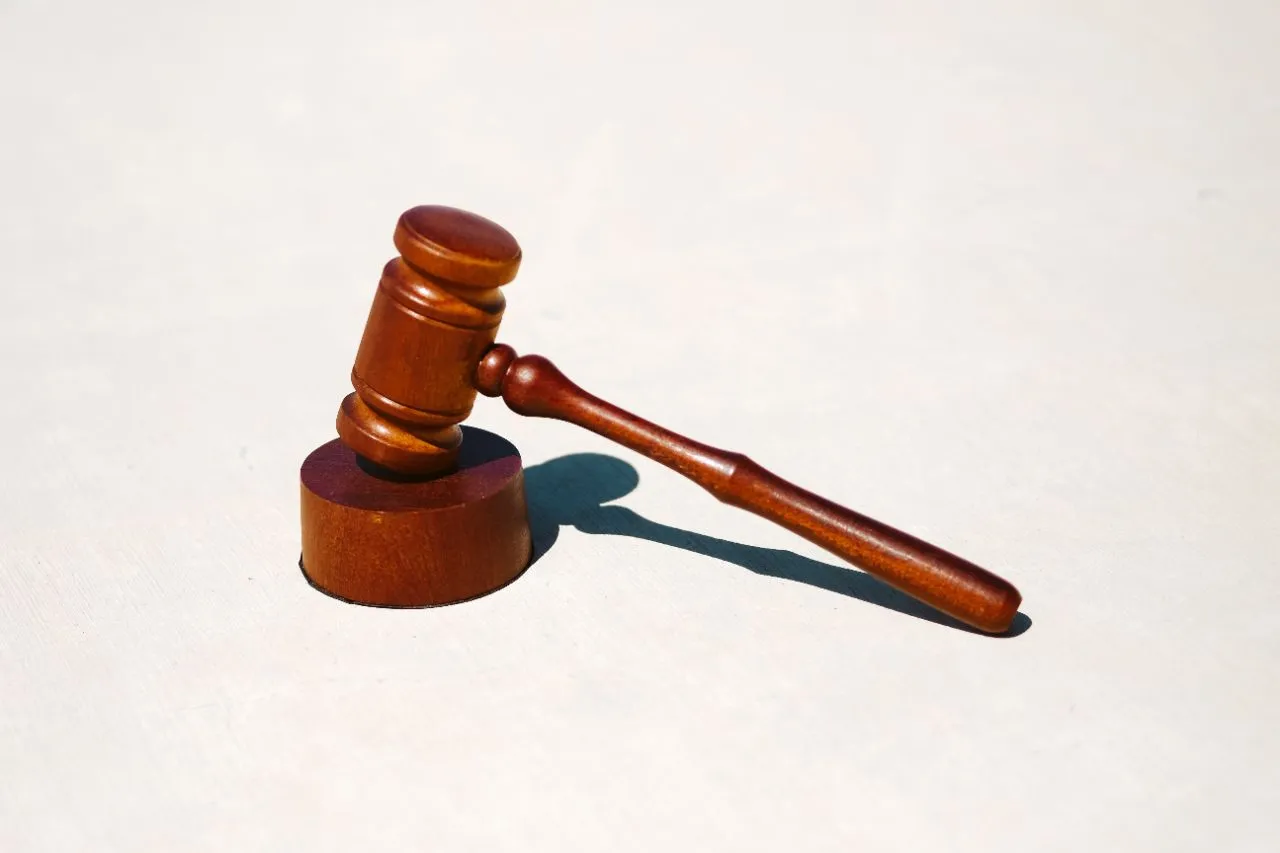
In the ongoing legal tussle over cryptocurrency assets, the High Court of Singapore has rejected a plea by the bankrupt crypto hedge fund Three Arrows Capital (3AC) to dismiss a lawsuit filed by Arthur Cheong, the founder of Web3 investment firm DeFiance Capital.


This ruling represents a pivotal moment in the $140 million dispute, shedding light on the ownership and control of assets, while building upon DeFiance Capital’s previous success back in August of last year in having its preference for jurisdiction in Singapore endorsed.
https://asset.coinness.com/en/news/d31fa3644413f44f0e827d55e9d1ac18.webp
Photo by Tingey Injury Law Firm on Unsplash

Recognizing assets held in trust

On Jan. 26, a Singapore judge ruled against 3AC's request to have Cheong’s claim thrown out, stating that DeFiance Capital has adequately demonstrated the existence of a Singapore-based trust safeguarding its assets. This revelation could potentially shield DeFiance Capital from 3AC's liquidators, marking a crucial juncture in the legal battle.


The dispute traces back to an agreement where Cheong was set to launch an independent fund on the 3AC Group platform, with ownership and control vested in DeFiance Capital. This fund, leveraging 3AC's infrastructure, faced disagreements over the transfer of certain assets, whose undisclosed value became a point of contention in court documents.


The downfall of the $10 billion 3AC hedge fund, responsible for the "Super Cycle" thesis predicting perpetual crypto price increases, had widespread repercussions in the crypto industry. DeFiance Capital bore the brunt of this collapse and the recent court ruling brings the firm closer to resolving the aftermath favorably.


The ongoing argument holds strategic importance for DeFiance Capital, as the investment firm challenges any legal obligation for its shareholders to compensate 3AC creditors. "Wassielawyer," a pseudonymous restructuring attorney advising DeFiance Capital's founder Arthur Cheong, highlighted the significance of this stance on social media.


Positive sign

The judge's acknowledgment of the trust, while not conclusive, is viewed as a positive sign for DeFiance Capital. In a series of posts on the X social media platform, Wassielawyer outlined on Thursday that he sees this as "much-needed vindication" for Cheong, signaling a potential turn in favor of the investment firm.


Wassielawyer emphasized that DeFiance Capital merely utilized 3AC's legal structure, without commingling operations. This distinction becomes crucial as carefully drafted legal documents form the basis for 3AC creditors attempting to seize DeFiance Capital funds. The restructuring professional added:

”[DeFiance Capital] have on the basis of the substantive facts, ran an argument that the assets of DCs should not be used to pay back 3AC creditors. This eventuality would be manifestly unjust, enriching the creditors of 3AC at the expense of innocent DC investors.”


Once a major player in the crypto hedge fund arena, 3AC's demise resulted from exposure to Terra, staked Ethereum and Grayscale's Bitcoin Trust. The bankruptcy filing on June 30, 2022, marked the end of an era for the once-mighty fund.


Established in 2020, DeFiance Capital specializes in crypto investments, focusing on decentralized finance and GameFi. It has supported projects such as dYdX, Aave and Lido.


This decision establishes a precedent for similar cases, particularly in jurisdictions like Singapore, emerging as pivotal hubs for cryptocurrency and blockchain-related activities. The outcome holds implications for how such legal disputes will be handled in the future, shaping the landscape of crypto-related legal proceedings.

 

More to Read
View All
Policy & Regulation·

Oct 06, 2023

Uzbekistan Revamps Crypto Mining with New Regulatory Framework

Uzbekistan Revamps Crypto Mining with New Regulatory FrameworkUzbekistan is ushering in a reset on its approach to cryptocurrency mining with the implementation of a new regulatory framework by the central Asian country’s National Agency of Perspective Projects (NAPP).Photo by Farhodjon Chinberdiev on UnsplashFocusing on solar powerThese freshly endorsed rules were announced earlier this week. They establish stringent guidelines for cryptocurrency mining operations within the country, reserving mining exclusively for registered legal entities and mandating the use of solar power.Under the sweeping regulations, individual miners are barred from participating in cryptocurrency mining activities, a move aimed at bringing structure and oversight to the expanding crypto mining sector within Uzbekistan’s borders.A key feature of the framework is the requirement for cryptocurrency miners to harness electricity generated by solar photovoltaic means. This environmentally conscious approach mirrors global endeavors to promote sustainability and clean energy sources in the crypto mining sector. Miners are also permitted to connect to the national electrical power grid, but only under specific conditions as outlined in the legislation.Safeguarding the power gridIn this respect, Uzbekistan is likely to be learning from the experiences of its northern neighbor, Kazakhstan. Following a ban on crypto mining in China in 2021, Kazakhstan suddenly became the second largest global center for Bitcoin mining. Unprepared for this eventuality, this mining activity caused major problems for the country’s power grid, resulting in blackouts and unrest.The NAPP underscores the necessity for mining operations and service providers to adhere to these newly established rules. To engage in cryptocurrency mining legally, entities must secure the requisite permits and licenses. These permits, valid for five years, come with strict reporting obligations, ensuring transparency and regulatory compliance.Moreover, cryptocurrency miners must prioritize the technical integrity of their electrical supply systems, emphasizing safety and reliability to prevent electrical accidents and maintain secure operating environments.In a bid to nurture a controlled and regulated cryptocurrency ecosystem, Uzbekistan’s crypto watchdog has already issued licenses to several entities, including a cryptocurrency exchange, a crypto depository, and ten other crypto trading platforms. Encouragingly, discussions have taken place with global exchanges like Binance, Huobi, and Bybit, signaling Uzbekistan’s ambitions to establish itself as a cryptocurrency hub.Ban on individual minersThe NAPP’s latest framework also outlaws the mining of anonymous cryptocurrencies designed to enhance transaction privacy, such as Monero (XMR). This measure aligns with international efforts to combat illicit activities linked to anonymous digital currencies.It’s worth noting that these new regulations represent the latest in a series of decrees by the Uzbek government, reiterating the ban on individual miners and the use of cryptocurrencies for domestic payments. Consequently, the full impact of these recent regulations on the nation’s cryptocurrency mining landscape remains to be seen.Uzbekistan’s decision to confine cryptocurrency mining to legal entities employing solar power reflects a growing understanding of the opportunity the activity provides to effectively exploit excess renewable power. In July, the President of eastern neighbor Kyrgyzstan put forward an ambitious project to use crypto mining to exploit the country’s hydro-electric power resources.

news
Policy & Regulation·

Mar 27, 2024

Korean financial authority to heighten oversight on token listing with new guidelines

The South Korean financial authority will establish new policies and guidelines for token listing and provide admirable examples from past listing events for local exchanges to follow, according to local media outlet News1.  So far, fiat-to-crypto exchanges in Korea have been listing tokens on their platforms under a guideline issued by Digital Asset eXchange Alliance (DAXA) – a self-regulatory consultation group comprised of five major Korean crypto exchanges. The existing DAXA guideline outlines basic yet vague instructions, which have allowed exchanges to list tokens largely at their discretion.  However, the new guideline from the financial authority, expected to be released by this June, will mark the government’s first official manual on token listing. This is in line with the upcoming Virtual Asset User Protection Act, which will be effective in July. Photo by Hitesh Choudhary on UnsplashSetting clear guidelines for token listingsThe new guidelines are expected to include examples of past fraud detection and real-time monitoring cases which are deemed to have set precedents for the industry players. Moreover, the financial authority plans to distribute past exemplary cases of token listing as early as April, which is anticipated to set a model listing process and help local crypto exchanges adhere to the law and requirements.  This announcement comes after the local game company Wemade relisted its native token WEMIX on Korbit, one of DAXA's member exchanges, just a year after it was delisted on major exchanges due to its deviant practices in token issuance. The relisting of WEMIX has since raised concerns among crypto insiders about the lack of criteria regarding token listings. More refined token listing process As the crypto market's bullish trend continues, Bithumb and Coinone – the second and third-largest exchanges in Korea – are stepping up their efforts to speed up the listing of new coins. Industry experts expect these exchanges will double down on their efforts in screening and reviewing processes for tokens to align with the new guidelines in the future.  An official from the Korean Financial Intelligence Unit (FIU) said that while the anticipated listing process is not legally binding, it will definitely have a more profound impact on local crypto exchanges compared to the self-regulated DAXA guidelines.  

news
Policy & Regulation·

Jul 27, 2023

Korean Banks Impose Crypto Exchanges to Maintain a Reserve of at Least 3B KRW

Korean Banks Impose Crypto Exchanges to Maintain a Reserve of at Least 3B KRWIn a significant step towards regulating the cryptocurrency market and ensuring the safety of virtual asset users, South Korea’s Federation of Banks (KFB) has collaborated with financial authorities and virtual asset exchanges to establish the “Guidelines for the Operation of Real Name Accounts for Virtual Assets.” The KFB, as a group of banks and financial institutions, facilitates cooperation between its members and promotes the development of the financial industry.Photo by rc.xyz NFT gallery on UnsplashThe guidelines come as a response to the increasing need for stronger money laundering prevention measures and standardization in the crypto industry. The first step towards this was taken in 2018 when crypto exchanges became obliged to establish a real name account at a bank in order to provide Korean Won (KRW) deposit and withdrawal services to their customers. Currently, the exchanges that won such bank accounts are Upbit, Bithumb, Coinone, Korbit, and Gopax.However, this policy brought with it a set of challenges, including differing practices among various cryptocurrency exchanges, leading to inconveniences for users. Additionally, varying user protection measures, such as reserve requirements, caused confusion in the market.3 billion KRW in reservesTo address these issues, the new guidelines aim to clarify how banks operate cryptocurrency real-name accounts and bolster overall security. One of the key changes is the requirement for crypto exchanges to maintain a reserve of at least 3 billion KRW ($2.36 million). This reserve fund serves as a precautionary measure to address potential financial losses resulting from hacking incidents or system failures at crypto exchanges.Furthermore, the guidelines mandate banks to manage deposit and withdrawal limits by categorizing user accounts into limited and normal accounts. A limited account will not be converted to a normal account, which grants higher deposit and withdrawal limits, until the user’s transaction purpose and the source of funds are verified.Enhanced due diligenceIn addition, banks will perform annual enhanced due diligence (EDD) for individual account holders. This thorough review will encompass users’ identification, transaction purposes, and the origin of funds.User asset segregationTo safeguard users’ funds, crypto exchanges will be required to ensure that customer deposits are held separately or placed in trust. Regular due diligence at crypto exchanges will also be conducted by banks, with mandatory visits occurring at least once a month. Moreover, third-party services will be engaged to perform independent due diligence every quarter on crypto exchanges, providing an additional assessment of their operations.The official launch of these new guidelines is scheduled for January of next year. However, the requirement of depositing at least 3 billion KRW will come into effect earlier, starting in September of this year. Additionally, the implementation of guidelines for expanding deposit and withdrawal limits is anticipated in March of next year.

news
Loading