Top

Bitcoin rally significantly benefits online-only Kbank in Korea

Markets·March 04, 2024, 7:11 AM

Following the recent bitcoin boom, transactions in cryptocurrencies among Korean investors have surged, significantly benefiting local banks that have made contracts with Korean crypto exchanges to offer real-name accounts for crypto investors. As the price of bitcoin soared to as high as KRW 90 million ($67.6 million) in Korea on Thursday, online-only bank Kbank saw an uptick in trading fee revenue, according to local media outlet The Seoul Economic Daily. Kbank is a partner with crypto exchange Upbit, which accounts for 70% of the Korean crypto market. 


Under the current law, Korean crypto exchanges offering trading against Korean won must secure real-name accounts from a bank. These banks typically earn fees of KRW 300 to KRW 1,000 per transaction. Currently, other than Kbank, NongHyup Bank offers real-name accounts to Bithumb, Kakaobank to Coinone, Shinhan Bank to Korbit and Jeonbuk Bank to Gopax.
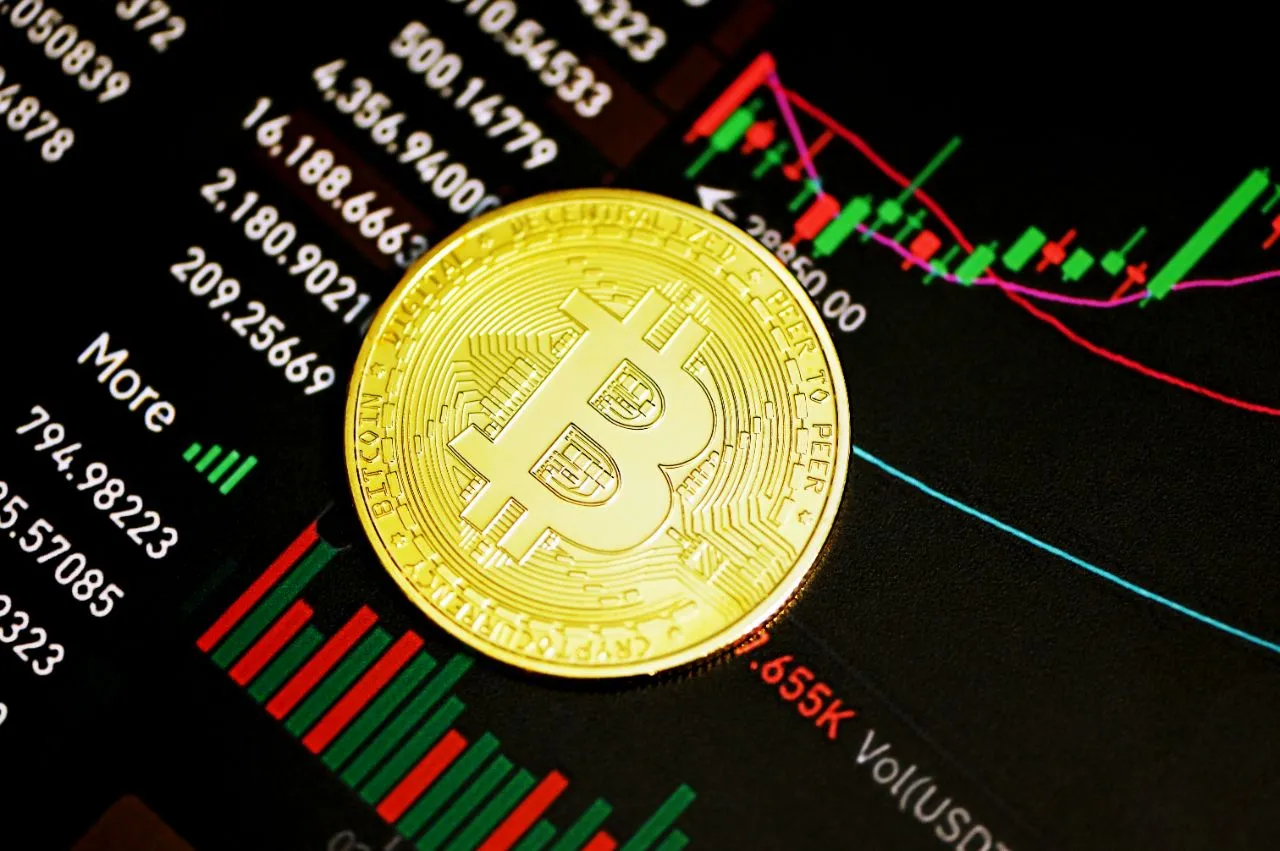
https://asset.coinness.com/en/news/7315c44d342b0a44a3f5b5528d734719.webp
Photo by Kanchanara on Unsplash

Crypto trading volume up 68.2% in a month

According to Xangle, a crypto data intelligence platform, the total crypto trading volume in Korea rose by 68.2% between the last week of January and the last week of February, rising from KRW 2.39 trillion to KRW 40.2 trillion. During the same period, the daily average trading volume also grew from around KRW 4 trillion to KRW 5.7 trillion.  


In particular, the bitcoin trading volume on Upbit surged to 19,254 BTC on Feb. 28, reaching the second-highest level since Nov. 10, 2022, when the asset’s trading volume stood at 20,710 BTC. After signing the real-name account contract with Upbit in 2020, Kbank raked in KRW 29.2 billion in fees during the last bull market of 2021, which was equivalent to 14% of its annual interest income of KRW 198 billion and exceeded its net income for the year, which stood at KRW 22.5 billion.


Increased bank deposits from exchange users

Kbank also saw a substantial rise in its balance sheet, with Upbit users depositing around KRW 2.94 trillion into their real-name accounts. The sum is six times greater than the deposits made into NongHyup Bank by Bithumb users, which stood at KRW 547.1 billion. 


Experts see that the surge in Kbank’s user base, which recently surpassed 10 million users, is largely attributed to growing excitement surrounding bitcoin. One crypto insider said that crypto trading fees, which have been on the decline for the past 2 years, could take a turn this year, signaling further gains for the affiliated banks. 

 

More to Read
View All
Web3 & Enterprise·

Apr 24, 2023

SAI.TECH Consolidates Mining Product Offering

Singapore’s SAI.TECH, a bitcoin miner and mining infrastructure hardware developer, has chosen to consolidate its product offering. The company has simplified its product range by categorizing them as Ultiaas, Boltbit, and Heatnuc. Virtual annual conferenceThe company took the opportunity to host SAITIME 2023, a virtual corporate annual conference, using the event as a platform to announce its SAIHUB product consolidation.Ultiaas will focus on the development of hardware and software products alongside integrated solutions, in order to enable liquid cooling and heat reuse capabilities while attempting to achieve optimized energy efficiency. In practical terms, these products convert mining chip heat into reusable energy.The team behind the Ultiaas product line believes that the technology can have a significant positive effect on data centers through the harnessing of chip heat in commercial, residential, industrial and agricultural locations. The firm has thoroughly tested the product, with its first successful operation at its testing and distribution facility in Ohio in the United States. According to a press release, the company says that “we look to tap into the state’s vast reservoir of clean energy.” With that, it is already working on the construction of a second site.The green bitcoin mining specialist recycles 90% of the waste heat produced in the mining process, thanks to the technology that it has developed.Boltbit concerns itself with the provision of decentralized transaction system services and technical support. It focuses on blockchain and lightning network technology. Lastly, Heatnuc will focus on the research and promotion of small modular reactors. Unusual price actionThe company, which listed on the Nasdaq last year following a special purpose acquisition companies (SPAC) merger in 2021, was the center of some speculative interest last week. The firm’s shares surged by over 360% to a high of $7.42 in one day’s trading. A week on, the share price has calmed down, trading at $3.68 on Friday. The rationale behind the short-lived share price surge remains a mystery. Kazakhstan scale-backIn August of last year, SAI.TECH decided to scale back an active bitcoin mining site that it is involved in in Kazakhstan. A second phase of the project would have brought 90 MW online. It is still working on phase 1 which will bring 15 MW online.Kazakhstan had seen an influx of bitcoin miners in the wake of a China mining ban a few years ago. The sudden surge in energy consumption on the Kazakh energy grid upset the national power supply, resulting in protests and riots. The country then pushed back against the miners, disconnecting many projects from the grid. It was against this background that it’s understood SAI.TECH decided to scale back its plans in the landlocked Eurasian country.

news
Markets·

Nov 05, 2025

StanChart CEO predicts blockchain will replace cash in everyday finance

Bill Winters, the American banker who heads the British financial group Standard Chartered, appeared at the Hong Kong FinTech Week conference earlier this week, where he predicted a future in which cash will give way to blockchain-based systems for everyday transactions. According to Cointelegraph, Winters’ view aligns with that of Hong Kong regulators. At the same time, he stressed the importance of continued experimentation, noting that it remains uncertain how this transformation will ultimately take shape. Winters also commended Hong Kong’s leadership in exploring the potential of digital finance. Tech-driven finance has certainly been one of the key initiatives Hong Kong has been exploring. Recently, the Hong Kong Monetary Authority (HKMA) released its e-HKD Pilot Programme Phase 2 Report, which showed public support for tokenized deposits.Photo by Shubham Dhage on UnsplashReal-world assets gain ground on the blockchainOn-chain data also underscores the rapid growth of the tokenization sector. According to RWA.xyz, the total value of real-world assets (RWAs) deployed on-chain has climbed to $35.63 billion, up 7.8% from a month ago. A study by Ripple and Boston Consulting Group (BCG) estimates that tokenized assets could be worth $19 trillion by 2033, about 530 times their current value. Among RWA assets, the BlackRock USD Institutional Digital Liquidity (BUIDL) Fund, Tether Gold (XAUT), and Paxos Gold (PAXG) currently lead the market in terms of value. Over the past 30 days, BlackRock’s BUIDL Fund slipped 0.06%, while the two tokenized gold products, XAUT and PAXG, jumped 46.65% and 14.19%, respectively. These gains mirror gold’s bullish run in October, when its price surpassed $4,000 per ounce for the first time on Oct. 7. The momentum has since eased slightly, with gold now trading at around $3,969.55 per ounce. Tokenization brings 24/7 markets and P2P flexibilityIndustry experts point to the convenience of tokenization as a key advantage. Speaking to Yahoo Finance, Will Peck, head of digital assets at WisdomTree, explained that tokenized gold allows for around-the-clock trading and direct peer-to-peer (P2P) transactions. He added that gold and Bitcoin act as complementary stores of value, both serving as deflationary assets. Ian Kane, CEO of fintech company Firepan, said tokenized gold appeals to investors as it enables them to retain ownership, leverage their holdings for loans, and generate extra yield, while preserving their principal against debasement or devaluation. These views are not new. Earlier this month, Robinhood Markets CEO Vlad Tenev described tokenization as “a freight train” that “can’t be stopped,” predicting it will eventually transform the global financial system. Similarly, in his annual letter to investors in April, BlackRock CEO Larry Fink said the tokenization of assets could fundamentally reshape the way people invest. By digitizing ownership, tokenized venture capital funds could move beyond their closed circles, giving ordinary investors a stake in early-stage innovation and greater control over their capital. Venture capital faces hurdles in tokenization pushWhile tokenization promises greater accessibility and liquidity, not all market segments are ready for it. According to TheStreet, tokenized venture capital (VC) funds could open a traditionally closed market to more investors, but the process is more complex than it appears. In an interview with TheStreet, Elena Obukhova, founder of Supermoon Ventures, said that liquidity, not technology, is the main obstacle. Unlike tokenized company shares that can be traded freely on public markets, VC funds invest in private startups whose value may take years to materialize through an exit or acquisition. Allowing such funds to trade freely could increase volatility and pressure founders, as interim valuations might distort perceptions and weaken confidence in early-stage ventures. Still, the promise of tokenized venture finance remains within reach. Firms are testing models that limit trading periods, protect investor data, and refine valuation methods to better reflect the illiquid nature of startup investments. Since liquidity events such as initial public offering (IPOs) or acquisitions typically occur only every one to two years for early-stage startups, the path forward will depend on creating systems that can maintain stable and accurate valuations in the interim. Tokenization is rapidly emerging as a transformative force in the financial world, offering greater accessibility, liquidity, and efficiency. As more assets, from gold to venture capital, make their way onto the blockchain, the potential to reshape investment and trading markets grows. While challenges remain, particularly around liquidity and valuation in sectors like venture capital, the continued advancements in tokenization demonstrate its key role in the future of finance.

news
Policy & Regulation·

Feb 14, 2024

Korea Customs Service to form task force to combat crypto-related crimes

The Korea Customs Service (KCS) is preparing to establish a dedicated task force to combat the surge in cryptocurrency-related crimes. According to a report by local media outlet Joseilbo, this initiative was deliberated in a meeting chaired by KCS Commissioner Ko Kwang-hyo, specifically convened to discuss strategies against foreign exchange violations. The KCS reported that last year, it uncovered a total of 198 criminal incidents related to foreign exchange activities, with the combined value reaching approximately KRW 1.9 trillion ($1.4 billion).Photo by Mathew Schwartz on UnsplashCrypto involved in 88% of forex violations Of the total amount mentioned, violations of the Foreign Exchange Transaction Act comprised KRW 1.654 trillion, with 88% of these incidents involving virtual assets. This represents a dramatic surge in the involvement of virtual assets in financial crimes, especially when compared to 2020, where crypto-related offenses constituted 3% of the total value linked to forex violations. This trend underscores the rapidly growing role of virtual assets in such illicit activities. To address these issues, the KCS is set to broaden its crackdown on illicit cryptocurrency activities. This crackdown targets practices such as transferring foreign currency overseas to acquire virtual assets for arbitrage trading and using virtual assets to conceal trade payments, thereby attempting to bypass customs duties.Task force’s international collaborationAs part of this initiative, the country's customs agency aims to build a task force focused on tackling crypto crimes. This specialized group will be responsible for gathering and analyzing data, conducting investigations and recommending regulatory enhancements. The task force will collaborate with financial regulators to obtain crypto transaction records from domestic cryptocurrency exchanges. Moreover, it will work with customs authorities of other countries, including Hong Kong, to collect details on crypto transactions conducted abroad. 

news
Loading