Top

Potential positive impact of monetary stimulus in China

Policy & Regulation·September 26, 2024, 1:54 AM

Many commentators in the crypto space were pointing to a lowering of interest rates last week by the Federal Reserve in the United States as being a positive development for the pricing of digital assets. However, the introduction of a stimulus package to revive the Chinese economy may also have a role to play.


Stimulus package

Bloomberg reported on Sept. 24 that People’s Bank of China Governor Pan Gongsheng had cut a key short-term interest rate. Furthermore, the Bank of China governor plans to implement a reduction in the reserve requirements that are applied to the country’s banks. The Reserve Requirement Ration (RRR) will be cut by 50 basis points, which will mean that $142 billion will be freed up for new lending. 


Additionally, a package of measures has been introduced to rejuvenate China’s beleaguered real estate market, lowering the borrowing costs related to $5.3 trillion in mortgages.
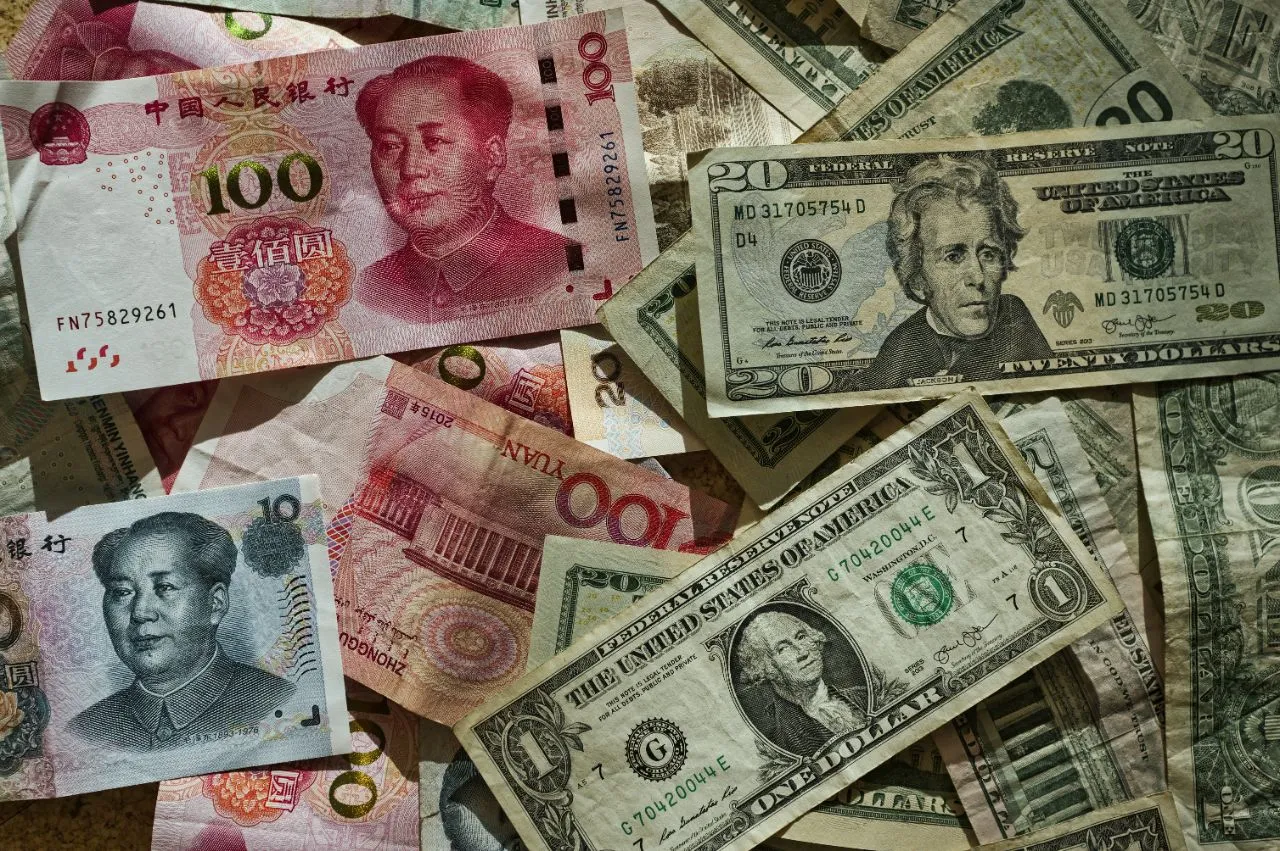
https://asset.coinness.com/en/news/80a461c9ba733f424b0176fe5cd0c9e0.webp
Photo by Eric Prouzet on Unsplash

Bullish for crypto?

Jamie Coutts, chief crypto analyst at financial research platform Real Vision, took to X to comment on the development. Coutts wrote:


“The bottom is in for global central bank liquidity for this cycle. Sit back and watch the other CBs fall into line. In a credit-based fiat fractional reserve system, debasement is a feature, not a bug.”


Coutts signed off with a “Bitcoin” hashtag, with the inference that the development will have positive implications for Bitcoin. Similarly, market analysts at Singaporean crypto-asset trading firm QCP Capital perceive the move as being bullish for crypto and risk assets more generally.


QCP Capital analysts stated:


"We believe more easing is coming from the People's Bank of China (PBoC), and they have communicated as much, and combined with the U.S. Federal Reserve joining the global cutting cycle, all major central banks, except Bank of Japan, are now ready to inject more liquidity into the market. The macro space continues to look more and more bullish for risk assets, including crypto." 


Taking that consideration further, the QCP Capital analysts suggest that market participants in the crypto space may be caught off guard by a resultant uptick in crypto pricing, stating:


"We know how explosive crypto prices can be, and with so many bullish catalysts, we think the next move higher will leave many people surprised and sidelined.”


Fed rate cuts

Many market commentators were similarly enthused last week following an announcement in the U.S. by Jerome Powell, Federal Reserve Chairman, of a 50 basis point rate cut, with the suggestion that further cuts may be implemented going forward.


However, not all market pundits are of the same view. Some believe that small interest rate cuts occurring in an overall high rates environment won’t move the needle and that it’s only in a zero rates environment where Bitcoin and crypto skyrocket. 


Arthur Hayes, co-founder of BitMEX and Chief Investment Officer (CIO) at the Maelstrom Fund, asserted in his keynote speech at TOKEN2049 in Singapore last week that he wasn’t enthusiastic about rate cuts driving crypto. 


“While I think a lot of people are looking forward to a rate cut, meaning that they think the stock market and other things are going to pump up the jam, I think the markets are going to collapse a few days after the Fed’s rates,” he stated.


Markets didn’t collapse subsequently although it seems that they are responding to this latest monetary stimulus introduced by China.


More to Read
View All
Policy & Regulation·

May 22, 2023

Cebu Meeting of FSB Highlights Crypto Risks

Cebu Meeting of FSB Highlights Crypto RisksThe Regional Consultative Group for Asia of the Financial Stability Board (FSB) has highlighted the risks implicated by crypto assets in a series of meetings held on Thursday and Friday in Cebu, the Philippines.The FSB is an international body with a mandate to monitor the global financial system, as well as make recommendations in respect of that system. The agency was established by the G20 group of countries in April 2009, replacing its forerunner, the Financial Stability Forum.Photo by John Alvin Merin on UnsplashA regulatory framework for cryptoThe two-day event focused on non-bank financial intermediation (NBFI) in Asia and the development of an effective global regulatory framework for crypto-assets. It discussed recent developments in financial markets, together with their regional impact.In opening remarks, Philippine Central Bank Governor, Felipe Medalla, stated: “Crypto, the biggest issue there is, whether we like it or not is quite a lot, especially younger people who are actually gambling. They have huge losses, our view right now. Well, you’re there, it’s your problem and the regulation becomes strict the moment crypto meets banking.”International participants highlighted the need for the development of an effective global regulatory framework for crypto-assets. Particular concern exists with regard to the potential for systemic risk in relation to crypto and a potential overflow into the traditional financial system.Earlier this year, the FSB proposed a complete regulatory framework for cryptocurrencies, with the report having been originally submitted in October of last year. Among its key components is the imposition of tighter controls. It proposed the guiding principle of “same activity, same risk, same regulation” for crypto assets, mirroring the approach taken for traditional financial assets.Global approach to taming cryptoThis approach has proven to be problematic for people working within the digital assets space. Many of the core facets of cryptocurrencies are entirely different to anything we see in traditional finance. Trying to frame crypto within an existing approach and standard has been perceived by many to be akin to trying to fit a square peg in a round hole.It’s not the FSB's role or place to affect policy directly. That responsibility lies with policymakers and regulators in each individual country. However, the organization is seeking to influence those individuals and entities in the hope that they will employ its suggested regulatory framework.Klaas Knot, Chair of the FSB and President of the Dutch Central Bank, provided this view on crypto: “We will come up with a global regulatory framework. It also only makes sense to regulate this from a global perspective. Because, nowadays you can take a server and put it anywhere in the world and start issuing these digital assets.”From Knot’s take, it’s clear that governments and central bankers are cottoning on to the fact that individual nation-state regulation is futile to an extent where decentralized innovations like cryptocurrency are concerned. Others such as European Central Bank (ECB) President Christine Lagarde and Mark Branson, President of German financial markets regulator BaFin, similarly have called for a globally enforced regulatory approach over the course of the past year.Ongoing struggleWhile regulation can be helpful, particularly when it comes to the points at which crypto meets the traditional system, there’s no doubt that this emerging innovation will disrupt the conventional system to some degree or other. That may place an incentive before central bankers and governments to try and stymie the further development of digital assets.While a truly global approach to regulating digital assets could retard development of the sector, there is rarely total consensus among world governments on a single issue. Therefore, by its very nature, crypto, and the digital assets sector will likely continue to develop regardless. It’s more a question of how long that process takes.

news
Web3 & Enterprise·

Mar 09, 2024

Nissan delves into metaverse on a heritage and safety theme

On March 7, Nissan Motor Co. introduced an innovative metaverse experience titled the "Heritage Cars & Safe Drive Studio," blending elements of automotive history with interactive safety education.Photo by Matthijs Waanders on UnsplashMarking 90 years in businessThe studio, launched to commemorate Nissan's 90th anniversary, features three iconic models from the company's past, recreated in virtual environments to reflect their respective eras. Among the showcased vehicles is the Silvia Q’s S13, renowned globally for its role in drifting culture. Users can explore this historic car from the 1980s while learning about the influence of pedestrian clothing colors on driver visibility. In another exhibit, users engage in a mini-game designed to educate on driver field-of-view and the impact of multitasking on safety. Alongside, the Skyline 2000GTX-E, famous for its presence in popular media like the Gran Turismo video game series and Fast and Furious movies, adds a touch of nostalgia and excitement, transporting users to the 1970s era. In a 1950s and 60s American diner and drive-in theater setting, the final exhibit offers a hands-on steering wheel spin exercise. These experiences aim to merge Nissan's heritage with vital safety knowledge, such as understanding the significance of pedestrian attire and the dangers of distracted driving. Developed in collaboration with Japanese university researchers, these immersive experiences are accessible through Meta Quest headsets, marking Nissan's continued exploration of virtual and augmented reality for customer engagement and education. Previous forays into the metaverseThis initiative aligns with Nissan's ongoing efforts to enhance its presence in the metaverse. It’s not the carmaker's first rodeo where the metaverse is concerned. It introduced its first virtual test drive and a virtual unveiling of its Sakura model in 2022. That same year, the company suggested it was interested in providing more in the way of virtual events, even going as far as to suggest the development of virtual customer support offices for clients. It followed that up in December 2023 with a revamp of four existing metaverse worlds, a project that also formed part of its 90th-anniversary celebrations. Nissan's latest foray into the metaverse coincides with advancements in augmented reality (AR) and virtual reality (VR) hardware. The recent launch of Apple's inaugural mixed-reality headset in February 2024 signals intensified competition among tech giants like Meta and Microsoft, who have been gradually expanding into consumer and enterprise AR/VR markets over the past decade. Broader auto industry interestNissan isn’t alone in the auto industry in taking initial steps into the metaverse. Rival Toyota has taken a different approach, pursuing an interest in creating remote workspaces for staff so that meetings can be held in the metaverse. Hyundai experimented with entering the metaverse as early as 2021. Through a partnership with Naver Z, the company offered virtual test drives of its Sonata model. Meanwhile Renault Korea has tipped its toes in the metaverse by offering consumers the ability to custom-build virtual cars on a metaverse platform. Through these metaverse updates, Nissan aims to stay at the forefront of automotive innovation, utilizing immersive experiences to engage customers and promote safety awareness in an increasingly digital world. 

news
Policy & Regulation·

Aug 22, 2023

China Furthers Efforts to Shape the Metaverse

China Furthers Efforts to Shape the MetaverseFindings by US political media outlet POLITICO suggest that Chinese authorities and state-owned companies are seeking to mold the metaverse in line with existing systems in China such as the country’s social credit scoring system.The concept of the metaverse entails a network of interconnected immersive virtual worlds powered by virtual reality, augmented reality, and simulations. Development in this area is centered around applications such as online gaming and virtual events.Photo by Hanson Lu on UnsplashDigital Identity SystemIn a report published on Sunday, POLITICO referenced recently drafted proposals put forward by China Mobile, a state-owned telecoms operator. The proposals outline a “Digital Identity System” for users within online virtual worlds and metaverses.These proposals recommend the use of “natural characteristics” and “social characteristics” within digital IDs, encompassing personal data such as occupation, “identifiable signs,” and other attributes. Moreover, they suggest storing this information “permanently” and sharing it with law enforcement to ensure order and safety within the virtual realm.Setting agreed benchmarks for emerging techThe proposals present a hypothetical scenario involving a disruptive user named Tom, who causes turmoil in the metaverse. The digital identity system, according to these proposals, would facilitate prompt identification and punishment by law enforcement.These discussions are occurring within the framework of the International Telecommunication Union (ITU), a United Nations (UN) agency responsible for establishing global technology standards. This strategy echoes China’s endeavor to set worldwide benchmarks for emerging technologies.The ITU, as a UN agency, holds significant sway in defining global telecommunications and technology infrastructure standards. Given that the US and China have quite different outlooks when it comes to technology governance, particularly the future development of the internet and related technologies, the ITU has become a means through which common ground can be found and differences resolved.Upcoming vote on proposalsChina Mobile’s proposals, presented during the ITU’s metaverse focus group meeting, are poised to be voted on during the next meeting in October in Geneva. The company is the largest mobile operator by subscriber base. Demonstrative of ongoing tensions that exist between the US and China, the company was delisted from the New York Stock Exchange in 2021 following a US executive order.Chinese organizations are reportedly submitting more proposals than their Western counterparts, demonstrating that China is very much taking a lead in metaverse development. It’s evident that there is a clear strategy for China to establish itself in furthering this technology.In May, Alibaba Cloud, a subsidiary of Chinese e-commerce giant Alibaba Group, entered into a partnership with layer one blockchain Avalanche to better enable businesses to deploy metaverses. Around the same time, an administrative body within China’s Henan Province established a $22 million dollar investment fund, focused on financing metaverse-related ventures.Later that month, the city of Zhengzhou announced a set of policy proposals designed to support the growth and development of metaverse companies in the region.Within the Chinese autonomous territory of Hong Kong too, there has been plenty of metaverse-related activity. Metaverse start-up Artifact Labs completed a funding round with a view towards expanding its operations. The city is home to Animoca Brands, a prominent player in metaverse-related development.

news
Loading