Top

Ripple scores DFSA license approval in Dubai

Web3 & Enterprise·October 02, 2024, 2:57 AM

Blockchain-based digital payment network enterprise Ripple has announced that it has acquired in-principle approval of a financial services license from the Dubai Financial Services Authority (DFSA) in the United Arab Emirates (UAE).


In a press release published on the firm’s website on Oct. 1, Ripple claimed that the approval “unlocks Ripple’s end-to-end payment services in the UAE, boosting Middle East operations.”


The in-principle approval is a first step on the company’s path towards full approval. That eventuality will enable Ripple to offer cross-border payment services relative to fiat and digital assets, within the Dubai International Financial Center (DIFC) special economic zone.
https://asset.coinness.com/en/news/aaf40f7199830707381fe5e0e24ec556.webp
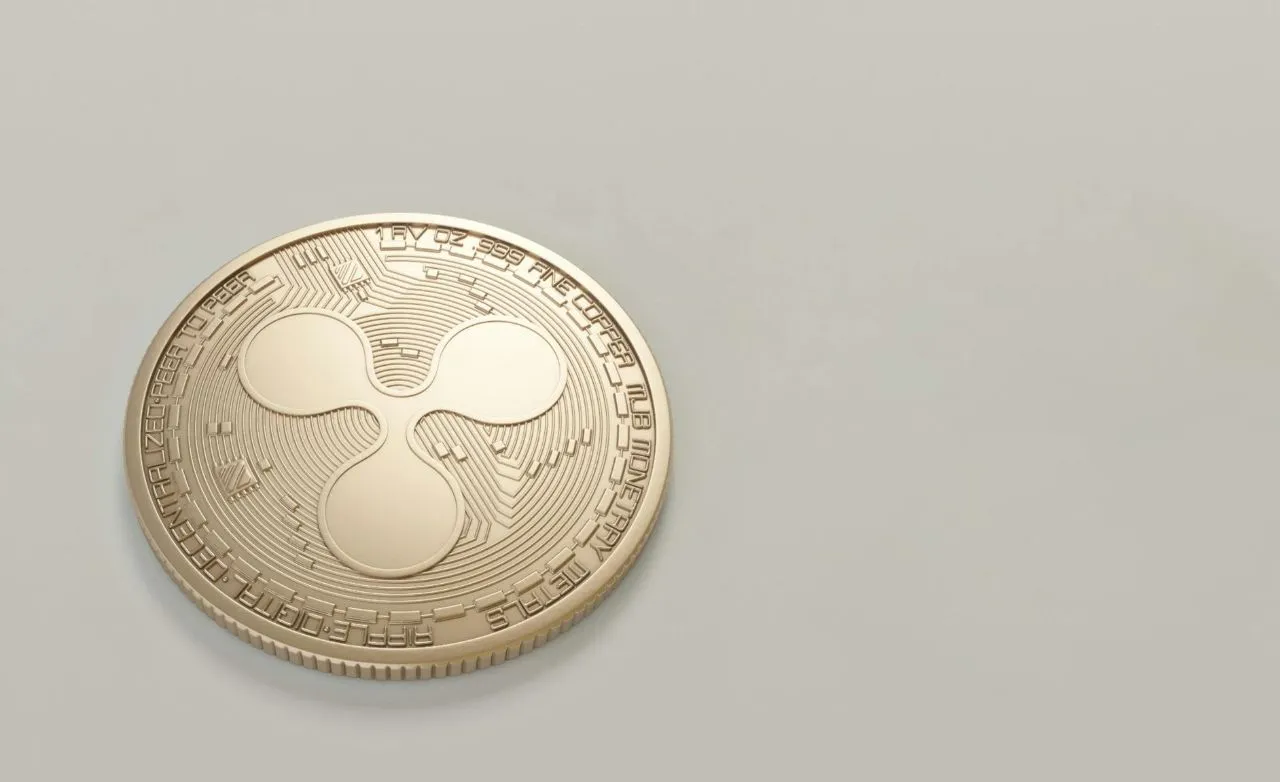
Photo by Moose Photos on Pexels

Expanding Middle Eastern presence

The company claims that pursuing the license is part of a broader strategy to expand its Middle Eastern presence. It follows on from the firm’s move in 2020 to establish its Middle Eastern headquarters in Dubai. Ripple claims that the licensing “significantly strengthens Ripple’s global footprint as a regulated entity and enables the introduction of seamless cross-border payment services, including Ripple Payments Direct (RPD), in the United Arab Emirates (UAE).”


In moving from in-principle approval to full approval, Ripple will have further obligations to accomplish, such as securing office space within the DIFC special economic zone. The company had previously indicated its intention of establishing an office within the DIFC. Back in August, it emerged that Ripple had partnered with the DIFC Innovation Hub with a view towards promoting blockchain and digital asset innovation within the UAE.


Regulatory clarity in the UAE

Ripple is striving to become the first blockchain-enabled payment services provider licensed by the DFSA. Once licensed, the company plans to roll out its enterprise-grade digital asset infrastructure.


Ripple’s XRP has been one of five digital assets approved by the DFSA such that investment funds are allowed to invest in it, although the regulator did indicate in June that it is moving towards expanding the list of recognized tokens.


Mired in legal difficulties with local regulator the Securities and Exchange Commission (SEC) in its home market of the United States in recent years, the company signaled a change of strategy in 2023, indicating its interest in focusing more on international expansion.


While speaking at an event in Dubai at the time, Ripple CEO Brad Garlinghouse said that Ripple was expanding in Dubai. Taking to X in relation to this latest milestone, Garlinghouse wrote that “regulatory clarity is what businesses want, and what consumers need,” adding that “the UAE understands that.”


In the company’s press release, Garlinghouse referred to the “forward-thinking regulatory approach” being pursued in the UAE, which he believes is positioning the country “as a global leader in this new era of financial technology.”


The UAE isn’t the only focus for the company’s international expansion. Ripple has established an office in Singapore which handles over 50% of the firm’s payment flows. On Oct. 1, U.S. investment bank Houlihan Lokey published a report in which it highlighted Ripple as an emerging competitor to the SWIFT cross-border payments system. 


Although the company has had some success in navigating its way through litigation with the SEC in the U.S., it’s thought that the dispute may be prolonged further as some commentators have suggested that the SEC plans to appeal a recent court decision.


 

More to Read
View All
Policy & Regulation·

Jul 21, 2023

Myanmar Government in Exile Backs Crypto Bank Launch

Myanmar Government in Exile Backs Crypto Bank LaunchMyanmar is on the cusp of a financial revolution as the National Unity Government (NUG), the country’s exiled shadow government, introduces the Spring Development Bank (SDB), a crypto-based financial institution.With a mission to bestow long-awaited financial freedom and digitized sophistication upon the nation’s citizens, the SDB aspires to reshape Myanmar’s financial landscape.Built on PolygonThe bank derives its name from the Spring Revolution, an opposition movement that bravely challenges the ruling military junta. The goal of the SDB is to bring “freedom and democracy to the 55 million citizens of Myanmar,” a lofty ambition that reflects the NUG’s determination to empower its people through innovative means.Constructed on the Polygon Network, the SDB aims to revolutionize domestic and international payments, making them faster and more efficient. But the bank’s vision extends beyond just payments. Following a recent press conference, bank officials revealed plans to offer a diverse range of financial products, including fixed deposits, currency exchange services, cross-country remittances, and even digital gold savings options.Reaching the Burmese diasporaNotably, the SDB’s reach extends beyond Myanmar’s borders to the two-million-strong Burmese diaspora residing abroad. This diaspora frequently sends money back to their homeland, but the current remittance fees can soar as high as 30%. The bank intends to alleviate this burden, reducing the costs associated with sending money back to Myanmar.The Spring Development Bank operates under the licensing and regulation of the Interim Central Bank of Myanmar, which is under the control of the NUG. U Calvin, the bank’s CEO, emphasized that this launch marks the initial step towards restoring financial independence to Myanmar.The bank’s emergence comes amid Myanmar’s complex relationship with cryptocurrencies. While there is no specific legislation addressing cryptocurrencies, the Central Bank of Myanmar issued a ban on them in 2020, and the military junta later proposed a cybersecurity law that criminalized their usage in January 2022.Photo by Dan Gold on UnsplashJuly soft launchA soft launch of the SDB is scheduled for July 22, with 1,000 private beta users and 100 relationship managers. The bank expects to achieve a full launch in late August, with the goal of attracting 100,000 active users within the first six months of operation.Despite these regulatory challenges, Myanmar’s people have turned to cryptocurrencies as an escape from their dire financial situation. Since the February 2021 coup, the country’s economy has suffered significantly, with the World Bank estimating an alarming 18% annual contraction. Fading trust in the traditional banking system, controlled by the military, has further crippled the financial market.The Myanmar kyat (MMK) plummeted to an all-time low of 2,200 against the US dollar (USD) in September 2021, down from 1,330 in February 2020 (currently 1 USD = 2,100 MMK).The SDB’s arrival signals a glimmer of hope amidst these trying times, offering a beacon of financial opportunity for the citizens of Myanmar. With the support of the NUG, the bank is looking to take an innovative approach to better serve Burmese citizens, both at home and abroad.

news
Web3 & Enterprise·

Oct 27, 2023

Bithumb and Korbit Struggle to Gain Traction Despite Zero Trading Fees

Bithumb and Korbit Struggle to Gain Traction Despite Zero Trading FeesSouth Korean cryptocurrency exchanges Bithumb and Korbit have recently eliminated trading fees, but their bold decision hasn’t yielded much results. Bithumb was the first to implement this change and attracted users for about a week, but it is now seeing a loss in market share. Korbit, following Bithumb’s example, is also struggling to achieve meaningful outcomes.Photo by Alexander Grey on UnsplashLimited impactLocal media outlet Chosun Biz used data from crypto data platform CoinGecko to draw this conclusion. On October 26, Korbit’s daily trading volume represented 0.19% of the total trading volume among South Korea’s top five crypto exchanges (Upbit, Bithumb, Coinone, Korbit, and Gopax). This figure marked a 0.14 percentage point increase compared to the 0.05% recorded on October 19. Korbit had implemented a zero trading fee policy at 9 a.m. (KST) on October 20. Additionally, they launched a promotion offering KRW 5,000 ($3.69) worth of bitcoin to users who transferred virtual assets totaling KRW 1 million or more from Travel Rule-compliant exchanges to Korbit. While the promotion did contribute to Korbit’s market share, it still remains below 1%.Bithumb’s performance showed some improvement, albeit briefly. As of October 26, Bithumb’s market share stood at 18%, marking a 4.7 percentage point increase from its 13.3% share on October 3, the day before it eliminated trading fees. However, it’s worth noting that its market share had reached almost 30% shortly after the promotion’s launch. This indicates that its strategy is losing efficacy over time.The less-than-enthusiastic results from their daring marketing endeavors can be attributed to their inability to draw in retail investors. To begin with, Upbit, the leading player in the market, had already been providing a relatively low fee of 0.05%. Furthermore, adapting to new user interfaces on these exchanges posed a challenge. Zero trading fees weren’t attractive enough for crypto investors to leave their current platforms.Trading volume mattersIn the case of Korbit, its lower trading volume was a disadvantage when it came to attracting users. On crypto exchanges, a higher trading volume typically translates to faster trade executions. As a result, users of Korbit might experience delays in executing trades at their preferred price.Jeong Hye-won, a research associate at crypto data analytics platform Xangle, told Chosun Biz that users on exchanges with lower trading volumes tend to experience slippages due to slower transaction speeds and sparsely populated order books. A slippage means the difference between the initially placed order price and the executed order price. Jeong further explained that Korbit’s zero trading fee policy didn’t have a significant impact because it offers fewer listed tokens compared to Upbit and Bithumb.There is speculation that the free-trading fee promotions introduced by Bithumb and Korbit, despite their revenue sacrifices, might conclude sooner than initially anticipated due to their perceived ineffectiveness. Bithumb derives 99.95% of its revenue from trading fees, while Korbit relies on trading fees for 99.79% of its income. An industry insider has commented that trading fees play a vital role in an exchange’s revenue, and given Bithumb’s reported loss in earnings during the second quarter, there are concerns about their capacity to sustain this strategy.

news
Policy & Regulation·

May 27, 2023

Study Places Hong Kong as Leader in Crypto Readiness

Study Places Hong Kong as Leader in Crypto ReadinessHong Kong, according to a recent study conducted by Forex Suggest, has emerged as the leading jurisdiction worldwide in terms of its readiness for cryptocurrencies. The study evaluated various factors such as the number of blockchain startups per 100,000 people and the density of crypto ATMs in relation to the population.Photo by Traxer on UnsplashZero capital gains taxThe attractiveness of Hong Kong for investors in the crypto space stems from its advantageous tax policies. The study noted that Hong Kong does not levy capital gains taxes on cryptocurrency, making it an appealing destination for crypto enthusiasts. The United States and Switzerland secured the second and third positions, respectively, in the rankings of the most crypto-ready countries.In recent times, Hong Kong has actively embraced investments from digital asset companies and is poised to implement new regulations for the industry. Effective from June 1, the city’s new rules aim to establish Hong Kong as a global hub for digital assets. These regulations permit licensed cryptocurrency trading platforms to offer services to retail investors while incorporating measures to safeguard individual traders.Global crypto firms are gearing up for that new licensing approach, carving out separate corporate entities in order to meet the regulatory requirements which the Hong Kong regulator, the Securities Futures Commission (SFC), has set. Another Hong Kong regulator, the Hong Kong Monetary Authority (HKMA), is also opening up to embrace digital asset innovation through a pilot project implicating the tokenization of real world assets.Regarding the number of blockchain startups, Hong Kong boasts three startups per 100,000 individuals, securing the second position globally. Topping the list is Switzerland, with an impressive count of 12.9 blockchain startups per 100,000 residents, amounting to a total of 1,128.The study also highlighted that countries such as Hong Kong, Switzerland, Panama, Portugal, Germany, Malaysia, and Turkey impose the lowest taxes on cryptocurrencies. These nations exempt individuals from capital gains taxes on profits derived from cryptocurrency trading.Crypto ATM proliferationWhen considering the prevalence of crypto ATMs, Hong Kong ranks third globally, with two ATMs per 100,000 people, totaling 149 ATMs. The United States takes the top spot with nearly 34,000 crypto ATMs, but when normalized to the population, it has 10.1 ATMs per 100,000 individuals.Regressive measures in USIn contrast to Hong Kong’s favorable environment, regulators in the United States have intensified their efforts to tighten regulations on cryptocurrency exchanges, leading many within the industry to advocate for clearer guidelines. Consequently, several exchanges are exploring jurisdictions that offer more favorable conditions.Forex Suggest emphasized that the report’s findings were based on extensive data analysis, taking into account factors such as tax regulations, legislation, the presence of blockchain startups, and the level of interest in cryptocurrencies. Each jurisdiction received a normalized score out of 10 for each factor, and the overall rankings were determined by averaging these scores.Hong Kong’s position as the most crypto-ready jurisdiction in the world showcases its commitment to fostering innovation and becoming a global leader in the digital asset space. With its advantageous tax policies, growing number of blockchain startups, and forthcoming regulations, the autonomous Chinese territory is solidifying its position as an attractive destination for businesses and investors in the cryptocurrency space.

news
Loading
