Top

Legislator calls for Bitcoin reserve in Hong Kong

Policy & Regulation·December 31, 2024, 1:09 AM

In an interview with local media, Hong Kong legislator Johnny Ng called for the Chinese autonomous territory to implement a national Bitcoin reserve.


Ng made the comments in a discussion with Hong Kong-based state-owned Chinese language media outlet, Wenweipo. The legislator believes that there is an opportunity for Hong Kong to take advantage of China’s “one country, two systems” approach to governance, which gives it the freedom to implement such a reserve despite mainland China remaining much less enthusiastic where Bitcoin and cryptocurrencies are concerned.
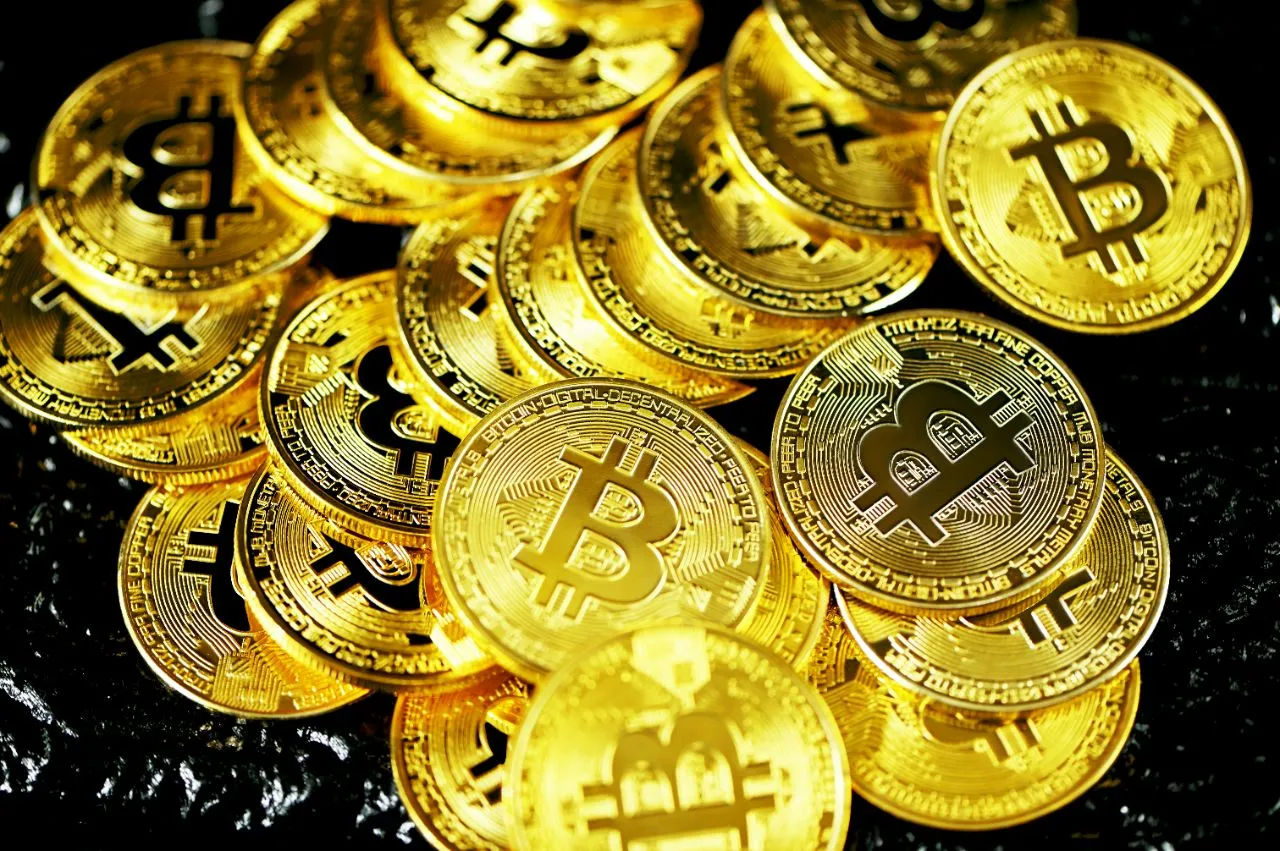
https://asset.coinness.com/en/news/9bd305529ef6d11d83e3405ca5400aeb.webp
Photo by Kanchanara on Unsplash

Spot Bitcoin ETF impact

The Hong Kong Legislative Council member suggested that as a first step, Hong Kong needs to assess the impact that spot Bitcoin exchange-traded funds (ETFs) in the United States have had. Spot Bitcoin ETFs were launched in the U.S. in January. The leading spot Bitcoin ETF, IBIT, provided by asset manager BlackRock, has achieved a growth rate five times faster than any other ETF launched in the past.


El Salvador and the Kingdom of Bhutan are examples of nations that have made Bitcoin a significant component within their national reserves. A recent report suggests that El Salvador currently holds 6,000 Bitcoin which it purchased at an average price of $45,465.


In November, Arkham Intelligence reported that Bhutan was holding Bitcoin with a dollar value which had exceeded $1 billion at that time. Ng also referred to a move by individual states in the U.S. towards holding Bitcoin as a reserve asset. In August, the state of Wisconsin increased its holdings of shares in BlackRock’s spot Bitcoin ETF, IBIT.


Last month, the state of Pennsylvania introduced a bill to make Bitcoin a strategic asset. Ohio has proposed similar legislation while Alabama’s State Auditor, Andrew Sorrell, has suggested that his state should establish a Bitcoin reserve.


Reducing price volatility

Ng believes that furthering the Chinese autonomous territory’s dealings relative to Bitcoin could prove beneficial, given that Bitcoin has the potential to play a role in attracting more talent and investment to Hong Kong. Additionally, he feels that the development of Bitcoin reserves at state level could help in reducing the price volatility of the asset as it goes through the process of global adoption.


The Hong Kong lawmaker also believes that there is an opportunity for the Chinese antonymous territory to benefit from first mover advantage, stating that “the value of Bitcoin will be more stable, causing more and more other countries to follow suit and reduce their holdings of traditional assets.”


Ng's latest interview follows a similar comment he made on X in July, where he suggested that Bitcoin is worth considering as an official financial reserve for a country.


David Bailey, CEO of Bitcoin Magazine, took to X stating:


“Hong Kong making moves, SBR here we go. President Trump must make the Strategic Bitcoin Reserve his top priority the day he enters the White House.”

In recent days, soundings from Japan and Russia suggested that neither of these countries was prepared to establish Bitcoin reserves. However, just like with the advent of the Bitcoin ETF in the U.S., following Trump’s expression of interest in the establishment of a strategic Bitcoin reserve, the level of consideration of the matter has increased considerably among governments around the world.


More to Read
View All
Policy & Regulation·

Jan 11, 2024

Apple India blocks eight exchanges subject to FIU notice

It emerged on Wednesday that the Indian version of the Apple App Store has blocked access to eight crypto exchanges that were recently subject to a show cause notice from an Indian government agency, the Financial Intelligence Unit (FIU). The development occurred only two weeks after these global firms were flagged for allegedly operating "illegally" in the country. The FIU had cited non-compliance with India's anti-money laundering rules. In its statement on Dec. 28, the FIU urged India's IT Ministry to block the websites of all nine services in the country. The affected exchanges include Huobi, Gate.io, Bittrex, Binance, Kraken, Kucoin, MEXC Global and Bitfinex. Binance acknowledged the issue in a social media post, stating that it will continue to work with local regulators. Interestingly, Bitstamp, another exchange mentioned by the FIU, remained operational on the App Store in India. While these apps have been removed from the Apple App Store, they are still available on the Google Play Store in India and their websites remain accessible within the country. Users who had previously installed these apps on their devices can still access them. Photo by Naveed Ahmed on UnsplashTax avoidanceThe backdrop for this action involves a trend where many Indian traders had shifted to global cryptocurrency platforms rather than native digital asset exchanges. India initiated cryptocurrency taxation last year, imposing a 30% tax on gains and a 1% deduction on each crypto transaction.  While Indian-based exchanges like CoinSwitch, CoinDCX and WazirX maintain compliant know-your-customer verifications, global platforms have not followed suit. Notably, WazirX has experienced a drastic 97% drop in trading volume over two years as many traders migrated to global apps. It’s thought that as many as five million crypto users have shifted their trading activity to offshore exchanges. The tax has proven to be controversial and according to Dr. Vikash Gautam, the author of a report on the tax measure published last November, “it just isn’t enforceable . . . It is possible to be done with international cooperation, but we do understand it is a long process. Some of the other countries have some arrangements with international exchanges to track that." Leveling the playing fieldIt’s amid that competitive backdrop that native Indian exchanges lobbied the Indian government through the Bharat Web3 Association (BWA) to take action against unregulated offshore exchanges recently. CoinSwitch's co-founder and CEO, Ashish Singhal, urged offshore exchanges to comply with local regulations, suggesting registration with the FIU and adherence to India's Anti-Money Laundering (AML) and Counter-Terrorist Financing (CFT) measures. Singhal, whose CoinSwitch platform is a founding member of the BWA industry advocacy group, highlighted that this would not only benefit offshore exchanges but also enhance consumer protection in India through increased regulatory oversight. Earlier warnings from Indian cryptocurrency exchanges foresaw users shifting to decentralized exchanges or non-compliant services due to the New Delhi government's taxation policy on crypto. In response, CoinDCX announced incentives for customers transferring their crypto assets from global exchanges to its India-based platform. Taking to social media on Wednesday, CoinDCX founder Sumit Gumpta stated:”This is a defining moment for [virtual digital assets] in India, and we're dedicated to facilitating a seamless and secure transition for investors navigating these changes.”   

news
Policy & Regulation·

Dec 13, 2023

NFTs not subject to South Korea’s Virtual Asset User Protection Act

NFTs not subject to South Korea’s Virtual Asset User Protection ActIn anticipation of the Virtual Asset User Protection Act coming into effect in July of next year, the South Korean Financial Services Commission (FSC) has issued an advance notice regarding its subordinate statutes.Photo by Ethan Brooke on UnsplashSeven specific provisionsThe subsidiary regulations under the Act detail seven specific provisions aligned with the Act’s objectives. Firstly, assets categorized as electronic securities, mobile vouchers, deposit tokens backed by the Bank of Korea’s central bank digital currencies (CBDCs) and non-fungible tokens (NFTs) will not be classified as virtual assets and hence, not regulated by this Act. However, in instances where NFTs are used as a means of payment for specific goods or services, they will be regarded as virtual assets.Secondly, banks will take responsibility for managing the deposits of users on cryptocurrency exchanges. This aligns with the Act’s requirement for virtual asset service providers (VASPs) to keep users’ funds separate from their own, either by depositing them in, or entrusting them to, reputable institutions. Under these regulations, banks are required to manage users’ assets in a manner consistent with how investors’ deposits are handled under the Capital Markets Act. This means that banks are allowed to invest VASP users’ assets only in secure instruments, such as state and local government bonds, and are also obligated to pay fees to deposit owners, taking into account the yields of these investments.80% of user assets in cold walletsThe third key aspect of the regulations is that VASPs are required to store a minimum of 80% of user assets in cold wallets, which are not connected to the internet. This is higher than the current requirement of 70%, enhancing the security measures for users of virtual assets. To calculate the total value of a virtual asset at any given time, its total supply is multiplied by its average daily price over the past year. VASPs are obligated to assess the value of virtual assets every month.The fourth regulation mandates that VASPs must enroll in an insurance plan, contribute to a rainy day fund or accumulate reserves. This is to ensure they can fulfill their compensation responsibilities in the event of incidents like security breaches or technical failures. The required preparation amount is set at a minimum of 5% of the user assets stored in hot wallets, as these are more susceptible to risks. VASPs are required to update their compensation thresholds or reserves monthly and must take any necessary actions to comply with these requirements by the next working day following the update.Information disclosure guidelinesAnother regulation addresses the issue of insider trading in the context of the virtual asset market. Under the current Capital Markets Act, information is considered disclosed when it’s made available through disclosure systems of the FSC or the Korea Exchange (KRX). However, since the cryptocurrency market lacks a similar system, the new statute provides criteria for determining when information is deemed disclosed.For instance, if a VASP, including exchanges, releases crucial information about a virtual asset on an exchange and six hours pass, that information is regarded as disclosed. This acknowledges the non-stop nature of the crypto market. Moreover, information disclosed post 6 p.m. is treated as officially disclosed after 9 a.m. the next day.Additionally, if a virtual asset issuer publishes significant information about its token on a website hosting its white paper, the information is deemed public after one day. This is conditional upon the website being publicly accessible and having consistently provided important token information for the preceding six months.These rules aim to provide clarity and fairness in information disclosure in the crypto market, adapting the principles of traditional financial markets to the unique dynamics of virtual assets.No arbitrary suspension of transactionsThe sixth regulation restricts VASPs from arbitrarily halting deposits and withdrawals of virtual assets unless there are justifiable reasons for such actions. Acceptable circumstances for suspending these transactions include situations where the VASP experiences a technical disruption in its system, where regulatory authorities instruct a VASP to cease deposits and withdrawals or where cyberattacks or similar incidents have occurred or are clearly imminent.Lastly, virtual asset exchanges are required to monitor for abnormal transactions continuously. These are transactions that show substantial shifts in the prices or trading volumes of virtual assets, particularly in response to news or rumors that could influence cryptocurrency prices. If VASPs suspect unfair trading practices, they must report to the FSC or the Financial Supervisory Service (FSS). When there is ample evidence of such activities, crypto exchanges are obligated to notify the police or the prosecutors’ office. In addition, the financial regulator has the authority to levy fines based on the prosecution’s decisions or after completing consultations with the prosecution if a year has passed since the day of the report.During the period of advance notice, which spans from Nov. 11 to Jan. 22, the FSC will seek comments from relevant organizations, experts and businesses. This process is aimed at refining the rules and regulations subordinate to the Virtual Asset User Protection Act. Moving forward, the financial authorities plan to publish a set of guidelines and Q&A materials and conduct explanatory sessions, with the goal of ensuring a smooth implementation of the Act.

news
Web3 & Enterprise·

Oct 05, 2023

CMCC Global Launches $100 Million Fund for Asian Blockchain Startups

CMCC Global Launches $100 Million Fund for Asian Blockchain StartupsCMCC Global, a crypto-focused venture capital firm based in Hong Kong, has successfully raised $100 million for its newly established Titan Fund.That’s according to a report on Wednesday (local time) published by the South China Morning Post (SCMP). The fund is dedicated to providing crucial support to startups operating in Asia’s developing blockchain sector.Photo by Shubham Dhage on UnsplashProminent backersOver 30 prominent investors, including Winklevoss Capital and Animoca Brands Founder Yat Siu, have eagerly backed the initiative. Last month, CMCC led a funding round into Animoca. Among the notable investors joining this venture are EOS blockchain developer Block.one, Richard Li’s Pacific Century Group, and Hong Kong-based growth equity investment firm Jebsen Capital.The Titan Fund is structured to channel its capital into three primary investment categories: blockchain infrastructure, consumer applications, and crypto financial services. Martin Baumann, Co-Founder of CMCC Global, emphasized the fund’s commitment to fostering innovation in the blockchain space. He stated:“If Hong Kong continues on its route of embracing Web3, there will naturally be more and more entrepreneurs starting companies in that space. And we can be their first capital.”Exploiting Asia’s Web3 opportunityBased on commentary by Baumann earlier this year, the CMCC Global Co-Founder certainly believes that an opportunity has opened up in Asia where Web3 is concerned. In May Baumann told Bloomberg TV that regulatory issues unfolding in the United States represented an opportunity for Asia.In criticizing the US, Baumann stated:“The US has been quite negative from the regulatory perspective and it really seems to us that the US is shooting itself in the foot with a machine gun.”Developing upon the inherent opportunity implicated in that difficulty in the US, he said: “We see places like Hong Kong having a real opportunity at this point in time to bring those firms and entrepreneurs to the city.”There’s plenty of capital sitting on the sidelines waiting for the right entry valuations to pull the trigger,” he added.Hong Kong’s crypto ascendencyThe venture capitalist may have been right on both counts. This funding announcement coincides with Hong Kong’s resurgence in the crypto arena. Historically, the city had been home to industry giants like BitMEX and Alameda Research.Recent developments indicate that Hong Kong is actively collaborating with China to establish itself as a thriving hub for crypto innovation. The Chinese autonomous territory has been encouraging crypto start-ups on the Mainland to relocate to Hong Kong. In August, it granted licenses to HashKey Exchange and OSL to offer crypto trading services to retail traders.The Titan Fund’s successful capitalization demonstrates the growing interest and confidence in Asia’s blockchain ecosystem. CMCC Global, with its pool of investors, is aiming to play a pivotal role in supporting and nurturing the next wave of blockchain startups in the region.

news
Loading