Top

Confiscated crypto fund proposed in Russia

Policy & Regulation·March 24, 2025, 1:45 AM

While Russia had previously ruled out adding Bitcoin to its national reserves, the latest soundings from officials within the world’s largest country call for the creation of a crypto fund to hold and manage confiscated cryptocurrencies.


According to a report published by Russian state-owned news agency TASS, Evgeny Masharov, a member of the Civic Chamber of the Russian Federation, has put forward a proposal for the formation of a special fund that would hold and manage cryptocurrencies that had been confiscated as the proceeds of crime by the Russian authorities.
https://asset.coinness.com/en/news/bc2a17626289d15b5f6be1bb1856a54f.webp
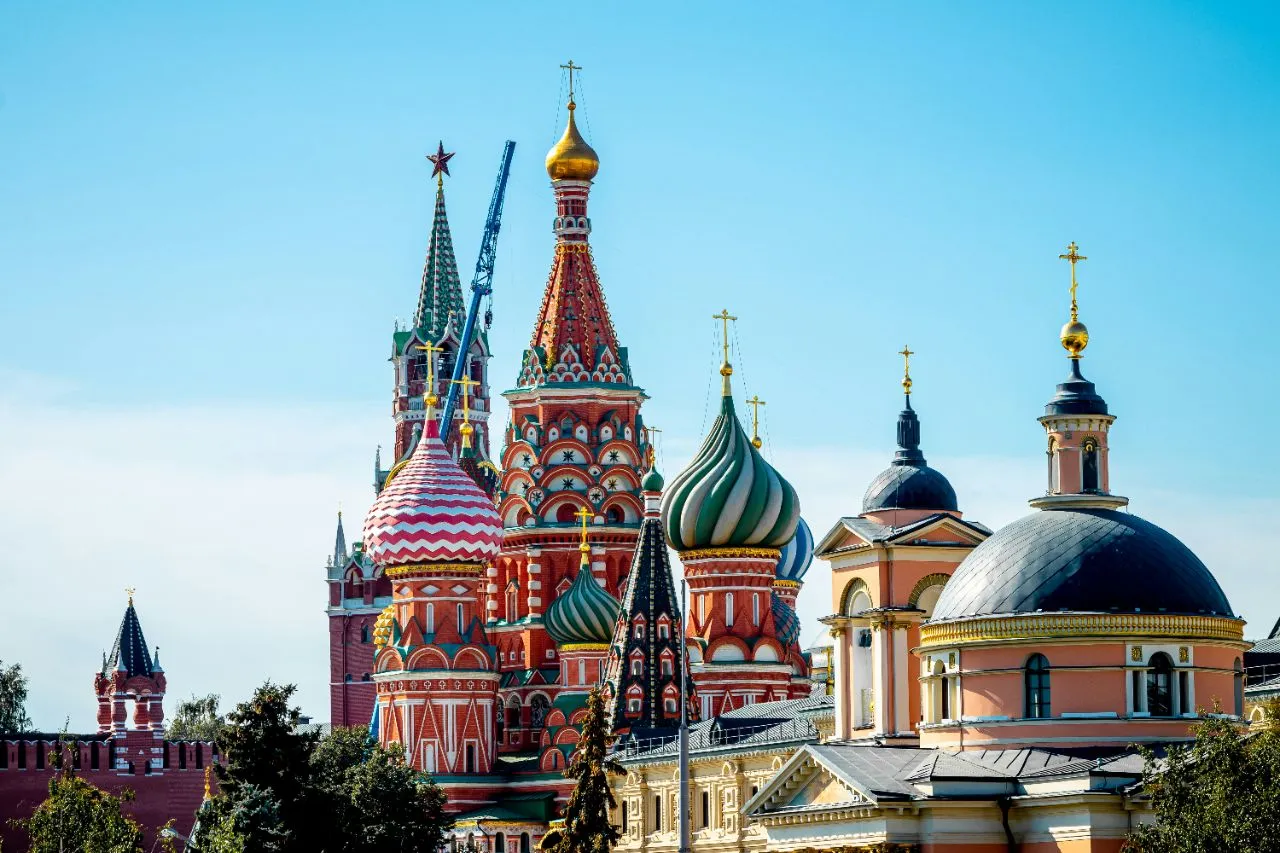
Photo by Artem Beliaikin on Unsplash

Masharov told TASS:


"Cryptocurrency confiscated in criminal proceedings should work for the benefit of the state. For these purposes, a special fund can be created, on the balance sheet of which these cryptocurrencies would be located, the capitalization of which will significantly increase over time.”


In the future, Masharov proposes that the funds could eventually be used for educational, social and environmental projects.


Enabling asset confiscation

Masharov supported moves to define digital assets as property within the realm of criminal procedure legislation previously. Since 2021, legislation has been proposed to lay out a properly defined framework to enable the confiscation of such assets in criminal cases. As of last month, Russia’s Supreme Court is currently working towards establishing this.


The Civic Chamber official expressed his willingness to discuss his proposal with other stakeholders such as crypto industry representatives and officials from Russia’s Federal Taxation Service.


If this proposal was to be implemented, it would match a position taken in the U.S. with regard to a Bitcoin reserve. Earlier this month, U.S. President Donald Trump signed an executive order creating a strategic Bitcoin reserve which will be funded mainly by confiscated Bitcoin.


Central bank resistance

Russia’s central bank has been largely opposed to the use of cryptocurrencies within Russia in recent years. Last December, central bank governor Elvira Nabiullina stated that the bank had no plans to invest in cryptocurrencies. Earlier that month, Anton Tkachev, a member of Russia’s State Duma, had put forward a proposal to establish a national Bitcoin reserve.


With the onset of sanctions as a consequence of the conflict in Ukraine, the Russian government has softened its position with regard to cryptocurrencies. Digital assets such as Bitcoin are now seen as a mechanism to enable cross-border trade and cross-border payments, circumventing the international banking system.


It was reported last year that Russia’s central bank had changed course and with that, it was leading efforts to assist Russian companies to use cryptocurrency for international trade, bypassing Western sanctions. Earlier this month, Reuters reported that Russian oil firms are now using leading cryptocurrencies such as Bitcoin, Ethereum and Tether in oil trade deals with their counterparts in China and India.


In another development earlier this month, it emerged that the central bank is now allowing a limited level of crypto investment by investors.


Faced with sanctions and current geopolitical realities, it’s understood that Russia had been considering the use of Bitcoin for reserve purposes, but for the time being, it has opted to concentrate on adding gold and the Chinese yuan to its sovereign wealth fund. 



More to Read
View All
Web3 & Enterprise·

Sep 09, 2023

Founders Exit Following Overhaul of NFT Startup Rario

Founders Exit Following Overhaul of NFT Startup RarioPolygon-based NFT platform Rario, specializing in cricket-related non-fungible tokens (NFTs), is experiencing a major transformation, with its founders, CEO Ankit Wadhwa and CTO Sunny Bhanot, departing the company after a two-year tenure.Investors in the startup are taking on a more prominent role in steering the direction of the Indian startup, according to a report from TechCrunch on Friday.Photo by Alessandro Bogliari on UnsplashDream11Dream11, a prominent Mumbai-based fantasy sports platform and one of Rario’s primary backers, alongside other investors, is said to be exerting pressure to gain greater control, resulting in the ousting of the firm’s founders. The development comes amid other significant shifts in Dream11’s leadership.Additionally, Rario is undergoing a broader restructuring effort that includes the elimination of various roles, according to sources who were cited by TechCrunch as being familiar with the matter.This recent upheaval coincides with reports of Dream11’s parent company, Dream Sports, taking measures to reduce operational costs. TechCrunch noted that Dream Sports is actively renegotiating several licensing agreements previously inked by Rario as part of cost-cutting measures.High profile investorsRario boasts a roster of high-profile investors, including global investment company Alpha Wave Global and cricket icon Sachin Tendulkar. In April 2022, the cricket NFT platform made waves by securing $120 million in a Series A funding round, asserting its dominance in the cricket NFT rights arena with over 900 cricketers on board at that time. It’s not clear what valuation the firm had at the time of the Series A funding round but in a prior round, Rario had been valued at $250 million.Founded in 2021, Rario set out with a mission to create digital cricket collectibles and foster an online community for passionate fans. By April 2021, the company had successfully sold 50,000 NFTs to sports enthusiasts spanning 20 countries.Cricket world partnershipsCricket is the second largest sport in the world with in excess of 1.5 billion fans worldwide. That leaves a lot of scope for Rario to harness NFTs to bring about new forms of engagement.Among Rario’s notable partnerships are agreements with cricket leagues such as Cricket Australia, the Australian Cricketers’ Association, the Caribbean Premier League, the Lanka Premier League, and the Abu Dhabi T10 League Legends League Cricket.Polygon changesPolygon Labs, the developer of the Ethereum-centric layer two scaling network upon which the Rario platform runs, also features India in its origin story. It too has seen upheaval at a managerial level recently. In July, the firm announced a number of senior positional changes. Its former Chief Legal Officer (CLO) was elevated to the position of CEO. Those changes saw Polygon Labs’ Indian Co-Founder Sandeep Naiwal transition to the role of Executive Chairman.Rario’s ongoing evolution reflects the dynamic nature of the NFT space, where startups must adapt to changing investor interests and market conditions. With its investors taking the reins, Rario faces a pivotal juncture in its journey to redefine how cricket fans engage with the sport through the exciting world of NFTs.

news
Web3 & Enterprise·

Jul 09, 2025

Metaplanet aspires to acquisition of digital bank

The CEO of Japanese hotel operator turned Bitcoin treasury company, Metaplanet, has suggested that the firm may consider acquiring a digital bank in the future. Simon Gerovich, the firm’s CEO and a former Goldman Sachs banker, told the Financial Times that part of the second stage of its overall strategy may involve “acquiring a digital bank in Japan and providing digital banking services that are superior to the services which retail now is getting.”Photo by Kanchanara on UnsplashBitcoin gold rushGerovich explained that phase one of Metaplanet’s plan involves participating in what he considers to be “a bitcoin gold rush.” He added: “We need to accumulate as much bitcoin as we can . . . to get to a point where we’ve reached escape velocity and it just makes it very difficult for others to catch up.” Other firms are jumping on the bandwagon, as within a very short timeframe, 140 companies around the world have adopted a Bitcoin treasury strategy. Metaplanet currently weighs in as the fifth-largest corporate holder of Bitcoin globally. Right now, the company holds 15,555 BTC. Its target is a holding of 210,000 BTC, which equates to around 1% of the total Bitcoin supply. Based on current pricing, such a holding would be worth in the region of $23 billion. Acquiring cash-generating businessesOnce the company has accomplished its Bitcoin accumulation goals, it plans to move on to phase two, acquiring cash-generating businesses while leveraging its Bitcoin holdings in order to do so. Using Bitcoin as collateral, Gerovich said that Metaplanet will “get cash that we can use to buy profitable businesses.”  While inroads are being made with regard to the acceptance of Bitcoin as a corporate reserve asset, it is earlier days still for its acceptance as collateral. Last month, the Federal Housing Finance Agency (FHFA) in the United States, ordered Fannie Mae and Freddie Mac, key government-sponsored players in the American mortgage market, to explore the treatment of Bitcoin as eligible collateral for mortgages. Standard Chartered and crypto exchange OKX launched a pilot program earlier this year geared towards the use of crypto for collateral purposes. Gerovich talks in terms of Metaplanet’s phase two plan playing out at a time “when bitcoin, like securities or government bonds, can be deposited with banks and then they’ll provide very attractive financing against that asset.” The Metaplanet CEO stated that he expects the Bitcoin accumulation phase of the plan to play out over a period of between four and six years. The Tokyo-listed firm started accumulating Bitcoin in 2024. Some market participants are backing Metaplanet’s strategy with their own money. Global investment management firm Capital Group recently became Metaplanet’s second-largest investor. Bitcoin treasury criticsHowever, the emergence of Bitcoin treasury firms has also drawn quite a few detractors. Some critics point out that many of these companies have a negative operating income. Market analyst Caleb Franzen asserted that even after buying Bitcoin, they’re still junk companies. Others point out that too many firms have jumped on the Bitcoin treasury bandwagon, making the prospect no longer attractive. Fakhul Miah, managing director of GoMining Institutional, is also concerned about copycats. He told Cointelegraph that ”if these smaller firms crash, we could see a ripple effect that hurts Bitcoin’s image.”

news
Policy & Regulation·

Oct 20, 2023

Regulatory Caution Among Asian Nations Amid Reports of Illicit Financing

Regulatory Caution Among Asian Nations Amid Reports of Illicit FinancingWith a plethora of reports of crypto-related terrorist financing having been published in recent weeks, it’s understood that Asian nations may be looking to exercise caution when it comes to the current ongoing process of establishing regulatory guidelines for crypto.That’s according to a report published by the South China Morning Post (SCMP) on Thursday. The use of cryptocurrency by Hamas to fund its attack on Israel is being seen as the catalyst that may drive authorities in various Asian nations to take a more cautious approach to regulating digital currencies, according to analysts cited by the publication.Raj Kapoor, the founder of India Blockchain Alliance (IBA), commented on these recent developments, stating:”It is a kick on the backside for most governments. All regulatory bodies will take a closer look at crypto regulation. Governments will need to start implementing new rules and regulations.”At the recent G20 summit held in New Delhi, a joint declaration called for the regulation, supervision, and oversight of crypto assets, among other measures. The declaration emphasized the importance of supporting “a coordinated and comprehensive policy and regulatory framework.”Kapoor stressed the importance of revisiting the declaration and developing solutions to implement its objectives.Photo by Adolfo Félix on UnsplashRenewed scrutinyEvents in Palestine in recent weeks have led to renewed scrutiny when it comes to monitoring illicit financing activity via cryptocurrency. Only days following the recent Hamas attack, Israeli authorities moved to freeze specified crypto accounts.That scrutiny has continued in recent days, with more accounts having been frozen on crypto platforms such as Binance, while more still have been identified as suspicious, with requests for further information having been submitted in respect of over 200 additional accounts.On Wednesday it emerged that the United States Treasury’s Office of Foreign Assets Control (OFAC) had sanctioned a Gaza-based crypto platform.Potential over-reactionWhile crypto-related terrorist financing has been widely publicized, blockchain analytics firm Chainalysis warned on Wednesday that crypto’s role in this illicit activity has likely been overstated. In its blog post on the subject, the firm stated:“Although terrorism financing is a very small portion of the already very small portion of cryptocurrency transaction volume that is illicit, some terrorist organizations raise, store, and transfer funds using cryptocurrency.”Additionally, Chainalysis stated that it had seen “overstated metrics and flawed analyses of these terrorist groups’ use of cryptocurrency.” Peter Van Valkenburgh, Director of Research at non-profit crypto advocacy group Coin Center, also believes that reporting on the matter is not balanced. Taking to X, he stated:“Sensational early reporting on the scale of Hamas crypto fundraising significantly misstated the amounts involved.”Coin Center’s Director of Communications, Neeraj Agrawal, highlighted an article which claimed that crypto “fueled Hamas’ terror attack on Israel” in its title, only to reveal within the body of the article that “cryptocurrency is still far from the largest funding source for terrorism.”Anndy Lian, a Singapore-based author and inter-governmental blockchain adviser, noted that while some countries may consider banning cryptocurrencies as a solution, this could merely drive illicit financing underground and make it more challenging to trace and halt. Lian argued that cryptocurrencies are traceable and trackable, unlike traditional fiat currencies like US dollars.

news
Loading