Top

XRP primed for institutional adoption in Asia via tracker fund launch

Web3 & Enterprise·April 22, 2025, 8:36 AM

XRP, the native asset of the XRP Ledger (XRPL), a blockchain network developed by Ripple Labs, is destined for further institutional adoption in Asia due to the launch of the region’s first XRP tracker fund.


Crypto-focused institutional asset manager HashKey Capital recently announced the launch of its HashKey XRP Tracker Fund, which has been devised to track the performance of what is the world’s fourth-largest crypto asset by market cap, after Bitcoin (BTC), Ether (ETH) and U.S. dollar stablecoin Tether (USDT).
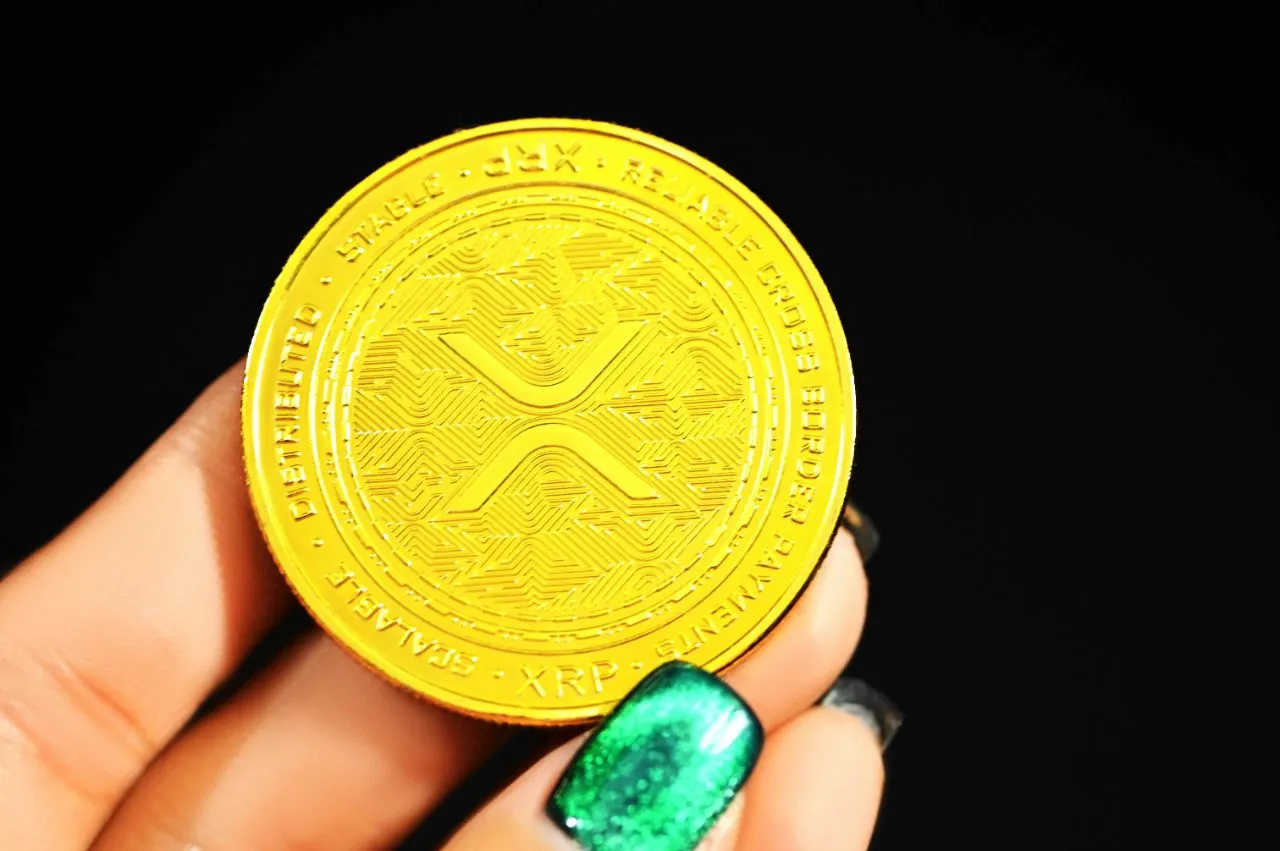
https://asset.coinness.com/en/news/99402d12198ff279c25518cd15e8a457.webp
Photo by Kanchanara on Unsplash

Enabling institutional access

The fund enables investors to gain exposure to XRP without having to take direct ownership and custody of the digital asset. Bitcoin and Ethereum exchange-traded funds (ETFs) have become popular in a number of markets, including the United States, as they allow institutional investors to gain exposure to these digital assets where they may have been uncomfortable with direct ownership due to concerns around custody and counterparty risk or regulatory concerns.


According to HashKey’s press release, investors can buy into the fund through cash or in-kind subscription and subscribe or redeem shares monthly. The fund will be measured and compared against a benchmark index provided by CF Benchmarks, a provider of crypto-related indices.


HashKey Partner Vivien Wong acknowledged the potential that XRP has in the market, stating:

“XRP stands out as one of the most innovative cryptocurrencies in today’s market, attracting global enterprises who use it to transact, tokenize, and store value.”

She added that the new fund simplifies access to XRP within the region, while catering to a growing demand for investment opportunities related to digital assets.

Potential ETF fund conversion

This marks HashKey’s third product that tracks digital asset pricing, with the company having launched both Bitcoin and Ethereum exchange-traded funds (ETFs) previously. On X, HashKey Capital outlined that the XRP Tracker Fund could potentially evolve into a fully fledged ETF, subject to regulatory approval, within the next 1-2 years.


The new fund, which was launched on April 18, also incorporates a strategic partnership with XRP developer Ripple Labs. In what is understood to be the first of a number of collaborations, Ripple will fulfill the role of being the fund’s anchor investor.

Ripple’s Managing Director for the Asia-Pacific (APAC) region, Fiona Murray, cited the development as proof that institutional adoption of digital assets continues to go from strength to strength. 


Ripple CEO Brad Garlinghouse stated last month that he expects a number of spot XRP ETFs to be approved in the United States later this year. Earlier in March, analysts at American investment bank JPMorgan had estimated that spot XRP ETF approval in the U.S. could result in net inflows of $8 billion into such products.

At the time of writing, XRP was trading at $2.09. The asset has increased in price by 300% over the course of the past 12 months, largely due to a changing regulatory environment in the United States and optimism that a settlement can be reached to end its multi-year legal battle with the Securities and Exchange Commission (SEC).


More to Read
View All
Web3 & Enterprise·

May 23, 2023

Cake DeFi Co-Founder Launches Ordzaar Ordinals Marketplace

Cake DeFi Co-Founder Launches Ordzaar Ordinals MarketplaceU-Zyn Chua, Singaporean Co-Founder and CTO of Singapore-based Cake DeFi, has launched Ordzaar, a Bitcoin Ordinals marketplace.In a social media post on Friday, the marketplace described itself as “a decentralized & trustless marketplace for #Bitcoin Ordinals, bridging the gap between trustlessness and true decentralization.” The Ordinals protocol has been enabled due to the SegWit and Taproot upgrades to the bitcoin protocol. It’s a system for numbering satoshis, the smallest denomination of the Bitcoin cryptocurrency. The protocol assigns each satoshi with a serial number, using that number to track them across transactions.By taking this approach, each individual satoshi becomes unique, allowing additional data to be attached to them in a process called inscription. The project has hit the ground running, with its website online and a step by step guide released, instructing new users in how to buy and sell Ordinals on the marketplace.Releasing a press release to publicize the launch, the project pointed out that “the lack of a fully decentralized Ordinals marketplace [poses] a major challenge”, given a backdrop in which Bitcoin Ordinal inscriptions have surged in popularity over the course of recent weeks. Elaborating on that point, the team stated: “There is a growing need for a reliable and secure platform that allows buyers and sellers to transact in a decentralized manner, giving them complete control over their assets, this is where Ordzaar comes in.”Asia Ordinals marketplace firstOrdzaar represents the first ever Bitcoin Ordinals marketplace based within the Asian region. Alongside U-Zyn Chua, the team behind the project implicates three other seasoned crypto-natives with a wealth of experience in crypto, bitcoin, and blockchain. Cake DeFi colleague Naqib Noor assumes the role of Co-Founder and Development Lead. As well as being Co-Founder, Chua is the project’s Lead Researcher.In an effort to showcase the brand new marketplace, the Ordzaar team sponsored and participated in the Bitcoin Ordinals 2023 conference in Miami late last week, with Chua appearing as a speaker at the event. The Co-Founder told Blockhead that:“Ordinals have proven that Bitcoin is more than just a peer-to-peer payment system and has demonstrated a new, high-value use case for the longest-running cryptocurrency. As the industry continues to build and innovate, Ordinals have the potential to unlock even more value on the Bitcoin blockchain, and will lift the entire crypto ecosystem as a whole.”NFTs took on a life all of their own with a market surge, tripling in value to $250 million in 2020. While that largely Ethereum-based market has cooled somewhat since then, it nonetheless continues to broaden and establish itself. Chua believes that Bitcoin-centric Ordinals can take a large slice of that development. “Along with the explosive adoption seen in the traditional ETH NFT market, we expect to see a similar trajectory in the Ordinals space,” he explained.In a tweet published on Saturday, Crypto journalist and investment team member at Seoul-based crypto venture capital firm #Hashed, Joseph Young, referred to changing dynamics within the NFT space, with relative newcomers Blur and Tensor taking on OpenSea and Magic Eden. Not short on confidence, the Ordinals team responded, stating: “And Ordzaar will be dominating decentralized Ordinals and BRC20 trading.” The overarching crypto space continues its progression at pace, and it will be intriguing to see how Ordinals, together with new marketplaces like Ordzaar, perform as the industry trundles forward.Photo by Dmitry Demidko on Unsplash

news
Web3 & Enterprise·

Nov 06, 2023

South Korean cryptocurrency-only exchange Cashierest to close its doors

South Korean cryptocurrency-only exchange Cashierest to close its doorsCashierest, a cryptocurrency-only exchange based in South Korea, announced on Monday (local time) that it will be closing its doors. A cryptocurrency-only exchange is a type of trading platform that supports trading of tokens but not fiat currencies. In South Korea, there are only five exchanges — Upbit, Bithumb, Coinone, Korbit and Gopax — that provide trading with the Korean won.As of 11 a.m. KST on Nov. 6, the services for token deposits and new sign-ups have been discontinued. Trading activities on the platform will cease at 11 a.m. on Nov. 13. Additionally, the ability to transfer tokens from Cashierest to other exchanges will end at 1 p.m. on Dec. 22.Photo by Lisa Bresler on UnsplashEarlier layoffs and CEO resignationSpeculation about the potential sale of Cashierest has been circulating since earlier this year, following layoffs and the resignation of its former CEO, Park Won-joon, in July. These events are largely seen as a result of low trading volumes on the platform, which many attribute to its lack of support for trading in Korean won.Lack of fiat support leading to low trading volumeA detailed study by the Financial Intelligence Unit (FIU) under the Financial Services Commission (FSC) revealed that, out of 21 Korean crypto-only exchanges, 18 are experiencing a deficit in shareholders’ equity as of the first half of this year. Furthermore, 10 did not generate any revenue from transaction fees.During the same period, the five exchanges that support fiat-to-crypto transactions had an average daily trading volume of KRW 2.9 trillion (approximately $2.2 billion), while the collective daily trading volume for all crypto-only exchanges was just KRW 1 billion. This indicates that the market size of crypto-only exchanges is merely 0.03% of that of their fiat-supporting counterparts.

news
Policy & Regulation·

Mar 07, 2024

Busan at risk of losing its status as blockchain regulation-free zone

Nearly five years have passed since South Korea’s second-largest city Busan was designated as a blockchain regulation-free zone (blockchain zone) in July 2019. This designation has allowed blockchain companies to run their businesses within the region’s regulatory sandbox, freely exploring the potential of the cutting-edge industry. Busan is the only city in Korea to have won the bid for running more than two regulation-free blockchain projects approved by the SME ministry. However, Busan city may soon lose its status as the blockchain zone, unless it develops and attracts new blockchain-related businesses, local news media KBS News reported. The city has been struggling to attract new blockchain businesses after its 10-month-long preparation to enact a law, which would have enabled startups to enroll in indemnity insurance, resulted in failure.  Photo by Alexander Smagin on UnsplashBlockchain startups on the brink of closing its services Among the blockchain companies operating in the blockchain zone is Busan Blockchain Real-estate Investment Currency (BBRIC), which allows users to invest in real estate with a budget as small as KRW 1,000 ($0.75). Park Hyo-jin, Vice CEO of Sejong Telecom operating BBRIC, expressed his concerns in an interview with KBS News, saying that the termination of the city’s status as the blockchain zone would make it difficult for BBRIC to continue its services. Another blockchain startup in the region’s blockchain zone emphasized the importance of maintaining the city’s status in an interview with the press. Kim Yong-gil, the chief research officer at a blockchain-driven solution firm, said the company he’s working for was able to lay the foundation for its business growth after it was selected as one of the first companies to operate within the blockchain zone in 2019. The company currently aims to expand its distribution business from fisheries to coffee industry.  At the moment, 43 blockchain companies like these are operating their offices at the Busan International Finance Center (BIFC). Among 15 of them have relocated to Busan from the outside region to benefit from the sandbox. Busan’s loss of its status would also result in these companies leaving.  Busan’s desperate bid to retain its status as blockchain zone To retain the blockchain startups, the Busan government must maintain its status as the blockchain zone by getting permission to extend the designation period. Kwon Ki-kwang, Head of the Blockchain Regulation-free Zone team at Busan Technopark – a public foundation that supports SMEs – stated that it is looking for businesses specialized in blockchain technology, including those focused on blockchain-driven voting systems.  

news
Loading