Top

Aurora Mobile & VMS Group to invest in crypto

Markets·June 26, 2025, 12:52 AM

Earlier this month, CoinNess reported on a flurry of Asian companies who had announced plans to add crypto to their balance sheets. That trend continued this week with two Chinese companies announcing similar plans.


In a press release published on June 24, Aurora Mobile, a marketing technology firm based in Shenzhen, announced its intention to begin to invest in digital assets. The Nasdaq-listed company (JG) outlined that its Board of Directors had approved the investment of up to 20% of the firm’s cash and cash equivalents in various digital assets in a strategic initiative involving Aurora Mobile’s treasury management.
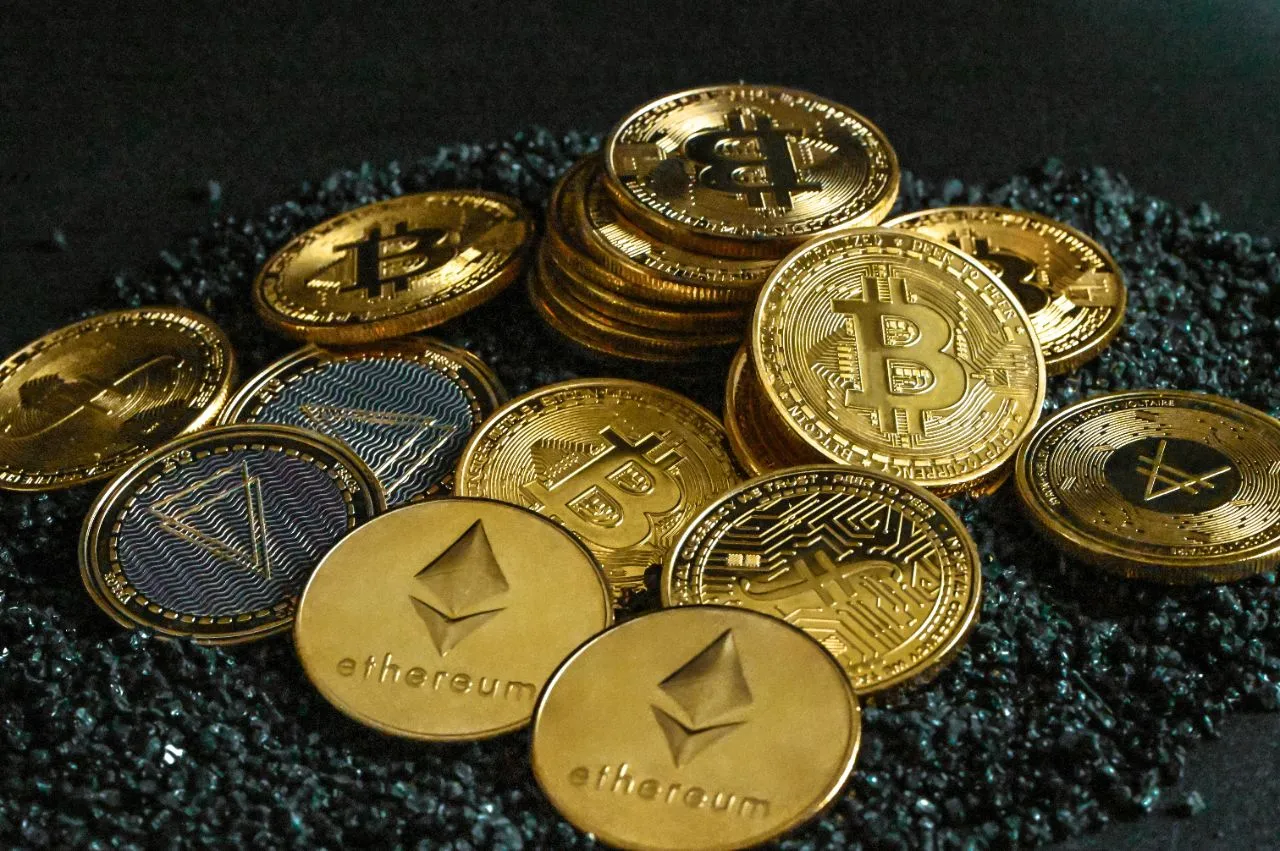
https://asset.coinness.com/en/news/0d918fa9e883e0f0f5d663ec72ad6fa5.webp
Photo by Traxer on Unsplash

Gaining exposure to emerging asset class

It described the initiative as an example of the company’s “commitment to innovative treasury practices,” focusing on long-term value creation for Aurora Mobile’s shareholders.


The firm’s CEO, Weidong Luo, said that the initiative will enable the company to diversify its portfolio, “gaining exposure to an emerging asset class with low correlation to traditional markets.” Luo also asserted that the move would demonstrate that the firm is “aligning with the technological advancements reshaping global finance.”


Aurora Mobile indicated that it would look to purchase Bitcoin, Ethereum, Solana, Sui and other tokens.


China’s crypto trading ban

A trading ban on crypto was introduced in mainland China in 2021. With that, it’s unclear how Aurora Mobile will establish its crypto treasury. It may opt to do so through Singapore-based subsidiary EngageLab or through an affiliated corporate entity in Hong Kong.


No such ban applies in Hong Kong, where VMS Group, another company which has decided to invest in digital assets, is headquartered. VMS Group is a family office which provides investment solutions and advisory services, while specializing in alternative investments. 


According to a report published by Bloomberg on June 23, the company, which has $4 billion worth of assets under management (AUM), intends to allocate up to $10 million to investment strategies run by a decentralized finance (DeFi)-focused hedge fund, Re7 Capital.


VMS Group managing partner Elton Cheung told Bloomberg that the investment decision was taken as part of an effort to diversify into more liquid investments. Cheung added:


“We thought this was the right time [to invest in digital assets] because of growing demand and because we see clearer legislative and government support from various jurisdictions, as well as large institutional support and endorsement.”


Potential partnerships

VMS Group executive Zhi Li, who has been tasked with leading digital asset investments for the company, said that the firm is examining potential partnerships with blockchain payments and infrastructure projects. Li stated that “there is very strong institutional and family interest in getting regulated digital asset exposure,” adding that VMS has “seen the younger generation of families wanting to do something different.”


Alongside these investments into cryptocurrencies, demand for crypto-related stocks in Hong Kong is also surging. Shares in publicly-listed licensed digital asset platforms in the Chinese autonomous territory surged by as much as 200% on June 25 as the market reacted positively to the city’s developing digital assets policy.

More to Read
View All
Web3 & Enterprise·

Nov 01, 2023

Rotonda holds blockchain hackathon at GBIC 2023

Rotonda holds blockchain hackathon at GBIC 2023Rotonda, the operator of the digital asset wallet platform Bithumb Buritto Wallet, hosted a hackathon on Monday (local time) at this year’s Global Blockchain Incheon Conference (GBIC), centered around the theme of addressing a variety of local issues, such as carbon reduction, industrial and urban issues and public services using Web3 technology. Contestants from across the country gathered to create blockchain-based prototypes aimed at addressing such issues.Photo by Marvin Meyer on UnsplashOther blockchain and Web3 companies like Roa Core, Ret Games and ReFi Korea also participated as sponsors for the competition, which was held at Songdo Convensia, an international conference complex located in Songdo International Business District.Innovative solutions recognizedThe ten teams that made it to the finals presented a range of ideas related to the theme, which were judged based on how applicable, feasible and influential they are, as well as their potential for development and social contribution.“Through this year’s hackathon, we were introduced to innovative ideas and high-quality technologies to address various local problems. Discovering and supporting passionate entrepreneurs is in line with the values that we uphold within our ecosystem at Bithumb Buritto Wallet,” said Lee Sang-ho, Vice President at Bithumb Burrito Wallet.The grand prize of KRW 5 million (approximately $3,600) was awarded to DIY, a team that developed a project to promote cultural resources, tourism experiences and sports industries in Incheon using dynamic non-fungible tokens (dNFTs). dNFTs can be adapted or changed based on external events and data. The hackathon judges praised the team for adding gamification elements to increase citizen participation and streamlining administrative procedures through smart contracts. The team also won additional benefits like office space in Incheon’s Jemulpo Smart Town.“We are delighted to be recognized for the in-depth discussions we had amongst our members to develop a highly usable and differentiated platform,” the team said in a statement. “We will strive to leverage blockchain technology to create various success stories.”Additional winnersTwo runner-up prizes went to the Caffeine Addiction team, which developed a platform for motivating coffee drinkers to dispose of used coffee grounds, and the Datayo team, which developed dBus, a smart mobility platform with token-based crowdfunding processes. They received KRW 3 million and KRW 2 million, respectively, in prize winnings.

news
Policy & Regulation·

Nov 17, 2025

Japan Exchange Group weighs tougher scrutiny of crypto treasury firms

The Japan Exchange Group (JPX), operator of the Tokyo and Osaka stock exchanges, is considering measures to curb the expansion of publicly listed digital-asset treasury (DAT) firms, according to sources speaking to Bloomberg. JPX is reportedly exploring various regulatory avenues, ranging from tightening backdoor listing rules to mandating new audits for applicable firms. Following recent scrutiny from the exchange, three Japanese public companies have suspended their cryptocurrency purchase plans since September. These firms were reportedly warned that pursuing crypto investment as a core strategy could restrict their ability to raise future capital. While JPX currently lacks binding regulations explicitly prohibiting listed companies from accumulating digital assets, a representative stated that the exchange is monitoring firms with potential governance and risk issues to protect the interests of shareholders and investors.Photo by Su San Lee on UnsplashMetaplanet responds to regulatory concernsFollowing the Bloomberg report, Metaplanet, a Japanese public company that has adopted a Bitcoin accumulation strategy similar to that of the American firm Strategy, issued a clarifying statement. The firm asserted that it "has not been subject to any regulatory actions or investigations by relevant authorities concerning our business operations." Metaplanet emphasized its willingness to engage in constructive dialogue with regulators should any inquiries arise. According to BitcoinTreasuries.net data, Metaplanet is currently Japan’s largest corporate Bitcoin holder and ranks fourth globally among public companies, trailing only Strategy, MARA Holdings, and XXI. The extent of the firm’s commitment to this strategy was highlighted by Shinpei Okuno, Metaplanet’s Head of IR and Capital Strategy, who shared the company’s holdings via X. Balance sheet data as of September 30, 2025, reveals that Bitcoin accounts for 99% of Metaplanet’s total assets, 542.7 billion yen out of 550.7 billion yen. Okuno noted that the company aims to maintain a balance sheet structure that supports the issuance of digital credits collateralized by its crypto holdings. Market performance and sector outlookThe stock performance of DAT firms highlights the market's reaction to these risks. According to Yahoo Finance data, Metaplanet’s share price has declined 40.29% over the past six months to 372 yen. This drop outpaces Bitcoin’s 8% decline over the same period. This downward pressure is visible across the broader DAT sector. Decrypt reported that Strategy's stock has fallen 50% from its July peak, while SharpLink, which invests in Ethereum, has dropped nearly 90%. Data from StrategyTracker indicates that the market-net-asset values (mNAVs) of these firms have slipped to near or below 1, reflecting depressed valuations. Analysts warn that low mNAVs complicate capital raising efforts, potentially forcing these firms to liquidate crypto holdings to cover operating expenses. At the same time, the analysts acknowledged possible tailwinds. Fakhul Miah, Managing Director at GoMining Institutional, told Decrypt that Bitcoin-oriented DATs generally outperform those investing in multiple, higher-risk crypto assets. He suggested that if U.S. economic data indicates easing inflation and the Federal Reserve cuts rates in December, Bitcoin could rally. Yaroslav Patsira, Fractional Director at CEX.IO, echoed this sentiment, noting that the outlook for DATs is tied closely to Bitcoin’s potential upside. Taking a longer-term view, Decrypt noted that despite the recent pullback, crypto-related equities have shown strong year-to-date (YTD) performance relative to the underlying asset. Galaxy Digital is up 73.4% and SharpLink 43.2% YTD, compared to Bitcoin’s 8.6% gain, suggesting the current correction is taking place within a broader uptrend. Japanese stablecoin push faces U.S. resistanceBeyond the equity markets, Japanese crypto initiatives are also encountering regulatory friction in the U.S. Decrypt reported that a coalition of small U.S. banks has formally objected to a bid by Connectia Trust, a proposed subsidiary of Sony Bank, to issue dollar-backed stablecoins in the U.S. Sony Group’s banking arm last month applied to the Office of the Comptroller of the Currency for a national trust charter to facilitate these issuances. The Independent Community Bankers of America (ICBA) argues that the Japanese institution is attempting to exploit regulatory gaps to avoid the oversight applied to traditional banks, noting that Connectia’s stablecoin bears similarities to bank deposits. However, Kadan Stadelmann, CTO of Komodo Platform, offered a different view, telling Decrypt the concerns are “overstated and driven by big-bank interests.” As Connectia’s application undergoes U.S. regulatory review, it has once again exposed the underlying divide between established banking interests and crypto-native approaches to financial services, particularly around how stablecoin issuers should be overseen.

news
Policy & Regulation·

Apr 10, 2023

India’s Upcoming G20 Summit Bullish for Crypto

India’s Upcoming G20 Summit Bullish for CryptoThe upcoming G20 summit in Delhi, India, will mark the first-ever G20 summit hosted in South Asia. The G20 comprises 19 countries and the European Union. While the summit is focused on discussing critical issues related to the global economy, it will also include discussions on cryptocurrencies.©Pexels/Studio Art SmileCrypto policy precursor to mass adoptionRegulations and policy frameworks around crypto will be a significant topic of conversation at the summit, alongside discussions on international financial stability. India’s Finance Minister, Nirmala Sitharaman, confirmed that G20 nations are working towards creating an effective Standard Operating Procedure (SOP) for regulating crypto during the summit.India has been taking a systematic approach to regulate the evolving crypto space, as evidenced by the nation’s evolving stance on cryptocurrencies and the recently launched central bank digital currency (CBDC) pilot. With this in mind, the G20 summit in Delhi is expected to provide a platform for countries to discuss and collaborate on effective crypto regulations and policy frameworks.According to Gracy Chen, Managing Director of the Singapore-based Bitget cryptocurrency exchange, more work on policy relative to crypto in India is bullish for the development of the sector within the South Asian country. “India’s consistent growth in adapting to cryptocurrencies and forming newer policies around it has made it a hub for tech investments. With more development and a policy framework, we can expect higher mass adoption. The G20 summit will be bullish for crypto’s growth in India,” Chen told Indian weekly English-language news magazine, India Today.During the 2022 Budget discussions, the government of India proposed some significant changes to the taxation of cryptocurrencies. As a premium investment product, cryptocurrencies are known for their high volatility, and the government believed that they should be subject to a heavier tax burden. Specifically, they introduced a 30% tax on capital gains earned through the sale of digital assets, as well as a 1% tax on Tax Deducted at Source (TDS) for all crypto transactions.The tax on capital gains applies to all digital assets, and the government intends to track historical records to ensure compliance. Additionally, the 1% TDS is applied to every single transaction, regardless of its size or frequency. These changes were seen by some as a trial framework, and many in the crypto space hoped for greater leniency from the government in the future. However, it remains to be seen whether the government will revise these tax policies in the coming years.CBDC pilot projectsFurthermore, the Reserve Bank of India (RBI) has recently launched two CBDC pilots to test the feasibility of digital currencies in India. The first pilot is a wholesale CBDC, which is being conducted in collaboration with nine banks.The second pilot is a retail CBDC, launched in December, which is being tested in four major cities across India — Mumbai, New Delhi, Bengaluru, and Bhubaneswar. The goal of these pilots is to evaluate the potential of digital currencies in facilitating secure and efficient transactions, as well as to study the possible impact on the traditional banking system.By exploring both wholesale and retail CBDCs, the RBI is taking a comprehensive approach to CBDC development, which may inform future decisions regarding the adoption of digital currencies in India.Chen maintains that “discussions around cryptocurrency policy frameworks accelerate the possibilities of mass adoption in the region.” “With over 750 million internet users, India holds the potential to not just pilot but establish real-life crypto and blockchain use cases for the masses,” she added.

news
Loading