Top

Affiliate of Chinese bank launches crypto trading services in Hong Kong

Web3 & Enterprise·August 20, 2025, 1:38 AM

CMB International Securities, the brokerage and investment banking arm of China Merchants Bank (CMB), has acquired a virtual asset trading license and rolled out related trading services in Hong Kong.
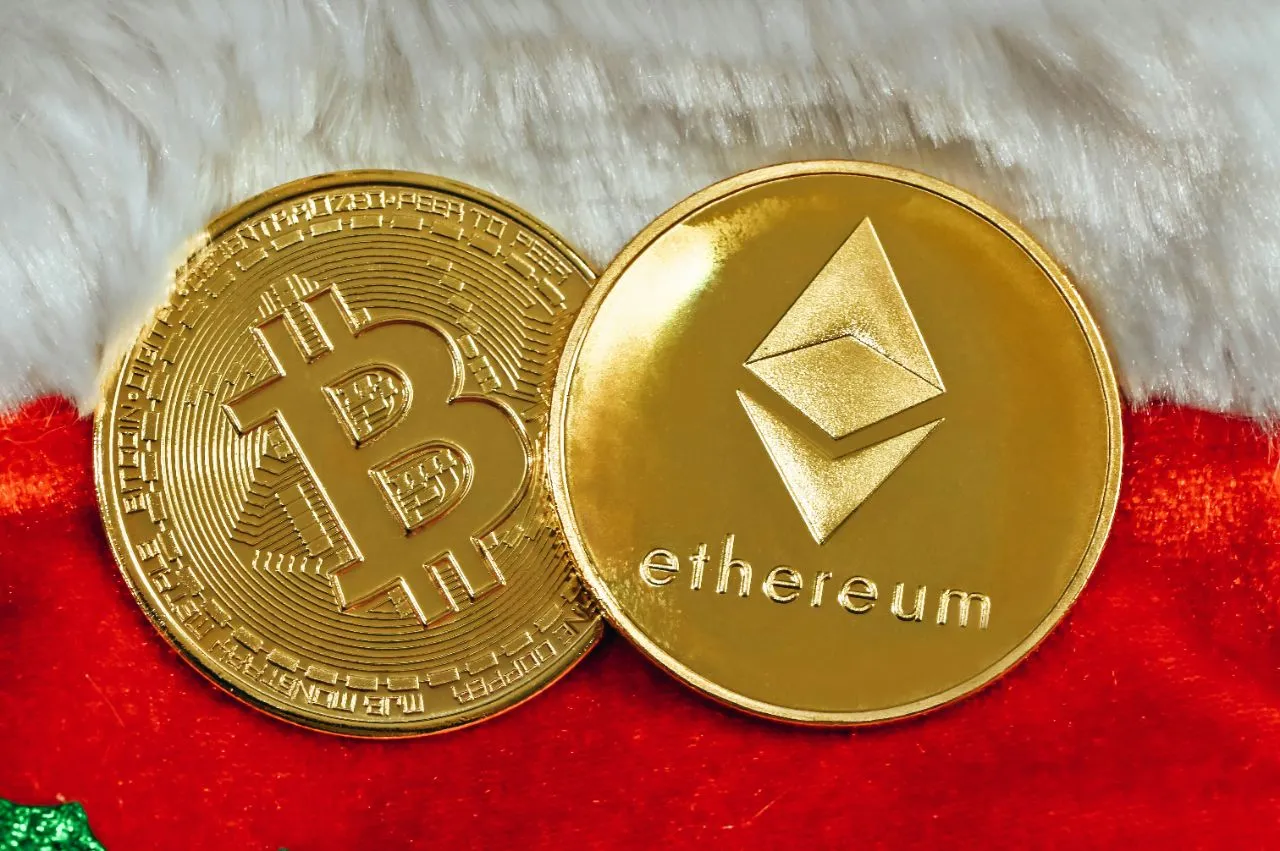
https://asset.coinness.com/en/news/a51b70a73c96c73ac6b53dc00248a1ce.webp
Photo by Traxer on Unsplash

First Chinese bank-affiliated brokerage to add crypto services

The development is significant as it marks the entry of the first brokerage firm directly affiliated with a Chinese bank into the digital assets arena. It takes on further significance due to the importance of its parent company within financial services in Asia.

Recent reports suggest that China Merchants Bank has assets under management (AUM) of RMB 15 trillion, equating to around $2.1 trillion. Headquartered in Shenzhen, the bank is China’s seventh largest in terms of AUM. Compared globally, an S&P Global Market Intelligence report published in 2024 positioned the bank in 25th place by measure of AUM.


CMB International Securities disclosed that it started offering such services on Aug. 18 via a post on the Chinese social media platform WeChat. It explained that the launch followed the company’s acquisition of an upgrade to its existing trading license from Hong Kong’s Securities and Futures Commission (SFC) on July 11, authorizing the brokerage to offer virtual asset trading.


24/7 digital asset trading

The company outlined that it has added virtual asset trading via its mobile application, offering qualified investors 24/7 digital asset trading. Following the launch, eligible investors can now trade Bitcoin (BTC), Ethereum (ETH) and the USDT stablecoin. These professional or eligible investors must open a CMB International Securities cash account before they can commence trading digital assets on the CMB platform.


Given the ongoing ban on crypto trading activity within mainland China, CMB International has to ensure that its product offering doesn’t reach mainland residents. At the time of the company being awarded its virtual assets trading license last month, Hong Kong Web3 Association Co-Chair Joshua Chu spoke to that requirement. He stated:

“By securing this licence, CMBI gains regulated access to Hong Kong’s dynamic crypto market, yet it must operate within strict boundaries that prevent direct mainland participation, reflecting the delicate balance of innovation and legal constraint.”


‘One country, two systems’

“One country, two systems” is a constitutional principle of the People’s Republic of China that enabled the reunification of Hong Kong with China back in 1997. Many believe that while Beijing continues to impose a ban on crypto and hasn’t been vocal in its support of Hong Kong’s embrace of the crypto sector, there is an implied support nonetheless of Hong Kong’s development as a crypto hub.

Hong Kong’s separate system allows China to let it develop as a proving ground for virtual assets. That tacit support has encouraged companies like Beijing-headquartered Tiger Brokers to pursue virtual asset trading licensing within the Chinese autonomous territory. Similarly, Victory Securities, a Hong Kong firm with a significant presence within the mainland Chinese market, has also pursued digital asset-related licensing in Hong Kong.


This isn’t CMB International’s only crypto-related venture. Earlier this month, the company partnered with Singaporean digital asset exchange DigiFT in launching the Hong Kong-Singapore Mutual Recognition Fund. The development marked the first money market fund to be hosted on the Solana blockchain.


 

More to Read
View All
Web3 & Enterprise·

Nov 10, 2023

Bitget enhances crypto exchange app with Web3 wallet and swap service

Bitget enhances crypto exchange app with Web3 wallet and swap serviceSeychelles-incorporated crypto derivatives and copy trading platform Bitget has advanced its DeFi capabilities by integrating a Web3 wallet and swap service into its crypto exchange application.Photo by Shubham’s Web3 on UnsplashEnhancing platform app featuresThis new feature empowers users to seamlessly swap their tokens and access DeFi services through the platform’s Web3 wallet, according to a press release the company published concerning the development earlier this week. Bitget outlined that the primary goal of the integration is to offer users diverse options for trading their crypto assets within the exchange ecosystem.Bitget Managing Director Gracy Chen set out the significance of the recently ushered in changes. Chen stated:“Integrating Web3 services into our CEX platform marks a significant milestone for Bitget. By offering users the freedom to access various DeFi services alongside the convenience and security of our CeFi platform, we are empowering them with a unique experience. Bitget aims to provide a comprehensive ecosystem that caters to the evolving needs of our users, all while maintaining the highest standards of security and reliability.”Service offering expansionFurthermore, the app is set to expand its services, gradually incorporating a non-custody wallet, an NFT marketplace and decentralized applications (dApps), Chen confirmed. Bitget users can now experience enhanced flexibility in their trading activities, as the exchange plans to make most listed currencies available in the Web3 wallet for DeFi trading. The swap feature, a core element of this integration, aggregates liquidity from 10 decentralized exchanges (DEXs), including popular platforms like Uniswap, PancakeSwap and Curve Finance. Chen confirmed further details to Cointelegraph, stating:“At the core of the recent integration is our Web3 Wallet, which facilitates the secure storage, management, and control of their digital assets. Alongside the wallet, we’ve launched a Swap service, which is an advanced DeFi aggregator.”The firm acquired the BitKeep crypto wallet earlier this year, with the product subsequently having been officially rebranded to the Bitget Wallet in August. The move has worked out well for the firm, with it confirming at the end of July that it had achieved 20 million users as a consequence. The more recent integration not only facilitates asset management services but also provides native storage solutions for users.$100 million fundThis initiative aligns with Bitget’s ongoing efforts to establish a strong foothold in the crypto space. The exchange has consistently pursued expansion, launching multimillion-dollar funds to support the growth of the Web3 ecosystem. At an event in Singapore recently, Bitget introduced a $100 million fund dedicated to supporting venture firms and investing in the next generation of Web3 projects.Earlier this week, the company committed a $10 million fund towards the objective of nurturing high-potential crypto startup projects in India.

news
Policy & Regulation·

Jan 02, 2024

Singapore Prime Minister issues warning on AI-generated crypto scam

In a recent announcement on Facebook, Singapore Prime Minister Lee Hsien Loong has raised alarm bells about a new form of cyber scam that exploits deep-fake technology. Deep-fake technologyThe Prime Minister highlighted the emergence of deceptive videos utilizing artificial intelligence (AI) to create false portrayals of him endorsing cryptocurrency scams. This development underscores the escalating sophistication of online scams and the deployment of advanced technology to mislead the public. Deep-fake technology has emerged as a powerful tool for scammers, enabling them to manipulate genuine footage to produce highly convincing yet entirely fabricated content. In the latest incident, a deep-fake video features Prime Minister Lee Hsien Loong endorsing a nonexistent crypto investment platform purportedly associated with entrepreneur Elon Musk. This video, a manipulated version of an interview on CGTN, showcases the concerning level of realism achievable with deep-fake technology. The incident emphasizes the growing trend of utilizing AI in perpetrating scams. Prime Minister Lee underscored the deceptive nature of these videos, articulating the potential damage they could inflict by leading unsuspecting individuals to invest in fraudulent schemes. The Singaporean government maintains a vigilant stance on such scams, consistently urging citizens to exercise caution and verify information from official sources.Photo by Guo Xin Goh on UnsplashPrevious issuesThe exploitation of public figures in financial scams is not a new phenomenon. Prime Minister Lee has been a recurrent target of such scams, dating back to 2018. At that time, the government issued public warnings about Bitcoin investment scams falsely claiming the Prime Minister’s endorsement. More recently, in July, another fake video featuring Lee Hsien Loong surfaced, prompting renewed public warnings. In 2021, the Prime Minister’s name and photograph were used without his consent in an effort to sell cryptocurrency. The data was taken from his X (formerly Twitter) profile. At the time, Lee wrote:“The site’s creators are anonymous, but I have sent an open tweet out to ask that my name and photo be removed from the site immediately, as I have nothing to do with the platform. I urge everyone to remain vigilant when dealing with cryptocurrency platforms.” That was a much less sophisticated identity-related scam. More often than not, scammers and fraudsters tend to be early adopters of technology. That’s proving to be the case with the use of deep-fakes in this instance. A need for cautionAs he did in 2021, Prime Minister Lee has urged the public to exercise caution in light of this more recent incident. He advises against responding to scams promising guaranteed investment returns or giveaways. There’s every sign that the Prime Minister’s warning is warranted. In September it emerged that six Singaporeans lost more than $100,000 when a scammer tricked them into buying tokens on a cryptocurrency trading platform. More recently, five Americans were conned out of $10 million in a scam that involved a spoofed domain of the former Singapore International Monetary Exchange (Simex). This call for public vigilance is part of a broader government effort to address the surge in cyber fraud. These repeated incidents underscore the challenges posed by digital technologies in spreading misinformation and financial fraud.   

news
Markets·

Apr 27, 2023

Yuan Surpasses Dollar in China Cross-Border Trade

Yuan Surpasses Dollar in China Cross-Border TradeThere has been a lot of talk in recent weeks and months about the continued use of the US dollar as the global reserve currency and newly published data from Beijing now demonstrates that the Chinese yuan became the most widely used cross-border currency in China for the first time in March.©Pexels/VOLKAN SORKUNErosion of dollar dominanceOver the course of the month of March, the US dollar was used in 46.7% of cross border transactions. That’s down 1.1% on the preceding month. Meanwhile, the yuan was the currency of choice in cross border Chinese trade last month, used in 48.4% of all cross border transactions.While this may seem impressive and it is encouraging for the Chinese authorities, it is still just a drop in the ocean when compared with the overall global cross border transaction statistics. Data produced by international financial messaging service, SWIFT, demonstrates that while the yuan’s share of global currency transactions relative to trade finance increased to 4.5%, that’s just a drop in the ocean. The same data set reveals that the US dollar accounted for around 84% of global cross border transactions in March.While it’s unlikely that the US dollar will be usurped in its global reserve currency role over the short to medium term, certain cracks are beginning to emerge that serve to weaken the leading fiat currency. According to a recent report by emerging market focused management firm Eurizon SLJ Capital, the dollar demonstrated a decline in reserve currency use of 8% in 2022. Since 2016, the leading international currency has declined in use on an adjusted basis by 11%. It also emerged this week that Argentina will begin to pay China in yuan for imports. The move comes at a time when the South American country is experiencing an acute shortfall in its dollar reserves following a drought-induced decrease in agricultural exports which would have ordinarily brought more dollars into the country’s coffers.SanctionsIn the case of Russia, China’s yuan replaced the US dollar in monthly trading volume in February for the first time, according to data compiled by Bloomberg. The emergence of the Russia Ukraine conflict in 2022, and more specifically the United States’ response to Russia as a consequence of the conflict, appears to have led to major change in terms of dollar use. Prior to the invasion, the trading volume of the Chinese yuan in Russia was negligible.The United States introduced a raft of sanctions that made it difficult for Russian banks and Russian corporations to trade internationally. It also confiscated sovereign funds held in US dollars belonging to Russia.It’s thought that this move has had wider repercussions as other nations have started to feel increasingly insecure in holding US dollars against that background. The logic is that any potential conflict between a nation and the United States could lead to a similar outcome. The US may have crossed a line that destroys confidence in other countries’ use of the US dollar.Implications for cryptocurrencyWhile these weaknesses in the global reserve status of the US dollar are unlikely to lead to its demise in that role any time soon, they may well be a bellwether of what plays out over the longer term. US dollar weakness is one aspect. Set against that, it’s hard to imagine the yuan being so dominant as to ever be the leading world currency relative to international trade.It’s far more likely that we may see several global ‘reserves’ share the role in the longer term. Bitcoin has been mentioned in the past as a candidate for this role given that it is not associated with any one nation. However, its current market capitalization and trading volume is minuscule by comparison with what would be required of a global reserve currency. That said, in a future where various currencies play a part in holding that reserve status, Bitcoin could very well see a modest but increasingly significant increase in its use for global trade purposes in the years ahead.

news
Loading