Top

Yuan Surpasses Dollar in China Cross-Border Trade

Markets·April 27, 2023, 1:45 AM

There has been a lot of talk in recent weeks and months about the continued use of the US dollar as the global reserve currency and newly published data from Beijing now demonstrates that the Chinese yuan became the most widely used cross-border currency in China for the first time in March.
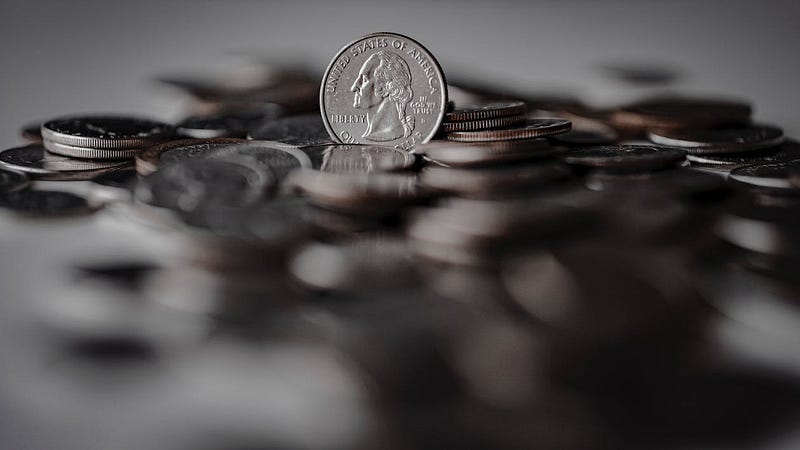
Dollar coin
©Pexels/VOLKAN SORKUN


Erosion of dollar dominance

Over the course of the month of March, the US dollar was used in 46.7% of cross border transactions. That’s down 1.1% on the preceding month. Meanwhile, the yuan was the currency of choice in cross border Chinese trade last month, used in 48.4% of all cross border transactions.

While this may seem impressive and it is encouraging for the Chinese authorities, it is still just a drop in the ocean when compared with the overall global cross border transaction statistics. Data produced by international financial messaging service, SWIFT, demonstrates that while the yuan’s share of global currency transactions relative to trade finance increased to 4.5%, that’s just a drop in the ocean. The same data set reveals that the US dollar accounted for around 84% of global cross border transactions in March.

While it’s unlikely that the US dollar will be usurped in its global reserve currency role over the short to medium term, certain cracks are beginning to emerge that serve to weaken the leading fiat currency. According to a recent report by emerging market focused management firm Eurizon SLJ Capital, the dollar demonstrated a decline in reserve currency use of 8% in 2022. Since 2016, the leading international currency has declined in use on an adjusted basis by 11%. It also emerged this week that Argentina will begin to pay China in yuan for imports. The move comes at a time when the South American country is experiencing an acute shortfall in its dollar reserves following a drought-induced decrease in agricultural exports which would have ordinarily brought more dollars into the country’s coffers.


Sanctions

In the case of Russia, China’s yuan replaced the US dollar in monthly trading volume in February for the first time, according to data compiled by Bloomberg. The emergence of the Russia Ukraine conflict in 2022, and more specifically the United States’ response to Russia as a consequence of the conflict, appears to have led to major change in terms of dollar use. Prior to the invasion, the trading volume of the Chinese yuan in Russia was negligible.

The United States introduced a raft of sanctions that made it difficult for Russian banks and Russian corporations to trade internationally. It also confiscated sovereign funds held in US dollars belonging to Russia.

It’s thought that this move has had wider repercussions as other nations have started to feel increasingly insecure in holding US dollars against that background. The logic is that any potential conflict between a nation and the United States could lead to a similar outcome. The US may have crossed a line that destroys confidence in other countries’ use of the US dollar.


Implications for cryptocurrency

While these weaknesses in the global reserve status of the US dollar are unlikely to lead to its demise in that role any time soon, they may well be a bellwether of what plays out over the longer term. US dollar weakness is one aspect. Set against that, it’s hard to imagine the yuan being so dominant as to ever be the leading world currency relative to international trade.

It’s far more likely that we may see several global ‘reserves’ share the role in the longer term. Bitcoin has been mentioned in the past as a candidate for this role given that it is not associated with any one nation. However, its current market capitalization and trading volume is minuscule by comparison with what would be required of a global reserve currency. That said, in a future where various currencies play a part in holding that reserve status, Bitcoin could very well see a modest but increasingly significant increase in its use for global trade purposes in the years ahead.

More to Read
View All
Web3 & Enterprise·

Jul 21, 2023

Bitget Targets MENA Business Expansion

Bitget Targets MENA Business ExpansionBitget, the Seychelles-based cryptocurrency derivatives exchange, is setting its sights on the Middle East and North Africa (MENA) as the region emerges as a fast-growing crypto hub.The firm announced its expansion plans via a press release which was published on Thursday. With countries like the United Arab Emirates (UAE) and Bahrain embracing crypto, more exchanges are taking notice and entering the market. Bitget has now joined the ranks of a series of crypto companies seeking to establish a foothold in the region.Photo by Kyle Glenn on UnsplashIncreasing crypto adoption and interestCiting the region’s impressive crypto adoption rate, which accounted for 9.2% of global transactions between 2021 and 2022, Bitget is capitalizing on the growing interest in digital assets. The UAE alone experienced a remarkable 400% increase in registered crypto businesses over two years, driving a surge in global digital asset trading by 10%. Moreover, blockchain-related educational programs have tripled in the region, which contributes to 8% of the overall mining hash rate. All of these are creating a favorable environment for Bitget’s expansion.Dubai officeTo support its entry into the Middle East, Bitget has opened an office in the heart of Dubai and has already hired 60 new employees for various mid and back-office positions. The company aims to scale its Middle East team further, with plans to hire 30 to 60 more professionals over the next two years.Bitget is not alone in recognizing the potential of the Middle Eastern market. Bybit, another major cryptocurrency exchange, recently obtained local licenses to operate in the digital assets space in the UAE, having moved its global headquarters to Dubai in April.OKX, one of the largest exchanges by volume, also received a Minimal Viable Product (MVP) Preparatory License from the Dubai Virtual Assets Regulatory Authority (VARA). Binance is also eyeing the Middle East, with Binance Dubai poised to become the primary focus for the company’s development efforts, given regulatory challenges in Europe and the US.Global expansion strategyBitget’s expansion into the Middle East is part of its broader global scaling strategy. The company has already registered as a Virtual Asset Service Provider (VASP) in Poland and Lithuania, and it launched a localized Turkish website earlier this year.Founded in 2018, Bitget boasts a user base of over 8 million users across more than 100 countries, offering copy trading services. The company’s move to the Middle East showcases its determination to tap into new markets and solidify its position as a global player in the cryptocurrency exchange landscape.There’s been a lot going on at Bitget in recent months, in addition to these regional expansion plans. In May the company announced a corporate social responsibility project named “Blockchain4Youth,” cleverly identifying the importance of connecting with the younger demographic which is far more likely to drive crypto and blockchain adoption.Earlier this month it launched a crypto loans product offering while last week it provided transparency via its proof of reserves initiative, demonstrating a 223% level of reserves and outlining that the company is debt free.

news
Web3 & Enterprise·

Jan 16, 2024

Blockchain research startup Four Pillars snags $527k investment

South Korean blockchain research firm Four Pillars has secured KRW 700 million (approximately $527,000) in investment funds from Kakao Ventures, Hashed and Bass Investment, according to South Korean news site Coin Readers on Tuesday.Photo by Precondo CA on UnsplashEmpowering blockchain venturesLed by a team of industry experts, Four Pillars is dedicated to supporting companies that aim to develop blockchain projects and successfully bring their business to the market. It conducts research based on its technological expertise and experience in blockchain collaborations, providing customized solutions based on each client’s circumstances. It aims to save time and money for companies looking to enter the blockchain market by providing comprehensive and relevant insights on cryptocurrency basics, the blockchain industry, regulations and market analyses, rather than simply listing information. Rapid growth and strategic partnershipsSince its establishment last year, the research platform has attracted more than 30,000 visitors per month on average in just two months. The company has also signed an agreement with Japanese publishing agency Gentosha to publish a Japanese version of its content. Other partners include the layer 1 blockchain Sei Network, Web3 gaming platform Iskra, tech juggernaut LINE’s blockchain Finschia, and Korean telecommunications provider SKT's digital T Wallet.  Before securing the recent investment, the Four Pillars team was recognized for collaborating with various developers on global blockchain projects and receiving a research sponsorship from the dYdX Foundation, a decentralized protocol operator known for being highly selective when offering sponsorships. "The core members of Four Pillars, including CEO Kim Nam-woong, are among the few people in the Korean crypto scene who can bring unique insights to research," said Brian Jang, Director at Kakao Ventures. "Based on their unrivaled research capabilities, we expect them to grow rapidly while connecting domestic and international protocols and corporate needs to business outcomes." Bridging markets, breaking barriersAs trends in the global blockchain market change at a rapid pace, the importance of high-quality, relevant research is amplified, even more so than in the era of Web2. However, information tends to be scattered across platforms, making it overwhelmingly difficult for companies to utilize it in their business endeavors. This is also one of the key reasons why overseas companies have a hard time navigating their entry into the Korean market with their limited knowledge of market trends or conditions. The same can be said for Korean companies who want to launch their businesses overseas. By bridging Korean and overseas companies and projects, Four Pillars aims to resolve this widespread information asymmetry in the ever-growing blockchain industry and establish its foothold as a global research firm. This is reminiscent of Delphi Digital, a U.S.-based crypto research firm founded in 2018 that quickly expanded and established a global Web3 accelerator service called Delphi Labs.  The Four Pillars team also aims to dedicate the investment funds towards accelerating its efforts in talent acquisition, product development and continued research. In the future, the company plans to boost diverse blockchain projects and contribute to the participation of various stakeholders in the blockchain ecosystem.  "Our priority and goal is to create a developer-friendly environment by leveraging the high-quality research and products that we provide at Four Pillars," the firm’s CEO said. "We will lower the barriers to entry for blockchain and grow the entire Web3 market by making it more suitable for both users and developers."

news
Web3 & Enterprise·

Nov 14, 2023

dtcpay forges strategic partnership in launch of crypto payments system

dtcpay forges strategic partnership in launch of crypto payments systemSingapore-based dtcpay has announced a collaboration with Singaporean data-sharing platform PlatON and Chinese payments firm Allinpay International, marking the imminent launch of a digital currency payments system.Photo by Jonathan Borba on PexelsPOS terminal crypto paymentsThe trio is set to unveil a cutting-edge digital currency payment system, leveraging smart point of sale (POS) terminals supporting a range of currencies, including USDT, ETH and BTC. The primary goal of this partnership is to broaden the reach of digital payments, providing global users with faster, more cost-efficient and secure payment experiences.The overarching objective of the collaboration is to empower partners and merchants to seamlessly accept payments in both fiat and digital currencies. By doing so, dtcpay, PlatON and Allinpay International aim to enhance operational efficiency, broaden business outreach and capture the attention of a younger customer base.Officials emphasize that this venture aligns with dtcpay’s commitment to delivering secure and efficient digital payment solutions while diversifying its service offering. A spokesperson for Tonghua International, Allinpay International’s parent company, stated:“We are very pleased to cooperate with industry leaders, PlatON and dtcpay. This cooperation will not only promote the development of digital currency payments but also help merchants better adapt to the modern payment trend and meet the needs of young consumers.”A collaboration that relies on core competenciesThe collaborative effort capitalizes on the strengths of each entity. dtcpay facilitates swift and secure digital and fiat currency exchange. PlatON contributes advanced privacy computing technology for robust technical infrastructure, while Allinpay International provides smart terminals and online aggregate payment interfaces, eliminating entry barriers relative to Web3 payments.In addition to driving advancements in digital currency payments, Allinpay International seeks to support merchants in adapting to modern payment trends and meeting the preferences of younger customers. dtcpay’s comprehensive suite of services includes multi-currency swaps, online checkouts and in-store POS solutions, positioning the company as a one-stop solution for merchants embracing the future of payments.Founded in 2019 in Singapore, dtcpay operates as a regulated payment service provider licensed by the Major Payment Institution (MPI) under the Monetary Authority of Singapore (MAS).The company struck up a similar partnership in September, bringing crypto payments to the POS system of Jeripay, which has a network of 8,000 terminals in Singapore. In an interview earlier this year, the firm’s CEO Kanny Lee outlined that dtcpay had targeted Hong Kong and Dubai as markets in which the company plans to expand.Sumsub partnershipThe collaboration’s momentum was further solidified at the end of September 2023 when dtcpay partnered with Sumsub, a global full-cycle verification platform. This partnership aimed to enhance the security and reliability of digital currency payments in target markets such as Singapore, Hong Kong, Dubai, the UK and Europe. Sumsub integrated its electronic Know Your Customer (e-KYC) service into dtcpay’s wallet platform, streamlining the onboarding process for customers engaging in transactions through the platform.PlatON is an open financial infrastructure that features verifiable and privacy-preserving computation. It will endeavor to bring financial-level system stability and compliant digital asset management to the collaboration. Allinpay is a global financial payment company focused on providing diverse payment solutions while enhancing digital financial technology services globally.

news
Loading