Top

Ex-PBOC governor warns on stablecoin speculation, questions case for yuan peg

Policy & Regulation·August 29, 2025, 8:00 AM

China’s former central bank governor has warned that speculation in stablecoins could threaten financial stability, Bloomberg reported, citing a post from the Beijing-based think tank CF40 Research. His remarks run counter to calls from some economists and industry figures for a yuan-backed stablecoin as the U.S. advances its digital-asset policy agenda.


Zhou Xiaochuan, who led the People’s Bank of China (PBOC) from 2002 to 2018, delivered the comments at a closed-door meeting in mid-July. He argued that China’s payment rails—spanning third-party platforms, the central bank digital currency (CBDC), digital wallets, and clearing infrastructure—are already highly efficient, leaving little scope for stablecoins to deliver meaningful cost savings. He also rejected the premise that conventional cross-border payments come at steep costs.


Zhou identified price manipulation driven by speculative trading as the chief risk to financial and asset markets, adding that current safeguards in the U.S., Hong Kong, and Singapore remain inadequate.
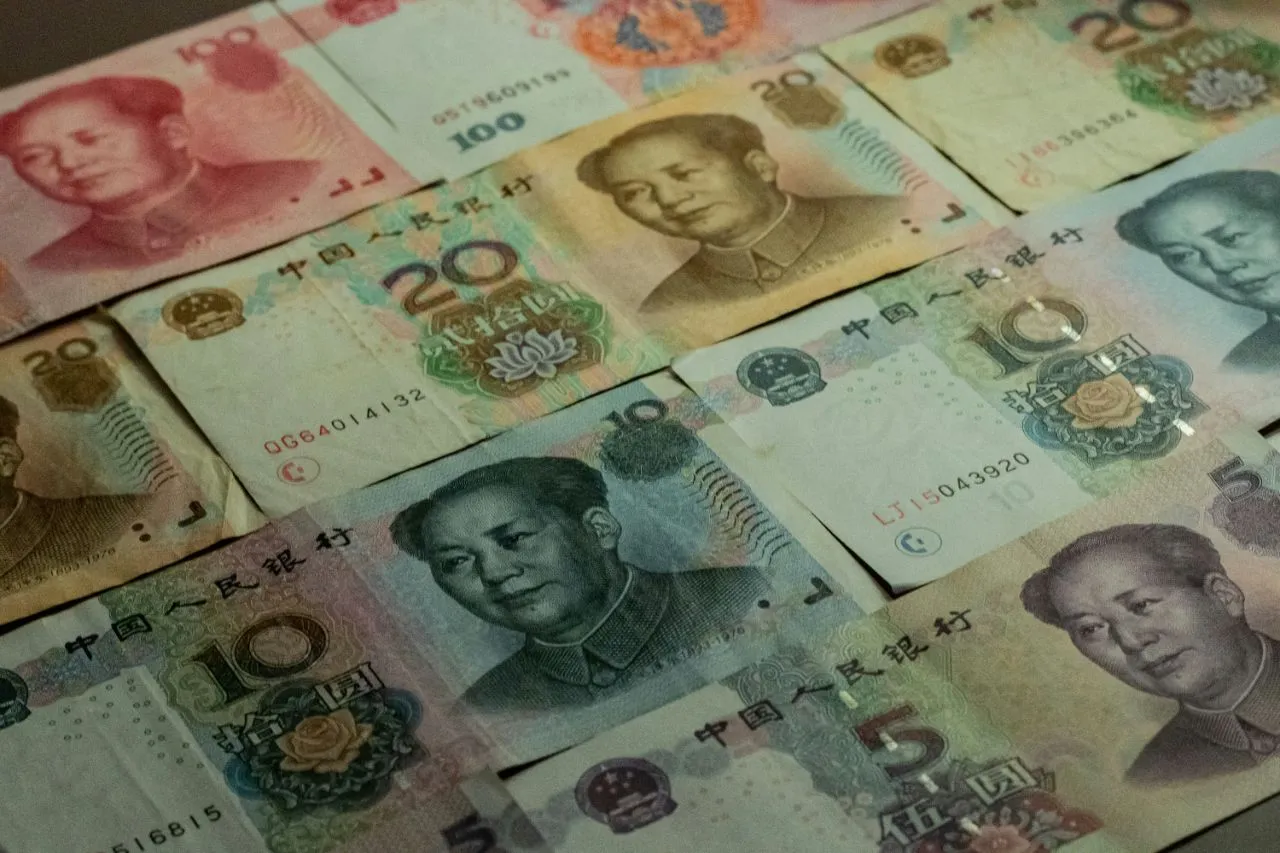
https://asset.coinness.com/en/news/832cd253aa5f55653103c2e855fd6db3.webp
Photo by Mitchell Luo on Unsplash

Onshore controls push yuan stablecoins offshore

Any debate over a yuan-linked token must also contend with China’s currency structure. The onshore yuan (CNY) is subject to strict capital controls and limited cross-border convertibility, while the offshore yuan (CNH) trades more freely. As a result, any prospective yuan stablecoin would likely reference the CNH; pegging directly to the CNY would conflict with Beijing’s capital rules.


An earlier Reuters report has indicated that Beijing is weighing whether to authorize a yuan-pegged stablecoin to promote international use of the currency. Analysts caution that such a token would almost certainly be confined to offshore markets, even if regulators proceed.


U.S. sets federal guardrails for stablecoins

Meanwhile, policy moves in the U.S. are gathering pace. In July, President Donald Trump signed the Guiding and Establishing National Innovation for U.S. Stablecoins (GENIUS) Act into law, creating a federal framework for stablecoins. A White House fact sheet says the law requires issuers to maintain 100% reserves in liquid assets such as U.S. dollars or short-term Treasuries and to publish monthly disclosures on reserve composition. The administration has argued that dollar-backed stablecoins could bolster demand for Treasuries and reinforce the dollar’s reserve-currency role.


Hong Kong has emerged as comparatively receptive to digital assets. The special administrative region’s Stablecoins Ordinance entered into force on Aug. 1, establishing a licensing regime to oversee Hong Kong dollar–backed stablecoins. Earlier this month, CMB International Securities, a subsidiary of China Merchants Bank, became the first Chinese bank-affiliated institution to offer trading in Bitcoin, Ethereum, and Tether (USDT).


Industry voices are also pressing the case for stablecoins. At the WebX conference in Tokyo on Aug. 25, Binance co-founder Changpeng Zhao (CZ) argued that CBDCs are becoming obsolete, while stablecoins—typically backed by real assets—enable wider transactions and are gaining market traction. He said CBDCs remain rarely implemented due to limited demand and suggested China appears more open to stablecoins after years of tighter oversight, pointing to Hong Kong’s efforts to build an ecosystem.


Potential PBOC stimulus may lift crypto

China remains a consequential force in global crypto markets. A recent report suggested that potential PBOC stimulus could fuel an altcoin rally. With China accounting for 19.5% of global GDP, shifts in its monetary stance are seen as important drivers of worldwide liquidity. Following July data showing a 0.1% month-on-month decline in retail sales, a 0.4% rise in industrial production, and an uptick in unemployment to 5.2%, analysts expect measures to support growth. Any additional liquidity could flow into risk assets, including cryptocurrencies, potentially pushing digital tokens toward new highs.


 

More to Read
View All
Web3 & Enterprise·

5 days ago

Token Cat authorizes up to $1B in corporate crypto purchases

Token Cat Limited, a Nasdaq-listed Chinese automotive marketplace formerly known as TuanChe Limited, has approved a new digital asset investment policy that will allow the company to deploy up to $1 billion into cryptocurrencies as part of its treasury strategy. In a press release distributed via Chainwire, the Beijing-headquartered company said its board of directors signed off on a Crypto Asset Investment Policy authorizing the use of a portion of its cash reserves to acquire selected tokens under internal risk-management controls. Any purchased assets will be held with third-party custodians rather than managed in-house, the company said.Photo by Precondo CA on UnsplashThe initial allocation will focus on tokens tied to newer projects in areas such as artificial intelligence, RAW-to-chain infrastructure, and token–equity hybrid models. Further deployments will be evaluated over time and will remain subject to additional board approval, according to the statement. The policy will be implemented under the oversight of Sav Persico, who was recently appointed chief operating officer. Token Cat said he brings decades of experience in technology and blockchain-related businesses and emphasized that the initiative reflects a long-term approach to digital assets rather than a speculative trade. China’s regulation and softer DAT inflowsToken Cat’s decision comes even as China’s central bank continues to stress that crypto-related business activity remains off-limits domestically. According to Reuters, the People’s Bank of China (PBOC) recently reiterated that services involving virtual assets constitute “illegal financial activities” and highlighted that cryptocurrencies do not have the legal status of fiat currency. The statement was issued against the backdrop of what the central bank characterized as a renewed pickup in speculative crypto trading and broader concerns about financial risks. Beyond China, Token Cat’s move fits into a wider trend of companies experimenting with so-called digital asset treasuries (DATs), in which companies commit varying portions of their balance sheets to crypto. Those strategies, however, have seen softer momentum in recent months. Cointelegraph, citing data from DefiLlama, reported that DATs drew about $1.32 billion in fresh capital in November, the lowest monthly intake of 2024. Bitcoin-focused DATs accounted for the bulk of that activity with roughly $1.06 billion of inflows, while Ethereum-based DATs saw about $37 million in outflows. Bitwise chief investment officer Matt Hougan said on X that DATs have generally moved in tandem over the past six months, but he expects that pattern to change as investors begin to differentiate between firms with clearly articulated strategies and those without. He said a limited number of DATs could emerge with more resilient valuations, while others may continue to trade at persistent discounts. Biotech Sonnet advances HYPE-token planDespite the recent slowdown in inflows, new corporate efforts to gain exposure to digital assets continue. One example is Sonnet BioTherapeutics Holdings, a North Carolina–based biotechnology company developing immuno-oncology drugs. On Dec. 2, Sonnet said its shareholders had approved a proposed business combination with Hyperliquid Strategies Inc. (HSI) and Rorschach I LLC. That vote followed an agreement reached in July for Sonnet to merge with Rorschach to form Hyperliquid Strategies, a new entity expected to hold roughly 12.6 million HYPE tokens valued at about $583 million, along with at least $305 million in cash, for a projected combined value of $888 million. Hyperliquid is a decentralized exchange (DEX) built on its own layer-1 blockchain. Its native token, HYPE, has a total supply of one billion and is used for network governance, staking, and smart contract functions on HyperEVM, the platform’s EVM-compatible environment. Sonnet’s move, together with Token Cat’s newly adopted investment policy, adds to a steady stream of corporate initiatives testing the role of digital assets in balance-sheet management. With companies ranging from biotech firms to automotive marketplaces exploring similar strategies, the coming months will show whether crypto holdings can establish themselves as durable components of corporate treasuries. 

news
Policy & Regulation·

Mar 14, 2025

Korea’s Bithumb joins forces with Interpol to fight crypto crime

South Korean crypto exchange Bithumb is working with the International Criminal Police Organization (Interpol) to combat global criminal activities involving digital assets. According to Korean media outlet Joseilbo, Yoo Jung-ki, who heads Bithumb's Policy Support Office, met with Tomonobu Kaya, Assistant Director of Interpol's Financial Crime and Anti-Corruption Centre, during a recent meeting in Thailand. The gathering was part of a three-day event held from March 10 to 12, organized under Interpol's Project ViCTOR (Virtual assets-facilitated financial Crime – Trace, Obstruct and Recover), an initiative funded by Japan's Ministry of Foreign Affairs. During their meeting, the two officials explored ways to enhance cooperation while committing to maintaining a close, sustainable working relationship.Photo by rc.xyz NFT gallery on UnsplashExchange shares expertiseDuring his Bangkok visit, Yoo delivered a speech addressing emerging crypto crime trends and necessary regulatory changes to protect users. He also discussed the Financial Action Task Force's (FATF) guidelines and recommendations, along with South Korea's policies on anti-money laundering and combating terrorism financing (AML/CFT). His presentation resonated with the audience, particularly when he emphasized the importance of collaboration between the public sector and crypto exchanges on multiple fronts, including recovering stolen funds from criminals. Regarding the meeting, Yoo stated that he found it meaningful to participate, as a representative of South Korean crypto exchanges, in a gathering focused on developing global countermeasures against money laundering and digital asset crimes. He added that Bithumb is committed to supporting the international cooperative system aimed at preventing and recovering from crypto crimes. Interpol’s effortsThe event also covered recent updates on Interpol's Global Rapid Intervention of Payments (I-GRIP) stop-payment mechanism, launched in 2022, and Singapore's evolving crypto regulatory landscape. In June last year, Interpol reported that police across 61 countries had collectively intercepted approximately $135 million in fiat currency and $2 million in cryptocurrency, with I-GRIP helping authorities track illicit proceeds from both types of currencies.Interpol's involvement in investigating crypto crimes has been expanding recently. According to Cointelegraph, Argentine lawyer Gregorio Dalbon has requested that a prosecutor and judge issue an Interpol Red Notice for Hayden Davis, a co-creator of the LIBRA token allegedly linked to Argentine President Javier Milei. The controversial memecoin, launched last month, briefly reached a $4.5 billion market cap before its value collapsed.

news
Web3 & Enterprise·

Jan 15, 2024

Lotte Data Communication showcases metaverse and EV charging platform at CES 2024

Lotte Data Communication, the IT service management unit of South Korean conglomerate LG Group, brought its hyperrealistic metaverse platform Caliverse and electric vehicle charging platform EVSIS to the stage at CES 2024, attracting great interest from stakeholders from around the world, according to an article by South Korean news outlet KG News.Photo by GuerrillaBuzz on UnsplashExploring tomorrow's technologyCES is one of the biggest annual tech conventions in the world organized by Consumer Technology Association, where companies and other industry leaders gather in Las Vegas to showcase their innovations and visions for a future led by advanced technology. This year’s event was held from Jan. 9 to 12.  AI takes the spotlightIn particular, user-engaging technologies such as generative AI received much attention at the convention, such as AI mobile scanning, which allows anyone to take a picture of their product with a mobile device and virtually create their own digital object in less than five minutes. Another new technology called metaverse live streaming allows users to interact with each other in the virtual space in real-time by replicating their appearance. Standing at the forefront of the IT industryLotte’s Caliverse platform provides deeply immersive content based on world-class technologies such as ultra-high-definition VR shots, image synthesis and real-time rendering graphics. It can also be experienced through a head-mounted display (HMD) as well as most other electronic devices such as 3D monitors, PCs and smartphones, maximizing user accessibility. The company also showcased various EV chargers and digital platforms that are used in its other new product EVSIS, gaining popularity among visitors at the event. Lotte aims to further establish itself as a global market leader in the IT industry based on these cutting-edge platforms.

news
Loading