Top

Korean crypto exchanges list Trump-linked cryptocurrencies

Web3 & Enterprise·September 02, 2025, 5:25 AM

Cryptocurrencies tied to the family of U.S. President Donald Trump began trading on South Korea’s major exchanges on Monday.


Upbit, the country’s largest exchange, listed WLFI—the native token of World Liberty Financial, a DeFi platform backed by the Trump family—and World Liberty Financial USD (USD1), a stablecoin the platform says is pegged 1:1 to the U.S. dollar and backed by dollars and government money market funds. Bithumb also listed both WLFI and USD1, while Coinone listed WLFI only.
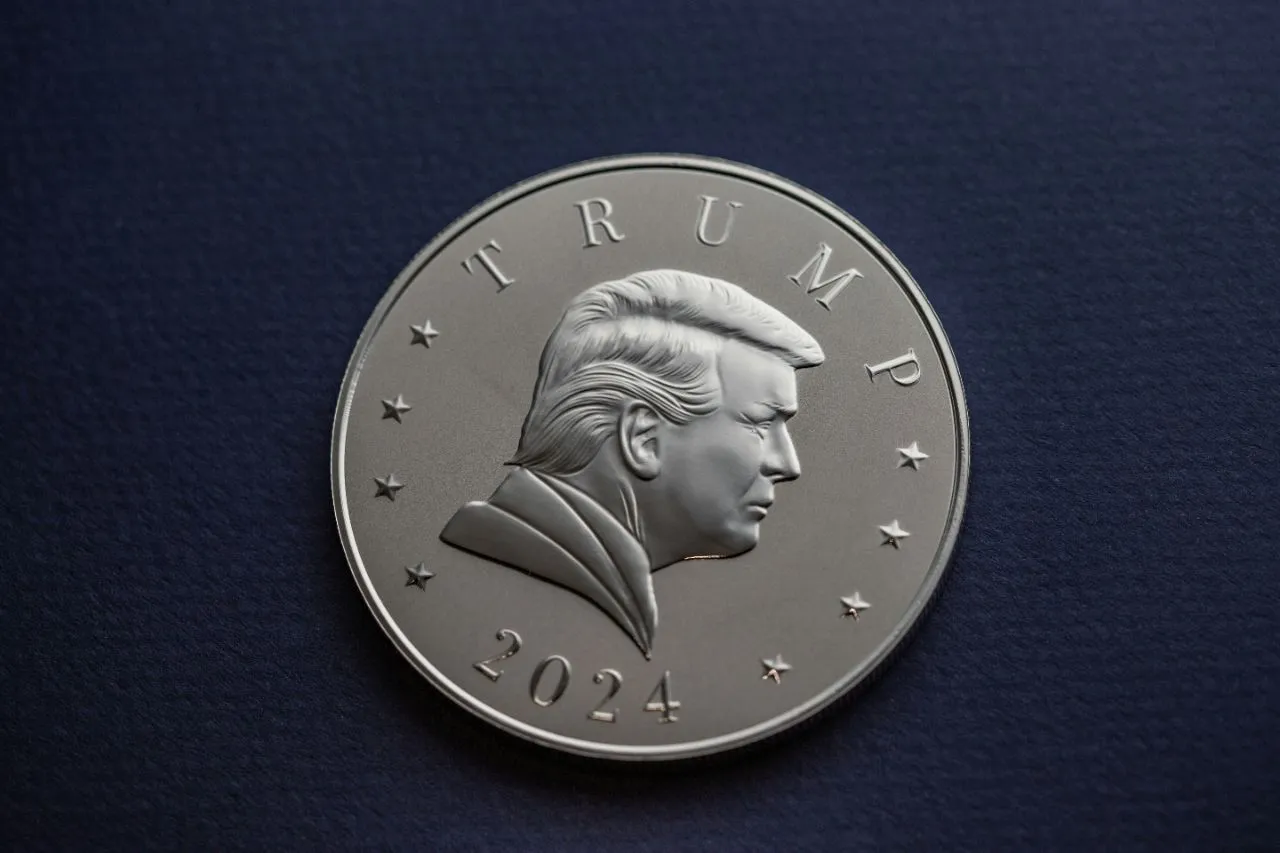
https://asset.coinness.com/en/news/8cdbcae8b4a6a0aad470e9f5784ab395.webp
Photo by Scottsdale Mint on Unsplash

From global listings to a volatile debut

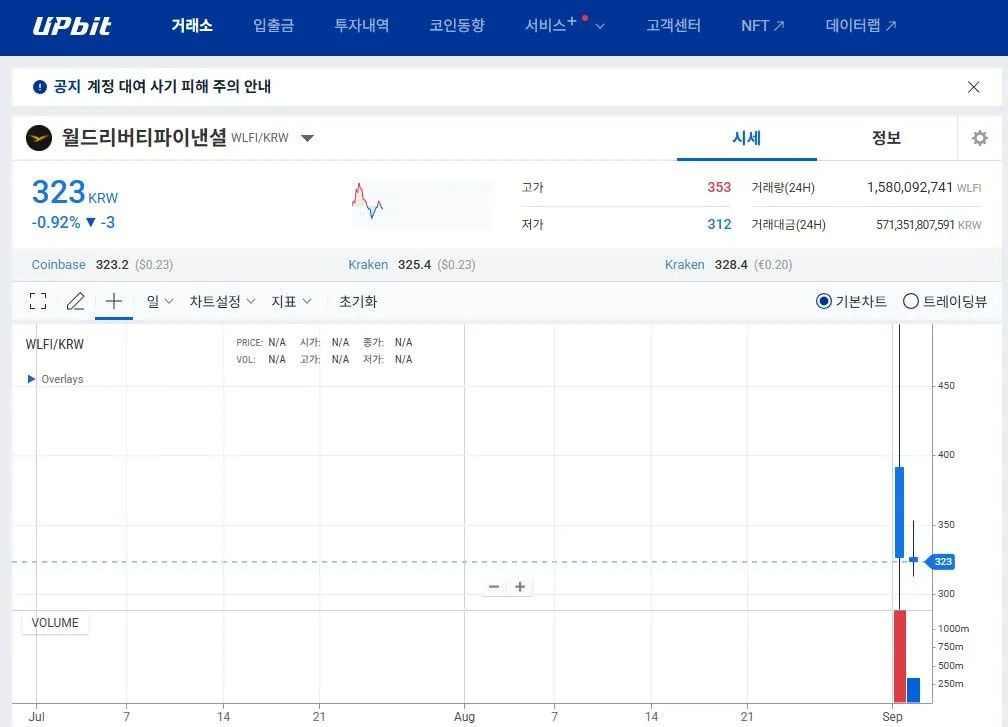
WLFI’s first session was volatile. It opened on Upbit at a floor price of 433.76 won ($0.31) and, roughly 17 hours later, was down about 25% at 323 won ($0.23) at the time of publication.
https://asset.coinness.com/en/news/ddebe18a850dcbf79d22ca0153c03238.webp
Source: WLFI/KRW spot trading pair on Upbit

The Korean launch comes alongside listings on major global venues, including Binance and Coinbase. Until its exchange listings, WLFI holders had been unable to trade their tokens. The Wall Street Journal estimated the Trump family’s holdings, representing less than a quarter of the supply, to be worth close to $5 billion after the listing. Trump’s three sons are named as co-founders of World Liberty, which says tokens allocated to founders and team members will remain locked. President Trump is described as the project’s “co-founder emeritus.”


Political controversy over crypto and holdings

The project has drawn criticism from those who argue it could serve as a conduit for influence, with partners and investors seeking political favor. In April, Democratic lawmakers Senator Elizabeth Warren and Representative Maxine Waters warned the U.S. Securities and Exchange Commission that the family’s stake posed “an unprecedented conflict of interest” in oversight of the crypto industry. Later, White House press secretary Karoline Leavitt said, “Neither the President nor his family have ever engaged, or will ever engage, in conflicts of interest.”


Controversy over public officials’ crypto exposure is not new. Recently, it was reported by The Chosun Ilbo that as of Aug. 14, Lee Eog-weon, nominee to chair South Korea’s Financial Services Commission (FSC), held 10 shares of Strategy, a Nasdaq-listed Bitcoin treasury company with 632,457 BTC in reserves. The disclosure indicates no legal violation because the holdings predate his nomination, but it highlights tension with his public views. In a letter to parliament ahead of his confirmation hearing, Lee questioned crypto’s intrinsic value and argued its volatility undermines its utility as a store of value or medium of exchange.


If Lee were not seeking a government post, his holdings of crypto-related stocks would hardly surprise South Koreans. According to Money Today, citing data from the Korea Securities Depository (KSD), Korean investors increased purchases of crypto-related U.S. equities amid expectations of U.S. rate cuts. Bitmine Immersion Technologies—a Bitcoin miner that also accumulates Ethereum as a treasury asset—was the second-most purchased U.S. stock by Koreans in August, with net buys of $252.77 million, or 7.6% of all purchases among the top 50 U.S. stocks. Stablecoin issuer Circle ranked 10th at $92.62 million, and the GraniteShares 2x Long COIN Daily ETF, which delivers twice the daily price movement of Coinbase, ranked 11th at $90.74 million. In total, crypto-related stocks and ETFs accounted for 30.4% of the top 50 U.S. equity holdings by value.


South Korea weighs spot ETFs amid investor surge

Policy is moving in tandem with market interest. Spot crypto ETFs have recently been elevated to South Korea’s national agenda, opening the door to potential approval. Analysts say such products could repatriate demand that has been flowing overseas. Kim Jin-young of Kiwoom Securities argues that expanded regulatory approval could reshape Korea’s capital market by widening investor access, drawing in institutional capital, stabilizing prices, and diversifying available crypto-linked products.


 

More to Read
View All
Web3 & Enterprise·

Jul 09, 2025

Metaplanet aspires to acquisition of digital bank

The CEO of Japanese hotel operator turned Bitcoin treasury company, Metaplanet, has suggested that the firm may consider acquiring a digital bank in the future. Simon Gerovich, the firm’s CEO and a former Goldman Sachs banker, told the Financial Times that part of the second stage of its overall strategy may involve “acquiring a digital bank in Japan and providing digital banking services that are superior to the services which retail now is getting.”Photo by Kanchanara on UnsplashBitcoin gold rushGerovich explained that phase one of Metaplanet’s plan involves participating in what he considers to be “a bitcoin gold rush.” He added: “We need to accumulate as much bitcoin as we can . . . to get to a point where we’ve reached escape velocity and it just makes it very difficult for others to catch up.” Other firms are jumping on the bandwagon, as within a very short timeframe, 140 companies around the world have adopted a Bitcoin treasury strategy. Metaplanet currently weighs in as the fifth-largest corporate holder of Bitcoin globally. Right now, the company holds 15,555 BTC. Its target is a holding of 210,000 BTC, which equates to around 1% of the total Bitcoin supply. Based on current pricing, such a holding would be worth in the region of $23 billion. Acquiring cash-generating businessesOnce the company has accomplished its Bitcoin accumulation goals, it plans to move on to phase two, acquiring cash-generating businesses while leveraging its Bitcoin holdings in order to do so. Using Bitcoin as collateral, Gerovich said that Metaplanet will “get cash that we can use to buy profitable businesses.”  While inroads are being made with regard to the acceptance of Bitcoin as a corporate reserve asset, it is earlier days still for its acceptance as collateral. Last month, the Federal Housing Finance Agency (FHFA) in the United States, ordered Fannie Mae and Freddie Mac, key government-sponsored players in the American mortgage market, to explore the treatment of Bitcoin as eligible collateral for mortgages. Standard Chartered and crypto exchange OKX launched a pilot program earlier this year geared towards the use of crypto for collateral purposes. Gerovich talks in terms of Metaplanet’s phase two plan playing out at a time “when bitcoin, like securities or government bonds, can be deposited with banks and then they’ll provide very attractive financing against that asset.” The Metaplanet CEO stated that he expects the Bitcoin accumulation phase of the plan to play out over a period of between four and six years. The Tokyo-listed firm started accumulating Bitcoin in 2024. Some market participants are backing Metaplanet’s strategy with their own money. Global investment management firm Capital Group recently became Metaplanet’s second-largest investor. Bitcoin treasury criticsHowever, the emergence of Bitcoin treasury firms has also drawn quite a few detractors. Some critics point out that many of these companies have a negative operating income. Market analyst Caleb Franzen asserted that even after buying Bitcoin, they’re still junk companies. Others point out that too many firms have jumped on the Bitcoin treasury bandwagon, making the prospect no longer attractive. Fakhul Miah, managing director of GoMining Institutional, is also concerned about copycats. He told Cointelegraph that ”if these smaller firms crash, we could see a ripple effect that hurts Bitcoin’s image.”

news
Policy & Regulation·

May 24, 2023

Hong Kong Moves to Enable Retail Crypto Trade

Hong Kong Moves to Enable Retail Crypto TradeHong Kong’s Securities and Futures Commission (SFC) has moved to enable retail participation in crypto trading within the Chinese autonomous territory.The SFC has arrived at that determination, according to a report it published on Tuesday. The report, titled “Consultation Conclusions on the Proposed Regulatory Requirements for Virtual Asset Trading Platform Operators Licensed by the SFC (Note 1),” provides an overview of the nature of feedback the Commission received as part of its consultation process relative to virtual asset trading.Photo by Ben Cheung on PexelsRetail investor protectionIn the press release which accompanied the report, the Commission outlined that “a significant majority of respondents agreed to our proposal to allow licensed trading platform operators to serve retail investors.” On that basis, the SFC is moving forward in enabling retail trading of crypto assets through licensed virtual asset trading platforms effective June 1, and it’s setting out to do so while implementing a number of measures to protect retail investors.That will include ensuring that operators provide an appropriate on-boarding process. In the case of crypto asset projects, the SFC is determined to see to it that good governance is implemented, alongside enhanced token due diligence, admission criteria, and disclosures.In the statement, the SFC’s CEO Julia Leung, said that “providing clear regulatory expectations is the key to fostering responsible development.” She added that “Hong Kong’s comprehensive virtual assets regulatory framework follows the principle of ‘same business, same risks, same rules’ and aims to provide robust investor protection and manage key risks. This will enable the industry to develop sustainably and support innovation.”Specific conditionsOne item that the SFC’s new rule-book on virtual asset trading for retail investors outlines is a ban on crypto “gifts.” Effectively any promotions or incentives that lead with free gifts, and this will likely include token airdrops, will be prohibited.In terms of capital liquidity, virtual asset exchanges will be required to maintain a minimum of 5,000,000 Hong Kong dollars ($638,000) at all times as a minimum paid-up share capital. A Platform Operator must at all times maintain liquid capital which is not less than its required liquid capital,” the document outlines.Token due diligenceThe SFC acknowledged that it can be difficult for virtual asset exchanges to carry out due diligence on new tokens. With that in mind, it has incorporated a requirement for any new token to have a twelve-month track record before it can be considered to be listed to provide an indication of such things as supply, demand, maturity, and liquidity. In that way, exchanges have some data to work with in carrying out token due diligence.Smart contracts have been a point of weakness in recent years, with considerable sums lost through hacks that have exploited smart contract code vulnerabilities. To that end, the SFC insists that as part of token due diligence, new assets will have to undergo smart contract audits performed by independent assessors.Given that the spate of recent crypto platform failures implicated loss of customer deposits, the rule-book considers the need for segregation of client funds. Exchanges will need to segregate funds and can either hold them separately from the assets of the exchange itself or have them held in escrow.

news
Policy & Regulation·

Mar 15, 2024

India’s SEBI head wants instant settlement to counter crypto threat

The Securities and Exchange Board of India (SEBI) is set to introduce a same-day settlement cycle starting March 28, making India only the second country, following China, to adopt such a system. This move comes amidst growing competition from the cryptocurrency sector, with SEBI Chairperson Madhabi Puri Buch emphasizing the need for instant settlement and tokenization to remain competitive.Photo by Big G Media on UnsplashEvolving market dynamicsBuch has unveiled plans aimed at enhancing the efficiency of India's capital markets through faster settlement processes. During a recent press conference, she highlighted the significance of adapting to evolving market dynamics. Buch stated:“If our well-regulated market cannot compete with the crypto world and cannot say we also offer you tokenization and instantaneous settlement over the medium term, I won’t even say long term, you should expect investors to move." The SEBI chairperson articulated that we live in a time where the current generation demands instant delivery of services. It’s with that in mind Buch believes that crypto is a threat to traditional financial markets. She stated:"Everybody wants instant everything. Right? So why should anyone believe that tomorrow if an alternative is available with instant settlement tokenization and they say the regulated market doesn’t offer it, you should expect people to move.” With a focus on meeting investor expectations for instant transactions, SEBI aims to bridge the gap between traditional capital markets and the rapidly evolving crypto landscape. Faster settlement cyclesIndia has been at the forefront of adopting faster settlement cycles, having transitioned to a one-day settlement (T+1) model between 2021 and January 2023. The optional same-day settlement, scheduled to commence later this month, represents another step towards enhancing market efficiency. However, Buch cautioned that further delays in embracing instant settlement could lead to a significant portion of the market shifting towards cryptocurrencies. The move towards faster settlement has been met with enthusiasm from some market participants. Indian business news publication Mint reported the comments of Shauryam Gupta, CEO of web trading platform Rupeezy, on the subject. Gupta stated: “The shift to instantaneous settlement is a substantial milestone, streamlining operations and cutting down on risk. The potential advantages of reducing counterparty risk and boosting liquidity signal positive growth for the sector.” However, others, particularly brokers, have expressed reservations. Brokers, who hold client funds and earn interest on balances, stand to see their interest earnings decrease with shorter settlement times. Nonetheless, SEBI remains steadfast in its commitment to modernizing India's capital markets to remain globally competitive. The regulatory landscape surrounding cryptocurrencies in India has been predominantly shaped by the nation's finance ministry and the Reserve Bank of India (RBI). While the RBI has been vocal in its opposition to cryptocurrencies, advocating for central bank digital currencies instead, SEBI's recent initiatives underscore its willingness to adapt to changing market dynamics. SEBI's efforts reflect a broader trend of regulatory bodies worldwide seeking to strike a balance between innovation and investor protection in an increasingly digital financial landscape. 

news
Loading