Top

UAE’s RAK Properties to accept crypto payments through Hubpay partnership

Web3 & Enterprise·September 04, 2025, 6:38 AM

RAK Properties has signed a strategic agreement with Hubpay that will allow international buyers to pay for homes in the United Arab Emirates (UAE) using digital assets, the real estate developer said in a Sept. 1 statement on its website.


Under the arrangement, customers can settle property purchases with major cryptocurrencies, including USDT, Bitcoin (BTC), and Ethereum (ETH). Payments will be processed on Hubpay’s regulated platform, converted into UAE dirhams, and transferred directly to RAK Properties’ account. The company said it will not handle digital assets directly. Instead, all transactions will be processed by Hubpay and its partners, who are licensed by Dubai’s Virtual Assets Regulatory Authority (VARA), to ensure compliance and transparency.


The initiative is aimed at drawing new categories of overseas investors to Ras Al Khaimah, the UAE’s sixth-most populous city, including the developer’s Mina waterfront community.

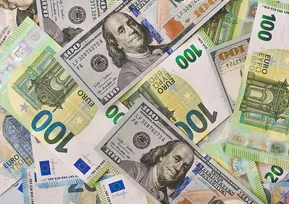
https://asset.coinness.com/en/news/320ee55bcb69b57a446db5c3a521e6d9.webp
Photo by Precondo CA on Unsplash

UAE’s crypto market expands amid rising risks

The move comes amid growing crypto activity in the UAE. A Chainalysis report last year ranked the Middle East & North Africa as the seventh-largest crypto market and noted that the UAE’s decentralized finance adoption was above the global average, citing regulatory clarity. From July 2023 to June 2024, crypto inflows to the UAE leaned heavily toward stablecoins, which represented 51.3% of value received, compared with 44.7% worldwide. Bitcoin’s share was smaller than the global average at 16.5% versus 22.3%, while altcoins and Ethereum showed little difference at 24.4% and 7.8%, respectively.


At the state level, the UAE itself has emerged as a significant player. Based on Arkham’s tracking, it is the world’s fourth-largest government Bitcoin holder, with about 6,352 BTC ($703 million). In contrast to the U.S. and U.K., whose holdings largely stem from law enforcement seizures, the UAE’s reserves come from mining through Citadel Mining. The firm is majority-owned by 2PointZero under the International Holding Company (IHC), which is chaired by Sheikh Tahnoun bin Zayed al-Nahyan, the UAE’s national security adviser and a prominent member of the ruling family in Abu Dhabi.


As crypto use has grown, so too have the risks. In the first half of this year, the UAE recorded the world’s largest average per-victim losses from crypto crime, with nearly $80,000 stolen per individual, according to Chainalysis. Only the U.S. came close to that figure, while Chile, India, Lithuania, Japan, Iran, Israel, Norway, and Germany rounded out the global top ten.


Harmonizing crypto rules

Amid a shifting crypto landscape, regulatory structures in the UAE are continuing to evolve. At the federal level, the Securities and Commodities Authority (SCA) supervises virtual asset services, while the Central Bank of the UAE (CBUAE) oversees payment tokens. The Dubai International Financial Centre and the Abu Dhabi Global Market operate their own frameworks. Last month, the SCA and VARA introduced a cooperation framework to harmonize oversight and allow mutual recognition of licenses, though the system stops short of automatic passporting in order to preserve national security controls.


In related developments, the National Bank of Ras Al Khaimah (RAKBANK) became the first bank in the UAE to partner with Bitpanda Technology Solutions, a Vienna-based crypto exchange and digital assets infrastructure provider. The partnership, which builds on earlier work exploring the issuance of digital payment tokens, is expected to give RAKBANK customers access to a variety of crypto use cases.

 

More to Read
View All
Markets·

Apr 24, 2023

Report: Can Bitcoin Replace Gold As a Safe Asset?

Report: Can Bitcoin Replace Gold As a Safe Asset?In light of the substantial increase in Bitcoin (BTC) prices this year, a report from KB Financial Group in South Korea examined the potential for BTC to replace gold as a safe asset.©Pexels/Michael SteinbergThe study delves into the factors behind the recent BTC price surge and emphasizes the need for caution when considering BTC as an alternative to traditional safe assets.3 drivers behind BTC surgeFrom January 1 to March 31 this year, BTC experienced an impressive return of 71%. This surge can be attributed to three main factors: an anticipated increase in liquidity due to market expectations of unchanged or falling interest rates; central banks supplying liquidity to mitigate risks in the traditional banking system; and concerns over the potential delisting of cryptocurrencies should the US court’s decision on the Ripple-SEC case classify XRP, Ripple’s native token, as securities, prompting investors to shift their focus to BTC.The report suggests that the current BTC boom is more likely a result of short-term arbitrages and social conformity, given the greater information asymmetry in the crypto market, which lacks the disclosure system present in traditional stock markets.Persisting risk factorsLast month, blockchain tracker Whale Alert spotted a transfer of 11,125 BTC from an anonymous address to Binance. The primary reason for moving assets from a private address to an exchange address is to sell them, indicating that investors should keep a watchful eye on Bitcoin trading volumes, particularly for any signs of large sell-offs.Data from the crypto data analysis platform Glassnode revealed that the percentage of the BTC supply that was active over a year ago reached an all-time high of 68% in late March. Historically, such an increase has been associated with falling BTC prices.This year, the BTC supply is set to grow due to the US government’s liquidation of seized BTC. As detailed in a March 31 Cointelegraph article, the US government seized 51,352 BTC in a case related to Ross Ulbricht, the creator of the online black market Silk Road. The government has already sold 9,861 BTC, with the remaining amount expected to be liquidated in four additional portions throughout the year.Binance, the world’s largest crypto exchange by trading volume, has been struggling to find banks in the US to store client funds after crypto-friendly banks Silvergate and Signature closed their doors.Need for cautionAlthough various media sources often portray BTC as a safe asset, the report advises caution in accepting these claims. Although some liken BTC to “digital gold,” the two assets share little in common beyond their finite and scarce nature. In fact, gold and BTC diverge significantly in terms of social consensus, intrinsic value, price volatility, and investor protection.Gold serves as a highly liquid asset with applications in both jewelry and industrial goods, in addition to its role as an investment vehicle. In contrast, BTC’s intrinsic value is still debatable. The price volatility of BTC is also a concern, as evidenced by its 71% spike in the first quarter of 2023, compared to gold’s modest 8% increase. Additionally, gold investment products are regulated by law, whereas BTC is not. The report thus recommends treating BTC as a high-risk product and incorporating it into a diverse investment portfolio.It is worth noting that since the outbreak of the COVID-19 pandemic, the crypto market has demonstrated a stronger correlation with the global stock market in response to negative signals. This trend can be partially attributed to the growing presence of institutional investors in the crypto market, who often sell risky assets first to secure liquidity in the face of unexpected shocks.

news
Web3 & Enterprise·

Nov 03, 2023

XPLA-Kado Partnership allows fiat-to-crypto transactions for XPLA users

XPLA-Kado Partnership allows fiat-to-crypto transactions for XPLA usersXPLA, the layer 1 blockchain project operated by South Korean gaming company Com2uS Group, announced on Friday (local time) its partnership with Kado, a fiat-to-crypto on/off ramp platform, enabling XPLA users to move between fiat currencies and cryptocurrencies seamlessly.Photo by Ibrahim Boran on UnsplashXPLA available via Visa, MastercardKado simplifies the process of converting between fiat and crypto. Usually, Web3 users have to deal with the inconvenience of using centralized exchanges to make such conversions. But Kado makes this much easier, allowing users to make purchases with either fiat currencies or cryptocurrencies. The platform accommodates an array of more than 20 fiat currencies and supports well-established payment options, including Visa, Mastercard, Apple Pay, ACH Transfer and Wire Transfer. Moreover, Kado’s services extend across over 150 countries that support Know Your Customer (KYC) protocols.Paul Kim, CEO of XPLA, acknowledged Kado’s contributions to establishing a base for the growth of the Web3 economy. He pointed out that this collaboration will make it simpler and more intuitive for XPLA users to engage with the Web3 economy. Thanks to Kado’s services, XPLA users will now be able to transact with their tokens with greater ease.Vince Dowdle, co-founder of Kado, underscored the importance of this partnership, noting that Kado has recognized XPLA as a frontrunner in shaping the future of Web3 gaming. This recognition comes from XPLA’s proactive stance in acquiring the intellectual properties (IPs) of multiple major games, reflecting a firm belief in the potential of the Web3 content space.Meanwhile, XPLA boasts a diverse roster of validators such as Oasys, Animoca Brands, YGG, Blockdaemon, Cosmostation and LayerZero. It has also onboarded popular games like Summoners War: Chronicles, Minigame Party, Ace Fishing: Crew, Idle Ninja Online and The Walking Dead: All-Stars. With these titles, XPLA is actively working to establish itself as a major hub for Web3 content on a global scale.

news
Web3 & Enterprise·

Sep 07, 2023

Zodia Markets Achieves Crypto Broker-Dealer Approval in UAE

Zodia Markets Achieves Crypto Broker-Dealer Approval in UAEZodia Markets, the London-based digital asset marketplace backed by Standard Chartered Ventures, has achieved the milestone of receiving In-Principle Approval (IPA) to operate as a cryptocurrency broker-dealer in Abu Dhabi’s over-the-counter (OTC) market.Photo by Kamil Rogalinski on UnsplashADGM green lightThat’s according to a press release published by Zawya, a business intelligence media outlet that covers the Middle East and North Africa (MENA) region. The regulatory approval comes from the Abu Dhabi Global Market (ADGM), a renowned financial hub in the United Arab Emirates (UAE).Salem Mohammed Al Darei, CEO of the ADGM Authority, extended his congratulations to Zodia Markets on this achievement and welcomed them into the ADGM ecosystem. The In-Principle Approval marks the third step in a comprehensive five-stage application process outlined by ADGM. The subsequent stages involve securing final approval and undergoing an “operational launch” test to ensure seamless functionality, with a need to follow ADGM’s guidance meticulously.“The harmony of traditional and new-age finance in Abu Dhabi with an international leading digital asset firm such as Zodia Markets that is backed by the well-established Standard Chartered will contribute to further enhancing the attractiveness of ADGM as a preferred destination for global entities,” Al Darei stated.Expanding global footprintZodia Markets’ strategic decision to enter the UAE market aligns with the growing prominence of the UAE in the digital assets industry. This move compliments Zodia Custody’s decision to launch a crypto custodian service in the UAE emirate of Dubai back in May. While both businesses are independent of each other and fully segregated, they share the very same parent company in Standard Chartered.At the time, a memorandum of understanding (MoU) was signed by parent company Standard Chartered alongside the Dubai International Financial Center (DIFC).This latest move bolsters the geographical presence of Zodia Markets but also provides institutional investors in the Middle East and Africa with convenient access to the world of digital assets, thereby strengthening the company’s global footprint in the digital asset space.News of the firm’s intentions to enter the UAE market emerged last November. The company’s thinking at the time was that it could exploit an opportunity to expand in the MENA region due to more progressive regulation while the US and Europe were perceived to be developing at a much slower pace from a regulatory point of view, making them unattractive comparatively.ADGM has been at the forefront of shaping the regulatory landscape for companies involved in virtual assets. In April, it put forward a legal framework for decentralized tech. As part of its commitment to fostering innovation, ADGM recently granted permission for the operation of a virtual asset platform named M2 and issued a license to the cryptocurrency exchange Rain in July.Usman Ahmad, CEO of Zodia Markets, articulated the company’s mission, stating:“Our goal is to provide institutions seamless access to trade digital assets without compromising on the standards and controls that exist in traditional financial markets.”Zodia Markets is a joint venture between Standard Chartered and Hong Kong-based digital assets platform OSL, which also expressed its enthusiasm for the In-Principle Approval.

news
Loading