Top

UAE signs on to OECD crypto-tax reporting pact, sets 2027 launch

Policy & Regulation·September 25, 2025, 6:42 AM

The United Arab Emirates (UAE) has taken a step toward global tax transparency in digital assets, opening a public consultation on how it will implement the Organisation for Economic Co-operation and Development’s (OECD) Crypto-Asset Reporting Framework (CARF) and confirming a formal commitment to the regime.


The UAE Ministry of Finance said it has joined the Multilateral Competent Authority Agreement, enabling the automatic exchange of information under CARF, following its intention announced last November. Implementation is slated to begin in 2027, with the first cross-border exchanges of data expected in 2028.
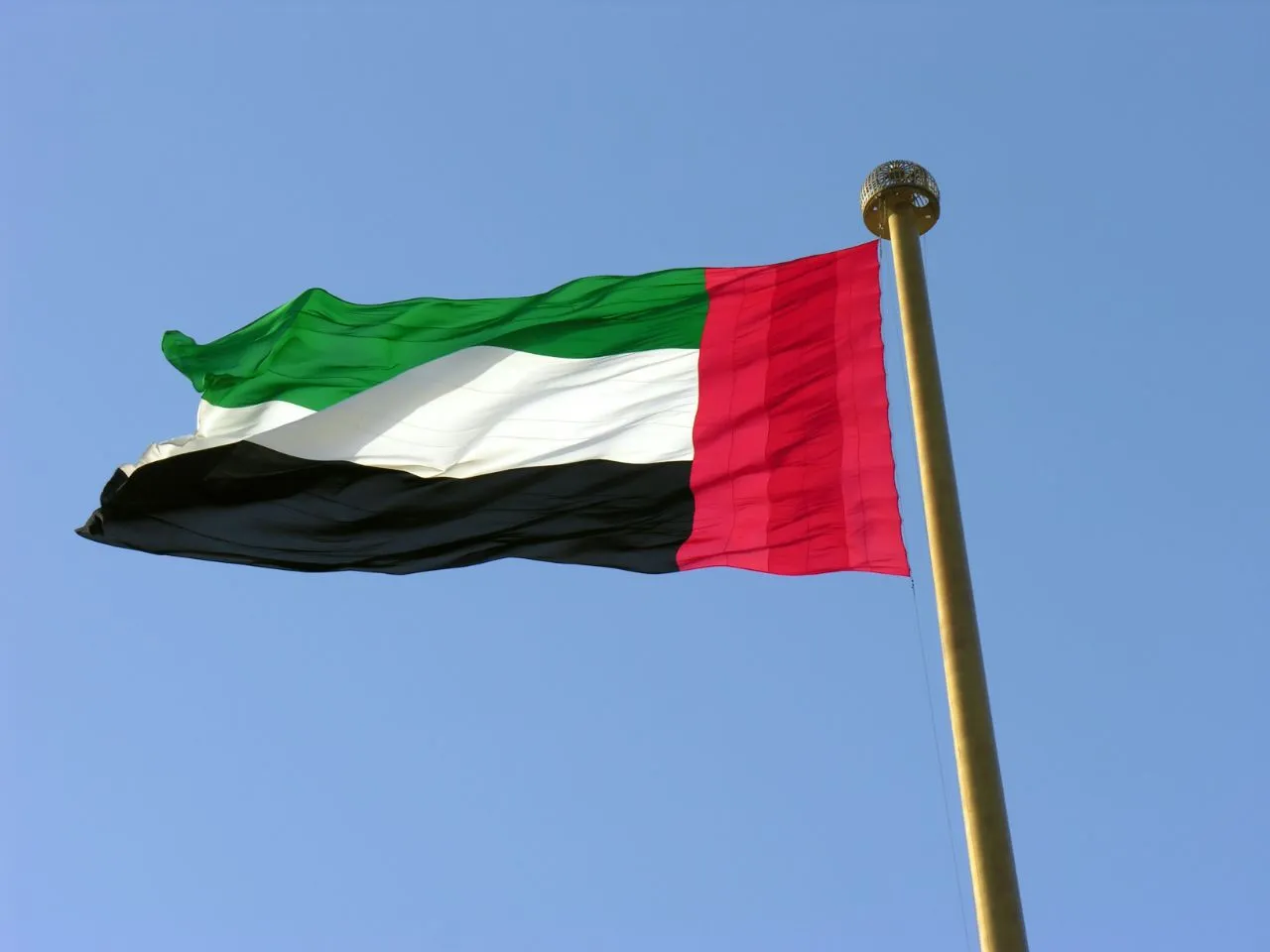
https://asset.coinness.com/en/news/4a5871b60e8c5b77a9f5d3852dc7e71e.webp
Photo by Saj Shafique on Unsplash

Global rules for crypto tax reporting

Designed by the OECD, CARF establishes standardized rules for collecting and sharing tax-relevant information on crypto activity. UAE officials say the framework will provide greater certainty for industry participants while aligning the country with international tax transparency standards.


As part of the rollout, the ministry is seeking input from across the market. Advisory firms, intermediaries, traders, custodians, exchanges, and other stakeholders are invited to weigh in on potential impacts and areas needing clarification. The consultation began on Sept. 15 and runs until Nov. 8, with the aim of shaping clear, effective rules that reflect expert insight and market realities.


Solana treasury company

The policy moves come amid brisk momentum in the UAE’s digital asset ecosystem. A recent announcement outlined the planned launch of Solmate, a Solana (SOL)-based digital asset treasury firm that will emerge from the rebranding of Nasdaq-listed, Ireland-based holding company Brera Holdings. The venture is supported through a $300 million private investment in public equity (PIPE) sponsored by UAE-based Pulsar Group.


Brera, known for its multi-club football ownership strategy across three continents, will have that business carried forward under Solmate, which counts the Solana Foundation, RockawayX, and ARK Invest among its investors. Former Kraken chief legal officer (CLO) Marco Santori is also set to become CEO.


Tokenization and real estate

Real-world asset (RWA) tokenization is another area gaining traction in the UAE. Mavryk, a layer-1 network, has raised $10 million in a round led by financial derivatives provider MultiBank Group. The investment builds on a partnership targeting the tokenization of more than $10 billion in UAE real estate via MultiBank’s RWA platform. Fireblocks will provide multiparty computation wallets to secure tokenized assets on Mavryk’s network.


Beyond tokenization, RAK Properties has signed a strategic deal with Hubpay to let foreign buyers acquire homes in the UAE, most notably in Ras Al Khaimah, the country’s sixth most populous city, using cryptocurrencies such as USDT, Bitcoin (BTC), and Ethereum (ETH).


Taken together, the UAE’s alignment with CARF and the burst of private sector initiatives point to a market moving toward clearer rules and broader institutional participation, even as the details of implementation are refined through the current consultation.

 

More to Read
View All
Web3 & Enterprise·

Aug 31, 2023

SEBA Bank Receives Conditional Approval for Crypto Services in Hong Kong

SEBA Bank Receives Conditional Approval for Crypto Services in Hong KongSwiss-based crypto-centric SEBA Bank has secured conditional approval from Hong Kong’s Securities and Futures Commission (SFC) to offer crypto services within the autonomous Chinese territory.While there are stipulations yet to be met before the license is fully granted, the development marks a significant progression when it comes to SEBA’s global business ambitions.Photo by Ruslan Bardash on UnsplashExpanding in AsiaThe “approval-in-principle” comes as part of SEBA’s strategic efforts to expand its foothold in the Asian crypto market. Once the conditions are fulfilled and the license is formalized, SEBA will be well positioned to provide Hong Kong with a range of comprehensive crypto services.This includes securities dealing encompassing crypto-related structured products, as well as consultation and management of both digital assets and traditional securities. SEBA sees potential in the offering of derivative products as it has identified demand for derivatives and structured products within the Asian crypto market.This step forward for SEBA follows earlier reports that the bank was actively growing its workforce in pursuit of digital asset licenses for both Hong Kong and Singapore. The company has grown its headcount from seven to 20 across these locations, as it looks to establish a strong presence in the Asian market.The move aligns with Hong Kong’s evolving stance on cryptocurrency and digital finance. Introduced in June, the virtual asset service provider (VASP) license was intended to regulate virtual asset services within Hong Kong’s legal framework. Currently, only two crypto exchanges have secured these licenses.Cryptocurrency exchange HashKey, alongside digital assets platform OSL, became one of the first licensed crypto exchanges in Hong Kong recently. Since then, it has expanded its offerings to retail users, allowing them to purchase Bitcoin and Ethereum using US dollars. Leading up to that licensing approval, it had also launched a wealth management service for high-net-worth individuals and institutional investors. The majority of publicly accessible VASPs remain unregulated, according to a recent statement by the SFC.Regulatory balanceThe Hong Kong Monetary Authority (HKMA) has also shown interest in fostering relationships between established financial institutions and crypto exchanges, further signaling the region’s growing engagement with the crypto space. It’s also pointing towards getting the balance right between enabling digital asset innovation and having sufficient regulation in place to protect investors. In May, its CEO, Eddie Yue, stated that Hong Kong wouldn’t be a place for light touch regulation.The licensing process in Hong Kong hasn’t been without its difficulties. The interest in obtaining crypto trading licenses caught the SFC flat footed as it found itself understaffed to work through the licensing applications that arrived at its door. The backlog prompted commentary from SEBA’s CEO for the Asia Pacific (APAC) region, Amy Yu, back in May, with Yu highlighting that the backlog had increased significantly over the course of nine months.While SEBA has broken into the market in the APAC region via its efforts in Hong Kong, it’s understood that the bank has plans to develop its business in Singapore further over the course of the coming months.

news
Web3 & Enterprise·

Jan 25, 2024

Eggverse and Weracle team up to bolster NFT gaming ecosystem

South Korean NFT trading platform Eggverse has signed a strategic business agreement with blockchain gaming platform operator Weracle to target the global market for NFT-linked gaming and expand the ecosystem, according to local news site ZDNet on Thursday (KST). The two firms plan to sketch a business model and implement specific strategies to provide differentiated and more convenient gaming experiences for users by making trading NFTs faster and easier.Photo by Choong Deng Xiang on UnsplashCollaborative expansion"With our years of project experience with leading partners in each field and our in-house technology, we expect to create strong synergies in expanding the global gaming ecosystem of both companies," Eggverse said. "Through this collaboration, we will promote various types of Web3 games in new marketplaces. We expect it will yield the biggest progress among the events we plan to organize in the first half of 2024." Popularizing digital assetsBased in Singapore, Weracle provides a variety of services, including swapping its own governance token, Weracle (WERAC), and Weracle Wallet, which allows users to store and manage game NFTs. Eggverse, on the other hand, is known for its Web3-compatible service that allows customers to mint and resell real-life items like hotel vouchers and artwork as NFTs – the first of its kind in South Korea. Last November, the platform signed a business deal with Asian blockchain hub SPLabs to venture into the Southeast Asian Web3 market.

news
Policy & Regulation·

May 22, 2023

MAS and NY Fed Publish Report on CBDC Cross-Border Payments

MAS and NY Fed Publish Report on CBDC Cross-Border PaymentsNew York’s Federal Reserve Bank and the Monetary Authority of Singapore (MAS) have collaborated on an endeavor titled “Project Cedar Phase II x Ubin+,” examining the use of a central bank digital currency (CBDC) for wholesale cross-border payments using one or more vehicle currencies.The joint effort has culminated in the publication of a report detailing their findings and results. Commenting on the initiative, MAS Managing Director Leong Sing Chiong stated:“The Cedar x Ubin+ experiment envisages a future digital currency landscape where central banks can enable interoperability of wholesale CBDCs to facilitate more efficient cross-border payment flows including for less liquid currencies, without requiring a common infrastructure.”Photo by NASA on UnsplashExploiting positive DLT characteristicsSpecifically, the New York Innovation Center (NYIC) of the NY Fed was the entity that contributed directly towards the research project. The work built on previous phases of Project Cedar. The objective was to explore perceived advantages of digital ledger technology (DLT) such as reduced settlement risk and reduced settlement time, in the context of cross-border payments.The conventional system primarily uses the SWIFT financial messaging network. The approach is highly inefficient. It’s time-consuming and needlessly ties capital up in vostro and nostro accounts (accounts held for another entity from an account another entity holds). Tying up capital proves to be a liquidity headache for corporations and any business entity that gets involved with international trade settlement.Smart contracts and off-chain messagingAgainst that backdrop, the project team was focusing on harnessing the ability to effect atomic or real-time settlement using DLT. Having commenced the work in November, the project team decided to rely on hashed timelock smart contracts in order to bridge distinct ledgers, so as to effect cross-currency and cross-border transactions.According to the report, the proposed system also relied on off-chain messaging functionality. Cross-border trade settlement often involves a number of stakeholders. Off-chain messaging can be beneficial in disseminating information relative to the process to all stakeholders.The researchers found that each simulated payment scenario achieved end-to-end settlement in under thirty seconds on average, realizing the goal of near real-time settlement. In turn, that speed of settlement meant that stakeholders could be notified of payment finality within a matter of seconds. Certainty of settlement, and thus reduction in counterparty risk was achieved by simulating atomic settlement, such that transactions only settled if all legs in the cross-currency payment chain executed successfully.From the point of view of interoperability and autonomy, the experiment demonstrated the ability to safely execute across multiple ledgers without the need to involve a centralized clearing authority or the establishment of a shared central network.The Bank of International Settlement (BIS) recently highlighted the finding that on a daily basis, $2.2 trillion of foreign exchange transactions don’t use a payment versus payment (PvP) settlement mechanism. PvP is a less risky form of settlement where two currency legs are exchanged simultaneously. Singapore is more exposed than most in this regard. Therefore, the use of DLT to counteract that risk in line with the experiment’s findings would be a progressive step.

news
Loading