Top

Kazakhstan pilots tenge-backed stablecoin with Solana and Mastercard

Policy & Regulation·September 26, 2025, 6:51 AM

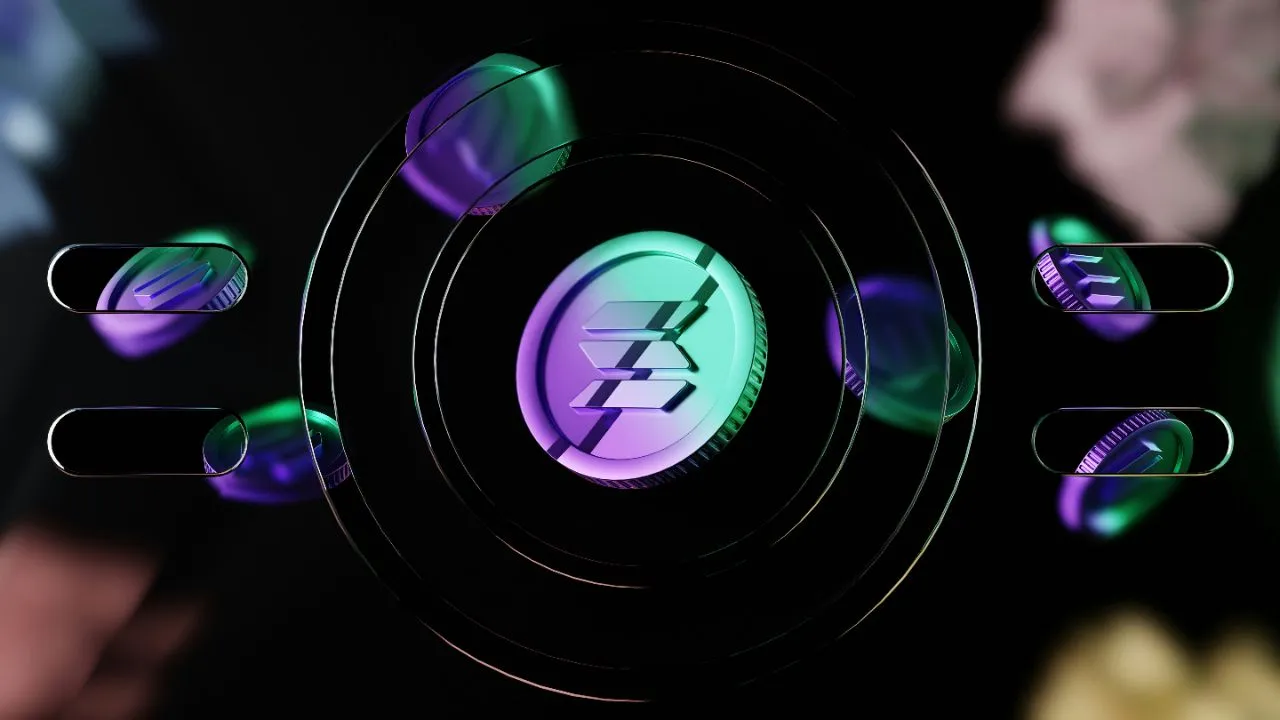
Kazakhstan’s central bank has begun testing a stablecoin tied to the national currency, advancing a broader plan to modernize the country’s financial infrastructure. According to Cointelegraph, the pilot, run inside the National Bank of Kazakhstan’s Digital Assets Regulatory Sandbox, introduces Evo, a token with the ticker KZTE that is built on Solana and backed by the tenge.


Intebix, a local crypto exchange, and Eurasian Bank are issuing KZTE. Mastercard is preparing connections that would link the token with major stablecoin issuers worldwide. The central bank is not minting the asset, but it is providing the regulatory framework that allows the token to be created and tested. Intebix founder Talgat Dossanov said the initiative is the first instance of the monetary authority directly engaging in the process of stablecoin issuance.
https://asset.coinness.com/en/news/43cc65a6b5429b5151882772a928f02b.webp
Photo by GuerrillaBuzz on Unsplash

Building a national crypto ecosystem

Early use cases focus on practical payments and on-ramps. The token is designed to widen the bridge between crypto and fiat, support conversions on exchanges, and enable spending through crypto cards. Officials described the pilot as a building block in a national digital asset ecosystem that aims to nurture new financial tools and deepen the local market.


The program aligns with guidance from President Kassym Jomart Tokayev, who in a Sept.  8 address urged faster development of a comprehensive digital asset environment. He called for a new banking law to boost competition, attract new players, strengthen fintech, and ease the circulation of digital assets. Tokayev also cited progress with the digital tenge, already in use to finance projects through the sovereign wealth fund, and proposed creating a state crypto fund under the central bank’s investment arm to launch a strategic reserve of promising tokens.


USD stablecoin accepted as regulatory fees

Regulatory efforts extend beyond the sandbox. On Sept. 4, the Astana Financial Services Authority (AFSA), the independent regulator of the Astana International Financial Centre (AIFC), launched a pilot that lets companies based at the center pay regulatory fees using stablecoins backed by the U.S. dollar. More than 4,000 firms from over 80 countries are registered at the AIFC, and Bybit was the first to sign a multilateral memorandum of understanding with the regulator.


Under the fee pilot, licensed Digital Asset Service Providers may join as Providers and act as agents for payers who choose to settle obligations to the regulator with stablecoins. AFSA chief executive Evgeniya Bogdanova said the initiative is meant to position the financial center as a hub for digital finance and to keep pace with global trends in stablecoin adoption.


Together, the sandbox stablecoin, the digital tenge rollout, and the AIFC payments pilot signal a coordinated push to make digital assets a larger part of Kazakhstan’s financial system. Authorities are testing how these tools can operate within clear rules, with an eye to drawing investment and keeping the country connected to fast-moving changes in global finance.

 

More to Read
View All
Policy & Regulation·

Jan 16, 2024

Positive signals in Vietnam suggesting XRP payments adoption

Recent statements by figures well placed in the crypto space and within the Vietnamese government point to increased potential for greater adoption of XRP, the payments solution token first developed by Ripple Labs.Photo by Silver Ringvee on Unsplash‘XRP will be big in Vietnam’Yasin Mobarak is a prominent figure within the XRP community. He’s also the founder and managing member of Dizer Capital, a venture capital and private equity firm that specializes in blockchain, internet of things (IoT) and clean energy projects. On Saturday, Mobarak tweeted out: "$XRP will be big in Vietnam." While Mobarak didn’t comment further, he did include a link to an X social media post published by XRP community member Kenny Nguyen, relaying the news that Vietnamese Finance Minister Ho Duc Phoc had announced that the government is currently working with the Vietnamese Central Bank with a view towards studying and possibly implementing the use of XRP for cross border payments. Central Bank's consideration of XRPVietnam's Central Bank is actively exploring the integration of XRP for cross-border payments, both domestically and internationally. This move aligns with the region's swift adoption of XRP, driven by its promise of faster, cost-effective and secure cross-border payment services. Ripple's recent collaboration with TPB Bank, a major player in Vietnam's banking sector, is set to fortify the entire XRP ecosystem. In September 2023, SBI Remit, a financial service provider and subsidiary company of Japanese financial services conglomerate SBI Group, initiated an XRP-based remittance service covering Southeast Asian countries like the Philippines, Vietnam and Indonesia. SBI has a long-standing partnership in place with Ripple aimed at launching international payment services. As part of that announcement, SBI confirmed the participation of Malaysia-based cross-border payments hub Tranglo in the project. Crypto adoption and growthDespite legal constraints, Vietnam emerged as a leader in crypto adoption in Asia in 2023 by claiming the third position in Chainalysis’ 2023 Global Crypto Adoption rankings. The region, still adapting to the global rise of cryptocurrencies, is undergoing a transformation. While centralized exchanges dominate in various countries, regional preferences vary. In the Philippines, a noteworthy 20% of the population engages with crypto sites for gaming and gambling. In contrast, Vietnam and Pakistan distinguish themselves with citizens favoring peer-to-peer exchanges. This approach allows direct trading between individuals, bypassing large corporations. A report produced by Kyros Ventures and Coin68 in conjunction with Hong Kong’s Animoca Brands last year found that 76% of Vietnamese crypto holders determine their investment choices based upon recommendations from friends and people within their peer group. The collaboration between regulatory bodies, financial institutions, government and crypto projects illustrates the growing integration of digital assets into traditional financial systems. This latest example pertaining to Vietnam and XRP certainly offers the potential of a much greater level of adoption in the region. While activity within Vietnam may be a key consideration for XRP investors and stakeholders in 2024, the potential for a Ripple initial public offering (IPO) is also something they’re likely to be watching out for. Over the course of the past six months, a Ripple IPO has been the subject of speculation. That speculative interest has likely increased following Circle, the issuer of U.S. dollar stablecoin USDC, filing for an IPO last week.  

news
Web3 & Enterprise·

Aug 03, 2023

SK C&C to Spearhead Establishment of Korea’s First Alternative Trading System

SK C&C to Spearhead Establishment of Korea’s First Alternative Trading SystemSK C&C, the information communications technology arm of South Korean conglomerate SK Group, is set to launch the country’s first Alternative Trading System (ATS) — a securities trading venue that is more loosely regulated than an exchange — in the second half of next year.The firm announced on Wednesday that it will commence the multilateral trading system construction project for Nextrade, a corporation dedicated to preparing the ATS.Photo by Kanchanara on UnsplashCollaborative effort of securities institutionsNextrade was initiated by seven securities firms, including the Korea Financial Investment Association, and was jointly established by 34 participating institutions, including 19 securities companies, three securities-related institutions, and four tech companies in November of last year.SK C&C in particular has been working with Nextrade since 2019. When the corporation was still a consultative body of securities firms, the SK subsidiary was in charge of consulting on various matters regarding the establishment of the ATS and functional system requirements.Establishing a solid foundationThe aforementioned construction project aims to establish a multilateral trading system and an operation and management system to support the trading, brokerage, and agency functions of listed securities and depositary receipts on the ATS, which Nextrade will proceed with upon its official approval in the second half of next year. SK C&C will take on a major role in leading this task.“Based on our digital IT service capabilities that we have accumulated within the financial sphere, we will establish an efficient and reliable multilateral trading system that is on par with regular exchanges,” said Kim Nam-sik, head of the SK C&C Financial Digital2 Group.Besides facilitating multilateral trading, SK C&C will develop an information distribution system that processes investment information in connection with the Korea Exchange and the Korea Securities Depository, as well as a trading support system responsible for product information management, trading statistics, and administration.Trading after hoursThe ATS will allow trading past normal trading hours, which are usually from 9 AM to 3:30 PM — an especially attractive selling point for buyers and sellers. This will be made possible by compiling product information based on closing prices after the market closes, which will create an environment that allows for trading after hours.This service will not only be convenient for office workers but also help them refer to official announcements and the status of overseas markets to make more informed decisions, SK C&C said.Securities that can be traded after hours will be limited to listed stocks and depository receipts on the Korea Exchange for the time being, but SK C&C is reportedly looking into allowing trading of security tokens, non-security virtual assets, and NFTs.Ensuring uninterrupted operationsNotably, there will also be a Disaster Recovery Center, which will serve to protect the ATS’ major systems and data assets and ensure business continuity. A data backup system will be set up to reduce backup time and swiftly recover from any failures in case of potential security threats.Furthermore, the ATS plans to introduce new types of orders to enhance investor benefits in the domestic capital market, setting it apart from the Korea Exchange.

news
Web3 & Enterprise·

Jul 19, 2023

Strategic Partnership Sees BitKeep Add Mantle Network Support

Strategic Partnership Sees BitKeep Add Mantle Network SupportBitKeep, a Singapore-centric multi-chain wallet project, has recently formed a strategic partnership with Mantle Network, an Ethereum Layer 2 modular network developed by BitDAO.According to a tweet posted by BitKeep on Monday, the collaboration brings with it the opportunity for BitKeep users to now manage and transact their assets on Mantle Network directly through their wallets.The latest version update of the BitKeep wallet incorporates support to enable users to store, transfer, and trade on-chain assets seamlessly within the wallet. This integration streamlines the user experience and provides easy access to the functionalities offered by Mantle Network.Photo by Shubham Dhage on Unsplash10,000 USDT prize poolTo celebrate this partnership and promote the growth of the Mantle ecosystem, BitKeep has announced a campaign open to all Web3 users. The campaign features a prize pool of 10,000 USDT, adding an element of excitement for participants. Additionally, BitKeep plans to further expand the ecosystem by integrating more DApps based on Mantle Network, ensuring diverse offerings and attracting users from various angles.Although at a corporate level, BitKeep is headquartered in the Cayman Islands, leading members of its project team including Founder Kevin Como are based in Singapore.Mainnet alpha releaseMeanwhile, Mantle Network has reached a major milestone by unveiling its highly anticipated mainnet alpha. The announcement took place at the Ethereum Community Conference (EthCC) in Paris, following an extensive six-month testnet phase. Mantle Network, as the first Ethereum layer-2 chain incubated and governed by a decentralized autonomous organization (DAO), has already gained attention for its innovative approach.With its modular design, Mantle Network separates key components such as execution, data availability, consensus, and settlement into distinct layers. By employing optimistic roll-up technology and leveraging Ethereum’s network for security, Mantle Network achieves efficient transaction processing at a lower cost and higher throughput compared to Ethereum itself.This unique architecture has been validated during the testnet phase, handling over 14 million on-chain transactions and facilitating the deployment of more than 140,000 smart contracts.$200 million EcoFundThe mainnet launch also marks the activation of a $200 million EcoFund, which aims to fuel the growth and development of the Mantle ecosystem. This substantial fund will support the ecosystem’s progress, ensuring resources are available to drive innovation and attract developers.Moreover, the merger between Mantle Network and BitDAO has created the Mantle Ecosystem, a unified Web3 ecosystem led by a DAO. Under the Mantle.xyz brand, this collaboration harnesses the strengths and resources of both entities. The merger bolsters the tokenized governance system, empowering token holders to govern the use and allocation of the significant treasury inherited from BitDAO.As BitKeep integrates Mantle Network into its wallet, users can expect an enhanced experience and increased accessibility to the Mantle ecosystem. Meanwhile, Mantle Network’s mainnet launch and the activation of the EcoFund signify significant milestones that lay the foundation for continued growth and development in the DeFi space.

news
Loading
