Top

U.S.-sanctioned Huione Group suspected of supporting crypto transactions in Korea

Policy & Regulation·October 24, 2025, 6:50 AM

A Cambodia-headquartered financial group recently cut off from the U.S. financial system is suspected of having operated in South Korea, raising fresh questions about cross-border crypto and currency flows tied to the group.


According to the Dong-A Ilbo, which cited data from the Korea Customs Service (KCS), Huione Group—now sanctioned by the U.S. Treasury Department’s Financial Crimes Enforcement Network (FinCEN)—appears to have run a currency exchange in Seoul from 2018 to July 2024. The outlet reported that a banner on the premises displayed a logo identical to Huione’s, prompting suspicions about its ownership and control.
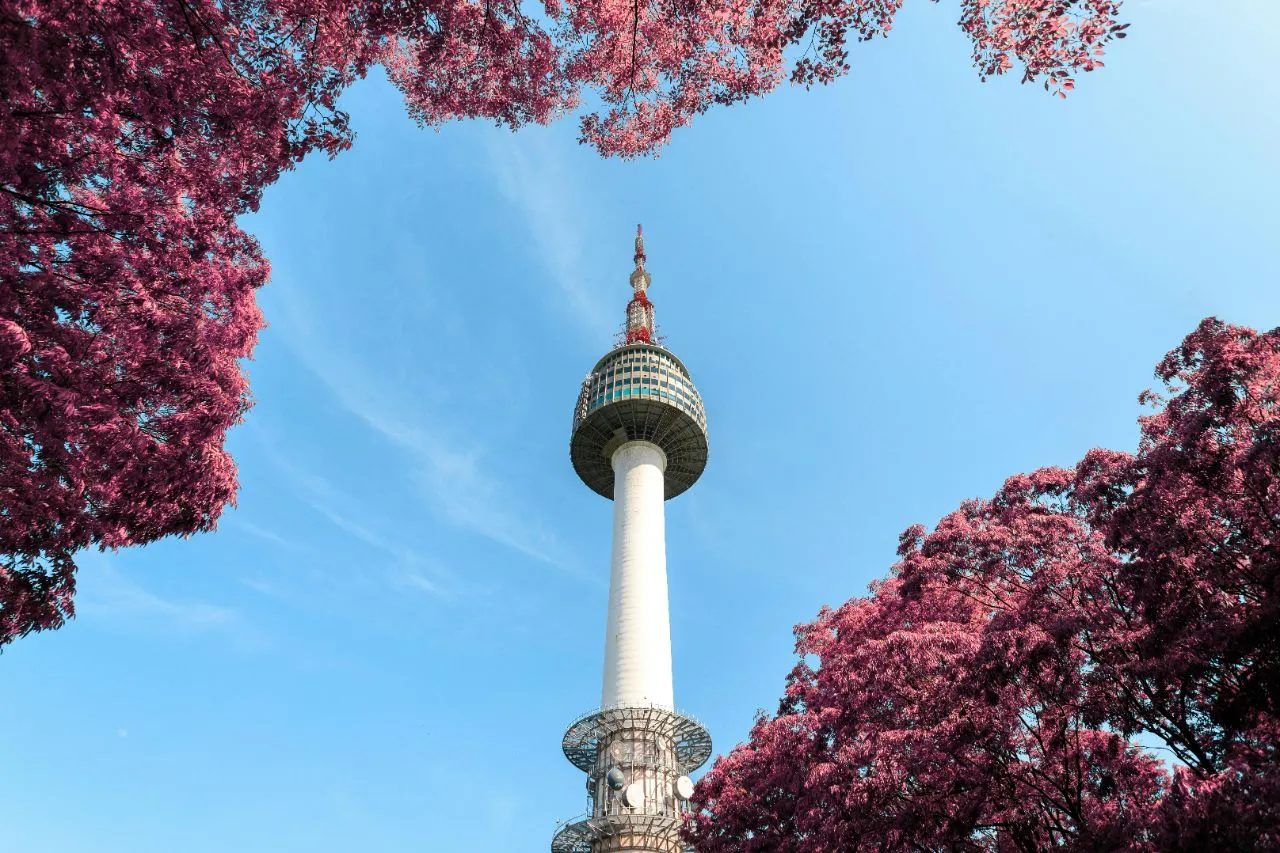
https://asset.coinness.com/en/news/35f95dfbbdf768ffb64249b09916e707.webp
Photo by Aleksandar Pasaric on Pexels

Ties to North Korean hackers

The exchange reported conducting roughly $20,000 in annual currency conversions during that period, excluding cryptocurrency transactions. The timeline overlaps with a period in which Huione Group reportedly received $150,000 in cryptocurrency from the North Korean hacking group Lazarus. 


Connections also extend to Cambodia. Panda Bank—a local lender that shares a building with Huione subsidiaries—supports USDT transactions originating from South Korea. Panda Bank director He Yanming is listed as the owner of Huione Crypto, a virtual asset service provider (VASP), suggesting potential links between operations in Seoul and Phnom Penh.


These developments come against the backdrop of a U.S. investigation disclosed in May, in which FinCEN said Huione’s business networks, including payments arm Huione Pay, collectively laundered at least $4 billion in illicit proceeds between August 2021 and January 2025.


Crypto used in $2.6B illegal conversions

Meanwhile, recent KCS data also shows a rise in illegal currency conversions involving cryptocurrency by foreign nationals. The Korea Economic Daily reported conversions totaling 432 billion won ($302 million) in 2021, climbing to 836 billion won ($584.5 million) in 2023 and 956 billion won ($668.4 million) last year. Over the past eight years, the total amount involved in such cases reached 3.7 trillion won ($2.59 billion) across 28 instances. By value, Chinese nationals accounted for 84.1% of the total, followed by Australians (11.1%), Vietnamese (3.2%), and Russians (1.6%).


The growing prevalence of cryptocurrency in illicit activity parallels a broader surge in crypto investment within the country. Many South Koreans have turned to digital assets, often with home ownership as a long-term goal. Trading on local exchanges, Bloomberg reported, is heavily skewed toward more volatile altcoins, which make up more than 80% of total volume. 


That stands in contrast to global markets, where investors largely focus on Bitcoin and Ethereum, which together make up more than half of overall trading. The momentum in local crypto investment intensified after Donald Trump’s U.S. presidential victory, with crypto trading in Korea reaching $27 billion in December 2024, about 80% of turnover on the KOSPI stock index.


The investigation underscores the growing challenge for regulators in tracking and containing cross-border financial networks that rely on cryptocurrency and informal money transfers. As crypto adoption deepens in South Korea and scrutiny widens abroad, authorities find themselves navigating an increasingly intricate intersection of financial opportunity, enforcement, and risk.


 

More to Read
View All
Web3 & Enterprise·

May 26, 2023

Renault Korea Establishes Metaverse Space for Car Enthusiasts

Renault Korea Establishes Metaverse Space for Car EnthusiastsRenault Korea Motors made an announcement on Friday that it will establish the Renault Korea Hub, an immersive automotive experience located within a metaverse, according to a report by Korean news media Dailian. The company intends to commence operations of this unique venture in the upcoming autumn season.Photo by Richard Horvath on UnsplashThe Sandbox and Korean brandsThe Renault Korea Hub will operate within K-verse, a designated area of Korean brands within The Sandbox, a metaverse platform based on blockchain technology.The Sandbox metaverse has recently announced its latest Korean brand partners, and as part of this development, a land sale event is being organized where their adjacent land will be raffled off. The event is named “Hallyu Rising.” Hallyu or the Korean Wave is a cultural phenomenon that has experienced a significant surge in global popularity since the 1990s, mainly thanks to its pop songs and TV shows.During the land sale event, users have the chance to acquire land adjacent to various prominent brands associated with Korean culture. This will be made possible through raffles and auctions facilitated by the metaverse platform. Other notable partners besides Renault Korea are Channel A, a TV broadcasting network; Netmarble, a game publisher; and CJ ENM, an entertainment company.Unique experiences for car enthusiastsThe Renault Korea Hub, the first of its kind in Korea, will provide a unique space for automobile enthusiasts to indulge in a diverse array of experiences and games. As per the automaker’s announcement, visitors will have the chance to engage in activities like developing their own vehicle designs.Visitors will have the opportunity to experience Renault Korea’s vehicles in voxel form, allowing them to explore the technology, design philosophy, and stories associated with each vehicle. A voxel can be understood as a 3D counterpart to a 2D pixel, representing a value on a regular grid in 3D space.Renault Korea CEO Stéphane Deblaise stated that the carmaker intends to continue its pursuit of diverse Web 3.0-based activities centered around metaverses and non-fungible tokens (NFTs). He said the automaker’s projects aim to establish a connection between customers’ mobility experiences and their digital lives. Deblaise also highlighted that these projects will undergo further development through the integration of artificial intelligence (AI) technologies.Storytelling contestEarlier this month, Renault Korea introduced the storytelling contest titled “create your SM6,” which concludes today. This campaign inspires customers to utilize emerging AI technologies to design their own SM6 vehicles and transform them into NFTs. The SM6, Renault Korea’s midsize sedan, initially debuted in 2016 and has undergone subsequent facelifts to enhance its features and aesthetics.The top ten performers in the storytelling contest, who create captivating renditions and stories featuring the SM6, will be rewarded with utility NFTs and KLAY, the native token of the Klaytn network. The first-place winner will receive a prize package consisting of 1 million KRW ($750) worth of KLAY, along with six SM6 NFTs.The announcement of the winners is scheduled to take place between May 31 and June 9. Following the announcement, the airdrop of rewards will be conducted from June 30 to July 7.

news
Policy & Regulation·

Jun 07, 2023

Lawsuit Sees Further Chinese Crypto TV Coverage

Lawsuit Sees Further Chinese Crypto TV CoverageChina’s state broadcaster, CCTV, rarely covers the topic of crypto but in the space of the past three weeks, it has covered the subject twice, with the latest segment covering the news of the United States Securities and Exchange Commission (SEC) filing a lawsuit against global crypto exchange, Binance.Photo by Paolo Chiabrando on UnsplashBad pressThe segment, which aired on CCTV, provided a brief overview of the lawsuit, stating that the SEC accused Binance, its Co-Founder Changpeng Zhao (CZ), and its American affiliate Binance.US of violating US securities laws. The report also noted that the prices of Bitcoin and Binance’s native BNB coin experienced a decline following the news.The lawsuit filed by the SEC received significant media attention due to Binance’s position as the world’s largest crypto exchange. The crypto industry in the US has been under increased scrutiny following the recent troubles faced by FTX, another major player in the market. Prosecutors have alleged that FTX engaged in fraudulent activities that harmed its users.Many blame US regulators who spent hundreds of hours with FTX executives working on projects, and US Capitol Hill politicians, 33% of whom received money from FTX, as being culpable for the FTX collapse. Despite this, it’s clear that the collapse is being leveraged to effect a clampdown on the digital assets sector.It is worth noting that the CCTV broadcast also made mention of a lawsuit filed by the US Commodity Futures Trading Commission (CFTC) against Binance and CZ in March. This lawsuit, similar to the SEC’s, focused on the sale of crypto derivatives. It is unclear whether CCTV covered the CFTC lawsuit when it was initially filed.CCTV’s coverage of crypto-related news is rare, making this particular broadcast significant and garnering wider attention. The outcome of legal action taken by the SEC against Binance is being watched carefully as it will likely have implications for digital asset regulation going forward.Previous coverageIn a previous broadcast last month, CCTV aired a segment that featured cryptocurrencies, including the Bitcoin logo. Ironically, given the nature of this latest reporting, Binance’s CZ regarded that previous coverage as a noteworthy event. Historically, such coverage has often preceded bull runs in the crypto market. The segment showcased what appeared to be a Bitcoin ATM in Hong Kong, displaying a prominent blue Bitcoin logo and an option to “Buy Bitcoins.”NFTs were also highlighted in the segment. Many speculated that the coverage signified a softening of the stance of the Chinese authorities in relation to crypto. However, the video of the initial crypto segment was taken down from the broadcaster’s website shortly after CZ tweeted about it.Despite it not being the most positive of news, CCTV’s coverage of the Binance lawsuit and its previous segment on cryptocurrencies indicates a growing interest in the industry from mainstream media outlets. The attention from a state broadcaster like CCTV suggests that regulators and authorities in China are closely monitoring developments in the crypto space and considering their potential impact on the broader financial landscape.

news
Web3 & Enterprise·

Jan 19, 2024

EDUM partners with MNet to promote educational blockchain service

EDUM – a blockchain project run by educational and professional services provider Jinhak’s subsidiary Dream Ladders – has signed a strategic business deal with Web3 firm Metaverse.Network (MNet), according to an article published by South Korean news outlet Maeil Business Newspaper on Friday (KST). Through this agreement, EDUM will be able to strengthen its Web3 platform to help promote effective learning and implement various services within metaverse parameters.Photo by Kelly Sikkema on UnsplashLearning for everyoneEDUM is a Study-to-Earn (S2E) blockchain project that aims to provide learners with affordable, high-quality educational services. Users will be able to earn rewards in the form of EDUM or EDUMP tokens when using different functions on the EDUM mobile application. EDUM is the project’s market-based utility token that can be cashed through external exchanges or even swapped with EDUMP, which has a fixed value and can only be used within the EDUM ecosystem. EDUMP tokens can also be used for purchasing NFTs or lectures on the EDUM platform. MNet’s technological prowessMeanwhile, MNet is a blockchain network operated from headquarters in Singapore. Backed by an Ethereum Virtual Machine (EVM) and WebAssembly (WASM) smart contract playground, builders can develop Web3 decentralized applications (dApps) for Web2 users. Notably, it has secured an investment from global blockchain investment company Animoca and is a key technological partner of the blockchain platform Polkadot. "We will continue to expand the success story and ecosystem of the EDUM project through continuous partnerships with various companies," said Yoo Sung-won, CEO of Dream Ladders. EDUM also recently teamed up with layer 1 blockchain XPLA to expand blockchain-based educational services and increase the role that Web3 can play in various fields.

news
Loading