Top

Okto commits $5 million treasury fund to support Vauld users

Web3 & Enterprise·November 07, 2023, 1:08 AM

Okto, the self-custody DeFi wallet app offered by Indian crypto exchange CoinDCX, has pledged a $5 million treasury fund to provide support to Vauld users.

Vauld, a Singapore-based crypto lending platform, brought a halt to all trading, withdrawal and deposit activities in 2022 as it ran into liquidity issues. The business has been undergoing a process of restructuring under the protection of the courts in Singapore ever since.

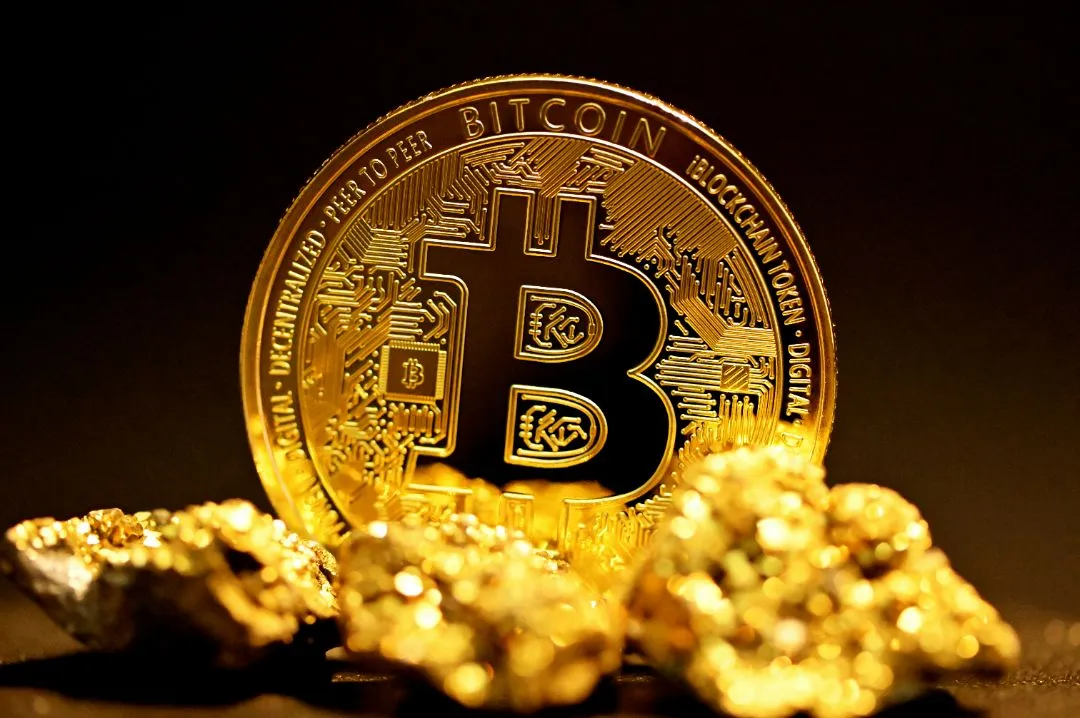
Photo by Towfiqu barbhuiya on Unsplash


Incentivizing user asset transfer

In response, Okto has stepped forward with a proactive approach to assist Vauld users in their transition. Okto is offering a 2% bonus to users who opt to transfer their assets from Vauld to Okto.

Neeraj Khandelwal, the Founder of Okto, emphasized the company’s overarching mission while unveiling this $5 million initiative. He said: “While this $5 million fund represents one of our initiatives to support the crypto ecosystem, our overarching vision is to empower the Web3 community through cutting-edge technology-backed platforms and apps designed to tackle the broader challenges within the ecosystem.”


Self-custody assurance feature

In addition to this incentive, Okto is also offering a self-custody assurance feature. This feature allows users to gain complete ownership of their private keys, ensuring that access to their funds remains exclusively in their hands. Moreover, users can benefit from round-the-clock access to monitor their assets. That delivers a reassuring sense of control and peace of mind regarding the users’ cryptocurrency holdings, against a backdrop of those users having had the experience of being unable to withdraw their funds when the Vauld platform paused trading.

The concept of self-custody is central to what crypto was supposed to be about. It grants complete ownership of assets to the user. Khandelwal outlined that Okto was established on the basis that it could strike a balance between security, convenience and custody. In this way, it felt that it could resolve what could be termed as the crypto wallet trilemma. “Okto’s enduring mission has been to provide users with a secure and user-friendly app, and we will persistently strive to achieve this objective,” Khandelwal added.


Mitigating risk

Launched globally earlier this year, Okto is a keyless, self-custody Web3 wallet that ensures secure access to DeFi services while prioritizing the safety of users’ funds. This all-in-one Web3 app approach eliminates the cumbersome need to safeguard seed phrases, ensuring users have full control of their funds.

Moreover, it mitigates the risk of a single point of failure through its state-of-the-art, custom-built, consensus-driven Multi-Party Computation (MPC) technology. With MPC, private keys required for fund access and control are never fully exposed, guaranteeing the constant security of users’ assets.

Vivek Gupta, Chief Technology Officer at Okto, elaborated on the technology behind Okto’s product offering, stating:

“Okto uses state of the art Multi-Party-Computation algorithms to create users’ private keys. Our MPC algorithm never produces a complete private key. Our MPC algorithm uses three nodes which communicate with each other under proprietary encryption channels and create a unique sensitive material on each node.”

In addition to its security measures, Okto wallet boasts compatibility with multiple Web3 chains such as Polygon, BSC and Avalanche, along with protocols like Stader and WooFi, among others.


More to Read
View All
Web3 & Enterprise·

Sep 25, 2023

Korea Investment and Securities Completes the Construction of Security Token Infrastructure

Korea Investment and Securities Completes the Construction of Security Token InfrastructureKorea Investment and Securities (KIS) recently announced that it has become the first securities firm in South Korea to successfully establish an infrastructure for security token offerings.Photo by Joshua Sortino on UnsplashReal-world assetsSecurity tokens are a new class of securities that are based on distributed ledger technology, allowing individuals to invest in real-world assets (RWAs) that can be tokenized. Such assets include real estate, ships, airplanes, and artworks.In March, KIS initiated a security token consortium named “Korea Investment ST Friends,” collaborating with Internet-only banks KakaoBank and Toss Bank, AI company Kakao Enterprise, and blockchain developer Open Asset. Since May, the consortium has been diligently working with the principal objective of constructing an infrastructure leveraging distributed ledgers. Consequently, the group has finalized the development and testing of a system that manages the entire trajectory of security token projects, from issuance to liquidation.Cloud systemSpecifically, KIS has built its infrastructure on a cloud network, bearing in mind that the regulatory framework for security tokens is still in development. This cloud system is capable of adapting to regulatory modifications and implementing improvement updates. Moreover, it utilizes an agile development approach to encourage rapid decision-making and productive collaborations, enhancing time efficiency.Compatibility with the traditional systemThe newly established security token infrastructure is also compatible with the traditional security trading system. Achieving this compatibility posed numerous technical challenges as the new system operates on distributed ledgers, whereas the existing one relies on centralized servers.KIS is preparing to file patents for some of the technologies incorporated into the new system. These technologies encompass the payment of dividends through smart contracts, assurance of immediate settlements using deposits on distributed ledgers, and the management and safeguarding of personal information. By demonstrating the infrastructure’s capability and stability, the securities firm aims to gain a technological edge.Choi Seo-ryong, the head of the platform division at KIS, expects the new infrastructure to mark a significant milestone as distributed ledger technology merges with traditional finance. He further mentioned that the securities company will discover blue-chip assets meeting investor needs while committing to the stable establishment of the regulatory framework and the protection of investors.Moving forward, ST Friends will continue to enhance the stability and functionalities of the infrastructure through a series of field tests related to the entire process of security token products. Aiming to construct a security token ecosystem, the group will also concentrate on developing products by collaborating with various firms, including Korean content investment platform Funderful and real estate trading platform Valuemap.

news
Policy & Regulation·

Jun 06, 2025

Hong Kong gearing up to give crypto derivatives the go-ahead

Hong Kong regulator, the Securities and Futures Commission (SFC), which oversees Hong Kong’s securities and futures markets, is understood to be planning to give the go-ahead for crypto derivative products to be offered to professional investors within the Chinese autonomous territory. Chinese English-language newspaper China Daily reported on June 4 that the proposed move forms part of Hong Kong’s efforts to expand its digital assets-related product offering in order to further bolster its position as a leading regional hub for the sector. Christopher Hui, Hong Kong’s Secretary for Financial Services and the Treasury, told the publication that the SFC will open up crypto derivatives trading to professional investors in the city “in an orderly, transparent and secure manner.”Photo by Florian Wehde on UnsplashBoosting liquidity to spot marketsChina Daily claimed that the SFC outlined that the crypto derivatives product will enable efficient risk transfers, while boosting the liquidity of the underlying spot markets. TokenInsight data suggests that the global crypto derivatives market has reached $21 trillion in trading volume over the course of Q1 2025. By comparison, derivatives trading dwarfs spot trading, given that spot trading weighed in at just $4.6 trillion over the same period. Liquidity in the underlying spot markets can be enhanced by a broadening of crypto derivatives product offerings in instances where digital assets are traded for immediate payment and delivery. Their availability will also appeal to professional traders and investors who need access to derivatives as part of their overall strategies in order to hedge positions and add leverage when required. Industry interestReaction to news of the Hong Kong SFC’s plans has largely been positive. Back in February, Jean-David Péquignot, chief commercial officer (CCO) with the world’s largest crypto derivatives exchange Deribit, told the South China Morning Post that opening up availability of crypto derivatives products was the one item missing from Hong Kong’s push towards development as a hub for the digital assets sector. At the time, he stated:“Hong Kong is this central financial hub in the world and a big one in Asia. If regulators can solve the derivatives piece, it is a place where we love to be.” On that basis, Péquignot suggested that Deribit, headquartered in Dubai, would be interested in establishing itself in Hong Kong, suggesting that “Asia is a big market for derivatives.” He added:“We want to be in Asia. We just need to find the right place and time to engage with regulators and get a regulatory framework to work with.” The company’s acquisition by Coinbase was announced last month for $2.9 billion. Regulatory approach questionedWhile many see the move towards the approval of crypto derivatives in Hong Kong as bullish, not everyone perceives the regulator’s approach in this instance to be positive. Pseudonymous crypto trader “Pickle Cat” outlined on X that “opening crypto derivatives only to 'professional investors' isn’t progress.”  The trader points out that good regulation would concentrate on controlling issuance and not circulation. Suggesting that the SFC has missed the point in its approach, the trader claims that the regulator would serve the crypto derivatives market best by verifying what backs such products while not restricting how such tokens move. 

news
Web3 & Enterprise·

Aug 14, 2025

Fonte Capital launches Central Asia’s first spot Bitcoin ETF

Fonte Capital, an Astana-based investment management company that allocates capital across a broad range of asset classes, including digital assets, launched a spot Bitcoin exchange-traded fund (ETF) in Kazakhstan’s capital city on Aug. 13. The firm is based within the Astana International Financial Centre (AIFC), with the launch prompting AIFC Governor Renat Bekturov to take to X to outline that the product offering is the first spot Bitcoin ETF to be listed within the Central Asian region.Photo by Kanchanara on UnsplashReflecting Bitcoin price dynamicsThe product has been listed on the Astana International Exchange (AIX) and has been assigned the ticker “BETF.” In announcing the offering, Fonte claimed that the ETF “aims to accurately reflect the price dynamics of bitcoin, striving to achieve this performance before fees and fund obligations.”Shares in the ETF are listed in U.S. dollars, with the fund having a “non-exempt” classification, meaning that it can be offered to a broad range of investors, including non-qualified retail investors. Each ETF share will be fully backed by Bitcoin, with Fonte having partnered with BitGo for digital asset custody.  Delivering institutional-grade accessTaking to social media, BitGo described the product offering as a “new era for digital assets” in Kazakhstan. The company asserted that through what it termed “U.S.-regulated cold storage,” the new fund is delivering institutional-grade access to Bitcoin within the region for the first time. Fonte pointed out that the fund “provides investors with a regulated and secure way to include Bitcoin in their investment portfolios without the complexities associated with holding and transferring the underlying asset.” This isn’t the first Bitcoin-related product that the AIX has listed. Back in 2021, it listed iX Bitcoin Exchange Traded Notes, with special purpose company iX Bitcoin SPC Limited acting as the note issuer.  The product differs from the Fonte ETF in that it is backed by shares of ProShares Bitcoin Strategy ETF, a future-based ETF first listed on the New York Stock Exchange (NYSE) in 2021. In comparison, Fonte’s product has the advantage of being directly backed by Bitcoin. The ETF’s backers have pointed out that there are further implications for the ETF’s shareholders. As the product is regulated by the AIFC, Fonte asserts that within that jurisdiction, holders of the product’s shares are protected from the potential reach of international sanctions. In this regard, the product offers further protection as it is not dependent upon overseas issuers.  Overall, the AIFC has played a key role in the development of crypto within Kazakhstan over the course of the last few years. In 2023, it awarded crypto exchanges Bybit and Binance approval to trade within the Central Asian nation.  Binance subsequently launched a local crypto exchange platform in Kazakhstan, achieving full licensing in October 2024. In June of this year, the authority granted its first license for the issuance of a fiat-backed stablecoin.  It emerged recently that Kazakhstan is working towards the establishment of a national crypto reserve, with the administrators of the country’s sovereign wealth fund expressing the desire to commence investment in crypto assets.

news
Loading