Top

Taiwan police uncover $320M crypto money laundering operation

Policy & Regulation·November 02, 2023, 2:25 AM

Taiwan police have recently exposed the largest cryptocurrency money laundering case in the nation’s history, involving 320 million USDT (approximately 10.5 billion New Taiwan dollars).
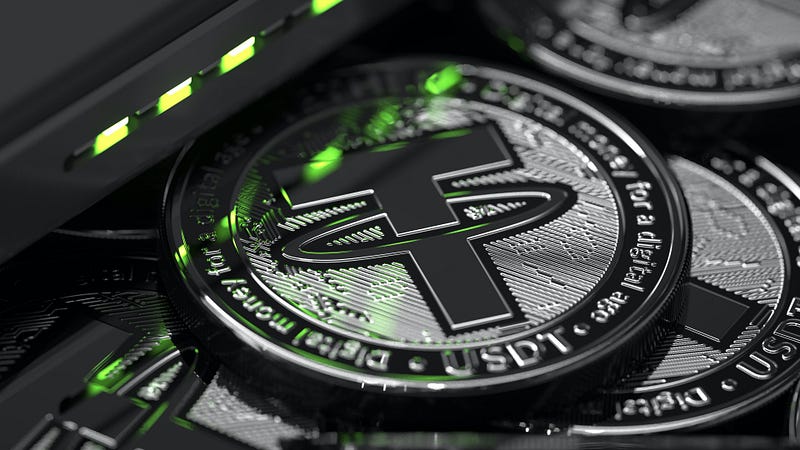
Photo by DrawKit Illustrations on Unsplash


Cross-border laundering operation

It emerged on Tuesday that the Electronic Investigation Team of the Criminal Bureau initiated their probe after uncovering a fraudulent scheme related to a counterfeit Taishin Securities mobile software last year. This led them to a merchant with the surname Qiu, the alleged mastermind behind this operation who was suspected of laundering substantial sums through virtual currency.

Qiu is believed to have maintained connections with overseas gambling and fraud groups, engaging in cross-border communication with illicit organizations in countries including Hong Kong, Malaysia and the Philippines.

Their investigation revealed that Qiu had been conducting transactions involving 320 million Tether US dollar stablecoins since February of the previous year. In June, law enforcement apprehended Qiu during one of his visits to Taiwan, along with four alleged accomplices.


High value goods

During the operation, authorities seized high-value assets from Qiu, including a Lamborghini Urus, a Lexus LM and three Audemars Piguet watches, with a combined market value exceeding TWD 13 million. The lavish lifestyle maintained by Qiu, evident from his luxury cars and high-end watches, serves as a stark reminder of the extensive underground economy driven by money laundering.

Evidence from the operation suggested Qiu’s involvement in handling illicitly obtained Tether coins worth approximately TWD 70 million. Further investigations uncovered that Qiu regularly sold virtual currency and converted it into cash to effectively obscure the money’s origins, accomplishing the goal of laundering.

In piecing the activities of the group together, police determined that victims were instructed to transfer their funds to fictitious accounts. In that way, the money found its way to crypto exchanges and individual crypto traders under the direction and control of the group.

Qiu would also retain a 1% profit margin from the laundered amount. Several other individuals were implicated in this extensive operation, including a foreign affairs officer named Liao and two other individuals named Chen and Huang. Each of these individuals is presently under investigation, with varying levels of bail and restrictions imposed.

The intricate web of transactions and the substantial amount laundered by Qiu have surpassed previous records held by the Electronic Investigation Team. As investigations continue, law enforcement is determined to uncover the full extent of this operation and trace the entirety of the money flow.

Taiwan’s legislators are currently working on producing a regulatory framework for crypto in the country. The only regulatory aspect that is covered right now is oversight relative to anti-money laundering (AML) and know-your-customer (KYC) regulation. In 2018 Yang Chin-long, Taiwan’s central bank Governor, called for a need to regulate crypto on the basis of existing AML rules, with the authorities subsequently following through on that measure.

In July 2022, the country’s Financial Supervisory Commission (FSC) penned a letter to the banking sector, banning the purchase of digital assets via credit cards.


More to Read
View All
Web3 & Enterprise·

May 30, 2023

Dunamu’s Q1 Revenue Drops 28.6% Amid Global Liquidity Contraction

Dunamu’s Q1 Revenue Drops 28.6% Amid Global Liquidity ContractionDunamu, the operator of Upbit, a major cryptocurrency exchange in South Korea, announced today the release of its Q1 2023 report.Photo by Tiger Lily on PexelsDeclining revenueAccording to the Data Analysis, Retrieval and Transfer System (DART) of the Financial Supervisory Service (FSS), Dunamu’s consolidated sales revenue for the first quarter of 2023 was 304.8 billion KRW ($231.3 million). This figure represents a 28.6% decrease from 426.8 billion KRW ($323.9 million) recorded during the same period last year. Additionally, its operating income declined by 26.3% to 211.9 billion KRW ($160.8 million) from 287.8 billion KRW ($218.4 million). However, its net income showed an increase of 54.9%, reaching 326.3 billion KRW ($247.6 million).Global liquidity contractionDunamu attributed the decline in revenue to several factors, including the ongoing global liquidity contraction, economic downturn, and reduced investor confidence. These factors collectively impacted the company’s financial performance during the first quarter of 2023. On a positive note, Dunamu linked the net income increase to the recovery and upward movement of digital asset prices in comparison to the previous quarter.Established in April 2012, Dunamu has enjoyed noticeable growth by offering a range of services related to digital assets, securities, and asset management. In recent years, it has been tapping into new technology trends like non-fungible tokens (NFTs) and metaverses to adapt to the era of Web3 and enhancing transaction security and convenience for valuable assets.As a company with a shareholder base exceeding 500, Dunamu has been disclosing its business reports as well as quarterly and semiannual reports since 2022 in line with the Korean Capital Markets Act’s requirements.

news
Policy & Regulation·

Dec 27, 2023

Worldcoin withdraws verification service from Indian market

Worldcoin, the startup co-founded by OpenAI CEO Sam Altman, has encountered setbacks in its eye-scanning initiatives just six months after its international expansion. A recent report by TechCrunch indicates that the company’s signature orb eye-scanner is no longer available to users in the Indian market. According to that report, the Worldcoin Foundation clarified that its activities have also been suspended in France and Brazil. The company clarified that its offerings in those markets were only intended to be limited-time product previews as opposed to long-term roll-outs.Photo by Big G Media on UnsplashTemporary service haltIn India, the World App is experiencing widespread adoption, but the orb-verified proof of personhood services has been temporarily halted. The pause aims to allow the protocol to develop and implement a bespoke, safe and orderly process to meet the growing demand. The setback comes after Tools for Humanity, the organization behind Worldcoin, announced the expansion of World ID, its digital identity program linked to iris scans, in July. The startup had ambitious plans, intending to make 1,500 orbs available in over 35 cities globally. Recently, the company unveiled a program offering $5 million in grants to developers utilizing its eye-scanning technology. Regulatory investigationsSam Altman and his co-founders established Worldcoin in 2020 to help individuals prove their digital identity amidst the rise of AI. Over the years, Worldcoin has secured $250 million in funding from notable venture capitalists, including Andreessen Horowitz. However, the startup has faced regulatory challenges, including investigations by French and German regulators and an Argentinian government agency. Altman, himself, has navigated recent challenges. In November, the OpenAI board temporarily removed him as CEO, reinstating him two weeks later. More recently, Fortune reported that Altman quietly received $75 million from the University of Michigan for a new venture capital fund, raising questions about transparency, particularly following the launch of OpenAI’s signature product, ChatGPT. Asian tourIn recent weeks, the project development team behind Worldcoin had engaged in a tour of Asia. The objective of that mission was to gather market feedback prior to engaging in greater efforts to expand the reach of its World ID verification system within the region. To gauge market receptiveness to its product offering, the tour included meetups in major Asian cities such as Hong Kong, Seoul, Singapore and Tokyo. Up until mid-November, the Asian region accounted for 1.4 million World App sign-ups.The introduction of World ID 2.0 by the company on Dec. 13 led to a surge in the price of WLD. Over the course of the 48 hours that followed, it jumped from $2.47 to $4.23, a 71% increase. At the time of writing, the token unit price stood at $3.66. As Worldcoin navigates these challenges, the cryptocurrency industry will closely monitor developments, recognizing the broader implications for the startup’s innovative approach to digital identity verification.

news
Web3 & Enterprise·

Nov 08, 2023

Lotte’s NFT marketplace partners with upcycling brand NiUl for membership NFTs

Lotte’s NFT marketplace partners with upcycling brand NiUl for membership NFTsLotte Data Communication, an affiliate of South Korean retail conglomerate Lotte Group, issued a press release on Wednesday (local time) to reveal that its NFT marketplace, Kottonseed, has issued new non-fungible tokens (NFTs) in partnership with upcycling brand NiUl whose name stands for “Nothing is Useless.”Photo by MSA-90 on PixabayPlastic lids to stylish keychainsNiUl recycles discarded plastic lids, transforming them into vibrant, stylish key ring pendants known as NiUl rings. NiUl has successfully sold over 2,000 pendants across a mix of online and offline platforms, with 300 kilograms of plastic lids donated by supporters. In a strategic move to broaden its reach, the company has been partnering with diverse firms and ramping up its donation initiatives, targeting environment and fashion-conscious millennials and Generation Z consumers.In their latest venture with Kottonseed, these pendants have been digitized into membership NFTs, which come with a suite of benefits like a special edition rope strap and discounts on products. Some lucky members may even get the opportunity to be involved in creating a NiUl ring. These membership NFTs are being released in limited numbers and are up for grabs starting today on NiUl’s page on Smart Store, an e-commerce platform of popular search engine Naver.NFTs in five colorsThe NFTs are offered in five distinct colors, each named after the sky’s varying appearances: “Post-rain Clear,” “Blue Sky,” “Sunset,” “Aurora” and “Night Sky.”A spokesperson for Lotte Data Communication expressed that the company sees great value in participating in upcycling initiatives with NiUl through their NFT marketplace, Kottonseed. They are keen on pursuing enjoyable and varied collaborations to support NiUl’s socially beneficial endeavors. Moreover, Lotte is actively exploring ways in which NFTs can contribute to environmental, social and governance (ESG) objectives.

news
Loading