Top

Bitmain’s Latest Air-Cooled Antminer Set to Ship in Q1 2024

Web3 & Enterprise·October 28, 2023, 12:24 AM

Bitmain, the prominent Chinese Bitcoin mining equipment manufacturer, has officially unveiled its latest innovation, the Antminer T21.
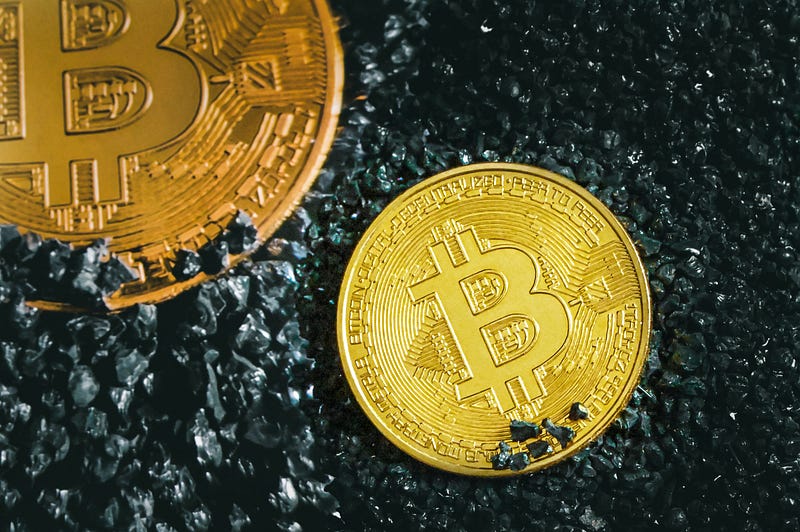
Photo by Traxer on Unsplash


Heat tolerance

The company confirmed in an announcement made on Thursday that the state-of-the-art air-cooled Bitcoin miner will ship during the first quarter of 2024. The Antminer T21 is expected to make waves in the world of cryptocurrency mining given that it can withstand scorching temperatures of up to 45 degrees Celsius.

During a facility tour, the firm tweeted out on Friday: “Although it is so hot here, ANTMINER is still running stable!”

The context of the comment relates to an installation of the new miner’s predecessor at a Moonwalk Systems facility in the arid heat of the United Arab Emirates (UAE). Moonwalk is utilizing water cooling to overcome the local conditions. However, it’s in environments like this one that Bitmain is likely to envisage its latest Antminer performing well.


Energy efficiency

Another standout feature of the Antminer T21 is its energy efficiency. With a stellar energy efficiency ratio of 19 joules per terahash (J/TH), it outpaces its predecessor, the Bitcoin Miner S21 Hyd, which offers an energy efficiency of 16.0 J/TH. This efficiency means miners can maximize their returns while minimizing their energy costs. Additionally, the Antminer T21 boasts an impressive processing power of 190 terahashes per second (TH/s), a crucial factor in the competitive world of Bitcoin mining.

The compatibility of the Antminer T21 with the SHA256 mining algorithm, used in the proof-of-work (PoW) consensus mechanism for cryptocurrencies like Bitcoin, Bitcoin Cash, and Bitcoin SV (BSV), adds to its appeal.

Notably, Bitmain has extended a helping hand to pre-order buyers of the Antminer T21 by offering Bitmain’s Price Protection Plan. This plan, available until November 25, aims to support miners in times of cryptocurrency market volatility. The plan shields customers from price fluctuations in Bitcoin for periods of one, three, or six months.


Company difficulties

Founded in Beijing in 2013, Bitmain swiftly rose to prominence as a global leader in producing Bitcoin (BTC) mining ASICs. However, the company faced internal turmoil due to a power struggle between its co-founders, Wu Jihan and Ketuan Zhan. The situation was eventually resolved in 2021, with Jihan Wu stepping down from his roles as chairman and CEO of Bitmain and selling his ownership share to Zhan for $600 million.

ASIC miner manufacturers like Bitmain have also had to grapple with the backdrop of a challenging market environment that has seen plummeting prices paid for mining equipment over the past two years.

Bitmain has faced scrutiny regarding its treatment of employees. Recent reports from local sources and Bitmain employees revealed that the company issued a notification in September indicating negative operating cash flow. In response to these financial challenges, Bitmain delayed the disbursement of a portion of its employees’ September salaries, raising concerns about the financial stability of the organization. In April of this year, it emerged that the Chinese authorities had imposed a fine on the company due to tax irregularities.


More to Read
View All
Policy & Regulation·

Sep 04, 2023

Binance’s Entry Followed by Increased Scrutiny on Foreign Executives in Korean Crypto Firms

Binance’s Entry Followed by Increased Scrutiny on Foreign Executives in Korean Crypto FirmsSince Binance’s acquisition of South Korean crypto exchange GOPAX earlier this year, it appears that South Korean financial authorities have tightened their oversight of virtual asset service providers (VASPs), according to an article by local news outlet News1.Photo by Vadim Artyukhin on UnsplashAuthorities had previously instructed existing VASPs to report any changes in their location or registered executives. However, according to industry sources on Monday, authorities recently issued a notice to VASPs, emphasizing the importance of reporting the appointment of foreign executives as well. This change in authorities’ approach is not unrelated to the recent incidents involving Binance and GOPAX, which have caused ripples in the Korean market.Ongoing leadership changesBinance acquired a majority stake in Streami, the operator of GOPAX, back in February after GOPAX struggled to make principal and interest payments on its own decentralized finance (DeFi) service, GOFi, in the wake of the FTX collapse that happened in November 2022. In doing so, Binance injected capital into GOPAX in order to provide a solution for the issue.This marked Binance’s entry into the Korean market, with the number of monthly active users in the country soaring since then. A survey conducted in June by blockchain-based polling app Cratos also revealed that the Korean public had an overall favorable opinion towards the acquisition.Following the acquisition, Streami underwent multiple leadership transitions with Lee Jun-haeng resigning and Binance’s Asia Pacific Head, Leon Sing Foong, taking over. Shortly after, Foong also stepped down, and the baton was passed to Lee Joong-hoon, GOPAX’s former Vice President. It is also notable that Foong recently left Binance altogether amid regulatory scrutiny.Streami subsequently submitted reports to the Financial Intelligence Unit (FIU) under the Financial Services Commission in line with requirements to inform the regulatory body about these changes. However, the FIU has not yet granted its approval, likely due to the legal challenges Binance is currently facing in multiple jurisdictions worldwide.In a seeming effort to address this regulatory roadblock, Streami has recently decided to delegate yet another CEO whose identity has not yet been disclosed. This marks the third leadership shift in just half a year.On the other hand, crypto trading platform Crypto.com also acquired the exchange OKBIT last year. However, its process of entering the Korean market was quite different from that of Binance, as the platform received proper approval for changes in executive positions, such as the appointment of Rafael de Marco e Melo as Chief Financial Officer.Mounting roadblocksIt appears that authorities have now decided to form a more robust oversight system, including monitoring changes in foreign executive appointments at VASPs. However, some argue that such regulatory changes could be perceived as a hindrance for global exchanges looking to enter Korea’s lucrative crypto market where there is a high level of investor sentiment from up to seven million individual investors.To operate as a virtual asset business in the country, businesses must obtain preliminary certification for an Information Security Management System (ISMS) and register as a VASP. Obtaining ISMS certification is a time-consuming process, prompting overseas VASPs to enter the Korean market by acquiring businesses that have already received certification in Korea.However, if the entry barriers to Korea increase as authorities start to scrutinize changes in foreign executive positions, global VASPs may reconsider entering the market.

news
Policy & Regulation·

Jul 04, 2023

Hong Kong Embraces Web3 Development with Dedicated Task Force

Hong Kong Embraces Web3 Development with Dedicated Task ForceHong Kong has taken another step towards embracing the potential growth of the crypto industry by creating a dedicated task force for Web3 development.Led by Financial Secretary Paul Chan, the task force, which was announced on Friday, consists of 15 non-official members, including university professors and entrepreneurs. As official members, government officials and financial regulators are involved.Financial Secretary Chan expressed his optimism about blockchain technology, the foundation of Web3, highlighting its potential for innovation through features such as disintermediation, security, transparency, and cost-efficiency. The task force envisions Web3 as a solution to challenges faced in sectors like finance, trade, business operations, and everyday life.Photo by Shubham Dhage on UnsplashMulti-agency participationNotable members of the task force include the CEOs of the Hong Kong Monetary Authority (HKMA), Securities and Futures Commission (SFC), and Hong Kong Exchanges and Clearing. Their presence demonstrates the commitment of top finance regulators in Hong Kong to the Web3 initiative. Additionally, Yat Siu, chairman of metaverse firm Animoca Brands, joins as a non-official member, bringing diverse perspectives to the table.Financial Secretary Chan emphasized Hong Kong’s ambition to become a significant player in the Web3 space. The city-state aims to support companies and nurture local talent within the ecosystem. This initiative aligns with Hong Kong’s long-term vision for crypto development, as set out in a policy document released last October. It’s the latest in a whole series of measures officials have taken since then to further that crypto ambition.Strategic positioningBy establishing the Web3 task force, Hong Kong seeks to position itself as a prominent hub for crypto activities. The city-state recognizes the potential economic benefits and job opportunities associated with the crypto industry. The task force’s diverse composition reflects the government’s intention to collaborate with stakeholders from various sectors and gather insights from academia, government bodies, and industry experts.Furthermore, the task force aims to create a supportive environment for digital asset development. Hong Kong’s financial regulators have been actively working on regulatory frameworks to ensure investor protection and promote market integrity.While it is still in the early stages, global crypto exchanges like Huobi, OKX, and BitMEX have recently expressed their intentions to establish a presence in Hong Kong. This indicates growing interest in the city-state’s crypto potential and validates the government’s efforts to position Hong Kong as a welcoming and conducive environment for crypto-related businesses.With its commitment to fostering digital asset development, Hong Kong demonstrates a forward-thinking approach to leverage the benefits of blockchain technology and position itself as a thriving ecosystem for Web3 innovation.The collaboration between academic, governmental, and regulatory stakeholders sets the stage for the Chinese autonomous territory to capitalize on the opportunities presented by the evolving crypto space. Hong Kong’s proactive stance and the establishment of the Web3 task force reinforce its position as a global financial hub and a front-runner in embracing emerging technologies for future economic growth.

news
Web3 & Enterprise·

Jul 13, 2023

Suspected Malicious Activity Drains AnySwap Tokens via Multichain Executor

Suspected Malicious Activity Drains AnySwap Tokens via Multichain ExecutorAccording to an on-chain sleuth known as Spreek, a person is using the Multichain Executor to drain tokens associated with the AnySwap bridging protocol.Multichain is a cross-chain routing network, established and maintained by a Chinese developer team. It supports in excess of 25 blockchains and more than 1,100 tokens.Photo by Marek Piwnicki on Unsplash$100 million outflowThis revelation comes after abnormal outflows of over $100 million from Multichain bridges on July 7, which were flagged by the Multichain team. Spreek’s report via Twitter on July 10 states that the Multichain Executor address has been draining anyToken addresses across multiple chains and transferring them to a new externally owned account (EOA).Evidence provided in the report includes an Ethereum transaction, 0x53ede4462d90978b992b0a88727de19afe4e96f0374aa1a221b8ff65fda5a6fe, which called the “anySwapFeeTo” method on the Multichain Router: V4 contract. This transaction resulted in approximately $15,275.90 worth of anyDAI being minted on Ethereum, sent to the Multichain Executor, burned, and exchanged for the underlying DAI backing the asset.The funds from these transactions were sent to the following address:0x1eed63efba5f81d95bfe37d82c8e736b974f477b. Similarly, on the BNB Smart Chain (BSC), the Multichain Executor used the anySwapFeeTo function to convert $208,997 worth of anyUSDC into Binance-pegged USDC and sent them to the same address. Additionally, 50.80 anyBTC, equivalent to $39,251.43 at the time, was converted into Binance-pegged Bitcoin and sent to the address.In total, approximately $263,524.33 worth of tokens were sent to this address through the anySwapFeeTo method. Spreek suggests that this behavior could be part of the protocol’s normal functioning. However, a different account engaged in similar activity the day before and ultimately sold the drained tokens, indicating malicious intent.Potential exploitSpreek theorizes that the attacker may be exploiting the anySwapFeeTo function by setting fees to an arbitrarily large amount, allowing them to drain users’ funds. The function apparently permits setting any value, enabling the address to choose the total value of the token held in that anyToken.The Multichain incident has puzzled blockchain analysts, as it remains unclear whether it resulted from an exploit or if it was simply large token-holders moving their funds between networks. The mystery began on July 7 when over $100 million worth of tokens were withdrawn from the Ethereum side of Multichain’s bridges and transferred to wallet addresses with no prior transactions. This represented the majority of funds held on each bridge.Hack or rug pullThe Multichain team labeled these withdrawals as “abnormal” and advised users to stop using the protocol. However, they have not disclosed the source or nature of the anomaly. In response to the incident, stablecoin issuers Circle and Tether froze some of the addresses involved in the suspicious transactions. Chainanalysis, a blockchain analytics firm, has commented that the incident appears more like a hack or rug pull rather than a migration.Adding to the complexity, the Multichain team has reported that their CEO is missing, and they have shut down certain bridges due to losing access to some of the network’s multi-party computation network servers. There have been various concerns relative to Multichain since May. The situation continues to evolve, with ongoing investigations and efforts to mitigate any potential damage caused by the suspected malicious activity.

news
Loading