Top

Nomura Subsidiary Achieves In-Principle Approval in Abu Dhabi

Web3 & Enterprise·September 29, 2023, 12:08 AM

The digital assets subsidiary of Japanese financial services conglomerate Nomura has been granted in-principle approval by the Abu Dhabi Global Market (ADGM) to offer broker-dealer and asset/fund management services for both digital and traditional assets.
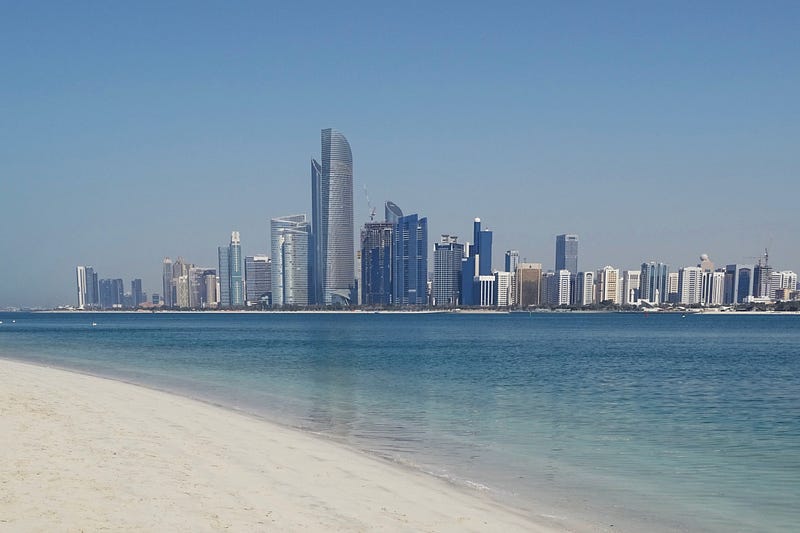
Photo by Belinda Fewings on Unsplash


Preliminary license to trade

The development is a shot in the arm for Laser Digital Asset Management while serving to highlight Abu Dhabi’s growing prominence as a global center for digital assets, attracting prominent players such as Binance and Kraken.

Led by CEO Jez Mohideen, Laser Digital is now on the path toward securing full financial services authorization in Abu Dhabi, subject to meeting undisclosed conditions specified in the approval. The company is enthusiastic about the ADGM’s transparent and comprehensive regulatory framework.

Speaking to that, Mohideen stated: “We are thrilled to be part of their comprehensive and clear regulatory framework, which is creating a global hub for digital assets.”


International free zone

The ADGM, an international financial free zone situated in Abu Dhabi, covers nearly 15 square kilometers across two islands. It hosts a registration authority, regulatory authority, and a court system functioning under common law principles. This favorable regulatory ecosystem has been instrumental in attracting digital asset firms to establish a presence in the UAE’s capital.

Laser Digital’s approval follows a series of recent cryptocurrency-related approvals in Abu Dhabi. Zodia Markets, backed by UK bank Standard Chartered, was recently granted permission to operate as a crypto broker, adding to the growing list of companies making strides in the region.

Binance, one of the world’s largest cryptocurrency exchanges, received in-principle approval from the ADGM in April 2022 and subsequently obtained full financial services permission in November of the same year. Kraken, along with firms like UAE-based M2 and Bahrain-based Rain, have also received permissions to operate within the ADGM in recent years.


Building on Dubai achievement

Laser Digital’s approval in Abu Dhabi comes on the heels of its earlier achievement of obtaining an operating license from Dubai’s Virtual Asset Regulatory Authority (VARA). Alongside these regulatory milestones, Laser Digital introduced an institutional Bitcoin Adoption Fund in August. Despite its relatively short existence since its establishment in September 2022, the firm has made significant strides.

Nomura’s engagement extends beyond Laser Digital, as it is also part of the Komainu joint venture alongside cryptocurrency firms CoinShares and Ledger. Komainu secured its operating license from Dubai’s VARA in August, contributing to the expanding community of crypto-focused businesses in the region.

It is worth noting the UAE’s diversified approach to cryptocurrency regulation, offering five distinct regulatory regimes for cryptocurrencies, including the ADGM and VARA. Legal experts from White & Case have recently assessed these regulatory frameworks, highlighting the UAE’s commitment to fostering a progressive and well-regulated environment for digital assets.

Nomura’s Laser Digital is well-positioned to play a pivotal role in the digital asset sector in Abu Dhabi, given that it’s leveraging the favorable regulatory environment of the ADGM and the UAE’s dedication to becoming a global digital asset hub.


More to Read
View All
Web3 & Enterprise·

Oct 12, 2023

Shinhan Bank to Issue NFTs at 2023 Global Blockchain Incheon Conference

Shinhan Bank to Issue NFTs at 2023 Global Blockchain Incheon ConferenceShinhan Bank is set to participate in the 2023 Global Blockchain Incheon Conference (GBIC) from October 30 to 31 at Incheon Songdo Convensia, where it plans to operate a promotional booth to present its blockchain initiatives and issue commemorative non-fungible tokens (NFTs).Photo by CHUTTERSNAP on UnsplashUnveiling the prospects of next-generation technologiesGBIC is an international conference hosted by the city of Incheon and organized by Incheon Technopark. It will focus on exploring the present and future landscape of blockchain and Web3 technology while providing a platform for networking among experts from around the world. The event aims to stimulate the business ecosystem within the field and promote cultural exchange.Exclusive perksTo mark the occasion, Shinhan Bank and the city of Incheon are working together to issue NFTs for visitors, which include records of information like confirmation of event entry and participation, coupon usage, and more. The NFTs will also be given away to the first 1,000 customers who arrive at the event site, offering three benefits — free coffee vouchers as well as entry passes to artificial and virtual reality experiences and other on-site events. Recipients will also have the option to hand over the functions and benefits of the NFTs to others.Those who wish to attend GBIC can pre-register on the official conference website.

news
Policy & Regulation·

May 19, 2023

BOK Staffers Assess Crypto Market Vulnerabilities and Their Implications

BOK Staffers Assess Crypto Market Vulnerabilities and Their ImplicationsOn Thursday, the Bank of Korea’s (BOK) staff members published an assessment of the vulnerabilities in the cryptocurrency market and their potential implications. Here is the summary of the report.Photo by D Tan on Unsplash2022 crypto winterThroughout 2022, the worldwide crypto market faced a series of adverse occurrences, such as significant drops in the prices of major crypto-assets and the collapse of prominent crypto companies. These events shed light on the vulnerabilities that had accumulated during the rapid growth of the market.The first major event occurred in May 2022 when the algorithmic stablecoin TerraUSD experienced a sharp decline, resulting in substantial losses and bankruptcies for numerous retail investors and crypto firms. This incident significantly eroded confidence in the overall crypto market. The subsequent bankruptcies of prominent crypto lender Celsius and hedge fund Three Arrows Capital (3AC) further highlighted the realization of risks commonly associated with traditional financial markets, such as multiple collateral loans and maturity and liquidity mismatches, within the crypto market.In November 2022, the well-known crypto exchange FTX filed for bankruptcy, demonstrating that the activities of a large crypto company can propagate risks through moral hazard and excessive profit-seeking behavior when it operates outside the realm of regulatory oversight.Similarities with TradFiThese negative events that unfolded in the global crypto market in 2022 share similarities with issues previously observed in financial markets, such as unsustainable business models, liquidity risk, leverage, and lack of transparency in financial conditions. These parallels suggest that if the crypto markets were subjected to comparable levels of regulation as traditional financial markets, it is plausible that the triggering of these risks could have been avoided altogether, or at the very least, the resulting damage could have been mitigated to some extent.Implications for the Korean marketAt present, it is deemed unlikely that events akin to those witnessed in overseas crypto markets will transpire in the Korean market. The Korean crypto-asset market has primarily evolved through exchanges, with limited influence from other enterprises such as crypto issuers and decentralized lending platforms. In addition, Korean crypto exchanges are subject to regulation under the Act on Reporting and Using Specified Financial Transaction Information. This mandates the separation of customer deposits from exchange assets and the strict management of custodial crypto-assets through secure wallets. Additionally, Korean exchanges are prohibited from listing their own tokens on their platforms.However, there remains a dearth of information regarding the business structures of crypto companies that offer services similar to those in the traditional financial industry. This lack of information poses challenges in accurately assessing risk and providing adequate investor protection. Meanwhile, there is a potential for a deeper integration between the crypto market and users’ daily lives, particularly through major technology companies, gaming companies, and security tokens.SuggestionsIt is vital to ensure that crypto-assets are regulated based on the principle of “same activity, same risk, same regulation” through the ongoing development of crypto-asset-related legislation. The Financial Stability Board, an international body monitoring the global financial system, explained this principle in a 2022 paper: “Where crypto-assets and intermediaries perform an equivalent economic function to one performed by instruments and intermediaries of the traditional financial sector, they should be subject to equivalent regulation.”Additionally, it is necessary to stay aligned with major countries in terms of the speed and comprehensiveness of regulatory measures to prevent regulatory discrepancies across borders due to the global nature of crypto risks.Enhancing the effectiveness and efficiency of regulation requires the establishment and maintenance of a close cooperation system between authorities. This collaborative effort should encompass various aspects, including monitoring, information gathering, and supervision of the crypto-asset market. Notably, the widespread adoption of stablecoins can affect the stability of the overall financial system, including monetary systems and payment and settlement systems. Hence, it is necessary to strengthen the involvement of central banks in the monitoring and supervision framework for crypto-assets, including stablecoins, as demonstrated by legislative approaches adopted by major economies like the EU. Furthermore, imposing disclosure requirements, external audits, and documentation submission obligations on crypto-asset operators is advisable.

news
Web3 & Enterprise·

Sep 02, 2023

HashKey’s New $100M Fund to Prioritize Altcoins

HashKey’s New $100M Fund to Prioritize AltcoinsHashKey Capital, the investment arm of Hong Kong-based crypto firm HashKey Group, is embarking on a new investment journey with the launch of a fund that predominantly targets major altcoins.Photo by Kanchanara on Unsplash50% altcoin allocationIn a recent interview with Reuters, Jupiter Zheng, the Portfolio Manager of the fund, revealed that less than 50% of the fund’s allocation will be directed towards Bitcoin (BTC) and Ethereum (ETH), the two largest cryptocurrencies.The fund has already garnered attention from potential clients, primarily high-net-worth individuals and investment firms catering to affluent, high-net-worth Asian families. Zheng underscored the fund’s commitment to diversifying investment strategies, which he believes is necessary as a consequence of the Hong Kong stock market’s recent weakness.“We see untapped demand from professional investors who wish to chase above-market returns in crypto,” Zheng noted, suggesting that the allure of crypto assets is becoming increasingly appealing to traditional investors.$1 billion assets under managementHashKey Capital has $1 billion in assets under management, and the firm has set an ambitious target of raising $100 million for the newly launched fund within the next 12 months. This allocation strategy also includes a portion of the fund’s holdings in cash, allowing for flexibility in navigating the dynamic and volatile cryptocurrency market.In addition to forging ahead with crypto investments, the company is actively establishing distribution channels with offshore Chinese financial institutions, expanding its reach and influence in the digital asset space.Positive market outlookZheng remains optimistic about the crypto market’s future, expressing confidence that cryptocurrency prices are finding stability as industry liquidity improves. He cited several factors contributing to this stabilization, including the plateauing of US interest rates and the growing interest of large US asset managers in filing for spot Bitcoin ETFs, indicating a maturing and evolving industry sector.Responding to news of the new fund, Ryan Selkis, CEO and Founder of crypto market intelligence firm Messari, said that he expected other funds to follow suit in 2024 given that “there’s a ton of inefficiency and mispricing in assets 50–500 by market cap.”HashKey’s progression in the crypto investment space can be traced back to its acquisition of a Type 9 asset management license from Hong Kong’s Securities and Futures Commission last year. This license granted HashKey the ability to manage portfolios exclusively composed of virtual assets, laying the groundwork for its latest venture. It has since secured Type 1 and Type 7 licenses and recently started offering its products to retail investors in Hong Kong, being one of the first to do so.Funding roundEarlier in the year, the company successfully closed a $500 million investment round for a fund dedicated to infrastructure, tooling, and applications that drive the widespread adoption of blockchain and crypto technologies. In April, it launched a wealth management service in response to demand from investors who were looking to gain exposure to digital assets.Hong Kong’s welcoming stance towards cryptocurrencies and its proactive approach to addressing market demand for alternative assets have played a pivotal role in attracting digital asset firms. The city’s Securities and Futures Commission (SFC) has been granting licenses to crypto exchanges in alignment with its new licensing framework, opening up opportunities for retail investors to trade “large-cap tokens” on licensed platforms while implementing safeguards like knowledge tests, risk profiles, and reasonable exposure limits.

news
Loading