Top

Crypto Exchange Korbit Raises Daily KRW Deposit Limits From 300K to 5M

Web3 & Enterprise·September 26, 2023, 5:15 AM

Korbit, one of the leading cryptocurrency exchanges in South Korea, raised the daily deposit limit for its customers as of 16:00 KST on September 25. This move aligns with the early implementation of the operation guidelines of real-name bank accounts for cryptocurrencies, which is scheduled to be introduced in January next year. Korbit collaborates with Shinhan Bank, utilizing its real-name accounts to facilitate Korean won transactions.
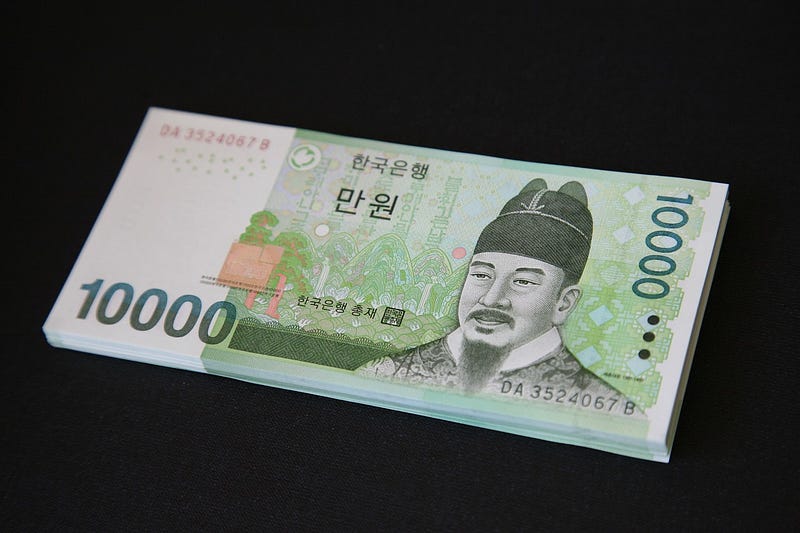
Photo by manseok Kim on Pixabay


User protection and AML

The operation guidelines have been established to fortify the protection of virtual asset users and to bolster efforts against money laundering. Financial authorities, the Korea Federation of Banks, and cryptocurrency exchanges have collaborated to initiate these measures at every local exchange starting next January. Meanwhile, exchanges are obliged to maintain reserves in their banks beginning this month, ensuring they are poised to provide compensation for involuntary losses in the event of hacking incidents or system failures.


Investor inconvenience and market confusion

Since the introduction of the real-name bank account system in 2018, banks and crypto exchanges have had different terms of use and user protection measures, leading to varied deposit and withdrawal limits as well as reserve levels across different exchanges. These inconsistencies have resulted in inconvenience to customers and have sown confusion in the market. In response, the entities in question have agreed to implement a shared set of guidelines for real-name bank accounts from January next year.


Daily limit of KRW 300K to KRW 5M

With the implementation of these guidelines, Korbit has elevated the current daily deposit limits from KRW 300,000 (approximately $222) and KRW 1.5 million to KRW 5 million. Moreover, once the bank authenticates the user’s transaction purpose — for instance, purchases of KRW 5 million or more in virtual assets in a month following the initial KRW deposit — and verifies the source of the funds, the constrained account can transition to a standard account. This adjustment allows the daily deposit and withdrawal limit of up to KRW 500 million.

The limitations associated with constrained and standard accounts apply solely to fund transfers between the crypto exchange and the bank. When holders of Shinhan accounts initiate fund transfers to accounts in other banks, the limitations imposed by Shinhan continue to apply.

Oh Sejin, CEO of Korbit, expressed enthusiasm that the higher deposit limit enabled by the new guidelines would improve investor convenience and draw in new customers. He added that the crypto exchange is committed to collaboration with Shinhan Bank, aiming to enhance user protection and anti-money laundering (AML) measures.
More to Read
View All
Policy & Regulation·

Nov 10, 2023

Korea Joins OECD’s CARF initiative to enhance crypto tax compliance

Korea Joins OECD’s CARF initiative to enhance crypto tax complianceThe South Korean Ministry of Economy and Finance issued a press release to declare the country’s involvement in the Crypto-Asset Reporting Framework (CARF). This program, developed by the Organization for Economic Co-operation and Development (OECD), is designed to promote tax compliance and combat tax evasion in the realm of cryptocurrency. The initiative brings together 48 countries and jurisdictions, such as France, Germany, Japan, the United Kingdom and the United States.Photo by Nataliya Vaitkevich on PexelsTarget year of 2027In the joint statement released on Nov. 10, the participants of the CARF expressed their commitment to its widespread and timely implementation, aiming to enhance the effectiveness of the regime. They plan to align their domestic laws and enforce agreements by 2027, the year targeted by the OECD for exchanging relevant information. The statement also encouraged other jurisdictions to participate in this global effort.Updating laws and activating agreementsKorea’s commitment to international cooperation, as indicated in the joint statement, shows its intention to update domestic laws and activate exchange agreements. This preparation will pave the way for the exchange of crypto-asset transaction information to commence in 2027, adhering to the OECD’s proposed timeline. Such a step is anticipated to significantly contribute to the broad implementation of the CARF. The Economy Ministry stated that Korea is committed to ongoing participation in international efforts aimed at preventing tax evasion and enhancing tax transparency.In September, during a tax administration forum in Seoul, experts suggested that Korea’s potential participation in the OECD’s CARF would require more than just legislative amendments. They highlighted the necessity for Korea to develop a cooperative system involving both virtual asset service providers (VASPs) and regulatory authorities, explaining that this approach would ensure a smooth and effective implementation of the CARF in Korea.

news
Policy & Regulation·

Jul 14, 2023

Hong Kong’s Bricks-and-Mortar Crypto Shops Attract Chinese Visitors

Hong Kong’s Bricks-and-Mortar Crypto Shops Attract Chinese VisitorsHong Kong has become a thriving destination for cryptocurrency enthusiasts, particularly mainland Chinese visitors, due to the ambiguity surrounding the regulatory status of these crypto shops.Despite the illegality of cryptocurrency transactions on the mainland and the ban on overseas exchanges serving onshore clients, Hong Kong allows legal crypto trading, and according to a recent report published by the Financial Times, the autonomous Chinese territory is being accessed by residents of the Chinese mainland for the purpose of trading crypto.Photo by Chapman Chow on UnsplashSurging demandBricks-and-mortar crypto shops, lightly regulated and scattered across the city’s popular tourism and shopping districts, have flourished thanks to the surging demand from mainland Chinese visitors. These stores offer customers the convenience of purchasing digital assets with cash, often without the need to disclose the source of funds or personal information.In contrast to the strict licensing requirements imposed on online exchanges in Hong Kong’s push to become a virtual assets trading hub, these over-the-counter (OTC) crypto stores provide customers with the opportunity to buy large volumes of cryptocurrencies with minimal or no verification checks.Before the border between China and Hong Kong reopened fully in February, mainland Chinese customers accounted for less than 5% of customers at Crypto HK, an OTC crypto outfit with two branches in the city. However, this figure has now increased significantly, making up around half of their customer base.Similarly, One Satoshi, a crypto store with nine branches in Hong Kong, reported trading volumes between January and May 2023 that were 20–25% higher than the same period the previous year. They anticipate a 35–40% increase in trading for the entire year.While some store owners, like Roger Li of One Satoshi, currently decline mainland Chinese customers due to Beijing’s crypto ban, they remain optimistic that restrictions will ease. This belief is prevalent among the crypto community in Hong Kong following the city’s announcement to become a virtual assets hub in October.Regulatory anomalyHong Kong introduced a new regulatory framework for cryptocurrency exchanges in June, requiring all online platforms operating in the city to apply for a license. However, most OTC stores still operate outside the purview of Hong Kong’s Securities and Futures Commission (SFC), presenting an area of further consideration for the government.OTC stores primarily serve as a simple way for users to convert money to and from unlicensed online exchanges, according to Carlton Lai, head of blockchain research at Daiwa Capital Markets. Hong Kong’s lenient regulations and ease of starting such businesses, as long as there is sufficient capital, contribute to the higher number of OTC stores compared to other locations.While some shops welcome increased regulation in the sector, others do not require customers to provide identification, promoting quick and anonymous transactions. However, this falls short of the investor protection measures mandated for online platforms seeking licenses to trade cryptocurrencies to retail clients.The lack of scrutiny faced by Hong Kong’s OTC shops, coupled with their proximity to mainland China — a market that ranked fourth globally for crypto trading in 2022 — makes them appealing to Chinese citizens still interested in the asset class.

news
Web3 & Enterprise·

Mar 24, 2025

DWF Labs establishes $250M fund for crypto project investment

United Arab Emirates (UAE)-based crypto market maker and Web3 investment firm DWF Labs has launched a $250 million fund for investment in mid to large-cap crypto projects. The company, which recently switched its administrative base from Singapore to Abu Dhabi, asserts that the fund will contribute towards the real-world adoption of Web3 technology. Photo by Towfiqu barbhuiya on UnsplashUp to $50M per projectTaking to X, DWF Labs Managing Partner Andrei Grachev announced the $250 million fund. He added:”Single ticket size ranged from 10 to 50M$ per a project. Cash + comprehensive support = Moon” In a statement published to the company’s website, DWF Labs outlined that the Liquid Fund initiative aligns with the firm’s commitment to contributing towards real growth within the broader crypto market. It stated: “The fund will provide strategic crypto venture capital and ecosystem support, ensuring sustainable growth for projects that drive real-world adoption and help promote change in the industry.” Initial dealsWork on the fund is already in motion. The company confirmed that it has already invested $11 million into promising blockchain projects as part of the initiative. Furthermore, DWF Labs confirmed that it is on the verge of signing two major investment deals with ticket values of $10 million and $25 million respectively. Beyond those deals, the firm asserts that other investment deals are in the pipeline. It clarified that the nature of the investment differs from traditional investments insofar as each deal incorporates a full-scale ecosystem growth strategy, devised specifically for the particular needs of each project. Grachev stated that the company believes “that strategic capital, coupled with hands-on ecosystem development, is the key to unlocking the next wave of growth for the industry.” Key aspects being considered by the company when formulating ecosystem growth strategies relative to targeted blockchain projects include public relations (PR) and brand amplification, a comprehensive go-to-market (GTM) strategy, lending markets development and a focus on stablecoin total value locked (TVL), with supporting liquidity and DeFi activity relative to layer-1 and layer-2 projects. Focus on ‘usability and discoverability’Grachev told Cointelegraph that emphasis will be placed on investing in blockchain projects that stand out in terms of “usability and discoverability.” He added that “good technology and utility alone isn’t sufficient,” asserting that "users first need to discover these projects, comprehend their value and develop trust." The DWF Labs managing partner suggested that strategic capital, together with hands-on ecosystem development, is paramount relative to efforts to realize the next iteration of growth within the crypto sector. Up until the end of last year, DWF Labs was headquartered in Singapore and still maintains a presence there. Besides Abu Dhabi, it also has a physical presence in Dubai. Hong Kong, Switzerland, South Korea and the British Virgin Islands (BVI) account for the locations of the remainder of its international offices. While Grachev and his firm can be assumed to have a positive broader view on the cryptocurrency sector given the launch of this latest fund, the DWF Labs managing partner recently pointed to a more immediate potentially bearish trend in the market.

news
Loading
