Top

Miracle Play and HAVAH team up to expand Web3 ecosystem

Web3 & Enterprise·December 18, 2023, 9:45 AM

Web3 e-sports tournament platform Miracle Play has signed a business agreement with the interchain platform HAVAH to exchange technologies and build a joint ecosystem, according to an official announcement on Miracle Play’s Medium page on Monday (KST).

“With our interchain technology, we expect to play a pivotal role in the expansion and organic interoperability of the Web3 e-sports ecosystem, and we will actively cooperate with Miracle Play in building a leading ecosystem and infrastructure,” said Lim Young-kwang, CEO of HAVAH.

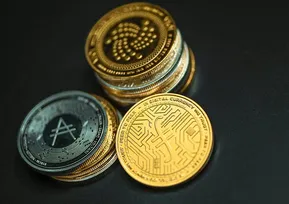
Photo by Mateo on Unsplash


Navigating the interchain landscape and blockchain gaming

Launched in January, HAVAH is an L1 interchain platform that allows users to freely move their digital assets across multiple blockchains. It features multiple decentralized applications (dApps) such as HAVAH Wallet and HAVAH Scan, and houses some 500,000 users.

Miracle Play uses smart contract technology to ensure that anyone and everyone can hold various types of gaming tournaments in the form of PC, mobile and console games. It is currently in the open beta phase, with a cumulative participation rate of about 30,000 players. Although it is only supported on Polygon as of now, it will eventually be available on a total of nine major networks including Avalanche, XPLA, Solana and more, to facilitate cross-network gaming tournaments.


Collaborative synergy

The two companies plan to collaborate on multiple fronts. Miracle Play will adopt HAVAH’s various mechanisms including the Mitter Protocol, which will allow the platform to implement one-click bridging services on the Miracle Play website and mobile app; as well as its interchain mechanism to bring multi-chain services to Miracle Play.

HAVAH also aims to provide technical support for distributing and utilizing in-game rewards across networks on Miracle Play. Miracle Play tournaments will also be available via GameFi dApps in HAVAH’s ecosystem.

“We will continue to work with companies in various fields to strengthen the interconnection of the blockchain ecosystem and expand the base of WEB3 Esport by making it conveniently accessible to everyone,” said Kim Hyun, CEO of Miracle Play.

More to Read
View All
Web3 & Enterprise·

Feb 19, 2025

HashKey secures $30M in funding from Chinese VC firm

A Beijing-headquartered venture capital firm has invested $30 million in Hong Kong’s HashKey Exchange. That’s according to a report published by Bloomberg on Feb. 14, citing unnamed sources understood to be familiar with the matter. HashKey’s capital injection has come from Gaorong Ventures.  The Chinese VC firm was founded in 2014, initially known as Banyan Capital before rebranding as Gaorong Ventures in 2018. The VC firm focuses on early and growth-stage investments, with a specific interest in new technology.  Gaorong has 23 IPO portfolios on its books, together with 30 projects valued at in excess of $1 billion. It has been an early-stage investor in Chinese tech firms such as Chinese shopping platform Meituan and online retailer PDD Holdings.  Last year, the company participated in a funding round for Dongchedi, the car information and trading platform belonging to ByteDance, the parent company of TikTok.Photo by Towfiqu barbhuiya on UnsplashBeyond unicorn statusIn this instance, the funds were invested with HashKey Group weighing in with a post-money valuation in the region of $1.5 billion. That puts the company well beyond unicorn status, which it achieved in a previous $100 million funding round over a year ago. At that time, HashKey didn’t disclose the names of investors other than to state that they were “prominent institutional investors” and “leading Web3 institutions.” It’s understood that the round included both existing and new investors. Surging VC investment in crypto startups This latest investment comes amid a backdrop of a surge in venture capital investment into the crypto sector. Well-known American venture investors Sequoia Capital and Andreessen Horowitz (a16z) invested almost $1.2 billion in crypto projects last month.  In 2024, $13.7 billion was invested in crypto and blockchain startups by venture capital firms, marking a 28% increase on the previous year. In Q4 2024, the United States took first place, accounting for 46% of investment into startups across the market in general. Hong Kong weighed in with 17% in second place.HashKey is also playing its own role in crypto and blockchain startup investment. HashKey Exchange’s sister company, HashKey Capital, is an institutional asset manager that also invests in crypto startups. In recent weeks, the company has invested in SignalPlus, a crypto trading software firm focused on the Asian market, and Kelpr, a Cosmos (ATOM) ecosystem wallet project. More crypto VC investment in 2025In January, HashKey Capital CEO Deng Chao told Cointelegraph that he expected more VC capital investment in crypto startups in 2025. He stated: “As we enter into a supportive macro environment driven by stimulative US policies and the formalization of crypto regulatory frameworks, these macro tailwinds are set to drive more VC investments heading into 2025.” Meanwhile, the overarching HashKey Group is positive in its outlook with regard to the crypto and blockchain sector in 2025. Last month, it outlined that it expects Bitcoin and Ethereum to surge in price, the share of the market held by decentralized exchanges (DEXs) to increase, capital inflows into the sector from institutions to grow, the approval of more crypto ETFs and further development of layer-2 networks over the course of the year.

news
Policy & Regulation·

Aug 23, 2023

Chinese Official Gets Life Sentence on Crypto Mining-Related Corruption Charges

Chinese Official Gets Life Sentence on Crypto Mining-Related Corruption ChargesA former Chinese government official, Xiao Yi, has been handed a life sentence for engaging in illicit business activities connected to a $329 million Bitcoin mining venture, together with other unrelated acts of corruption, according to Cointelegraph.The Intermediate People’s Court of Hangzhou City declared the verdict on Tuesday, finding Xiao Yi guilty of corruption and abuse of power.Yi, previously associated with the Jiangxi Provincial Political Consultative Conference Party Group and holding the position of Vice Chairman, faced charges stemming from a range of offenses. The corruption allegations dated back to 2008 and extended till 2021, involving instances of bribery.Photo by Tingey Injury Law Firm on UnsplashAdditional abuse of power chargesSimultaneously, the abuse of power accusations spanned from 2017 to 2021 and centered around providing financial and electricity incentives to Jiumu Group Genesis Technology, a company headquartered in Fuzhou that once managed over 160,000 Bitcoin mining machines.Prosecutors contended that Yi took deliberate steps to conceal the extent of the mining operation. He was said to have directed relevant departments to falsify statistical reports and manipulate electricity consumption classifications. During the period between 2017 and 2020, the energy consumption attributed to Jiumu amounted to 10% of Fuzhou’s overall electricity usage.Moreover, Xiao Yi’s involvement in facilitating crypto mining activities as a Party Secretary of Fuzhou city between 2017 and 2021 led to significant losses to public property, national interests, and people’s interests. This underscores the broader consequences associated with his actions and their impact on the community.The court ruling disclosed: “Yi pleaded guilty and repented, actively returned the stolen funds, and all the bribes and their profits have been seized.”Crypto mining and trading prohibitionIn the context of China’s current cryptocurrency regulatory stance, all forms of cryptocurrency transactions, exchange operations, and fiat-to-crypto onboarding, together with crypto mining, are prohibited. However, direct ownership of cryptocurrencies is not explicitly banned. In a recent development on August 3, a Chinese court declared a $10 million Bitcoin lending contract null and void based on the nation’s Bitcoin restrictions, without the possibility of legal debt recovery.Another incident on August 14 led to the sentencing of a Chinese national to nine months in prison for facilitating the acquisition of Tether (USDT) by an acquaintance, earning a profit from the transaction.Xiao Yi’s case reflects the Chinese government’s ongoing efforts to enforce its stringent stance on cryptocurrency-related activities, including Bitcoin mining, which has garnered increasing attention due to its energy consumption and potential economic implications.Bitcoin mining was outlawed in China in 2021. Many of its miners left the country, establishing operations in places like Kazakhstan and in North America. However, it’s understood that there is still a significant level of mining activity ongoing in China despite the ban.The life sentence serves as a stark warning against illegal Bitcoin mining and financial misconduct, aligning with the Chinese government’s intention to maintain control over its financial sector and prevent unauthorized financial activities. The detailed revelations about Yi’s role in facilitating crypto mining activities highlight the broader implications of his actions on the public and national interests.

news
Policy & Regulation·

Oct 29, 2025

EU bans Ruble-backed stablecoin A7A5 in latest round of Russia sanctions

The European Council has banned all transactions within the European Union (EU) involving the Russian Ruble-backed stablecoin A7A5, according to a press release published Oct. 23. The prohibition targets the stablecoin itself, its developer, its Kyrgyzstan-based issuer, and the operator of a platform that facilitates major A7A5 trades. The package also takes aim at Russian crypto exchanges.Photo by Christian Lue on UnsplashAdditional banking restrictionsThis measure is part of a broader set of economic sanctions against sectors the EU stated assist the Russian invasion of Ukraine, including energy, finance, and defense industries. As part of this financial clampdown, the EU will also impose a ban on five additional Russian lenders starting Nov. 12. One of those lenders, Alfa-Bank, recently began offering Bitcoin buying and selling services, according to an X post by journalist Pete Rizzo. The European body said the new crypto measures address Russia’s increasing use of digital assets to circumvent existing sanctions. Russian banks were cut off from the SWIFT international payment system in early 2022, following the onset of the Russo-Ukrainian war. Reports of Russia using cryptocurrency to finance malign activities have surfaced previously. Earlier this month, Sławomir Cenckiewicz, the head of the Polish National Security Bureau (BBN), told the Financial Times that Russia has employed crypto to finance attacks on EU countries. Cenckiewicz said that a network of agents recruited by Russia’s GRU military intelligence agency and uncovered in Poland in 2023 had been substantially funded with cryptocurrency. Reflecting this concern, lawmakers in Poland’s lower house approved a bill in September to strengthen national crypto oversight, a move also expected to help curb Russian funding channels. Cenckiewicz noted that Polish intelligence agencies are closely monitoring the legislation to prevent loopholes that allow foreign actors to support agents using digital assets. Russia’s evolving crypto policyThe EU’s action comes as Russia itself is attempting to refine its own cryptocurrency rules. According to the Moscow Times, Russia's central bank wants to limit cryptocurrency use strictly to cross-border payments within an experimental legal regime (ELR). The institution continues to reject recognition of cryptocurrency as a legal means of payment and has advocated banning its use for domestic payments and retail investment, while permitting trading only for high-net-worth individuals through licensed platforms. Russia’s finance ministry has expressed a more flexible view, pointing to the scale of crypto adoption among the public. Earlier this year, the central bank estimated that domestic crypto transactions exceeded 1 trillion rubles (about $12.4 billion) per month, and that as of March, wallets linked to Russian users held roughly 827 billion rubles (about $10.2 billion). The finance ministry and the central bank have agreed to tighten supervision of the crypto market, with officials expecting to finalize the new framework before the end of the year. 

news
Loading