Top

The Need for Crypto Regulation Improvements in South Korea

Policy & Regulation·September 25, 2023, 5:56 AM

Although the cryptocurrency market entered a bearish phase last year, there are prospects for growth as regulatory inclusion and market transparency begin to improve. However, the domestic market is currently hindered by deepening monopolies and inadequate support policies, limiting the development of the industry, said Kim Jin-won, Executive Director of Korean crypto exchange COREDAX, during a conference last Friday in Seoul.

The conference, hosted by the Federation of Korean Industries, invited experts to discuss the oncoming era of convergence and the current status and challenges of virtual asset legislation in South Korea, as well as the necessary steps for improving regulations on virtual assets.

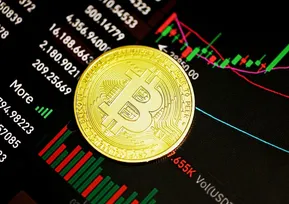
Photo by Kanchanara on Unsplash


Global decentralization trends

Overseas, various decentralized projects, such as the integration of blockchain technology into traditional financial markets, have led to the growth of related markets such as Bitcoin futures, decentralized finance (DeFi), over-the-counter (OTC) trading, custodial services, the metaverse, and Web3. However, in Korea, the lack of clear guidance or policy management for crypto businesses and services prevents the market from thriving.

Countries like the US and Japan as well as the European Union (EU) are overhauling regulations in order to dominate the global industry and market through blockchain technology and virtual assets. Kim emphasized that Korea also needs to incorporate such flexible regulatory improvements considering the likely possibility that various industries are going to thrive on crypto-related businesses.


Challenging existing regulations and calls for clarity

He started off by stating that the implicit regulation known as the “One Exchange, One Bank” principle was created for administrative convenience and is acting as a barrier to entry into the crypto industry. He argued that it is a discriminatory regulation, especially considering the fact that securities firms choose to operate stock trading accounts through multiple banks.

Regarding the standards for issuing bank accounts under real names, which will be determined by the Financial Intelligence Unit (FIU), he argued that they are difficult to comply with, even for banks that already have contracts with crypto exchanges. He called for the FIU to express a clear stance on the retroactive application of these standards to avoid potential consequences such as barriers to market entry for late-movers.

“The crypto market — including DeFi, non-fungible tokens (NFTs), artificial intelligence (AI), the metaverse, and Web3 — is growing at an annual average rate of 12.8%, and is expected to reach a scale of $4.9 billion by 2030,” he said. “When combined with Web3 innovation, the metaverse will evolve into a 3D platform business that incorporates the use of payment methods, NFTs, and virtual assets.”


Promoting innovation in the crypto industry

To foster such industry growth, it is necessary to actively explore new types of services as well as potential challenges. Innovative financial services should also be designated or promoted through regulatory sandboxes. The regulatory sandbox is a system run by the Korean government that exempts or suspends existing regulations for a designated amount of time for companies releasing new products and services and regulates them post-mortem if there is a problem.

Kim went on to propose specific measures such as negative regulations — regulations that outline what is prohibited by law while allowing everything else — to promote new industries. He also suggested that banks should be allowed to engage in custodial services for virtual assets.

Furthermore, he highlighted the need for cooperation between payment companies and crypto firms. “Payment service providers like Visa and Mastercard are already collaborating with global crypto exchanges to incorporate virtual assets into their businesses,” he said. “With companies like Tesla, eBay, and more adopting or considering adopting cryptocurrency as a payment method, we must consider allowing collaborations between domestic credit card companies, payment gateway companies, and crypto firms.”

He also urged for the early approval of initial exchange offerings (IEOs) to stimulate the crypto market and advocated for support policies for virtual asset service providers (VASPs). He cited examples such as brokering transactions for security tokens, allowing OTC trading, requesting security token issuance assessments through system integration with account management agencies, and permitting outsourcing for issuance operations.

More to Read
View All
Web3 & Enterprise·

Apr 02, 2024

Bithumb lowers fees and enhances UX to bolster competitiveness

One of South Korea's prominent cryptocurrency exchanges, Bithumb, has doubled down on its effort to solidify its position as a leading crypto trading platform in the country. Bithumb has recently announced its policy to offer the lowest withdrawal fees among all local crypto exchanges, while enhancing its user experience by upgrading the user interface (UI) and adding more features to its app, according to the local media outlet Kyunghyang Games.  Already one of the few qualified fiat-to-crypto exchanges in Korea and a member of Digital Asset eXchange Alliance (DAXA) – a consultation group of the top five local crypto exchanges – Bithumb aims to further strengthen its competitiveness in the market. Photo by Traxer on UnsplashLower withdrawal fees with trading fees already at 0.04%According to the press, Bithumb has announced to offer the lowest withdrawal fees in the local crypto scene to win the hearts and minds of investors. Under the updated fee policy, users are now charged 0.0008 BTC for withdrawing Bitcoin and 0.009 ETH for Ether. The exchange has also been known for offering one of the lowest trading fees at 0.04%.  Making the deposit limit increase easierBithumb has long been getting complaints from users over its relatively unfavorable user experience and cumbersome processes required to increase the deposit limit of their real-name accounts. In response, Bithumb has introduced a new in-app feature that simplifies such procedures, so that users can raise their deposit limit with ease.  Among users who joined Bithumb in March, those whose initial deposits have passed 30 days and who purchased crypto assets valued at over KRW five million ($3,700), are now eligible for the deposit limit raise, allowing them to deposit and withdraw up to KRW 500 million per day.  Enhanced user interface and user experience One of the newly added features is the "Even Faster Chart," which provides users with four times faster response times following its transition from "Web view" to "Native view."  Bithumb's Chief Operating Officer (COO), Moon Seon-il, stated that the exchange is improving its service in multiple ways, including offering the lowest fees, supporting multichain transactions and enhancing UI for users.  

news
Web3 & Enterprise·

Jul 02, 2024

Japan's Sony to revamp crypto exchange WhaleFin following acquisition

Japanese consumer electronics conglomerate company Sony appears to be gearing up for a cryptocurrency exchange relaunch following its acquisition of WhaleFin. That’s according to a press release published by Japanese public relations company PR Times. Last year, Sony bought Amber Group, a Singapore-headquartered digital asset and crypto financial services firm, which operates crypto exchange WhaleFin. It now appears that the company plans to revamp the local trading platform.  S.BLOX crypto exchangeAmber Group has been renamed to S.BLOX Co. A statement from WhaleFin confirmed the name change. The rebranding has occurred following the acquisition in August 2023 of Amber Group by Quetta Web, a wholly-owned subsidiary of Sony Group Corporation. It also outlined plans to upgrade the service in terms of user experience through a user interface (UI) design refresh. Furthermore, the service plans on releasing new applications going forward.  Part of the strategy is to leverage Sony Group businesses in order to further bootstrap the crypto exchange. Using this approach, the company believes that it can create new added value in cryptocurrency trading services.  The precise launch date of the renewed WhaleFin crypto exchange has yet to be announced. S.BLOX is registered with the Kanto Local Finance Bureau of the Ministry of Finance. Furthermore, it’s a member of the Japan Virtual and Crypto Assets Exchange Association (JVCEA), which oversees cryptocurrency trading within the Japanese jurisdiction from a regulatory and compliance perspective. The exchange business is understood to have a current capitalization of 1,708,179,531 yen (around $10.5 million).Photo by James Feaver on UnsplashWeb3 focusSony has made a concerted effort to expand its activity in the Web3 space. In March 2023, the company filed a patent that aims to enable players of Sony gaming products to access interactive Web3 gameplay. That application will focus on the use use of NFTs. A month earlier, Sony Network Communications, its internet provider division, partnered with the Astar blockchain development team in order to create an incubation program for startups who are working on decentralized autonomous organizations (DAOs) and NFT-based innovation. The same subsidiary partnered with Japanese blockchain firm Startale Labs last September in order to build Sony’s own public blockchain network. The CEO and founder of Startale Labs, Sota Watanabe, took to the X social media platform on July 1, clarifying that Startale’s external director will be heading up Sony’s new crypto exchange. While Sony has dipped its toe in the water previously relative to Web3 projects, this latest development will see it become more deeply involved in the crypto and Web3 space.  Amber Japan was bought out by crypto finance firm Amber Group in 2022 when it was known at that time as DeCurret. Last year, Bloomberg reported that Amber Group was working towards selling off the enterprise due to difficulties in navigating the strict regulatory environment it encountered within the Japanese market. In a related development, it emerged last month that leading Japanese crypto exchange bitFlyer had acquired FTX Japan, the Japanese subsidiary company of the failed global crypto exchange business.

news
Web3 & Enterprise·

Sep 25, 2023

Crypto Titans Clash on Elon Musk’s X

Crypto Titans Clash on Elon Musk’s XA subtle panel discussion photo posted by Andrei Grachev of Singapore’s DWF Labs turned into a war of words among crypto trading titans on Elon Musk’s X (formerly Twitter).Photo by Marek Piwnicki on UnsplashDWF vs GSRGrachev, who is a Managing Partner at the market maker and Web3 investment firm, thanked his fellow panelists in the post. However, the tone quickly soured as Cristian Gil, Co-Founder of rival market-making giant GSR, took offense to Grachev’s presence on the panel and voiced his disapproval on the platform.Gil didn’t mince his words, stating: “[Andrei Grachev] had absolutely no business to be on that panel. It’s insulting to [GSR] , [OKX] and [Wintermute] to be in the same room as [DWF Labs].”DWF vs WintermuteHis remarks received a “Like” from Evgeny Gaevoy, the CEO of market maker Wintermute. In response, Grachev defended his presence, asserting that DWF was superior in technology, trading, and business development compared to its rivals, going so far as to suggest to Gil: “Yeah, if I were you — I would be also crying all the time.”The exchange continued with Grachev claiming that DWF was capturing market share from Wintermute, and Gaevoy responded with a nonchalant “lol,” challenging Grachev to invest more if he believed DWF posed a threat.DWF Labs’ rapid growthWhile the exchange consisted of mere words, it shed light on DWF Labs’ sudden rise to prominence earlier over recent months. The company has featured prominently in an array of investments in Web3 startups and blockchain networks over the course of 2023. Prominent among them have been investments in EOS, the Algorand ecosystem, and the TRON ecosystem.Recently appearing on the BlockBeats podcast, Grachev defended the company, outlining that it was not involved in market manipulation in response to recent assertions to the contrary.“We do not engage in any manipulative behavior,” Grachev stated. “Of course, we have the futures market, which is a tool for hedging positions and trading clubs. We are completely different from directional traders,” he added.Gaevoy added some humor to the mix by sharing a meme, raising questions about the maturity level of these prominent figures in the crypto industry. The spat provoked a broad array of commentary from the crypto community.Crypto immaturityThe very public clash raises concerns about how traditional Wall Street firms, currently making bold moves into the crypto space, might perceive such behavior. Notably, firms like BlackRock have been involved in Bitcoin ETF applications, signaling a growing interest in cryptocurrency among mainstream financial institutions. In response to Gaevoy and Grachev, one commentator wrote: “The institutions are never coming back.”While it would appear that there’s no love lost between DWF, GSR, and Wintermute, it also seems evident that both market makers can agree on Singapore as being an appropriate location from where to operate a crypto business. While Wintermute is London-based, it revealed recently that it was expanding its operations in Singapore. Like Wintermute, GSR is primarily based in London although it too maintains a presence in Singapore to service Asia-centric business.

news
Loading