Top

Korean Crypto Expert Claims NFTs and Security Tokens Shouldn’t Be a Priority for Investors Yet

Policy & Regulation·September 20, 2023, 7:35 AM

Although there has been a lot of speculation recently regarding the prospects of non-fungible tokens (NFTs) and security tokens as lucrative investment opportunities, these topics should not be of concern yet, said Kim Dong-hwan, CEO of Korean crypto consulting firm Wonder Frame, at Tuesday’s 2023 FNTimes Investment Forum hosted in Seoul by the Korean Financial Times.

Photo by Markus Winkler on Unsplash

From a price-to-earnings perspective, these types of investments should not be of priority to the average investor, Kim said, stating that this argument is rooted in historical context. Bitcoin, the kingpin of cryptocurrencies, had its first breakthrough in 2012 when its price was around $13. Since then, its value has skyrocketed nearly 2,000 times. Those who profited from Bitcoin then went on to invest in Ethereum, the second-largest cryptocurrency by market capitalization. Ultimately, the money earned from Bitcoin was constantly circulating in the crypto market.


Grappling for liquidity

However, Bitcoin’s liquidity — the frequency at which assets are bought and sold, which can be deemed the most important aspect of investing in and trading cryptocurrencies — is currently down. Liquidity in the crypto market usually flows in order from Bitcoin first, to altcoins, then to NFTs, Kim explained, because investments in NFTs are made by people who hold cryptocurrencies, not Korean won. Therefore, NFTs, which have now experienced more than a 90% decline from their peak, must depend on Bitcoin’s price recovery for their own resurgence.

Securing liquidity for security tokens is also difficult, considering the fact that while these assets share common characteristics with cryptocurrencies, they are subject to strict regulatory oversight by financial authorities such as the Korea Exchange. Therein lies the difficulty in forecasting the prospects for security tokens.

Kim thus questioned whether there would be market makers or liquidity providers that would be willing to boldly step into the role of satisfying the market, given the close scrutiny of authorities such as Korea’s Financial Services Commission (FSC) and Financial Supervisory Service (FSS). Although crypto exchanges like Upbit act as market makers by facilitating daily trading worth trillions of won, speculation suggests that securities firms that are responsible for supplying security token liquidity may find it challenging to do the same.


Weak investments and negative perceptions of DeFi

Another concern for security tokens is fractional investments, which tend to be concentrated on assets of lower value. “Security tokens are fundamentally about dividing underlying assets and then selling them. However, in many cases, these underlying assets are of lower value or have no choice but to be traded this way,” Kim said.

Kim also mentioned the regulatory hurdles hindering decentralized finance (DeFi) in general, despite its reputed appeal. “DeFi is perceived by international organizations like the Financial Stability Board (FSB), the US Federal Reserve System, and the European Union (EU) as a public enemy that causes financial instability in the real world,” he said.

Taking all these factors into consideration, Kim recommended against investing in security tokens or NFTs at this time, given the current situation where even Bitcoin’s liquidity is at an all-time low. He suggested that, with market interest rates approaching 5%, unless there is a specific need to invest in virtual assets, it may be better to explore investment options positioned for higher interest rates.

Kim is an industry expert who has previously written articles for crypto news site CoinDesk Korea for four years and has taken on the role of Chief Business Development Officer (CBDO) at Blitz Labs, a virtual asset research firm. He founded Wonder Frame in 2022, where he currently works as a professional consultant.


More to Read
View All
Policy & Regulation·

May 16, 2024

China busts underground bank conducting illegal currency exchanges via crypto

China's authorities have dismantled an underground bank that illicitly utilized cryptocurrency for currency exchange operations between the Chinese yuan and the South Korean won, involving approximately 2.14 billion yuan ($295.8 million). China has a history of imposing strict capital control policies, prompting some individuals and entities to resort to cryptocurrency as a means of bypassing these regulations. According to a report published by local police in Northeast China’s Jilin province, six suspects were apprehended for their alleged involvement in facilitating the illegal operations spanning China and South Korea.Photo by Hyory Liu on UnsplashExploiting cryptocurrency featuresThe suspects purportedly took advantage of cryptocurrency features like transaction anonymity and decentralization to execute foreign currency exchange activities unlawfully. Investigations revealed that the criminal group utilized domestic accounts for fund receipt and transfer, alongside over-the-counter cryptocurrency transactions. Supporting illicit transactionsThe arrested individuals allegedly aided various entities, including South Korean purchasing agents, cross-border e-commerce platforms and import-export trade firms, in circumventing currency exchange regulations between the Chinese yuan and the South Korean won. 

news
Web3 & Enterprise·

May 11, 2023

Shots Fired in New OKX Ad Campaign

Shots Fired in New OKX Ad CampaignGlobal crypto spot and derivatives exchange OKX has launched a daring ad campaign that sets US-based rival exchange Coinbase firmly in its cross hairs.The formerly Chinese and now Seychelles-based exchange has pushed out a global ad campaign along the following theme: “The system doesn’t need an upgrade; it needs a rewrite.” The ads were launched on Tuesday, pointing out the ills of the traditional, centralized financial system.Photo by Merakist on UnsplashCrypto exchange rivalryThe advert doesn’t explicitly call out its rival, Coinbase. However, it is nuanced in taking a subtle dig at the US-based exchange. Exactly two months prior, on March 9, Coinbase released its own ad campaign. Coinbase claimed in its ad that “it’s time to update the system,” with OKX’s subsequent commercial having been carefully worded to poke fun at the Coinbase commercial.With a number of high profile epic failures of crypto businesses over the past twelve months, including the fall of FTX, the remaining exchanges in the business have been tripping over themselves in an effort to convince the alternative asset-investing public that theirs is the safest platform upon which they can securely trade.In its sixty second commercial, OKX poses the question “why don’t we change everything?”, set up by its claim that the conventional finance system is broken.The last of the big spendersThere’s been a notable change of strategy in the marketing activities of crypto businesses since the height of the last crypto bull run. Gone are the marketing excesses exemplified most by the now bankrupt FTX exchange.FTX demonstrated itself to be a profligate spender on all manner and means of marketing, particularly during 2021 and 2022. It paid Wall Street investor and Shark Tank star Kevin O’Leary $15 million to be a spokesperson for the company. Similar deals were struck with a range of celebrities including former NBA star Shaquille O’Neal, NFL stars such as former New England Patriots quarterback, Tom Brady, and a host of others.At the height of its marketing opulence, the fraudulently run firm signed a $135 million sponsorship deal that provided it with the naming rights to the home stadium of the NBA’s Miami Heat. 2022's Super Bowl, one of the world’s largest single marketing opportunities, saw FTX and others pay out big on advertising spend.By contrast, this year’s Super Bowl was almost a complete washout as far as crypto business participation was concerned. Meanwhile, all of the celebrities that featured in FTX’s marketing activities have found themselves the subject of multi-million dollar class action lawsuits filed by FTX creditors.A more sobering marketing strategyDespite the reputational damage that crypto has suffered due to these high profile failures, firms like OKX and Coinbase have continued to maintain a responsible level of advertising and marketing activity.That’s best exemplified by OKX’s ongoing marketing relationships with McLaren’s Formula One racing team and Manchester City Football Club. In March, US-based crypto exchange Kraken announced a marketing partnership with the Williams Formula One racing team.Crypto.com is probably the only crypto firm that spent excessively during the last bull run yet has continued to maintain a relatively high level of marketing activity. Much of that may have been due to commitments it had made during a more buoyant market. Notwithstanding that, the firm did fall foul of the UK advertising regulator, who banned its NFT promotion in December 2022.

news
Web3 & Enterprise·

Sep 02, 2025

Korean crypto exchanges list Trump-linked cryptocurrencies

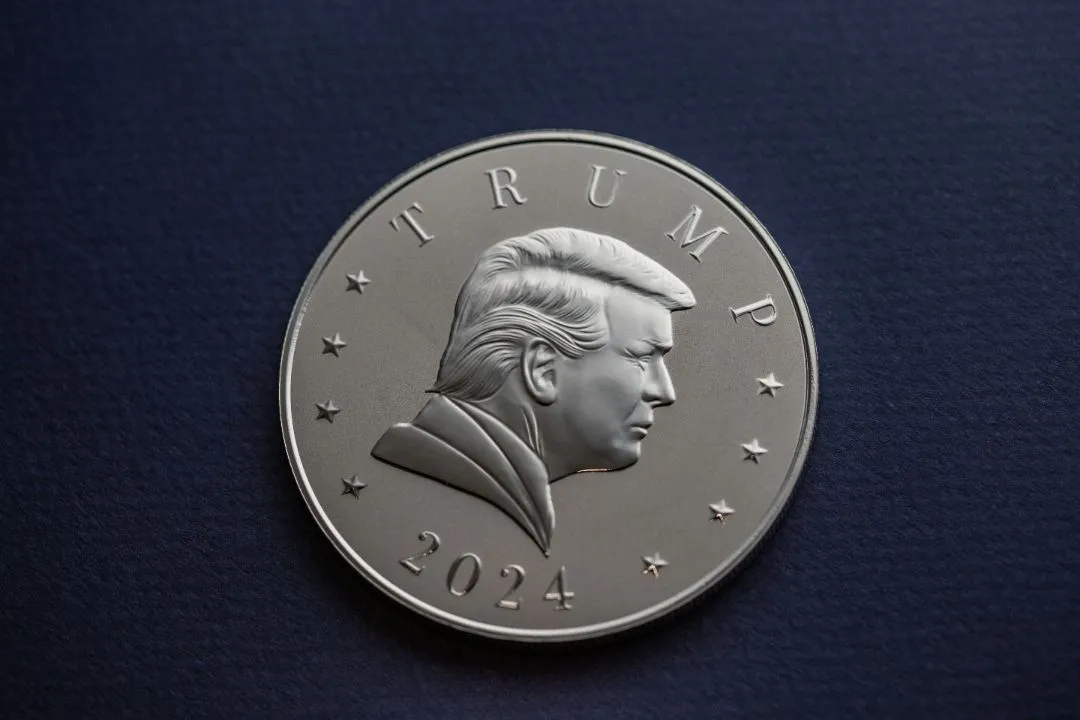
Cryptocurrencies tied to the family of U.S. President Donald Trump began trading on South Korea’s major exchanges on Monday. Upbit, the country’s largest exchange, listed WLFI—the native token of World Liberty Financial, a DeFi platform backed by the Trump family—and World Liberty Financial USD (USD1), a stablecoin the platform says is pegged 1:1 to the U.S. dollar and backed by dollars and government money market funds. Bithumb also listed both WLFI and USD1, while Coinone listed WLFI only.Photo by Scottsdale Mint on UnsplashFrom global listings to a volatile debutWLFI’s first session was volatile. It opened on Upbit at a floor price of 433.76 won ($0.31) and, roughly 17 hours later, was down about 25% at 323 won ($0.23) at the time of publication.Source: WLFI/KRW spot trading pair on UpbitThe Korean launch comes alongside listings on major global venues, including Binance and Coinbase. Until its exchange listings, WLFI holders had been unable to trade their tokens. The Wall Street Journal estimated the Trump family’s holdings, representing less than a quarter of the supply, to be worth close to $5 billion after the listing. Trump’s three sons are named as co-founders of World Liberty, which says tokens allocated to founders and team members will remain locked. President Trump is described as the project’s “co-founder emeritus.” Political controversy over crypto and holdingsThe project has drawn criticism from those who argue it could serve as a conduit for influence, with partners and investors seeking political favor. In April, Democratic lawmakers Senator Elizabeth Warren and Representative Maxine Waters warned the U.S. Securities and Exchange Commission that the family’s stake posed “an unprecedented conflict of interest” in oversight of the crypto industry. Later, White House press secretary Karoline Leavitt said, “Neither the President nor his family have ever engaged, or will ever engage, in conflicts of interest.” Controversy over public officials’ crypto exposure is not new. Recently, it was reported by The Chosun Ilbo that as of Aug. 14, Lee Eog-weon, nominee to chair South Korea’s Financial Services Commission (FSC), held 10 shares of Strategy, a Nasdaq-listed Bitcoin treasury company with 632,457 BTC in reserves. The disclosure indicates no legal violation because the holdings predate his nomination, but it highlights tension with his public views. In a letter to parliament ahead of his confirmation hearing, Lee questioned crypto’s intrinsic value and argued its volatility undermines its utility as a store of value or medium of exchange. If Lee were not seeking a government post, his holdings of crypto-related stocks would hardly surprise South Koreans. According to Money Today, citing data from the Korea Securities Depository (KSD), Korean investors increased purchases of crypto-related U.S. equities amid expectations of U.S. rate cuts. Bitmine Immersion Technologies—a Bitcoin miner that also accumulates Ethereum as a treasury asset—was the second-most purchased U.S. stock by Koreans in August, with net buys of $252.77 million, or 7.6% of all purchases among the top 50 U.S. stocks. Stablecoin issuer Circle ranked 10th at $92.62 million, and the GraniteShares 2x Long COIN Daily ETF, which delivers twice the daily price movement of Coinbase, ranked 11th at $90.74 million. In total, crypto-related stocks and ETFs accounted for 30.4% of the top 50 U.S. equity holdings by value. South Korea weighs spot ETFs amid investor surgePolicy is moving in tandem with market interest. Spot crypto ETFs have recently been elevated to South Korea’s national agenda, opening the door to potential approval. Analysts say such products could repatriate demand that has been flowing overseas. Kim Jin-young of Kiwoom Securities argues that expanded regulatory approval could reshape Korea’s capital market by widening investor access, drawing in institutional capital, stabilizing prices, and diversifying available crypto-linked products. 

news
Loading