Top

China busts underground bank conducting illegal currency exchanges via crypto

Policy & Regulation·May 16, 2024, 11:43 PM

China's authorities have dismantled an underground bank that illicitly utilized cryptocurrency for currency exchange operations between the Chinese yuan and the South Korean won, involving approximately 2.14 billion yuan ($295.8 million). China has a history of imposing strict capital control policies, prompting some individuals and entities to resort to cryptocurrency as a means of bypassing these regulations. According to a report published by local police in Northeast China’s Jilin province, six suspects were apprehended for their alleged involvement in facilitating the illegal operations spanning China and South Korea.

https://asset.coinness.com/en/news/fdbf5b86d4443fd087981d3b70aab86d.webp
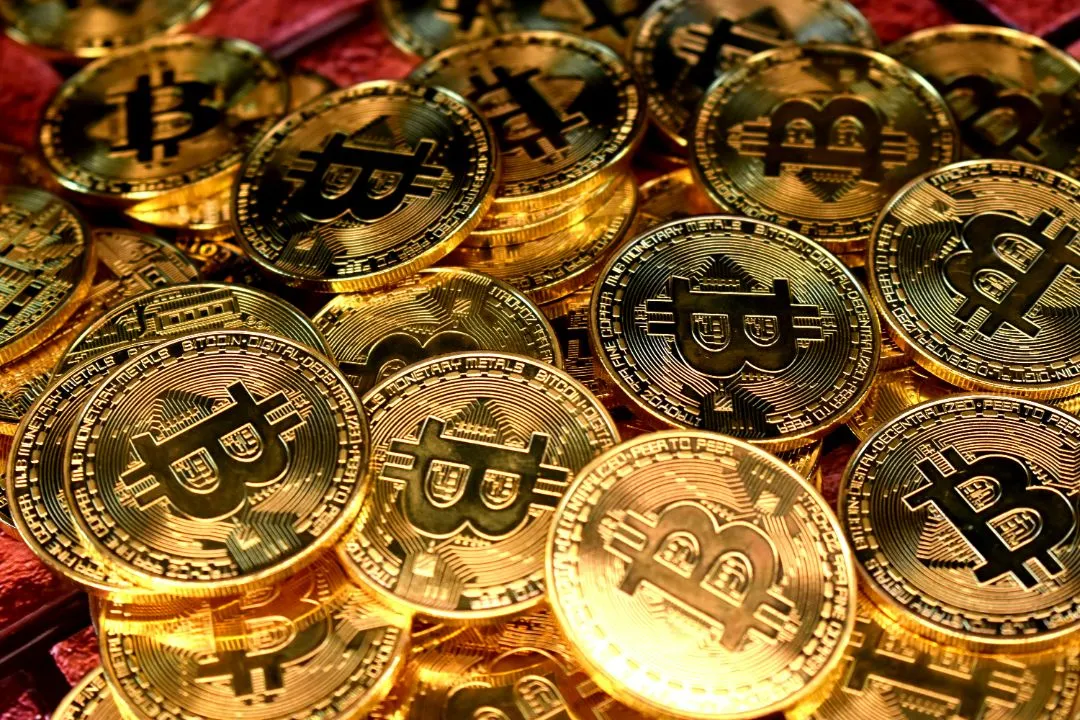
Photo by Hyory Liu on Unsplash

Exploiting cryptocurrency features

The suspects purportedly took advantage of cryptocurrency features like transaction anonymity and decentralization to execute foreign currency exchange activities unlawfully. Investigations revealed that the criminal group utilized domestic accounts for fund receipt and transfer, alongside over-the-counter cryptocurrency transactions.


Supporting illicit transactions

The arrested individuals allegedly aided various entities, including South Korean purchasing agents, cross-border e-commerce platforms and import-export trade firms, in circumventing currency exchange regulations between the Chinese yuan and the South Korean won.


More to Read
View All
Policy & Regulation·

May 24, 2023

Chinese Fentanyl Producers Taking Payment in Crypto

Chinese Fentanyl Producers Taking Payment in CryptoA report produced by blockchain analytics and crypto compliance solutions firm Elliptic has found that most Chinese suppliers of fentanyl precursors are accepting payments for the illicit material in cryptocurrency.In a blog post published on its website on Tuesday, Elliptic claimed that 90 percent of the 90 China-based firms, from which its researchers received offers of fentanyl precursors, accepted cryptocurrency as a form of payment. The majority of fentanyl which is trafficked into the United States is manufactured using imported fentanyl precursors like the material that the Elliptic researchers were offered.Seventeen of the suppliers even offered to provide fentanyl itself. Others still offered to supply synthetic opioids, equally or more potent than fentanyl, which are currently legal to both produce and supply within China.Photo by Hal Gatewood on UnsplashTracking blockchain transactionsIn tracing back transactions relative to these illicit suppliers, the Elliptic researchers’ analysis demonstrated that the digital asset wallets used by the rogue suppliers have received thousands of payments. The research team has estimated the net worth of those transactions to total $27 million.It appears that a move towards crypto payments is trending with this group of suppliers as there has been a 450% increase year-on-year when it comes to payments for fentanyl precursor using crypto.The study highlighted activity related to Dutch national Alex Peijnenburg. An alleged fentanyl supplier, Peijnenburg, made an $85,000 payment in crypto to one of the ninety fentanyl precursor suppliers identified by Elliptic researchers. In November of last year, the Dutchman was sanctioned by US authorities relative to his activities.Global trade and distributionThe report stated: “During our correspondence, the suppliers showed no concerns about how the chemical would be used, with some explaining that it was their best-selling product and could be used to produce fentanyl.”It went on to state that “others pointedly mentioned that they had sold it to customers in Mexico.” Mexico is a significant location in the global drugs trade, given the activity of drug cartels within the country. One supplier offered an insight to researchers as to the preferences of their nefarious Mexican clients, stating: “They always use USDT or Bitcoin to pay. It is no problem.”While it looks like these nefarious Chinese companies are able to trade into and out of crypto assets, that should be a difficulty for them as China banned the offering of crypto trading services going back a number of years already. Furthermore, foreign digital asset exchanges are prohibited from servicing the needs of Chinese clients where crypto is concerned.Elliptic’s research team uncovered that the majority of the illicit drugs trade suppliers have been using workarounds in order to gain access to overseas digital asset exchanges. The suppliers have used intermediaries in order to convert crypto into Chinese yuan.The report concludes that this part of the international fentanyl trade can be dealt with and “disrupted by the services that act as gateways into and out of crypto assets.” On arriving at that conclusion, Elliptic has acted by notifying the digital asset exchanges that these suppliers are using. “[We] have flagged hundreds of crypto addresses in our tools as being linked to this activity,” the report states.Crypto had infamously been associated with illicit activity on the dark web in its earliest years. It has moved well beyond that although due to its decentralized nature, it’s difficult, if not impossible, to control who utilizes decentralized digital currency.

news
Policy & Regulation·

Nov 26, 2025

Korea tightens crypto oversight as major merger targets Nasdaq listing

South Korea’s cryptocurrency market is moving through a period of stricter oversight and policy debate, while major industry players pursue overseas listings against a backdrop of falling market valuations and weaker investor sentiment.Photo by Ori Song on UnsplashAccording to Newsis, financial regulators are close to finalizing penalties for the country’s major crypto exchanges after a wide-ranging review of their compliance systems. The Financial Intelligence Unit (FIU) under the Financial Services Commission (FSC) is preparing to issue sanctions such as institutional warnings, fines, and personnel measures against platforms found to have breached anti-money laundering (AML) rules. These actions follow a series of on-site inspections that began in August 2024 with Dunamu, the operator of Upbit, and were later extended to Bithumb, Coinone, Korbit, and Gopax. Authorities plan to determine and announce penalties in the order of these inspections, which concluded in April 2025. Stablecoin debate growsAt the same time, a policy debate is unfolding in the parliament over how far South Korea should go in supporting digital asset innovation. The Maeil Business Newspaper reported that Democratic Party lawmaker Min Byoung-dug has questioned the Bank of Korea’s cautious stance on launching a won-backed stablecoin. The central bank has identified seven main risks associated with such an asset, including possible de-pegging and threats to monetary policy stability. Min argues that the bank is placing too much weight on these micro-level risks. In a recent report, he contended that delaying innovation could lead to larger, structural economic losses and said the risks identified by the central bank can be managed through oversight and product design rather than by avoiding stablecoins altogether. Dunamu–Naver deal targets NasdaqIn the corporate sector, major fintech firms are pushing ahead with international expansion plans. Naver Financial and Dunamu, which operates the Upbit exchange, have endorsed a merger plan involving a comprehensive share swap, according to The Herald Business. The share swap ratio has been set at 1 to 2.54. This development follows earlier reports that the two firms were close to an agreement intended to support a future Nasdaq listing in the United States. Bitcoin slide persistsThese regulatory, legislative, and corporate developments are taking place as market conditions deteriorate. Global data show weakening demand, with spot Bitcoin exchange-traded funds (ETFs) recording about $3.5 billion in net outflows in November, according to Bloomberg, while CoinMarketCap data show Bitcoin prices down roughly 24% over the past month.  Domestic sentiment reflects this caution. In a weekly survey conducted by CoinNess and Cratos, 59.5% of South Korean investors said over the weekend that they expect Bitcoin prices to fall or crash this week, up from 43.6% a week earlier. Only 12.4% of respondents forecast a price increase. Views on the broader market cycle are also shifting. In the same survey, 42.9% of participants said they believe the bull market has already ended. Reflecting this sentiment, Alternative.me’s Crypto Fear & Greed Index is at 15, in the “Extreme Fear” zone as of Nov. 26. 

news
Web3 & Enterprise·

Feb 24, 2024

Swoo Pay partners with Mastercard to target Southeast Asian market

Netherlands-based mobile wallet Swoo Pay has joined forces with global financial giant Mastercard to target the Southeast Asian market, offering crypto cashback on everyday purchases. Crypto loyalty tokensThe partnership was announced via a press release published on Cointelegraph earlier this week. Through Swoo's platform, users stand to gain crypto rewards, specifically Swoo Loyalty Tokens, for each contactless payment made via the app using digitized Mastercard cards. The partnership marks yet another step forward in the convergence of traditional financial systems with the burgeoning world of cryptocurrency. It reflects a broader trend among major financial institutions and retailers, who increasingly view cryptocurrency integration as a means to revitalize loyalty programs. Once users accrue “Tokenback” in the form of Swoo Loyalty Tokens, they have the flexibility to either exchange their rewards for popular cryptocurrencies like USDT or BTC within the Swoo app or convert them into fiat currency through partnering services. As Swoo continues to refine its crypto rewards platform, it will incorporate more Web3 features, further enhancing the utility and value of loyalty tokens within its ecosystem.Photo by Markus Winkler on UnsplashTargeting emerging marketsSwoo Pay is targeting emerging markets. Alongside Southeast Asia, that also brings the Middle East region and Africa within the scope of its marketing efforts for this product offering. Emerging markets have long been seen as ideal markets within which to bring about crypto adoption more generally. The significance of this announcement wasn’t lost on Nicki Sanders, chief technology officer (CTO) with tokenized real estate enterprise, Realio. Taking to social media, Sanders cited crypto adoption as one of three main reasons as to why this partnership could be a game-changer.   Sanders feels that the nature of the offering will result in crypto adoption as daily crypto use will be boosted. In turn, that will bring digital currencies into the realm of mainstream acceptability.She also feels that the product offering will be significant in terms of financial inclusion as it’s very accessible to underserved communities. Additionally, Sanders identifies the inherent innovation as being likely to result in mass adoption. “Focusing on Android and Huawei users, Swoo Pay navigates around Google service sanctions, offering a fresh pathway to digital payments,” she claims.This partnership builds upon the success of a previous trial campaign dubbed “Super Tokenback with Mastercard.” During the three-week initiative, users enjoyed 5% Tokenback (crypto cashback) on all Mastercard purchases made through Swoo Pay. The results were positive, with over 17,000 participants conducting upwards of 128,000 transactions. Not only did this drive increase card spend, but it also introduced a wave of new consumers to the concept of crypto-backed rewards. Representatives from Swoo emphasize the seamless integration of crypto into mainstream markets, ensuring compliance with local regulations and simplifying the launch and scalability of marketing campaigns to attract new users. Conversely, officials from Mastercard underscore the company's commitment to expanding the possibilities of digital payment instruments, prioritizing convenience, technological advancement and security. They highlight the role of Swoo Pay in addressing issues with tokenized payments for Android device users, thereby broadening accessibility to these innovative financial solutions.

news
Loading