Top

Kazakhstan Launches NPC With CBDC Implementation by 2025

Policy & Regulation·September 19, 2023, 1:30 AM

Kazakhstan’s National Bank (NBK) has unveiled the National Payment Corporation (NPC), a dedicated entity responsible for spearheading the development and launch of the country’s central bank digital currency (CBDC), known as the digital tenge.

In a press release published last Friday, the NBK set out that the launch of the NPC is effectively a restructuring of the Kazakhstan Center for Interbank Settlements. The new entity has been entrusted with overseeing the national payment system.

This mandate includes overseeing critical functions like interbank clearing services, facilitating money transfers, and managing digital identification. However, the NPC’s central mission revolves around establishing a robust “digital financial infrastructure” with a primary focus on realizing the digital tenge.

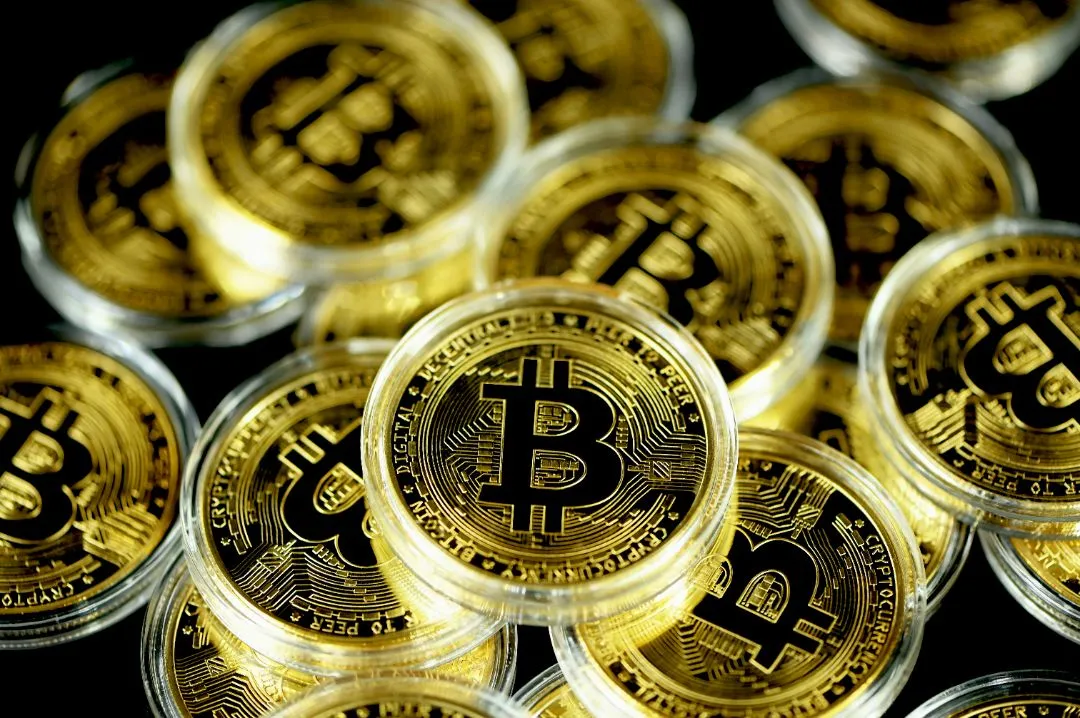
Photo by Uladzislau Petrushkevich on Unsplash


2025 targeted launch date

The journey toward the digital tenge began in February of this year, with an ambitious launch date set for 2025. Deputy Governor of the NBK, Berik Sholpankupov, initially articulated a vision centered on a “collaboration between traditional finance and DeFi,” aimed at significantly improving financial inclusion and strengthening international trade.

As of now, the CBDC pilot in Kazakhstan has advanced to a controlled environment pilot phase involving actual consumers and merchants. One of the key partners in this venture is Binance, the world’s largest cryptocurrency exchange. Binance is actively supporting the pilot through its technical solution, BNB Chain, marking a convergence between traditional financial institutions and the blockchain-based cryptocurrency sector.

Kazakhstan’s pursuit of CBDCs aligns with a global trend as numerous countries worldwide explore the potential of CBDCs. An astounding 105 countries, representing a substantial 95% of the global gross domestic product (GDP), are currently exploring the concept, highlighting the collective recognition of the transformative potential of digital currencies in shaping the future of finance.

Last week it emerged that the NBK had entered into a collaboration with the global financial messaging service SWIFT relative to the beta-testing of a CBDC.


Attracting global exchanges

In a move that bolsters the development of crypto in the central Asian country, Binance launched a regulated digital asset platform in collaboration with the local Freedom Finance Bank. Around the same time, Bybit secured in-principle approval to trade within the country from the local regulator.

Kazakhstan’s proactive stance toward cryptocurrency is also evident in its taxation policies. In 2022, the government collected approximately $7 million in tax payments from cryptocurrency mining entities following the implementation of revised regulations governing the fiscal responsibilities of cryptocurrency mining.

Additionally, the government introduced legislation aimed at curbing excessive energy consumption by domestic crypto miners, instituting licensing requirements, and making minor adjustments to the taxation framework.

Kazakhstan’s steps in establishing the National Payment Corporation and venturing into the realm of CBDCs reflect the country’s interest in embracing the digital era and staying at the forefront of financial innovation. As the industry looks on, Kazakhstan’s digital tenge project could serve as a model for others seeking to bridge the gap between traditional finance and the exciting possibilities of DeFi.
More to Read
View All
Policy & Regulation·

Sep 19, 2023

JPEX Exchange Scandal Sees Crypto Regulation Under Scrutiny in Hong Kong

JPEX Exchange Scandal Sees Crypto Regulation Under Scrutiny in Hong KongWhile Hong Kong has been developing steadily as a crypto sector hub, the focus in the Chinese autonomous territory has turned towards regulation after a recent scandal involving an unlicensed cryptocurrency exchange.Photo by Ihor Saveliev on UnsplashOngoing investigationYesterday we reported on some arrests relative to problems experienced at crypto exchange JPEX. The fallout continues on Tuesday, with the Hong Kong police now understood to have arrested eight individuals, including social media influencers who promoted the exchange and JPEX employees, on allegations of fraud. This illicit activity in and around the JPEX exchange has affected over 1,600 investors, implicating more than $150 million in assets.JPEX, in response to mounting pressure, announced the suspension of trading on its platform. In a statement, the exchange mentioned ongoing negotiations with third-party market makers to address liquidity shortages. However, JPEX also accused an unidentified third-party market maker of maliciously freezing funds, further complicating the situation.Politicians and regulators speak outResponding to the incident via a press conference on Tuesday, Hong Kong’s Chief Executive, John Lee, emphasized the significance of investing in virtual assets through licensed platforms. Lee stated:“This incident highlights the importance that when investors want to invest in virtual assets, then they must invest on platforms that are licensed.” He also pledged that the Securities and Futures Commission (SFC) would closely monitor the situation to ensure investor protection.Elizabeth Wong, the Head of the SFC’s fintech unit, revealed that an investigation was underway to determine whether JPEX had violated anti-money laundering laws. The SFC had already declared JPEX unlicensed, prompting numerous complaints from investors who were unable to withdraw their virtual assets or experienced unexplained reductions in their balances.Assets frozenHong Kong authorities have taken decisive action against those involved in the scandal. They have frozen bank accounts valued at 15 million Hong Kong dollars ($1 million) and seized three properties valued at 44 million Hong Kong dollars. The police have reported receiving 1,641 complaints related to JPEX, involving a staggering $1.2 billion Hong Kong dollars. By last Wednesday, the SFC had received in excess of 1,000 complaints and at that point, they notified the general public.The JPEX scandal has drawn attention to the need for stronger cryptocurrency regulations in Hong Kong, a region that has become attractive to cryptocurrency firms since mainland China banned cryptocurrency transactions in 2021. In mainland China, trading cryptocurrencies on foreign exchanges from within the country remains illegal.Hong Kong’s response to cryptocurrency regulation has evolved. Beginning on June 1, the SFC started accepting applications from cryptocurrency exchanges, allowing licensed operators to serve retail investors, provided they understand the associated risks. Previously, only professional investors had access to such exchanges. Currently, only two exchanges in Hong Kong, OSL Exchange and Hashkey Exchange, have received approval to operate.As Hong Kong reevaluates its approach to cryptocurrency regulation, the crypto sector will hope that it strikes a balance between fostering innovation and protecting investors from fraud and market manipulation.

news
Web3 & Enterprise·

Dec 14, 2023

Crypto exchange Foblgate unites with HKVAC to expand global reach

Crypto exchange Foblgate unites with HKVAC to expand global reachSouth Korean cryptocurrency exchange Foblgate has taken a step onto the global stage by signing a business agreement with the Hong Kong Virtual Asset Consortium (HKVAC), a private institution committed to building and sustaining Hong Kong’s cryptocurrency market, according to an article by local news outlet ZDNET Korea.“We look forward to strengthening our leadership in the global blockchain market with Hong Kong,” said Ahn Hyun-jun, CEO of Foblgate. “Korea has one of the most competitive markets in the world, and this partnership will further strengthen our presence in the global market.”Photo by Erika Fletcher on UnsplashInternational cooperationThrough this agreement, the two companies will provide opportunities for their respective business partners to expand their projects into Hong Kong and South Korea. They also plan to work together within the crypto and real asset markets and explore new business opportunities with companies in the security token sector.Pioneering the future of the crypto industryEstablished in May, the HKVAC is a private consortium consisting of a professional credit rating agency as well as big data firms, institutional investors and cryptocurrency exchanges like HTX (formerly Huobi) and KuCoin. It offers services like exchange and crypto asset ratings as well as data and research geared towards investors.In particular, its credit ratings — issued by licensed rating agency FrancXav Asia Ratings — are aimed at reducing information asymmetry and promoting fair competition. They also serve to guide regulatory authorities in their own assessment of potential risks in the crypto industry.

news
Policy & Regulation·

Nov 24, 2023

HTX and Heco Chain exploited with $115 million loss

HTX and Heco Chain exploited with $115 million lossSeychelles-incorporated cryptocurrency exchange HTX, linked to digital-asset entrepreneur Justin Sun, has fallen victim to a significant hack, only a few months after having suffered another hack in September.Photo by Markus Spiske on UnsplashSecond HTX hack in recent monthsThe last hack, involving a loss of digital assets to the value of $8 million, was resolved when the hacker agreed to return funds in October in return for a goodwill payment of around $400,000.This latest unfortunate incident follows another hack on Poloniex, also associated with Sun, just weeks ago. Sun acknowledged the HTX hack in a tweet, announcing the temporary suspension of deposits and withdrawals without specifying the exact amount pilfered.Separate Heco Chain hackIt is understood that approximately $30 million worth of cryptocurrencies was siphoned from the exchange wallet. The platform is actively investigating the breach, aiming to uncover the specifics surrounding the attack. Simultaneously, the HECO Bridge, which was established by HTX for cost-effective fund transfers across different blockchains, experienced a separate hack.This breach resulted in losses exceeding $85 million, including ETH, US dollar stablecoin Tether (USDT) and various other tokens. Although initially launched by HTX, HECO operates independently from the HTX exchange.Crypto community concernThese security breaches cast a shadow over Sun’s crypto ventures, especially considering the recent hack on Poloniex, which saw losses surpassing $100 million in various cryptocurrencies. A spokesperson for crypto security firm Hacken told Cointelegraph that these hacks could be the work of an insider.“We can see that all these attacks have the same target: Justin Sun’s projects,” the spokesperson stated. These related incidents are the cause of significant speculation within the crypto space, with some concern expressed about the financial health of HTX, given that the firm is currently offering unsustainable interest rates of up to 100% APY on a selection of digital assets.In response to the HTX hack, Justin Sun assured the community in a post on X (formerly Twitter) that HTX would fully compensate for the losses incurred in its hot wallet. The exchange has temporarily halted deposits and withdrawals as the investigation unfolds. Sun emphasized the commitment to resume services once the investigation concludes and the cause of the breach is identified.These incidents raise questions about the security infrastructure of platforms associated with Justin Sun. The crypto community awaits further details on the investigation’s outcomes and preventive measures that will be implemented to fortify these exchanges against future attacks.Such recent security breaches have not just affected Justin Sun-related enterprises. Earlier this month, decentralized exchange (DEX) KyberSwap was exploited to the tune of $46.5 million. Earlier this week, Kronos Research — a Taipei-based crypto trading, market making and venture capital platform — experienced a $25.6 million loss. The past twenty days have seen five major hacks resulting in an aggregate loss of a staggering $290 million.As the crypto industry grapples with increasing security challenges, the importance of robust protective measures cannot be overstated. These developments underscore the need for a cautious and diligent approach in safeguarding digital assets within the rapidly evolving cryptocurrency landscape.

news
Loading