Top

HashKey Enhances User Security with Exchange Insurance Partnership

Web3 & Enterprise·September 08, 2023, 1:22 AM

Hong Kong-based cryptocurrency exchange HashKey has taken a step towards bolstering its users’ security by signing a memorandum of understanding (MOU) with fintech firm OneDegree to provide insurance coverage for digital assets held on the platform.
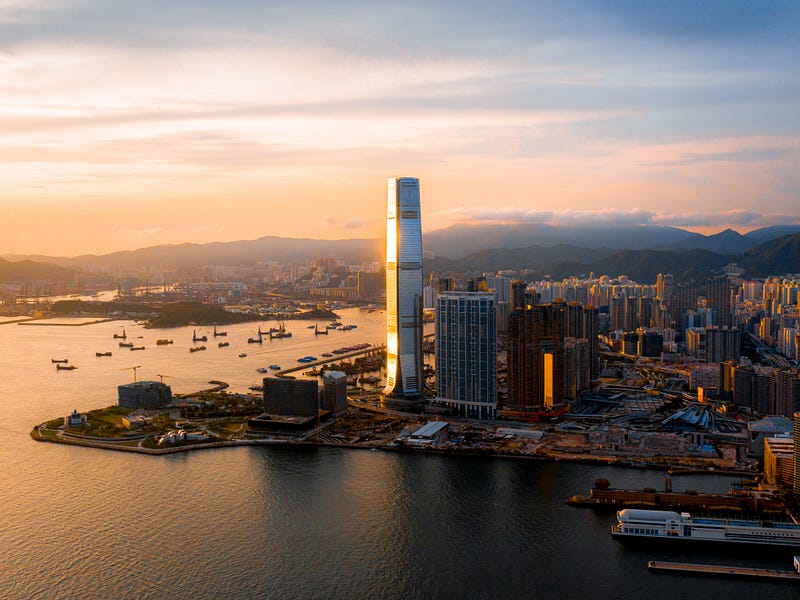
Photo by Manson Yim on Unsplash


Industry-wide significance

That’s according to a report in local news media on Wednesday. The move represents a positive development not only for HashKey users, as it extends protection to both hot wallets and cold storage addresses, but for the overall crypto space.

After the trail of destruction left by a series of high-profile crypto collapses in 2022, the overarching crypto space has been crying out for adequate solutions that reassure crypto market participants that their funds are safe when placed on centralized crypto platforms. In the traditional banking world, in most jurisdictions there are insurance-based schemes that guarantee a certain percentage or level of depositors funds. In many cases, these schemes are backed by the central government.

Asian crypto market participants have been hit harder than most due to these collapses having nothing in place in terms of deposit safeguards. In Singapore, crypto lenders Vauld and Hodlnaut failed, leaving deposit shortfalls. The city-state’s residents were particularly hard hit when it came to FTX as many Singaporeans had opted to use the exchange given that the authorities had banned Binance from trading there.

Xiaoqi Weng, the Chief Operating Officer of HashKey, emphasized the company’s commitment to fortifying its financial, technical, and service infrastructure to offer customers comprehensive protection. The goal is not only to enhance user security but also to contribute to the overall development of Hong Kong’s digital asset ecosystem.


Mitigating risk

Yanlin Guo, Co-founder of OneDegree, underscored the importance of establishing a robust framework for cryptocurrencies that includes insurance to identify and mitigate potential risks effectively. This collaboration between HashKey and OneDegree aims to provide added peace of mind to cryptocurrency investors who entrust their assets to the exchange.

HashKey achieved a significant milestone on August 3 when it became the first cryptocurrency exchange to receive regulatory licensing from the Hong Kong Securities and Futures Commission, enabling it to offer services to retail investors. Subsequently, on August 28, the exchange launched its trading services, albeit with relatively low trading volumes.

Currently, HashKey Hong Kong supports the trading of Bitcoin and Ethereum, with no options for margin trading or cryptocurrency derivatives. Nevertheless, the exchange accepts fiat deposits in both US dollars and Hong Kong dollars from authorized financial institutions worldwide.

The issue of user insurance has been a contentious topic in the cryptocurrency industry, with various exchanges offering different levels of protection. Some exchanges provide no insurance beyond a contractual claim to users’ assets in the event of bankruptcy. Others offer insurance solely for fiat deposits, while a select few, such as Binance and Bitget, extend coverage to crypto-related incidents.

HashKey has answered a market need by integrating this insurance product into its trading service. It’s likely that other platforms will follow suit in the not-too-distant future.


More to Read
View All
Policy & Regulation·

Jul 02, 2025

Malaysian regulator seeks feedback on crypto framework enhancements

The Securities Commission Malaysia (SC), the statutory body tasked with regulating and developing capital markets within the Southeast Asian nation, has published a consultation paper in an effort to garner public feedback on potential enhancements to its crypto regulatory framework. In a press release published to its website on June 30, the SC claimed that its proposals seek “to enhance competitiveness of Malaysia’s regulated digital asset market, improve investor protection and strengthen the resilience and integrity of [Digital Asset Exchange] operators.”Photo by Vlad Shapochnikov on UnsplashEasing listing requirementsIn the event that the proposals are adopted, one key change would see a liberalization of the listing requirements for digital assets. Where certain key eligibility criteria have been met, the regulator would allow the listing of digital assets on digital asset exchanges without prior SC approval. The regulator stated that it wants to make this change in order to speed up the time taken to get digital assets to market as they emerge. By setting out additional criteria, there will be greater exchange operator accountability. Exchange operators would bear responsibility for listing tokens in compliance with the requirements set out by the regulator.  Assets could only be listed once those assets and the underlying protocol and network had undergone security audits which had been carried out by an independent and qualified blockchain security auditor, with the audit results made public.  For the purposes of the “Liberalised Listing Framework,” the asset must have been trading on a Financial Action Task Force (FATF)-compliant virtual asset service provider (VASP) platform for a minimum of one year. The regulator believes that easing the listing requirements will result in a broader digital asset product offering being made available in Malaysia. Last month, Thailand’s Securities and Exchange Commission (SEC) started a public consultation process aimed at revising token listing rules. Coin listing processes have also come under scrutiny from the authorities in South Korea recently. Segregating client assetsAmong the proposals is a plan to oblige exchange platforms to properly segregate client assets from operational funds and assets held by the exchange business. In recent years, many failed crypto exchange platforms, most notably FTX, got into difficulty by co-mingling customer funds with operational funds. Furthermore, the regulator doesn’t want any cross-over of assets between the local exchange operator and any overseas affiliate companies it may have.The SC stated that it is cognizant of recent global exchange failures, which has led it towards further enhancing crypto exchange operational governance and controls. It suggests that only 10% of client assets should be held by a Malaysian exchange in hot wallets, with the remaining 90% held in cold or offline wallets. The SC said that it welcomes feedback from members of the various stakeholder groups on the proposals outlined. The public consultation period runs from June 30 through Aug. 11.  Malaysia is expected to have 4.74 million crypto users by 2026. That would equate to 13% of Malaysians using crypto by then.

news
Web3 & Enterprise·

Jul 05, 2023

OPNX Enables Margin Trading via oUSD

OPNX Enables Margin Trading via oUSDCrypto futures and bankruptcy claims trading exchange OPNX has unveiled a credit currency called “oUSD” for margin trading.The company announced the new currency via a statement to Cointelegraph by OPNX Co-Founder Mark Lamb on Wednesday. The initial phase of oUSD requires users to deposit crypto assets into the exchange to acquire the currency. In the subsequent phase, OPNX plans to enable users to obtain oUSD by depositing crypto into on-chain contracts, allowing for potential “bankruptcy remoteness,” according to Lamb.Photo by Krišjānis Kazaks on UnsplashSolving three problemsThe currency’s litepaper identifies three problems that oUSD aims to solve. Firstly, lenders are hesitant to trust platforms to hold cash loans backed by crypto collateral. Secondly, exchanges and lending platforms are wary of lending cash to margin traders due to the multiple bankruptcies witnessed during the bear market of 2022. Lastly, crypto derivatives traders seek “portfolio margin” to borrow and trade based on their crypto holdings rather than stablecoin holdings.To address these concerns, oUSD is designed as a “credit currency.” It can be obtained at a 1-to-1 ratio with Tether (USDT) or used to measure profit and loss when users utilize Bitcoin or other cryptocurrencies as collateral. Users with negative oUSD balances are subject to an interest rate determined by holders of the platform’s native token, OX. Those with a positive balance can redeem oUSD for USDT.Future plansLamb discussed future plans with Cointelegraph, explaining that users will eventually be able to acquire oUSD by staking cryptocurrencies within smart contracts outside the platform. This mechanism aims to provide bankruptcy remoteness, safeguarding users from potential exchange insolvency.One of the co-founders of OPNX, Kyle Davies, along with Su Zhu, also co-founded the failed hedge fund Three Arrows Capital (3AC), leading to controversy surrounding the exchange. OPNX’s CEO, Leslie Lamb, admonished investors for allegedly misleading the public by disassociating themselves from the exchange. Responding to criticism, Mark Lamb argued that the mistakes made by Davies and Zhu have contributed to improving OPNX as an exchange.Lamb stated: “I think Kyle and Su kind of portrayed the zeitgeist of the last crypto bull market well, and they lost the majority of their net worth, but they are building back, and that’s what I am doing as well, and that’s what everyone should do… just build back.”Appearing on a Twitter Spaces recently, the founders of the bankrupt Singapore-headquartered 3AC said that they are committed to donating future earnings from OPNX to the creditors of the collapsed crypto hedge fund. Goodwill has been largely lacking for the duo following the 3AC collapse yet undeterred, they are putting all their energies behind their new venture, OPNX.OPNX’s launch of oUSD as a credit currency offers potential solutions to the challenges faced by lenders, exchanges, and margin traders in the crypto space. By introducing oUSD, OPNX aims to provide a safer trading environment, provable solvency, and custody on-chain, giving users protection for their assets and promoting trust in the exchange. Trust might be in short supply for the start-up’s founders although there’s no doubt that they have acquired a lot more experience in the wake of the 3AC collapse.

news
Web3 & Enterprise·

Feb 27, 2024

OVERDARE partners with USDC issuer Circle

Korean game company Krafton’s metaverse studio OVERDARE announced yesterday via its official blog that it forged a partnership with Circle, a U.S.-based fintech firm that issues stablecoin USDC. Founded in December 2023, OVERDARE is a joint venture between Krafton and Naver Z, a subsidiary of online platform operator NAVER Corporation.  In collaboration with Circle, OVERDARE plans to jointly develop its own USDC payment and settlement system in addition to the Web3 wallet. These services are set to be adopted by its upcoming user-generated content (UGC) platform “OVERDARE,” which bears the same name as the company. Photo by Javier Martínez on Unsplash A metaverse platform for game creationThe soon-to-be-launched OVERDARE is a metaverse platform where users can create various types of games ranging from action role-playing games (RPG) to sports and shooting games. What enables users to create games with ease on this platform is “OVERDARE Studio,” a sandbox tool equipped with generative AI and Unreal Engine 5.   OVERDARE adopts the Create-to-Earn (C2E) system, which returns a portion of the sales profit to creators. The creators’ works in the form of NFTs and their transaction details are recorded onchain, strengthening the transparency of transactions and payments. OVERDARE’s self-developed Layer-1 blockchain mainnet “Settlus” will also do its part in the service operation, which would license the intellectual property (IP) of creators’ works on Web2 platforms.  Stablecoin to empower creator economy“Circle is excited to be at the forefront of this pioneering venture with OVERDARE to empower the creator economy through the provision of secure Web3 wallets and near-instant USDC payouts on a global scale. We believe this partnership will be a catalyst in shaping the future of digital entertainment, ultimately fostering an innovative Web3 environment for all,” said Jeremy Allaire, CEO and co-founder of Circle. Henry Park, CEO of OVERDARE, stated, “We’re excited to unveil our partnership with Circle, a company distinguished by its regulatory compliance and trustworthiness. Their robust support ensures that we are able to support the creator economy, and guarantee creators reliable access to their earnings.”OVERDARE is scheduled to launch a large-scale user test in the first half of this year and officially launch the service in the second half.

news
Loading