Top

Com2uS USA CEO Highlights Importance of Transition from Web2 to Web3 Gaming

Web3 & Enterprise·September 06, 2023, 9:28 AM

Lee Kyu-chang, CEO of South Korean game developer Com2uS’ American branch, stressed the important role of Web3 games in encouraging gamers to embrace blockchain technology during a discussion at the Korea Blockchain Week (KBW) 2023 event held at the Shilla Hotel in Seoul on Tuesday.

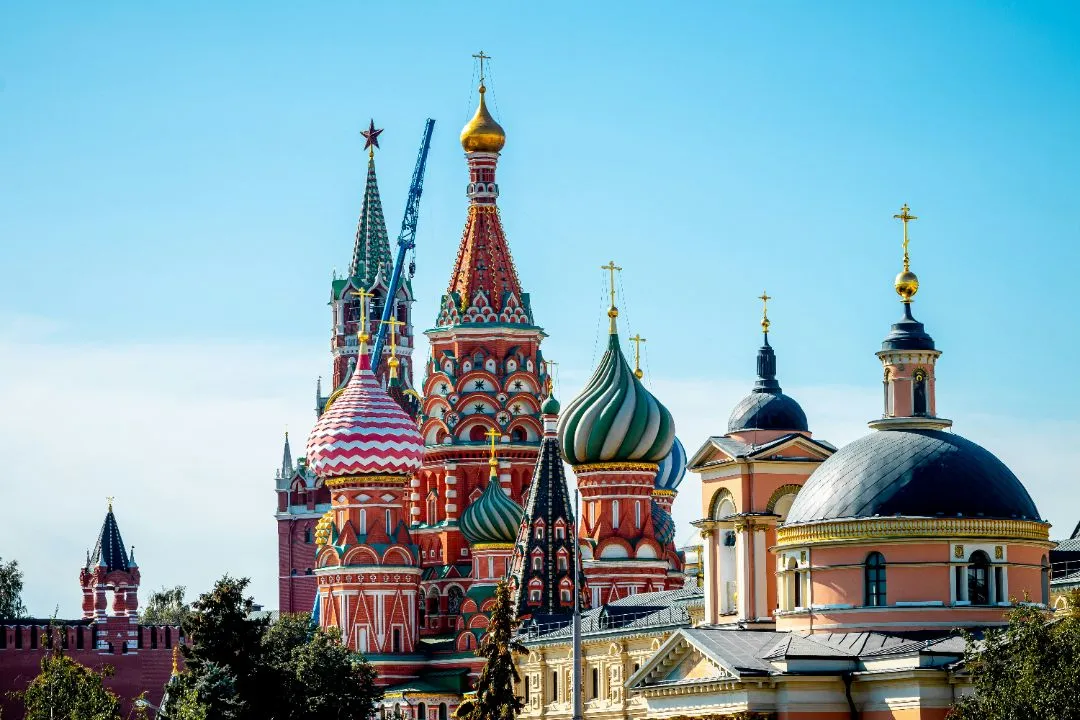
Photo by Fredrick Tendong on Unsplash

Lee shared various insights on the topic that Com2uS Group has gained through its experience in developing blockchain games. “We view blockchain not as a platform but as a tool,” he said.


Nurturing Web3 adoption among gamers

In particular, the CEO emphasized the need for Web2 users to transition to Web3. Indeed, Com2uS is aiming to migrate to Web3, although it is still majorly involved in Web2 businesses.

However, there stands a roadblock to achieving this widespread transition. “Gamers do not understand Web3. What they want is for good games to be released. And if they’re not good, they won’t play them regardless of whether they’re Web2 or Web3,” Lee explained, arguing that fun Web3 games will have gamers naturally learning about Web3.

Due to these reasons, the conversion rate for gamers is currently quite low. To remedy this, Lee proposed that facilitating the transition for Web2 gamers to Web3 is a more sustainable method than directly targeting only Web3 users. The latter strategy is not ideal due to the fact that there aren’t many Web3 users yet in the first place, and more importantly, existing ones are not typically gamers.


Balancing the shift

The Com2uS Group has thus chosen to concentrate on Web2 while gradually transitioning to Web3. “We must remember that the transition is slow. We went through a similar process when shifting from PC to mobile gaming,” Lee cautioned.

“Our company’s mission is to make people want to play games with ownership rights and make them want to own game assets.”

More to Read
View All
Policy & Regulation·

Mar 24, 2025

Confiscated crypto fund proposed in Russia

While Russia had previously ruled out adding Bitcoin to its national reserves, the latest soundings from officials within the world’s largest country call for the creation of a crypto fund to hold and manage confiscated cryptocurrencies. According to a report published by Russian state-owned news agency TASS, Evgeny Masharov, a member of the Civic Chamber of the Russian Federation, has put forward a proposal for the formation of a special fund that would hold and manage cryptocurrencies that had been confiscated as the proceeds of crime by the Russian authorities.Photo by Artem Beliaikin on UnsplashMasharov told TASS: "Cryptocurrency confiscated in criminal proceedings should work for the benefit of the state. For these purposes, a special fund can be created, on the balance sheet of which these cryptocurrencies would be located, the capitalization of which will significantly increase over time.” In the future, Masharov proposes that the funds could eventually be used for educational, social and environmental projects. Enabling asset confiscationMasharov supported moves to define digital assets as property within the realm of criminal procedure legislation previously. Since 2021, legislation has been proposed to lay out a properly defined framework to enable the confiscation of such assets in criminal cases. As of last month, Russia’s Supreme Court is currently working towards establishing this. The Civic Chamber official expressed his willingness to discuss his proposal with other stakeholders such as crypto industry representatives and officials from Russia’s Federal Taxation Service. If this proposal was to be implemented, it would match a position taken in the U.S. with regard to a Bitcoin reserve. Earlier this month, U.S. President Donald Trump signed an executive order creating a strategic Bitcoin reserve which will be funded mainly by confiscated Bitcoin. Central bank resistanceRussia’s central bank has been largely opposed to the use of cryptocurrencies within Russia in recent years. Last December, central bank governor Elvira Nabiullina stated that the bank had no plans to invest in cryptocurrencies. Earlier that month, Anton Tkachev, a member of Russia’s State Duma, had put forward a proposal to establish a national Bitcoin reserve. With the onset of sanctions as a consequence of the conflict in Ukraine, the Russian government has softened its position with regard to cryptocurrencies. Digital assets such as Bitcoin are now seen as a mechanism to enable cross-border trade and cross-border payments, circumventing the international banking system. It was reported last year that Russia’s central bank had changed course and with that, it was leading efforts to assist Russian companies to use cryptocurrency for international trade, bypassing Western sanctions. Earlier this month, Reuters reported that Russian oil firms are now using leading cryptocurrencies such as Bitcoin, Ethereum and Tether in oil trade deals with their counterparts in China and India. In another development earlier this month, it emerged that the central bank is now allowing a limited level of crypto investment by investors. Faced with sanctions and current geopolitical realities, it’s understood that Russia had been considering the use of Bitcoin for reserve purposes, but for the time being, it has opted to concentrate on adding gold and the Chinese yuan to its sovereign wealth fund. 

news
Policy & Regulation·

Sep 18, 2023

Korbit Report: SEC Commissioner Shares Insights on Crypto Regulation

Korbit Report: SEC Commissioner Shares Insights on Crypto RegulationKorbit Research Center, a division of South Korea’s cryptocurrency exchange Korbit, on Monday, released a report that provides a comprehensive summary of its interview with Hester M. Peirce, a Republican Commissioner at the US Securities and Exchange Commission (SEC), which took place on August 18. The interview was conducted by Peter Chung, the head of research at Korbit Research Center.Photo by Joshua Hoehne on UnsplashKorbit’s meeting with US crypto expertsIn August, Chung made a trip to the United States, where he met with prominent figures and companies within the cryptocurrency industry to gain a deeper understanding of the ongoing institutionalization of cryptocurrencies in the United States. Through this opportunity, Korbit intends to release a series of reports that will encapsulate the valuable insights garnered during these interactions in the US.His first interviewee of the series was Commissioner Peirce, who serves as one of the five commissioners at the SEC. These commissioners are appointed by the President of the United States with the confirmation of the US Senate. To maintain political balance and impartiality, it is mandated that no more than three commissioners belong to the same political party.Peirce assumed her role as a Commissioner at the US Securities and Exchange Commission (SEC) in January 2018, following her appointment by President Trump. Before her tenure at the SEC, she held the position of Senior Counsel on the United States Senate Committee on Banking, Housing, and Urban Affairs. She is known as an advocate for technological innovation.Token safe harbor proposalPeirce earned the nickname “Crypto Mom” due to her advocacy for encouraging innovation within the cryptocurrency industry through the implementation of reasonable regulations. One notable initiative that exemplifies her perspective is the token safe harbor proposal. This proposal suggests giving blockchain network developers a three-year grace period during which they can work on building a decentralized network while being exempted from complying with the registration rules of federal securities laws, as long as certain conditions are met.During the interview, Peirce expressed concerns about recent actions taken by the SEC, which have added to the uncertainty surrounding cryptocurrency regulations. She also emphasized the need for swift legislative action to establish a framework for cryptocurrency regulation. Peirce noted that there appears to be a tendency to prioritize the classification of virtual assets over investor protection.Suggestions for KoreaAlthough Peirce hasn’t engaged in any direct interactions with Korean regulators, she suggested the Korean government optimize regulations for its own cryptocurrency industry. Her suggestion was to minimize unnecessary intervention and instead foster an environment where the sector can naturally evolve in accordance with the principles of a free-market economy.Furthermore, Peirce delved into detailed discussions on three pivotal topics: the classification of virtual assets as securities, the need for disclosure requirements, and the significance of assessing the extent of decentralization within a network.Classification of cryptocurrenciesThe Commissioner said that it is inappropriate for the SEC to contend that most cryptocurrency projects should fall under its regulatory purview. The SEC’s argument is based on the assertion that cryptocurrencies may constitute securities because they function as a medium of value exchange in fundraising activities, much like investment contracts in traditional financial markets. Despite this, she expressed optimism regarding the recent US court’s ruling on the Ripple vs. SEC case, which she believes may help rectify misconceptions surrounding the classification of investment contracts.Balancing investor protection and investor choiceMeanwhile, she expressed her viewpoint that regulations aimed at protecting investors should stay true to the disclosure principles introduced back in 1934 when the SEC was first established. However, she also argued that the SEC should avoid imposing arbitrary restrictions on investors’ choices. During the initial phases of a cryptocurrency project, there tends to be an inherent information asymmetry between crypto project leaders and individual investors. To ensure a fair investment environment, she advocated for legal mandates for disclosure. Notably, both her token safe harbor proposal and the Responsible Financial Innovation Act proposed by US Senators Kirsten Gillibrand and Cynthia Lummis incorporate such disclosure requirements.Decentralization assessmentCommissioner Peirce also approached the assessment of decentralization with a thoughtful perspective. Her Token Safe Harbor Proposal 2.0 states that after the three-year grace period, “token transactions may not constitute securities transactions if the network has matured to a functioning or decentralized network.” However, she admitted to grappling with the challenge of precisely defining what constitutes sufficient decentralization. During the conversation, she sought Mr. Chung’s perspective on this matter. In response, Mr. Chung shared that the Korbit Research Center regularly conducts measurements and assessments of the degree of decentralization for major blockchain networks every six months.Regarding the interview, Peter Chung expressed his admiration for the high-ranking official’s openness to innovation and strong communication skills. He also voiced his hope for more open discussions in Korea that could promote sustainable growth of the country’s crypto industry.

news
Web3 & Enterprise·

Oct 10, 2025

MUFG pushes into tokenized finance as Japan enters a new political chapter

Japan’s largest bank is stepping deeper into digital assets at a moment of political change. Mitsubishi UFJ Financial Group (MUFG) and its securities arm Mitsubishi UFJ Morgan Stanley Securities (MUMSS) have launched a blockchain-based business, according to CoinDesk Japan. The move puts the country’s biggest lender at the center of a fresh push to bring regulated finance onto distributed ledgers while retail investors gain a new way to buy and trade tokenized products. MUMSS has begun offering bond security tokens, marking its formal entry into the security token market. At the same time, the firm introduced ASTOMO, a trading venue for retail investors built with Japanese fintech company Smartplus. The system will debut with real estate-backed security tokens. Individuals can invest from 100,000 yen (about $655) through a smartphone app. Under the partnership MUMSS will select and source the digital securities. Smartplus will run account management and build and operate the trading system using its Brokerage as a Service (BaaS) platform. MUFG also revealed that it has started preparing a public offering of subordinated bonds in token form. The bank intends the instruments to qualify as Tier 2 capital under international rules. The offering is expected to be the first of its kind for Japan’s banking sector. MUFG has submitted an amended securities registration statement to the Director General of the Kanto Local Finance Bureau in advance of the sale.Photo by Asm Arif on PexelsTakaichi’s victory sparks interest in Japan’s crypto pathThe corporate steps arrive as conservative lawmaker Sanae Takaichi rises to lead the ruling Liberal Democratic Party. She won the party election on Oct. 4 and is set to become Japan’s first female prime minister, with lawmakers expected to make the formal choice in the middle of this month.  Several industry voices see her leadership as supportive of digital assets, according to Cointelegraph. Elisenda Fabrega, general counsel at tokenization platform Brickken, said Takaichi’s victory might reshape how Japan perceives and regulates digital assets, reinforcing the country’s commitment to clear and reliable crypto laws. Maarten Henskens, chief operating officer at Startale Group and head of the Astar Foundation, chimed in to say that a looser monetary stance under Takaichi could keep liquidity flowing and drive greater investor interest in alternative assets such as cryptocurrencies. That optimism has already spilled into Japan’s equity markets. The Nikkei index has continued to soar since the leadership vote, reaching a record high of 48,580.44 on Oct. 9. Not all signals point in the same direction. A BeInCrypto report published before the election noted market predictions that Takaichi might also back tighter oversight. The report cited her March proposal to build a framework that lets financial institutions, including crypto exchanges, share information on suspicious transactions. That system would support faster account freezes. Nikkei 225 Index Source: Google FinanceLoose fiscal tone brings new pressures for BitcoinFrom a broader economic view, the picture looks more complex. CoinDesk reported that Takaichi’s preference for easy Abenomics-style policies could weigh on Bitcoin in the short term. Expansionary fiscal measures tend to increase bond supply and drive yields higher, which often curbs risk appetite by raising borrowing costs and making assets like stocks and cryptocurrencies less appealing. Her stance has also reduced expectations for a Bank of Japan rate hike, weakening the yen and strengthening the U.S. dollar. The stronger dollar has cooled Bitcoin’s momentum, while gold has continued to attract investors seeking stability. MUFG’s blockchain venture arrives at a turning point for Japan. The bank’s push into tokenized assets shows how traditional finance is adapting to digital change just as new leadership tests the balance between innovation and control. Whether this marks the start of a broader transformation will depend on how policy, regulation, and investor confidence evolve together in shaping Japan’s financial future. 

news
Loading