Top

Singapore Elects Crypto Skeptic as President

Policy & Regulation·September 05, 2023, 12:40 AM

Garnering 70.4% of all votes cast on Saturday, Singaporeans chose to elect Tharman Shanmugaratnam as their next president, a move that may have implications for Singapore’s outlook when it comes to digital assets.

While many had hoped that he would be the nation’s first non-Chinese prime minister, the crypto industry has greeted his rise to this largely ceremonial role with mixed feelings. Shanmugaratnam’s previous stances on cryptocurrency and digital assets have been predominantly critical.
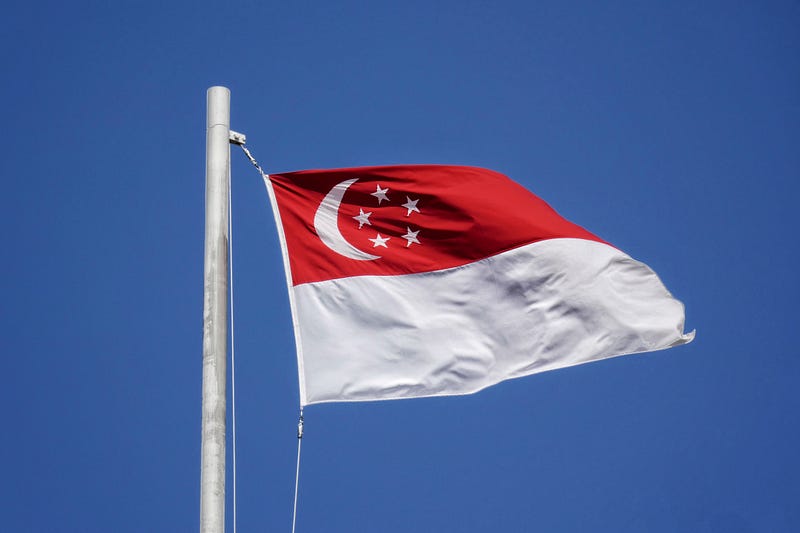
Photo by Justin Lim on Unsplash


Former MAS Chairman

In the past, the president-elect has referred to cryptocurrency as “slightly crazy” and “purely speculative.” His ascent to the presidency comes after a distinguished career that includes serving as the former finance minister, deputy prime minister, and chairman of the Monetary Authority of Singapore (MAS), the country’s central bank, from 2011 to 2023.


Crypto platform collapses

It was during his tenure at MAS that two prominent crypto companies, Three Arrows Capital (3AC) and Terraform Labs, faced catastrophic collapses.

The demise of Terraform Labs, along with its TerraUSD (UST) stablecoin, triggered a severe “crypto winter” in May 2022, from which the industry is still struggling to recover. This downfall wiped out a staggering $500 billion in value over just two weeks, devastating the portfolios of numerous retail investors.

The ripple effect of TerraUSD’s fall also engulfed 3AC, a significant cryptocurrency hedge fund headquartered in Singapore. The contagion spread across the cryptocurrency market, leading to the downfall of other major entities like crypto lending platforms Celsius Network and Voyager Digital, alongside Singapore-based Hodlnaut.

Given that these catastrophic events unfolded during Shanmugaratnam’s tenure at MAS, it’s plausible that he bore the brunt of the consequences. That might explain why in speaking on the subject in 2021, he appeared to be more accommodative, suggesting that there may be a useful role that crypto could play and highlighting that Singapore had allowed crypto businesses to develop within the city-state.

In June of last year, MAS reprimanded 3AC for providing misleading information and exceeding the allowed assets under management (AUM) threshold, thereby breaching its status as a registered fund management company.

In January, Shanmugaratnam said that regulating the crypto sector would give credibility to speculation and on that basis, it would be best to leave it unregulated. He went on to suggest that crypto should be subject to existing regulation as laid down for traditional finance.


Early stage concerns

Back in 2018, when he was Singapore’s finance minister, Shanmugaratnam questioned the wisdom of broad regulation potentially legitimizing a speculative and “slightly crazy” market. During the 2018 World Economic Forum, he emphasized the importance of anti-money laundering measures and advocated for educating consumers about the risks inherent in the unregulated crypto sector.

Although he acknowledged blockchain’s potential to enhance global payment systems, Shanmugaratnam favored integrating existing traditional payment mechanisms as an alternative to blockchain innovations.

Singapore’s new president brings with him a history of skepticism towards cryptocurrency and digital assets. However, with a largely ceremonial role relative to day-to-day governance, he’s not in a position to take direct action that could hold the sector back although he will have the power to initiate corruption investigations upon the advice of the Singaporean cabinet.


More to Read
View All
Web3 & Enterprise·

Jun 30, 2025

Litigation set to fuel Bitcoin accumulation at Genius Group

Artificial intelligence-driven education technology firm, Genius Group, has announced a plan to buy Bitcoin from the proceeds of damages that the company is pursuing through the courts. In a press release published to the Singapore-headquartered company’s website on June 26, it outlined that the firm’s Board of Directors has approved a distribution plan that would see any potential damages received from litigation that Genius Group is currently embroiled in, divided equally for distribution to shareholders and for the purchase of Bitcoin for the company’s Bitcoin treasury.Photo by Kanchanara on UnsplashUp to $1 billion in potential damagesGenius Group CEO, Roger Hamilton, commented on the matter, stating:“We are seeking combined damages of over $1 billion. As both lawsuits are being pursued by the Company to recover damages caused by third parties directly to our shareholders, the Board believes that 100% of any proceeds from the successful outcome of these cases should be directly distributed or reinvested for the benefit of shareholders.” On X, Hamilton outlined that there’s no guarantee with regard to how much the company recovers through litigation. However, he added that if justice prevails and the company is awarded $1 billion in damages, that would equal a $7 dividend per share for shareholders and the addition of 5,000 BTC to the firm’s Bitcoin treasury. Last month, the company provided an update on a lawsuit it has taken under the Racketeer Influenced and Corrupt Organizations (RICO) Act. Initially, $450 million in damages had been pursued but Genius Group amended the lawsuit, raising its claim to $750 million.  The lawsuit is being taken against Peter Ritz and Michael Moe as the controlling officers and directors of LZGI International, and against Michael Carter and John Clayton, in the United States District Court, Southern District of Florida. The company alleges that the defendants attempted to defraud Genius Group.  ‘Bitcoin First’Genius Group announced its “Bitcoin First” approach, and the launch of a Bitcoin treasury in November 2024, getting started with an initial purchase of 110 BTC valued at $10 million at that time. In April 2025, a New York court prohibited the company from selling stocks in order to fund the purchase of Bitcoin. Those court-imposed funding restrictions led to the firm selling off a small proportion of the overall Bitcoin that it was holding.  Prior to that prohibition on the purchase of Bitcoin being imposed, Genius Group had expressed the aspiration to build up its Bitcoin reserve to a value equivalent to $100 million. Wading further into the Bitcoin space, the firm acquired blockchain learning platform, XD Academy, in December 2024. On May 22, Genius Group announced that the U.S. Court of Appeals had overturned the ban imposed on the company. With that, it increased its Bitcoin holdings by 40%. As of June 17, the company held 100 BTC, valued at around $10 million. The firm plans to bring forward another lawsuit “alleging naked short selling and evidence of spoofing against certain parties,” with damages being pursued in the region of $250 million. Commenting on the coming of age of Bitcoin and the pursuit of a Bitcoin treasury strategy back in November 2024, Hamilton stated that “we're living in a unique moment in history - one most public companies will miss.” 

news
Web3 & Enterprise·

Aug 18, 2023

Galaxia Metaverse and ZIKTALK to Expand Blockchain and Web3 Initiatives

Galaxia Metaverse and ZIKTALK to Expand Blockchain and Web3 InitiativesSouth Korean blockchain company Galaxia Metaverse said Friday it has signed a memorandum of understanding (MOU) with the Web3 social media platform ZIKTALK. The two companies plan to collaborate for the expansion of and boosted connectivity between Galaxia’s blockchain wallet and ZIKTALK’s social media services.Photo by GuerrillaBuzz on UnsplashEncouraging engagementZIKTALK is a Web3 short-form video platform that rewards users based on their activities in the app. Video creators and viewers can receive ZIK tokens as rewards for watching or sharing videos, inviting friends, gaining followers, leaving comments, and more. Currently, the platform has around 1.4 million users primarily in Southeast Asian countries such as the Philippines, Indonesia, and Vietnam.Galaxia Metaverse’s main service, Galaxia Wallet (GXA Wallet), is a digital blockchain wallet that supports major mainnets such as Ethereum, Binance, Polygon, and Klaytn. Its utility token Galaxia (GXA), which can be stored in the Wallet, is rewarded through staking and can be used for purchasing NFTs. Wallet holders can also receive rewards when they use MetaGalaxia, a curation-based NFT marketplace, and acquire GXA when they use a coffee delivery application created by WeMakePrice O, the food delivery platform of e-commerce firm WeMakePrice.Together, Galaxia and ZIKTALK aim to expand their blockchain ecosystems to allow users to utilize their wallets and tokens in a safer and more convenient manner. This includes implementing more services such as token registration and wallet connection so that ZIKTALK users can use Galaxia Wallet more efficiently.“The majority of ZIKTALK users, which mainly consists of young people in their 20s and 30s who enjoy short-form content, represent the demographic that would benefit most from using Galaxia Wallet,” Galaxia said in a statement.Global growth and partnershipsMeanwhile, Galaxia has been actively expanding its blockchain ecosystem this year both domestically and internationally, collaborating with industry leaders such as Korean online marketplace Coupang and Singaporean blockchain-based mobility enterprise MVL Foundation.

news
Policy & Regulation·

Jun 21, 2023

Korean Financial Watchdog: Investor Protection Boosts Crypto Market

Korean Financial Watchdog: Investor Protection Boosts Crypto MarketLee Bok-hyun, Governor of the South Korean Financial Supervisory Service (FSS), addressed the issue of investor protection measures in the cryptocurrency market during his speech at the fourth Blockchain Leaders’ Club in Seoul. According to a report by local news agency News1, Governor Lee emphasized that these measures would not hinder the market but instead establish a positive cycle by increasing market confidence and driving industry growth.Photo by Joshua Miranda on PexelsCrypto user protectionTo underscore the importance of safeguarding users in the crypto industry, Governor Lee referred to recent incidents such as the collapse of stablecoin Terra and the failures of Silvergate and Silicon Valley Bank. He highlighted how these examples demonstrate the need for protective measures as the influence of the crypto market extends beyond the financial sector and impacts the real economy.Governor Lee further emphasized the FSS’s commitment to maintaining ongoing communication with the crypto industry and adapting the regulatory system to accommodate the changing landscape. He stated that the FSS would assist the industry in establishing its own self-regulatory system, which includes monitoring suspicious transactions and transparent procedures for virtual asset listing. Additionally, the FSS plans to collaborate with industry insiders to prevent misunderstandings when formulating relevant rules and regulations.Governor Lee also touched on the Virtual Asset User Protection Bill, stating that he expects to see the final draft this summer as it is currently undergoing a legislative process in the National Assembly. He highlighted the government’s commitment to improving market order and minimizing investor losses before the law’s implementation. The government is taking a “same risks, same regulation” approach to prevent regulatory arbitrage and establish effective monitoring systems for virtual asset transactions and on-chain data.Unfamiliar but importantMeanwhile, Lee Yong-woo, a member of the opposition Democratic Party of Korea (DPK), echoed the importance of establishing and improving a regulatory framework for the cryptocurrency industry. He drew parallels between the current situation and the dot-com bubble era, emphasizing the significance of not disregarding the potential of the crypto market due to unfamiliarity.Communication channelLawmaker Lee expressed hope that the Blockchain Leaders’ Club would contribute to shaping a stable crypto market by providing opportunities to listen to the opinions of market participants, which can then be reflected in managing and revising laws and regulations.Today’s event, hosted by News1, saw the gathering of lawmakers, government officials, crypto industry leaders, and academics. Among the participants were People Power Party Lawmaker Yun Chang-hyun, the top executives of the five major Korean crypto exchanges (Upbit, Bithumb, Coinone, Korbit, and Gopax), and the CEO of blockchain gaming company Wemade.

news
Loading