Top

Uzbekistan’s New Private Bank Joins National Crypto Card Initiative

Web3 & Enterprise·August 17, 2023, 2:23 AM

In a step towards enhancing its cryptocurrency ecosystem, the Republic of Uzbekistan has given the green light to include another private bank in its ongoing national crypto card project. The development was announced through an official press release earlier this week by the National Agency of Perspective Projects (NAPP), the country’s regulatory authority for digital assets.
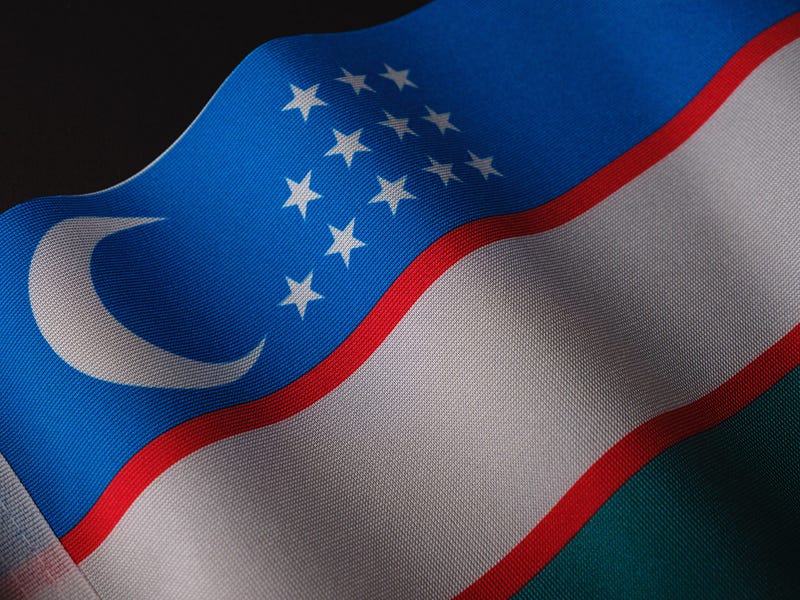
Photo by engin akyurt on Unsplash


Building upon a crypto framework

Under the provisions outlined by the Uzbekistan Ministry of Justice on December 30 of last year, the Special Regulatory Sandbox Regime was established. This unique framework empowers specific entities within Uzbekistan’s crypto sphere to provide specialized services. JSV Ravnaq Bank has now been registered as a member of this regime, enabling its active participation in the pilot phase of the nation’s crypto card project.


Virtual bank card

This initiative is poised to introduce a virtual bank card named “CRYPTO CARD — UzNEX.” The card’s standout feature is its ability to facilitate automatic fund addition to users’ primary accounts. This is achieved by swiftly converting crypto assets from a digital wallet on a partner crypto exchange platform.

A vital aspect of the crypto card’s development lies in its compatibility testing with various financial systems, including the widely used Mastercard payment platform. According to NAPP’s statement, the participant bank within the special regulatory regime will be rigorously testing the integration of the automated banking system, crypto-exchange information system, bank processing center, and the MasterCard international payment system.


December launch

Notably, the addition of Ravnaq Bank marks the second entrant into the project, with Kapital Bank being the first participant approved in May. While Kapital Bank’s testing phase commenced at the end of June 2023, Ravnaq Bank is set to initiate its test launch by the end of October 2023. Both banks are expected to launch the full project by late December, in accordance with NAPP’s timeline.

Beyond these private banks, the Special Regulatory Sandbox Regime also includes UZINFOCOM, a company authorized to develop NFT certificates based on distributed data registry technology.

More to Read
View All
Policy & Regulation·

Jun 20, 2023

Korean Travel Rule Solution Provider CODE to Start Charging Monthly Fees Next Month

Korean Travel Rule Solution Provider CODE to Start Charging Monthly Fees Next MonthSouth Korean Travel Rule solution provider CODE, established in collaboration between local cryptocurrency exchanges Bithumb, Coinone, and Korbit, has announced the implementation of service fees starting next month. Up until this point, CODE has been offering its services free of charge. The notification regarding this change was issued to CODE’s clientele, which includes various crypto exchanges, as reported by local tech news outlet Digital Daily.Photo by Kenny Eliason on UnsplashTravel RuleThe Travel Rule regulations, set by the Financial Action Task Force (FATF) and Korean legislation, require Korean trading platforms to maintain records of both the sender and recipient’s information for virtual asset transactions exceeding 1 million KRW ($780). The FATF, founded in 1989 and headquartered in Paris, is an international financial watchdog dedicated to combating global money laundering and terrorist financing.More competitive priceCODE is anticipated to offer its services at a more competitive price of 1 million KRW ($780), in contrast to its rival VerifyVASP (VV), which introduced a monthly fee of $1,800 earlier this year. VV is a product developed by Lambda 256, a subsidiary of Dunamu, the parent company of Upbit, the largest cryptocurrency exchange in Korea.CODE launched its services in March last year. Among its crypto exchange members are Gopax, Cashierest, and Coredax. In December, the Travel Rule solution provider appointed Lee Sung-mi, the former compliance officer of Bithumb, as its new CEO, and since then, it has accelerated its monetization plan. Prior to Lee’s appointment, Coinone CEO Cha Myung-hun had been at the helm of CODE.

news
Web3 & Enterprise·

Apr 16, 2025

Bitdeer pivots amid onset of Trump’s tariff war

In response to U.S. President Donald Trump’s imposition of tariffs on foreign imports into the United States, Singapore-based and Nasdaq-listed Bitdeer has pivoted in an effort to handle this latest challenge. In a discussion with Bloomberg, Jeff LaBerge, the company’s head of capital markets and strategic initiatives, said that rather than concentrating on sales and exporting crypto mining rigs, the company plans to utilize those rigs itself within its own mining operations.Photo by Traxer on UnsplashLaBerge stated: “Our plan going forward is to prioritize our self-mining.” 90-day windowThe company is also planning to take advantage of a 90-day tariff suspension period that the Trump administration put in place earlier this month, to ship mining machines from Southeast Asia to the United States.  In tandem with this short-term push on U.S. exports, it is expected that miners will focus on buying hardware during this time. Jaran Mellerud, CEO of Hashlabs Mining, told Cointelegraph last week that in the short term, there is likely to be a spike in mining rig imports into the U.S. Some reports have suggested that U.S.-based mining firms have chartered flights in an effort to quickly import mining equipment and avoid tariffs of up to 104%. Additional capital overheads for U.S. minersOver the longer term, the crypto mining services company CEO believes that tariffs will hurt U.S.-based miners, increasing their capital costs to a greater extent than in the case of overseas-based mining operations. Earlier this month Kristian Csepcsar, chief marketing officer (CMO) at Bitcoin mining technology firm, Braiins, similarly claimed that Trump administration tariff policy would likely harm domestic mining companies, while benefiting those located in regions such as Russia and Kazakhstan.  In another effort to deal with the challenge of tariffs on its products entering the United States, Bitdeer anticipates that it will begin production of its mining equipment in the U.S. sometime during H2 2025. Much has changed for the Singapore-based firm over the course of a short period of time. A month ago LaBerge told CoinDesk about its efforts to challenge the leading ASIC Bitcoin mining equipment manufacturers, Bitmain and MicroBT. He said that Bitdeer wants to become “the top player in the market,” while believing that it has the technology and know-how to do so. Challenging market conditionsEven before this tariff war bubbled over recently, the environment for Bitcoin miners was already proving to be difficult. Miners had been selling off Bitcoin reserves in recent weeks, taking profits while anticipating lower Bitcoin prices in the near future. American multinational financial services firm JPMorgan estimated recently that the market cap of the 14 U.S.-listed Bitcoin miners had fallen by 25% in March, writing off $6 billion in value in what was the third worst month for miners on record. Last month Bernstein analysts cut their 2025 price targets for a range of publicly-listed Bitcoin miners. Miners have been adapting to their business environment by upgrading equipment, cutting costs and diversifying into AI data hosting.

news
Web3 & Enterprise·

Jan 29, 2024

Wemade ramps up excitement for upcoming games at Taipei Game Show

South Korean gaming publisher Wemade attended this year’s Taipei Game Show – the largest gaming exhibition in Taiwan – from Thursday to Sunday, where it showcased its upcoming games Night Crows and Fantastic 4 Baseball, according to news site Bridge News.Photo by Mateo on UnsplashUnveiling upcoming blockbustersAt the event, Wemade operated an exclusive booth with game demos and promotional videos. There was also a cosplay of characters from the Night Crows game and a special performance by the TSG Hawks' cheerleading team, the Wing Stars. The TSG Hawks is a professional baseball team that joined the Chinese Professional Baseball League (CPBL) last year. The Wing Stars are led by the famous Korean cheerleader Ahn Ji-hyun. In addition, Lee Jung-wook and Lee Kun-hee, the CEOs of Night Crows developer Madngine, and Fantastic 4 Baseball developer Round One Studio, took to the stage to interact directly with gamers. "Night Crows is the first MMORPG developed with Unreal Engine 5, and you can enjoy top-notch visuals with Mad Engine's unique know-how," said Lee Jung-wook. "We promise to provide new fun and stable services to our global users." "While developing Fantastic 4 Baseball, we put a lot of thought into capturing the essence of baseball and making the players' faces and batting forms look realistic," Lee Kun-hee added. "We plan to bring the game to the global market when the Taiwanese baseball league begins." Market-dominating releasesNight Crows has been popular among gamers in South Korea, where it launched in April last year, topping the popularity and revenue rankings on major app markets. The global version of the game utilizes blockchain technology to implement an advanced tokenomics ecosystem. Global pre-registration will open on Jan. 11. On the other hand, Round 1 Studio’s Fantastic 4 Baseball is a realistic baseball game where players can create their own team with famous players from various leagues, including the CPBL. The demo version includes single-player and home run derbies. Both games are slated for global release in March.

news
Loading