Top

QCP Capital: Bitcoin Has $34K Price Potential

Markets·August 16, 2023, 2:35 AM

Bitcoin’s potential for a significant price rally toward $34,000 has been discussed recently by analysts at QCP Capital, the Singapore-headquartered crypto asset trading firm. Despite Bitcoin’s recent lack of major volatility catalysts, QCP’s analysis suggests that a classic support rebound might trigger the return of the highest Bitcoin prices in over a year.
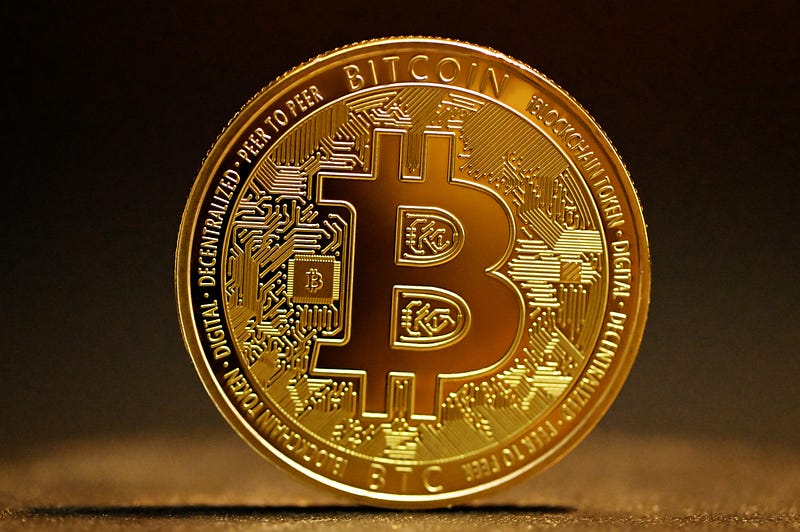
Photo by Kanchanara on Unsplash


Crucial price action time-frame

According to QCP Capital’s latest market update on Tuesday, the upcoming weeks are poised to be crucial for Bitcoin’s price action. The cryptocurrency has been range-bound for months, leaving market observers speculating about the emergence of a new market trend.

QCP Capital highlights September as a pivotal month due to the completion of a rising wedge pattern that started during the end of the 2022 bear market. This pattern has guided Bitcoin’s price movement, with the wedge reaching its first termination point at the beginning of September. The specific level of interest is $29,300, which aligns with the current focal point of the Bitcoin spot price.


Rally potential

The analysis ponders whether there will be a sharp rally that pushes the price to the $34,000 resistance level. This scenario has occurred three times this year, as the price kissed the support trendline. The report acknowledges that it might take a few more quiet weeks before the outcome becomes clear. The analysts expressed their intention to buy back their end of September short calls and anticipate going long on end of December volatility in due course.

QCP Capital’s perspective aligns with other optimistic views on Bitcoin’s short-term price strength. Some projections even suggest that the 2023 Bitcoin bull market might return by October, although the market sentiment is varied, with some cautioning about the possibility of new lows before a broader recovery.


Macroeconomic trends

Turning to macroeconomic trends, QCP Capital indicates that significant change is not on the immediate horizon, echoing the status quo in the crypto space. Comparing the current situation to the compressed trading environment of the crypto winter in 2018 and 2019, the analysis suggests that a macroeconomic shift would be required to reinvigorate the market, similar to what has happened in the past.

Bitcoin’s volatility has reached historic lows, as illustrated by data just published by on-chain market intelligence firm, Glassnode. While a game-changing macro environment shift isn’t imminent, there are short-term catalysts on the crypto calendar for the upcoming months.

These include events like Mt. Gox creditor payouts, the GBTC vs. Securities and Exchange Commission (SEC) lawsuit, potential SEC decisions on Blackrock/Fidelity’s Bitcoin spot ETF applications, and potential news related to centralized crypto exchanges and stablecoins.

The September deadline for comments on the initial Bitcoin spot price exchange-traded fund (ETF) applications is particularly noteworthy, as it’s widely seen as a turning point for the industry. Europe’s first Bitcoin spot ETF, which began trading on Tuesday, is being custodied by Fidelity Investments, marking another step in the maturation of the cryptocurrency market.


More to Read
View All
Policy & Regulation·

Jun 30, 2023

Audit Finds Excessive Pay Features on China’s e-CNY Project

Audit Finds Excessive Pay Features on China’s e-CNY ProjectChina’s Digital Currency Research Institute, responsible for developing the digital yuan, has come under scrutiny for its excessive pay rises, which exceeded the typical limit for central government departments by eight times, according to a recent audit report. The report, released by the National Audit Office, sheds light on the inner workings of the institute, which oversees China’s widely used central bank digital currency (CBDC).Photo by Eric Prouzet on Unsplash28 percent pay risesIn 2020, employees at the institute received an average salary increase of around 28%, a significant bump compared to the typical government limit. Despite its influential role, the Digital Currency Research Institute maintains a low profile, lacking an official website and public disclosure of its payroll size, budget, and organizational structure.Since the substantial pay increases in 2020, the institute’s growth appears to have accelerated. Job postings indicate that the institute embarked on a hiring spree in the past year, with positions ranging from Beijing-based software engineers for Google’s Android mobile operating system to cloud platform engineers in Suzhou and blockchain experts in Shenzhen.While the Digital Currency Research Institute is among several government agencies flagged for financial irregularities in the audit report, it is essential to note that the institute plays a crucial role in advancing China’s digital yuan project.Ongoing trialsOver the past four years, trials of the digital yuan, known as e-CNY, have rapidly expanded. Currently, there are 26 pilot cities and 5.6 million merchants accepting the CBDC, accessible through official apps and third-party payment systems such as Alipay and WeChat Pay.Despite the progress made in trial deployments, there is no official timeline for the official launch of the digital yuan. The e-CNY has already demonstrated its utility in various contexts. For instance, in major cities like Beijing, Shanghai, and Chengdu, subway riders can utilize e-CNY as a payment option through local transport apps. Moreover, passengers in eastern Zhejiang province can now use the official e-CNY wallet app to pay for the metro, even without an internet connection.While some cities have started exploring the use of e-CNY for bank loan and utility bill payments, the overall adoption of the digital yuan remains relatively slow. The amount spent using e-CNY is still a fraction of the massive 500 trillion yuan in mobile payments made in China last year. Consumers perceive little difference between e-CNY and traditional payment channels when using popular mobile payment apps.Jiangsu Province is establishing use of the digital yuan within its education system. Meanwhile, in the eastern city of Changshu, local administrators are starting to pay civil servants in e-CNY. To encourage wider acceptance and adoption, it will be crucial to further develop the infrastructure and address the concerns of businesses and consumers.As trials continue, it is expected that the digital yuan will play an increasingly significant role in China’s financial landscape, offering new opportunities while transforming the way transactions are conducted.

news
Markets·

Jun 16, 2023

Survey Reveals Favorable Public Opinion on Binance’s Acquisition of Korean Exchange Gopax

Survey Reveals Favorable Public Opinion on Binance’s Acquisition of Korean Exchange GopaxCratos, a South Korean blockchain-based polling app, conducted a survey from June 12 to June 14 to gauge public opinion on whether the Financial Services Commission (FSC) should approve the request of Korean cryptocurrency exchange Gopax’s operator Streami to change its representatives, as reported by local news outlet The Stock. This change is necessary for global crypto exchange Binance to acquire Gopax.The survey, which involved 2,093 participants, revealed that 64.6% of respondents favored approving the acquisition, while 35.4% opposed it. More than half of the participants believed that approving the acquisition would safeguard investors’ assets deposited in Gopax.Photo by Heesang Park on PexelsSurvey resultsWhen analyzed by age group, the survey found that respondents in their teens and 20s were more likely to disagree with the acquisition, with 69.4% and 52.3%, respectively. However, those in their 30s were more inclined to support it. Notably, over 70% of respondents in their 50s agreed with the acquisition.Among those who favored Binance’s acquisition, 55.5% chose investor protection as their reason. 33.5% believed there were no legal grounds to refuse the acquisition (33.5%), and 11.0% expressed concerns about the potential shrinkage of the crypto market (11.0%).On the other hand, the most common reason given by respondents for opposing the acquisition was the risk of Binance’s opaque business and financial structure (45.8%). This was followed by the ineligibility of executives, representatives, and other major shareholders (37.4%) and the risk of disrupting the crypto market (16.8%).Consensus on investor protectionCratos CEO Kang Dong-won explained that the crypto winter, characterized by declining crypto asset values, has been prolonged due to a series of negative news at home and abroad, including the US Securities and Exchange Commission’s (SEC) lawsuits against Binance and Coinbase, poor performance of crypto exchanges, and controversy over a Korean lawmaker’s alleged holding and investment of crypto assets. Kang believes that the survey findings reflect falling crypto yields, leading to a growing consensus on the need for investor principal protection and victim relief.On March 7, Streami submitted a report to notify the Financial Intelligence Unit (FIU) under the FSC about the change of its representatives. However, the Korean financial watchdog has been pending its decision amid Binance’s legal issues.The concern is that if Binance fails to acquire Gopax, investors could suffer losses since their assets worth KRW 56.6 billion are held in GoFi, the exchange’s crypto deposit service. On June 8, GoFi users sent a public inquiry to the FIU regarding the reasons for the delay in approving the exchange operator’s request. In the meantime, Streami is exploring ways to address this challenge by announcing its board meeting scheduled for next week. The meeting will discuss changing its CEO from Leon Sing Foong, Asia Pacific Head at Binance, to Lee Joong-hoon, Gopax’s current Vice President, as it is believed that appointing a Korean national as the CEO would facilitate smoother communication with the government.

news
Policy & Regulation·

Oct 25, 2023

As Excitement for First US Spot Bitcoin ETF Intensifies, South Korea Still Faces Mountain to Climb

As Excitement for First US Spot Bitcoin ETF Intensifies, South Korea Still Faces Mountain to ClimbThe price of bitcoin has surged significantly as it recorded an 18% increase in the past week, spurred by mounting anticipation surrounding the US’ first spot bitcoin exchange-traded fund (ETF) propelled by asset management juggernauts BlackRock and Fidelity Investments — a threshold that had not been crossed in over a year. According to CoinMarketCap, bitcoin is trading in the upper $33,000 range as of 5 p.m. KST on Wednesday.Photo by André François McKenzie on UnsplashOngoing buildupThe approval of a spot bitcoin ETF — long rejected or delayed due to a plethora of reasons like the volatility of cryptocurrencies and their susceptibility to market manipulation — would in the long run open up the possibility for institutions to earmark bitcoin as a major asset that can be integrated into the sphere of traditional finance. This would make bitcoin easier to handle and increase its exposure to traditional investors. “The mere possibility of this development marks a significant shift in the market landscape,” said an unnamed executive at a Korean asset management company in a news article by South Korean news outlet Maeil Business Newspaper.BlackRock’s spot bitcoin ETF, the iShares Bitcoin Trust, was also listed on the US Depository Trust & Clearing Corporation (DTCC)’s website with the ticker symbol IBTC on Monday before it mysteriously disappeared the following day. It has since been relisted on the website. The listing is “all part of the process of bringing ETF to market”, as explained by Bloomberg’s senior ETF analyst Eric Balchunas via his X (formerly Twitter) account on Tuesday.Is a spot bitcoin ETF on the table for Korea?However, Korean experts believe that there are still numerous hurdles to overcome in order for a spot bitcoin ETF to settle in Korea. In particular, some question whether cryptocurrency platforms that offer custodial services can even be classified as exchanges. There is also the issue of bitcoin’s varying prices across different exchanges. Its current price on Upbit, the country’s largest crypto exchange, is in the KRW 45.9 million range as of 5 p.m. on Wednesday. Local financial authorities have reportedly expressed skepticism about bitcoin ETFs for these reasons, suggesting a murky future for this development becoming a reality in Korea.

news
Loading