Top

Dubai Tempts AI and Web3 Enterprises With Subsidized Commercial Licenses

Web3 & Enterprise·August 16, 2023, 12:01 AM

Dubai has demonstrated over the past twelve months that it has its sights set on becoming a regional hub for innovation, and we have further evidence of that strategy today with news that the city is now enticing artificial intelligence (AI) and Web3 businesses with an unprecedented offer — commercial licenses at a 90% subsidy.
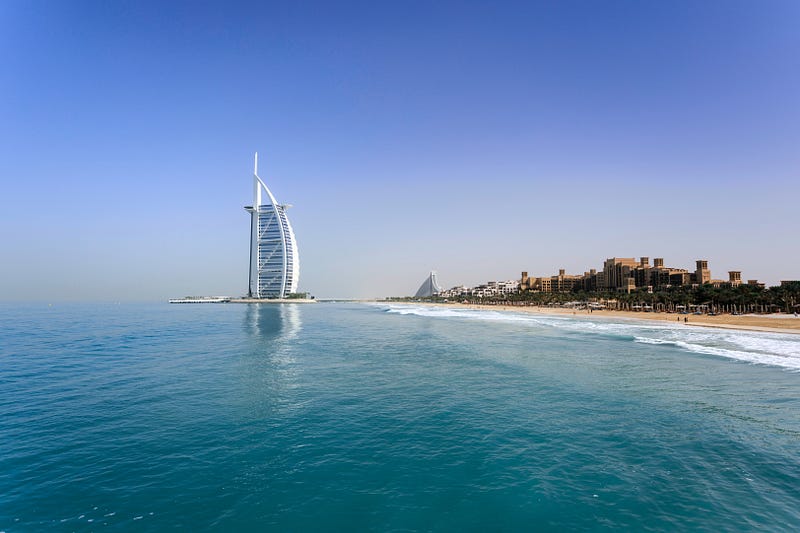
Photo by Aleksandar Pasaric on Pexels


AI and Web 3.0 Campus

The focal point of this strategic move is the Dubai AI and Web 3.0 Campus, a burgeoning tech haven designed to foster innovation and collaboration. The campus recently unveiled its decision to heavily subsidize licenses for companies choosing to establish a foothold within the city, publishing details of the move on Monday via a press release. The issuance of these licenses falls under the auspices of the Dubai International Financial Centre (DIFC), underscoring the city’s determination to attract global talent and diverse investment opportunities.

Mohammad Alblooshi, CEO of DIFC’s Innovation Hub, expressed confidence in the power of this initiative, stating:

“We are confident that by granting these licenses, we will attract more global talent and investment to the region and create a culture of collaboration and innovation.”

The Dubai AI and Web 3.0 Campus is geared up to cater to its prospective denizens, equipped with cutting-edge AI lab facilities, comprehensive training programs, essential hardware support, and accelerator initiatives.

All enterprises setting their sights on seizing the opportunity presented by the 90% subsidized commercial licenses are required to follow an application process.


Crypto trading licensing

Dubai’s tech evolution extends beyond AI and Web3 realms. The city has been proactive in granting operational licenses to cryptocurrency exchanges, marking yet another stride toward its tech-driven future.

In a recent development, Nomura’s crypto arm, Laser Digital Middle East, secured an operational license from Dubai’s Virtual Asset Regulatory Authority (VARA). This coveted license empowers Laser Digital to provide broker-dealer services and manage virtual asset investments within the emirate.

The progressive regulatory approach taken in Dubai has led to crypto exchanges such as Bybit, choosing the city as the location for its headquarters. In June MENA-focused digital assets platform BitOasis became the first crypto company to be awarded a broker dealer license by the Dubai regulator.

The regulatory approach taken in Dubai is proving to be progressive yet firm. The emirate hasn’t made the mistake of opting for ineffective light touch regulation that would attract the wrong type of crypto startup.

That’s evidenced by the response of VARA to the establishment of the OPNX exchange within its jurisdiction. OPNX was founded by Su Zhu and Kyle Davies, the founders of failed Singapore-based crypto hedge fund, Three Arrows Capital (3AC). VARA issued the business’ founders with a reprimand earlier this year, for establishing a crypto-related platform in Dubai without having obtained a crypto trading license.

Dubai’s willingness to embrace innovative technologies, coupled with its strategic initiatives and progressive regulation, is propelling it to the forefront of the global tech revolution. As it beckons AI and Web3 pioneers with enticing subsidized licenses and facilitates the growth of the cryptocurrency ecosystem, Dubai is carving a unique niche as a hub of technology and innovation and exploiting the potential growth opportunity that presents as a consequence.


More to Read
View All
Policy & Regulation·

Jun 02, 2023

Crypto.com Scores MPI License in Singapore

Crypto.com Scores MPI License in SingaporeIn a significant move for the Web3 industry, the Monetary Authority of Singapore (MAS) has granted online crypto trading platform, Crypto.com, a Major Payment Institution (MPI) license. This regulatory development showcases Singapore’s commitment to welcoming innovation and embracing the potential of the Web3 sector.Photo by Timo Volz on PexelsLicensing milestoneCrypto.com made the exciting announcement on Thursday, revealing that it has received the MPI license from the MAS, the country’s central bank and financial regulator. With this license in hand, Crypto.com can now provide its Digital Payment Token (DPT) services to residents of Singapore.This achievement follows the in-principle approvals granted to Crypto.com by the MAS in June of the previous year, further highlighting the company’s adherence to regulatory standards and its dedication to operating within the guidelines set by financial authorities.Community reactionThe news of the license has garnered positive reactions within the crypto community. Many members see the Singaporean government’s decision as a significant endorsement of the Web3 industry. ‘Aravind,’ a Twitter user, expressed this sentiment, stating, “Singapore government giving out a license is itself a massive plus for the Web3 Industry,” adding that it's probable the process to obtain the license has been hard fought, and likely two years in the making.Interestingly, another community member drew comparisons between Crypto.com’s successes and the challenges faced by global crypto exchange, Binance. While Binance has encountered difficulties in various jurisdictions, Crypto.com has been praised for its steady progress and forward-looking approach.Yet another Twitter user chimed in along similar lines, stating: “Whilst Binance seems to be losing ground, Crypto.com seems to be slowly doing things right and building for the future.”Binance has recently faced setbacks, such as its diminishing presence in the Australian and Canadian markets and trading restrictions imposed in certain European countries. Reports have even surfaced suggesting that Binance plans to lay off 20% of its staff in June.However, it’s important to note that Binance has not given up, as evidenced by its recent expansion into Thailand, where it established a regulatory-compliant platform. The exchange has also taken steps to ensure compliance in Japan through the creation of another regulatory-compliant platform.Additional licensesCrypto.com has set up its headquarters in Singapore, and it is in good company there with leading crypto firms Kraken and Coinbase also maintaining offices in the city state. The company has taken a truly global strategy, having marketed heavily in recent years. It maintains offices in nine other locations, including Miami, Dublin, London, Seoul, Malta, Sofia, Hong Kong and Shenzhen, as well as Kadıköy in Turkey.The crypto trading platform has received a Minimal Viable Product (MVP) preparatory license from the Virtual Assets Regulatory Authority (VARA) in Dubai, alongside firms like Komainu, Hex Trust, and GC Exchange. The company has also successfully pursued digital asset licensing in France, Australia, and the United Kingdom.Crypto.com’s acquisition of the MPI license in Singapore marks a significant milestone for the company and the broader Web3 industry. With Singapore embracing innovation and offering a favorable regulatory environment, Crypto.com is well-positioned to continue its growth and contribute to the advancement of the digital payment token ecosystem.

news
Markets·

Dec 05, 2023

Unprecedented surge in trading volumes on HashKey exchange

Unprecedented surge in trading volumes on HashKey exchangeHong Kong-based cryptocurrency exchange HashKey has experienced an unprecedented surge in daily trading volumes over the course of the past week, reaching approximately $4.5 billion, a notable increase from its usual levels.Photo by Jungwoo Hong on UnsplashToken rewards programThe surge, highlighted in a report published by The Block on Monday, occurred on Friday, and is being attributed to the company’s token rewards program, according to a spokesperson from HashKey Group.A HashKey Group spokesperson clarified that the surge in volumes was a result of the company’s recent HSK rewards campaigns, which involve the distribution of HSK tokens or EcoPoints. Introduced in April, these incentives were designed to encourage trading activity on the platform. The spokesperson emphasized the company’s commitment to operating within the regulatory framework, stating:“At HashKey, we operate strictly within the regulatory framework, and any actions of misconduct are not tolerated.”Last Thursday, HashKey issued a post on X (formerly known as Twitter), detailing one of its incentive campaigns. The post announced the introduction of a DOT/USD trading pair and encouraged users to explore additional ways to earn through ongoing campaigns. Despite receiving only 15 likes, the post aimed to attract users with the promise of HSK rewards for logging in, trading and participating in the platform’s campaigns.Licensing approval in AugustHashKey had obtained the first license to offer retail crypto trading in Hong Kong in August under the new regulatory regime, with an upgrade of its type 1 and type 7 licenses. Officially opening to traders on November 1, it quickly garnered attention in the crypto community. In the same month, it also launched an app, offering full mobile trading capabilities.While daily trading volumes on Sunday dropped to $275 million, still higher than the usual levels but closer to the volumes recorded in its initial month, the significant spike on Dec. 1 was particularly noteworthy. Comparatively, Binance, the world’s largest crypto exchange, recorded $11.3 billion in volume over the past 24 hours.Wash trading ruled outSpeculation arose on X regarding the possibility of wash trading contributing to the sudden surge in volumes. Wash trading involves intentionally matching a large number of orders to create artificial trading activity. However, HashKey’s spokesperson dismissed these claims, stating that no misconduct has been detected.Justin d’Anethan, Head of Business Development in Asia for Keyrock, a crypto market-making firm, commented on the situation, stating:“Many people in the crypto space assumed wash trading was taking place… But it’s almost unbelievable.”He noted that if one wanted to appear more active, it would be done gradually, rather than in a single surge.Market sentiment and trading volume trendOver the course of the past 24 hours, the Bitcoin unit price has surged from $39,500 to almost $42,000, with Asian trading believed to have contributed significantly to that trading momentum. The overall crypto market capitalization has reached $1.5 trillion for the first time since early 2022. Bitcoin trading volume over the past 24 hours hit $39 billion, with a bitcoin market dominance rate of 51%.

news
Web3 & Enterprise·

Sep 27, 2023

Crypto Exchange HTX Reports $8 Million Hack Over Weekend

Crypto Exchange HTX Reports $8 Million Hack Over WeekendCrypto exchange HTX confirmed on Monday that it fell victim to a hack over the weekend, resulting in losses amounting to 5,000 ETH ($8 million).HTX stakeholder Justin Sun, Founder of layer one blockchain TRON, disclosed the breach via an X post. In a series of subsequent X posts, Sun assured users and stakeholders that the exchange had promptly covered the losses, and current user deposits remained secure. He also emphasized that the platform was operating normally despite the security incident.Photo by GuerrillaBuzz on UnsplashHacker incentiveThe TRON Founder also extended an offer to the hacker responsible for the breach. He proposed a 5% reward for the return of the remaining funds, a figure notably lower than the 10% often offered to hackers in similar situations. Additionally, Sun dangled the possibility of a job at the exchange. That’s an unusual response to a cryptocurrency hack and one that had one commentator speculating upon the notion that the hacker belonged to the notorious North Korean Lazarus hacking group, pondering the prudence of such a move.Data from DeFi data aggregator DeFiLlama revealed that Seychelles-based HTX, formerly known as Huobi, witnessed nearly $10 million in outflows, with a remaining $2.73 million in customer deposits as of the latest data.Hacker’s identity may be knownThe hacker, who received a series of messages from an address identified as an HTX hot wallet by Nansen, was presented with a stark choice. The messages, written in both English and simplified Chinese, claimed to have uncovered the hacker’s true identity and urged the return of the stolen funds to the address 0x18709E89BD403F470088aBDAcEbE86CC60dda12e. In return, HTX offered a 5% “white hat bonus” valid until October 2, 2023. If the funds were not returned by that date, law enforcement would be involved, the message warned.The hack came shortly after Justin Sun shared a promotional video in which he depicted himself defeating a hooded figure symbolizing a hacker “shorting crypto” with a single punch while on a spaceship journey to what appeared to be Mars.Insolvency fearsOn Tuesday, Sun outlined that the exchange had established a “SAFU” (Safe Asset Fund for Users) fund for platform users. However, taking to X on Monday, Adam Cochran, Managing Partner at Cinneamhain Ventures, claimed that there was a likelihood that the HTX business is insolvent. Cochran maintains that available data suggests a shortfall in crypto holdings relative to HTX users' assets.Travis Kling, Founder and Chief Information Officer of Ikigai Asset Management, went one further on X, stating:”Not “probably”. Huobi is insolvent.”Kling, a long-time critic of Binance, went on to suggest that if Huobi were to collapse, that event would likely lead to Binance unraveling also.HTX originated in China and nowadays maintains offices in Singapore, Japan, South Korea, Hong Kong, and the UK. It has long been speculated that Justin Sun has a controlling stake in the HTX business. Sun has denied that assertion, instead suggesting that he is a member of HTX’s “Global Advisory Board.”

news
Loading