Top

UAE Royal Office to Visit South Korea Next Month for Web3 Ventures

Web3 & Enterprise·August 14, 2023, 9:06 AM

AIITONE, an immersive tech company based in South Korea, said Monday that officials from the Royal Private Office of H.H Sheikh Ahmed Bin Faisal Al Qassimi in the United Arab Emirates (UAE) are set to visit South Korea next month. During the visit, the Royal Office will work with AIITONE to enhance collaboration with Korean enterprises leading the Web3 sector, including information technology (IT) and blockchain, and explore cooperative opportunities across different sectors such as energy and finance.

The Royal Office will also engage in practical preparations for establishing the UAE banks’ Korean branches and meet with members of the Korean National Assembly and related business officials.

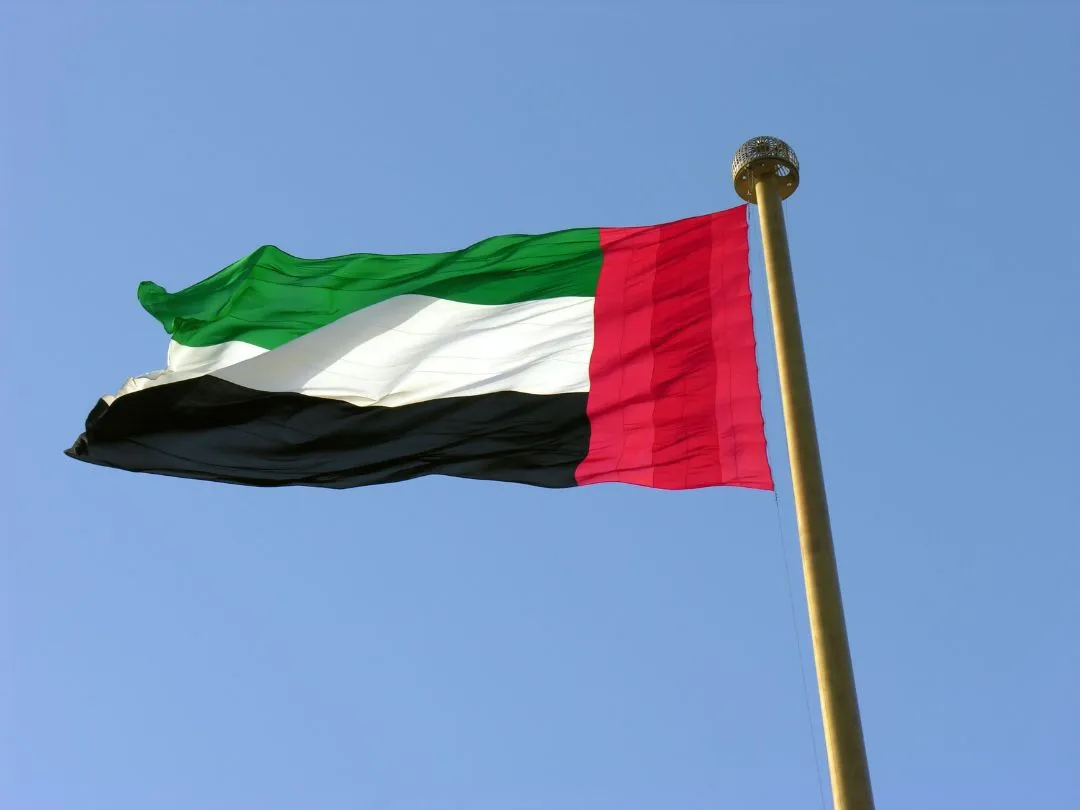
Photo by Saj Shafique on Unsplash


Nurturing international relations

“This visit will consist of meetings and discussions with Korean lawmakers, further strengthening political cooperation between our two countries and facilitating the exchange of opinions on crucial international matters,” a representative from the Royal Office commented.

“During the visit, a South Korea-UAE Web3 forum will also be held, expediting discussions on fintech-related collaboration possibilities such as blockchain and STO,” the representative added.


Transcontinental fintech growth

AIITONE and the Royal Office had previously signed a memorandum of understanding (MOU) vowing to work together to expand their respective business operations into each other’s regions — East Asia and the Middle East — and subsequently bolster the fintech industries there.

Under the partnership, AIITONE plans to convene with major Korean companies in order to analyze industry trends and explore potential areas for collaboration. The discussions are expected to cover various areas, including the establishment of Islamic banks in Korea, setting up offices for the investment of Arab capital in Asia, and strengthening cooperation in the field of security tokens.

The company will also work with the Royal Office on security token projects and central bank digital currencies (CBDCs) — areas where Dubai leads innovation.

“Through activities such as the UAE Web3 forum and blockchain-based security token ventures, we aim to pioneer new models of cooperation and achieve sustainable development,” said Bruce Jeong, Principal of Middle East Investment and AIITONE.

More to Read
View All
Web3 & Enterprise·

Aug 25, 2025

DBS Bank enables crypto-linked structured note distribution

Singapore’s DBS Bank has announced the launch of the distribution of crypto-linked structured notes. The development will see structured notes tokenized on the Ethereum blockchain, with the product being made available to eligible non-DBS clients across three digital investment platforms and exchanges. In a press release published to its website on Aug. 21, DBS, the largest bank in Southeast Asia, disclosed that its tokenized structured notes would be made available to the investing public via ADDX, DigiFT and HydraX. These platforms have signed agreements with DBS to distribute its tokenized structured notes, which are debt securities that combine various types of financial products into one offering.Photo by Shubham Dhage on UnsplashFirst token distributionThe development marks a milestone for DBS insofar as it makes for the bank’s first-ever token distribution. The bank explained that the nature of the note means that investors are provided with a cash payout when cryptocurrency prices rise. In this way, the investor can build exposure to the asset class without having to directly manage any digital assets.While this is DBS Bank’s first token distribution, the bank had launched crypto-linked structured notes for its own eligible clients back in September 2024. DBS asserted that demand for the product has been strong, given that it enables investors to run advanced investment strategies related to their digital asset portfolios. ‘The next frontier of financial markets infrastructure’Commenting on the development, DBS Bank’s Head of Foreign Exchange and Digital Assets, Li Zhen, said that “asset tokenization is the next frontier of financial markets infrastructure.” He added that the tokenized product offering addresses a growing institutional appetite for digital assets. Singapore-based Ryan De Souza, APAC partnership lead at blockchain development firm Offchain Labs, described the product offering as an example of the fractionalization prophecy starting to play out. Access to this type of product would typically be available with a minimum investment size of $100,000. With the tokenization of the product, accessibility is increased given that minimum investment has been reduced to $1,000. Each tokenized note represents a fungible $1,000 share of the conventional structure note product. The development is also significant from the perspective of Ethereum. It demonstrates yet another instance of institutional adoption, which increases both liquidity and demand relative to ETH. Tokenized product offerings are likely to gain further momentum given that they bring greater transparency and efficiency by comparison with conventional offerings. DBS outlined that its clients executed in excess of $1 billion in trades involving tokenized structured notes and crypto options within the first half of 2025. Additionally, trade volumes related to these products grew by almost 60% from Q1 2025 to Q2 2025.Singapore-headquartered product distribution partner DigiFT recently partnered with crypto market maker GSR with the launch of its secondary over-the-counter (OTC) trading service for tokenized real-world assets (RWAs). Back in March, DigiFT announced plans to launch an on-chain index fund, backed by a tokenized stock portfolio. ADDX, another Singapore-based platform, had joined forces with OCBC Bank back in 2023 with a view towards facilitating the launch of a tokenized equity-linked structured note.

news
Policy & Regulation·

Apr 21, 2023

Crypto Features in India-UK Markets Dialogue

Crypto Features in India-UK Markets DialogueAccording to a press release published by HM Treasury, the 2nd India-UK Financial Markets Dialogue meeting held on Wednesday featured six key themes with crypto featuring among them.©Pexels/SkitterphotoThe event brought officials from both nations together in the first in-person financial dialogue since 2017. While the meeting considered banking, insurance and reinsurance, capital markets, asset management and sustainable finance, it also allotted time to discuss payments and crypto-assets.CBDC knowledge sharingBoth sets of officials discussed the scope for augmenting knowledge on Central Bank Digital Currencies (CBDC) by way of mutual learning. The officials agreed on the importance of robust global approaches relative to the emergence and development of crypto-assets internationally. The joint statement issued following the meeting revealed that progress relative to the G20 roadmap for enhancing cross-border payments was a matter which was discussed. It’s an item that could have major implications for the use of cryptocurrency in cross border transactions.Global collaborationThe meeting marks another move towards greater global collaboration on policy and regulation relative to digital payment systems and crypto assets. Earlier this month, India’s Finance Minister Nirmala Sitharaman said that the introduction of any new regulations on digital assets needs to be coordinated on a global basis. “The G20 and its members agree that it’s not going to be possible to have an independent, standalone country dealing with crypto assets”, Sitharaman stated at a news conference following a meeting of central bank governors and G20 finance ministers.There’s a growing recognition among politicians, government and central bank officials that decentralized money doesn’t end at a territory’s borders due to its inherently decentralized properties.Taking steps to regulate cryptoWhile on the one hand strategizing as to how digital assets can be best controlled on a global level, India is also taking its own individual steps towards national regulatory action. Recently, it expanded its Prevention of Money Laundering Act (PMLA) to include consideration of digital assets. The newly amended PMLA will now deal with the exchange of digital assets for fiat money and vice versa. It also considers safekeeping, transfer and administration relative to cryptocurrency. Furthermore, its broadened scope deals with financial services offered related to virtual or digital assets.Rajagopal Menon, the VP of India’s leading cryptocurrency exchange WazirX, has said that “regulations levied by India have been baby steps toward institutional participation in the crypto exchange.” While market participants in the digital assets space are apprehensive about the regulatory measures that governments and state regulators choose to adopt, so long as the objective isn’t to regulate the innovation out of existence, such developments can have a profoundly positive effect on the digital assets market.There’s no doubt that in line with Menon’s point relative to the Indian context, the same scenario can play out in all digital markets given the application of the right regulatory approach. Institutional investment for the most part has eluded crypto despite many already heralding its arrival in recent years. Institutions move slowly and the only way in which they will be comfortable in working with digital assets is with complete regulatory clarity having been set out.So while some in crypto may be concerned at the mention of global regulatory coordination in respect of digital assets, so long as it doesn’t go too far, greater work towards improved regulatory clarity in the digital assets market can be a catalyst for further adoption and growth in India, the UK and further afield.

news
Web3 & Enterprise·

Sep 08, 2023

Yes24 Teams Up with KPC to Establish Digital Content Distribution Ecosystem

Yes24 Teams Up with KPC to Establish Digital Content Distribution EcosystemSouth Korean culture and arts content platform Yes24 announced on Thursday that it has signed a business agreement with digital content aggregator Korea Publishing Contents (KPC) to build a digital content distribution ecosystem based on blockchain technology to protect the rights of copyright holders and users alike.Photo by Hal Gatewood on UnsplashYes24 CEO Choi Sera and KPC CEO Lee Joong-ho attended the signing ceremony for the agreement last Tuesday.Collaboration on multiple frontsUnder the new partnership, both parties plan to explore various business models and collaborate on marketing efforts to establish and operate the digital content ecosystem. They also intend to cooperate by leveraging their human resources, technological capabilities, and market networks.“We will do our best to create a secure and fair digital content distribution environment that both protects and grants more rights to copyright holders and users,” Yes24 said in a statement, adding that it would also strive to contribute to the acceleration of the digital content market.Fueling creativity and content consumptionAs a major online book retailer, Yes24 provides a range of services, which include selling books as well as tickets for various concerts and events. KPC is a joint venture established by 65 Korean publishers with the collective aim of discovering sustainable growth drivers for the publishing industry. Currently, the company distributes over 1,000 e-books and audiobooks from various publishers to local and international e-book stores and libraries.

news
Loading