Top

Newly Published CoinGecko Index Tracks Alleged Crypto Securities

Web3 & Enterprise·August 08, 2023, 3:08 AM

Kuala Lumpur-based crypto data aggregator CoinGecko has unveiled a ground-breaking index spotlighting prominent cryptocurrency tokens that the US Securities and Exchange Commission (SEC) has earmarked as potential securities.

Through its “Top Alleged Securities Coins by Market Cap” page, the Malaysian aggregator categorizes a spectrum of cryptocurrency assets based on their market capitalization. At the forefront of this classification stands BNB, the native token of the Binance exchange and the BNB blockchain. It is closely followed by other prominent names such as Cardano, Solana, and Tron.
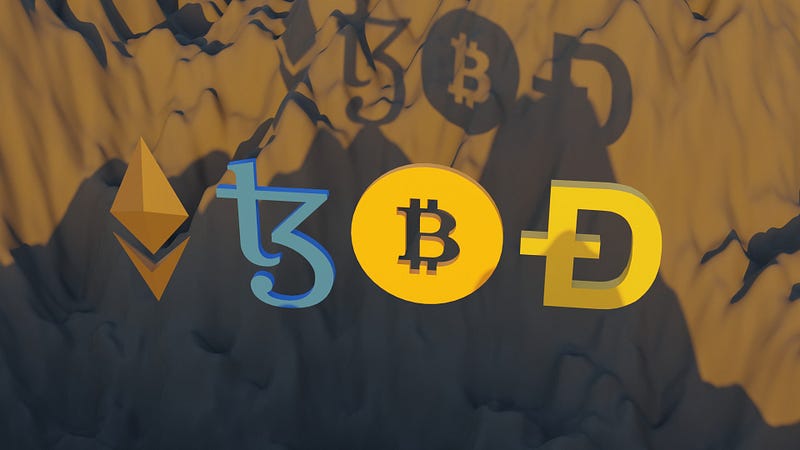
Photo by Shubham Dhage on Unsplash


$90 billion in value

The alleged securities amount to a whopping $90 billion in value according to their combined market capitalization right now. Putting this in context, the overall market capitalization of the entire crypto market currently stands at $1.2 trillion, of which Bitcoin accounts for over half a trillion dollars. This estimation paints a vivid picture of the immense scale of the cryptocurrency market and the potential reverberations of regulatory interventions.

CoinGecko’s index came to fruition in the first week of August, meticulously pooling the tokens that the SEC has previously classified as securities during legal proceedings. The decision to consolidate these tokens into a single index underscores the increasingly intricate interplay between the cryptocurrency market and regulatory frameworks.


Lack of clarity

When project teams and other market participants have asked for explicit clarity, SEC Chair Gary Gensler has frustratingly indicated that people need to make a simple determination based on the Howey Test — a historic securities case that has been used in the US to determine what constitutes a security. The case dates back to 1946, long before the onset of digitization let alone digital currencies.

Another issue is that the SEC is simply expressing an opinion based on its interpretation of existing securities law and securities case law. Without legislation in the US, clarity can only be provided in the courts. This is a flawed approach, as market participants have to wait for actions taken by the SEC against crypto entities to be adjudicated in the US courts in order to get a better understanding of the legal standing of these assets.

This comprehensive analysis provided by CoinGecko’s new index presents invaluable insights into the dynamic terrain of cryptocurrency regulation. It underscores the intricate dynamics between the digital currency market and the regulatory bodies that seek to govern it.

Taking the regulation of derivatives as a case in point, their emergence led to a very messy process of arriving at regulatory clarity. The very same thing is playing out with digital assets. While it is imperfect, there is no doubt that clarity will eventually be reached.

In the meantime, as the US fumbles where digital assets are concerned, regional authorities in East Asia and the Middle East are capitalizing on US regulatory shortcomings, implying that we will likely see further growth in crypto and Web3 in these locations until the US recovers.

More to Read
View All
Web3 & Enterprise·

Jan 13, 2024

Pontem secures funding to pioneer Move-compatible apps

Singapore-based startup Pontem, a Web3 product development studio, has successfully raised $6 million in a recent funding round. Broad venture capital participationThe firm announced details of the funding round via a press release published on Thursday.  The round was co-led by Faction and Lightspeed Venture Partners. The financing includes participation from notable contributors such as Pantera Capital, Aptos Foundation, market maker Wintermute, Singaporean trading firm Altonomy, Shima Capital and Kraken Ventures. This latest capital infusion brings Pontem's total raised funds to $10.5 million, building upon the $4.5 million secured in June 2021 through a private token sale led by Mechanism Capital, Kenetic Capital, Delphi Ventures and Hong Kong’s Animoca Brands.Pepi Stojanovski on UnsplashExpanding Move utilityThe primary focus of the funds is to empower developers in creating applications that are compatible with both the Ethereum Virtual Machine (EVM) and Move, expanding the utility of the Move programming language beyond its current usage on the Aptos and Sui blockchains. Move is a rust-derived programming language which was originally developed by Facebook with the intention of using it to power the Diem blockchain, prior to the company abandoning the project. It’s a platform-agnostic language designed for the writing of safe smart contracts. It distinguishes itself from the EVM's Solidity language by enhancing throughput through parallel processing. Pontem contends that Move is particularly appealing to Web2 developers from traditional finance and tech sectors due to its similarity to familiar static-type languages. Pontem envisions breaking the temporary vendor lock-in associated with the EVM, offering developers a versatile programming language that supports the security and scalability required for widespread adoption. Alejo Pinto, co-founder of Pontem, highlighted the objective of utilizing the capital influx to increase the usage of Move beyond the Aptos and Sui blockchains, providing dApp teams with a programming language that facilitates the addition of new features, promoting security and scalability. Pinto emphasized that Pontem seeks to address the vendor lock-in issue on Ethereum, enabling easier entry for Web2 developers and fostering their confidence in the decentralized space. Banafsheh Fathieh, Partner at Faction, praised Pontem's role in building critical primitives for the Move ecosystems. Pantera Capital Managing Partner Paul Veradittakit expressed excitement about investing in Pontem, recognizing the team's efforts in constructing essential financial and technical infrastructure to attract consumers and developers to the decentralized web. Lumio Layer 2The allocated capital is earmarked for developing Move Virtual Machine products on EVM-compatible blockchains like Ethereum. This includes Lumio, a Move-based Layer 2 solution which the company introduced in December. It operates as an optimistic rollup on Ethereum and leverages alternative Layer 1s like Aptos to process transactions. Pontem disclosed that products deployed on Aptos, such as the Pontem Wallet and Liquidswap DEX, have gained significant traction with 40,000 weekly active users and up to $1 million in daily volume. Looking ahead, Pontem envisions extending its support to the Solana Virtual Machine and other blockchain languages, underscoring its intention to provide a comprehensive development environment for decentralized applications. The funding secured in this round signifies a crucial step for the fledgling company in advancing the compatibility and accessibility of the Move programming language within the broader blockchain ecosystem. 

news
Policy & Regulation·

Jun 15, 2023

Korean Parliament to Hold Hearing on Virtual Assets Amid Controversies

Korean Parliament to Hold Hearing on Virtual Assets Amid ControversiesThe National Policy Committee (NPC) of the South Korean National Assembly has reached an agreement to conduct a hearing on virtual assets next month. This decision comes following discussions between the ruling and opposition parties, as reported by local news outlet Kukinews.Photo by KS KYUNG on UnsplashHearing dateLawmakers Yoon Han-hong and Kim Jong-min, who serve as administrative secretaries of the NPC, have agreed today to hold the virtual assets hearing on July 11. Yoon is a member of the ruling People Power Party (PPP), and Kim is a member of the opposition Democratic Party of Korea (DPK).During a full session held this afternoon, Lawmaker Kim proposed the idea of a hearing on virtual assets, to which NPC Chair Back Hye-ryun agreed.Growing public interestToday’s meeting was organized to foster a better understanding of the current issues surrounding virtual assets, given the increasing public interest, particularly in light of the recent controversy involving Lawmaker Kim Nam-kook’s alleged ownership of cryptocurrency tokens and the employment of PPP leader Kim Gi-hyeon’s son in a crypto-related company.The NPC intends to finalize the plan for the hearing on June 30, just before the plenary session on the day. The specific focus of the hearing and the participants, including witnesses, will be determined through consultations between the administrative secretaries.

news
Policy & Regulation·

Apr 11, 2023

Thai Opposition Party Offers Election Crypto Sweetener

Thai Opposition Party Offers Election Crypto SweetenerThailand’s opposition party, the Pheu Thai Party (PTP), has made a controversial move ahead of next month’s general election by offering 10,000 baht (approximately $300) in digital assets to citizens above 16 years old in exchange for their votes.©Unsplash/Markus WinklerThe stated intention of the policy is to spread the use of blockchain-based assets and attract international digital currencies, as well as to distribute products made in Thailand abroad using blockchain technology. Prommin Lertsuridej, who runs the party’s economic policy committee has claimed that 55 million Thai citizens will benefit from the measure if the PTP wins the election.Populist policiesThe plan will cost $15 billion and it is claimed that it will serve to revive the country’s struggling economy while providing relief to those struggling with debt. Additionally other populist measures will be pursued including an increase in the minimum wage and a minimum monthly household income guarantee.The policy has been met with mixed reactions from citizens, with some welcoming the extra cash and others accusing the party of blatant, cynical manipulation. The PTP has tried to sidestep accusations of manipulation by stating that the money will be limited to spending on local economic stimulus projects. Additionally, it cannot be used for gambling or debt repayment, and must be spent within a four-kilometer radius. The party’s chief adviser on public participation and innovation, Paetongtarn Shinawatra, called this policy an attempt to draw the attention of international currencies to Thailand.New crypto regulationsThis policy announcement comes just two months after the Securities and Exchange Commission (SEC) of Thailand issued new regulations for crypto service providers. The regulations were implemented to prevent a situation similar to the recent FTX collapse and hack, which resulted in the loss of millions of dollars’ worth of digital assets. The SEC has required service providers to establish a digital wallet management system to ensure efficient custody and to have a contingency plan in case of a security breach.Unintended consequencesWhile the PTPs policy has been met with criticism, it has also been seen as a bold move towards promoting the use of blockchain-based assets and digital currencies in Thailand. By offering citizens an incentive to use digital assets, the policy may encourage more people to explore this emerging market, which has the potential to create new opportunities for investment and economic growth.Populist politics and policy comes with a heavy longer term cost. The PTPs policy may be successful in achieving its intended goals, or it could ultimately lead to unintended consequences. Regardless of the outcome, the PTPs policy is a significant development in Thailand’s growing digital asset market and may set a precedent for other countries seeking to promote the use of blockchain-based assets and digital currencies.From an international perspective, even if the move backfires economically within Thailand, ever greater use and normalization of digital assets as in this case can only lead to greater overall adoption.

news
Loading