Top

Korean Parliament to Hold Hearing on Virtual Assets Amid Controversies

Policy & Regulation·June 15, 2023, 9:09 AM

The National Policy Committee (NPC) of the South Korean National Assembly has reached an agreement to conduct a hearing on virtual assets next month. This decision comes following discussions between the ruling and opposition parties, as reported by local news outlet Kukinews.

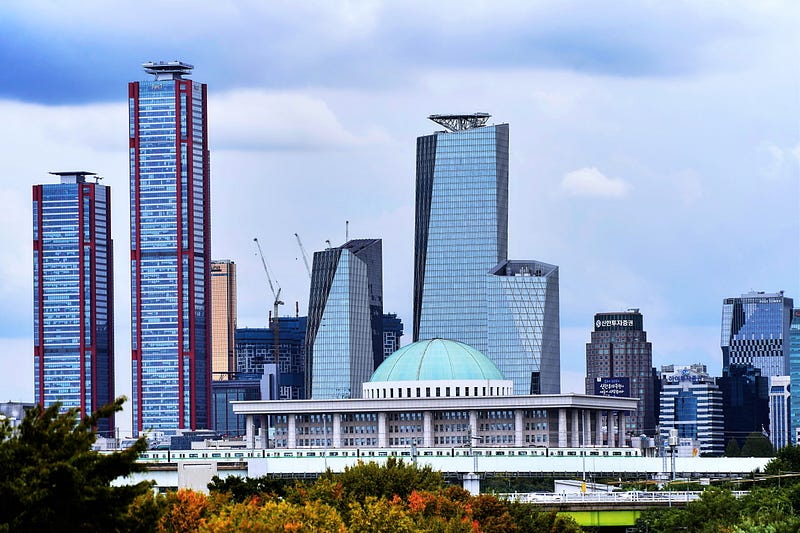
Photo by KS KYUNG on Unsplash


Hearing date

Lawmakers Yoon Han-hong and Kim Jong-min, who serve as administrative secretaries of the NPC, have agreed today to hold the virtual assets hearing on July 11. Yoon is a member of the ruling People Power Party (PPP), and Kim is a member of the opposition Democratic Party of Korea (DPK).

During a full session held this afternoon, Lawmaker Kim proposed the idea of a hearing on virtual assets, to which NPC Chair Back Hye-ryun agreed.


Growing public interest

Today’s meeting was organized to foster a better understanding of the current issues surrounding virtual assets, given the increasing public interest, particularly in light of the recent controversy involving Lawmaker Kim Nam-kook’s alleged ownership of cryptocurrency tokens and the employment of PPP leader Kim Gi-hyeon’s son in a crypto-related company.

The NPC intends to finalize the plan for the hearing on June 30, just before the plenary session on the day. The specific focus of the hearing and the participants, including witnesses, will be determined through consultations between the administrative secretaries.

More to Read
View All
Policy & Regulation·

Aug 24, 2023

Celebrating a Decade of Crypto in South Korea: Experts Convene to Chart the Future

Celebrating a Decade of Crypto in South Korea: Experts Convene to Chart the FutureThe MK Virtual Asset Conference, an event held in Seoul yesterday to celebrate the 10th anniversary of South Korea’s cryptocurrency industry, convened experts, politicians, and stakeholders to discuss the future of blockchain and digital assets.The conference was hosted by Maeil Business Newspaper and its blockchain subsidiary Mblock, and sponsored by cryptocurrency exchange Korbit, the Korean Securities Association, and the Korea Derivatives Association. It served as a valuable opportunity to evaluate the current state of the crypto market and explore solutions for pressing challenges.Photo by Ciaran O’Brien on UnsplashInevitable rise of blockchainOne of the distinguished speakers at the event highlighted the inevitable rise of blockchain technology. Kim Yong-beom, CEO of Hashed Open Research, the research arm of Seoul-based crypto venture capital firm Hashed, said, “Blockchain is the antithesis of the modern financial and capital system. While traditional finance possesses its own merits, it also carries substantial transaction fees and is confined within national boundaries. It is only natural that such a counterforce has emerged to address these issues.”He continued, “Given that traditional finance properly responds to blockchain technology’s rise and overcomes its limits, blockchain may lose its competitive edge. However, if traditional finance fails to do so, blockchain will not be easily dismissed.”CEO Kim also highlighted the third section named “Blueprint for the Future Monetary System” of the Bank of International Settlements’ 2023 Annual Economic Report, which was published in June. The report states, “The BIS Innovation Hub, in partnership with central banks around the world, stands at the forefront of experimentation with CBDCs and tokenization.” According to Kim, the traditionally conservative financial institution, which had previously been skeptical about blockchain-based distributed ledger technology, has now shifted its position to be more accepting of blockchain.Importance of institutional investorsDuring the conference, an academic underscored the importance of allowing institutional investors to enter the virtual asset space. Kang Hyoung-goo, an assistant professor in the Department of Finance at Hanyang University Business School, pointed out that the crypto market, when primarily driven by retail investors, tends to favor volatile assets over stable ones. Due to this inclination, more individual investors are attracted to exchanges where speculative trading is a frequent occurrence. This dynamic creates a vicious cycle, he explained.Defining digital assetsOn a different note, Lee Han-jin, a lawyer at Kim and Chang, one of the largest law firms in the country, emphasized the crucial need to establish a legal definition of digital assets. In Lee’s view, digital assets exist in the form of data on the blockchain, setting them apart from traditional assets. He argued that without a legal definition outlining the nature of these assets, they could potentially devolve into entities that mislead the public, lacking both legal reliability and trustworthiness.Political voicesPoliticians also took the stage to share their thoughts. Back Hye-ryun, a Democratic Party of Korea member, expressed in her congratulatory speech her commitment to protecting virtual asset users through legislation. Kim Jong-min, another lawmaker from the same party, underscored the unstoppable nature of the blockchain trend. Yun Chang-hyun, a lawmaker of the ruling People Power Party, mentioned that while Bitcoin couldn’t establish itself as a key currency in an anarchic manner, stablecoins and central bank digital currencies (CBDCs) are now positioned to fill that role.Regulatory considerationsMeanwhile, Kim So-young, Vice Chairman of the Financial Services Commission, stressed the ongoing uncertainty surrounding the societal impact of cryptocurrencies and how governments should oversee them. He emphasized that the Korean government aims to establish a balanced framework to facilitate the responsible development of digital assets. Furthermore, he highlighted the necessity of collaborating with major economies due to the global nature of virtual assets.

news
Policy & Regulation·

Mar 27, 2024

Korean financial authority to heighten oversight on token listing with new guidelines

The South Korean financial authority will establish new policies and guidelines for token listing and provide admirable examples from past listing events for local exchanges to follow, according to local media outlet News1.  So far, fiat-to-crypto exchanges in Korea have been listing tokens on their platforms under a guideline issued by Digital Asset eXchange Alliance (DAXA) – a self-regulatory consultation group comprised of five major Korean crypto exchanges. The existing DAXA guideline outlines basic yet vague instructions, which have allowed exchanges to list tokens largely at their discretion.  However, the new guideline from the financial authority, expected to be released by this June, will mark the government’s first official manual on token listing. This is in line with the upcoming Virtual Asset User Protection Act, which will be effective in July. Photo by Hitesh Choudhary on UnsplashSetting clear guidelines for token listingsThe new guidelines are expected to include examples of past fraud detection and real-time monitoring cases which are deemed to have set precedents for the industry players. Moreover, the financial authority plans to distribute past exemplary cases of token listing as early as April, which is anticipated to set a model listing process and help local crypto exchanges adhere to the law and requirements.  This announcement comes after the local game company Wemade relisted its native token WEMIX on Korbit, one of DAXA's member exchanges, just a year after it was delisted on major exchanges due to its deviant practices in token issuance. The relisting of WEMIX has since raised concerns among crypto insiders about the lack of criteria regarding token listings. More refined token listing process As the crypto market's bullish trend continues, Bithumb and Coinone – the second and third-largest exchanges in Korea – are stepping up their efforts to speed up the listing of new coins. Industry experts expect these exchanges will double down on their efforts in screening and reviewing processes for tokens to align with the new guidelines in the future.  An official from the Korean Financial Intelligence Unit (FIU) said that while the anticipated listing process is not legally binding, it will definitely have a more profound impact on local crypto exchanges compared to the self-regulated DAXA guidelines.  

news
Policy & Regulation·

Jul 04, 2023

DAXA Implements Virtual Asset Alert System to Enhance Investor Protection

DAXA Implements Virtual Asset Alert System to Enhance Investor ProtectionThe Digital Asset eXchange Alliance (DAXA), a consortium consisting of the top five cryptocurrency exchanges in South Korea, has made an announcement today regarding the introduction of a standardized virtual asset alert system.That’s according to a report by local news outlet Edaily. This system aims to tackle the problem of information asymmetry and safeguard the interests of investors.Badging of assetsUnder this new initiative, member exchanges will continuously monitor the market in real time to operate their respective alert systems. Whenever a virtual asset meets certain predetermined criteria, the trading window for that asset will be labeled with a badge. While DAXA members have collectively agreed to run the alert signal for a maximum of 24 hours, each exchange will have the autonomy to determine specific durations based on their individual requirements.Photo by Sigmund on UnsplashFive categoriesThe alert system will cover five distinct categories, notifying users of market movements related to price fluctuations, trading surges, deposit surges, price gaps, and whale trades. Price fluctuations refer to instances where the prices of virtual assets experience a rise or drop of over 50 percent within a 24-hour period. Trading surges indicate an increase in trading volume by more than 100 percent over the past ten days. Deposit surges signify an increase in deposit volume by over 100 percent during the same ten-day period. Price gaps occur when virtual asset prices on DAXA exchanges differ by more than 5 percent from their corresponding prices on crypto information website CoinMarketCap. Lastly, whale trades refer to situations where specific individuals or entities account for more than 40 percent of the total transaction volume within the past 24 hours.It is worth noting that the guidelines pertaining to the alert system will be customized by each member exchange according to their specific trading volumes and requirements. While adhering to the aforementioned framework, the member exchanges will establish their own rules and regulations.The formulation of this initiative involved the collaboration of all five members, who collected valuable input from DAXA advisors since the alliance’s inception in June of last year. The alert system also underwent a trial test phase to ensure its stability before being implemented.DAXA Vice Chairman Kim Jae-jin said the DAXA alert system would address information asymmetry issues by promptly providing data that ordinary investors previously couldn’t find on charts or order books. Kim added that the alliance is committed to further improving the alert system.

news
Loading